Prompt Library for Executive Chef Pro: Menu, Cost & Leadership
105 prompts for executive chefs to craft menus, calculate true plate costs with yield loss, lead brigade, write SOPs, and drive profits. No fluff—just decisions.
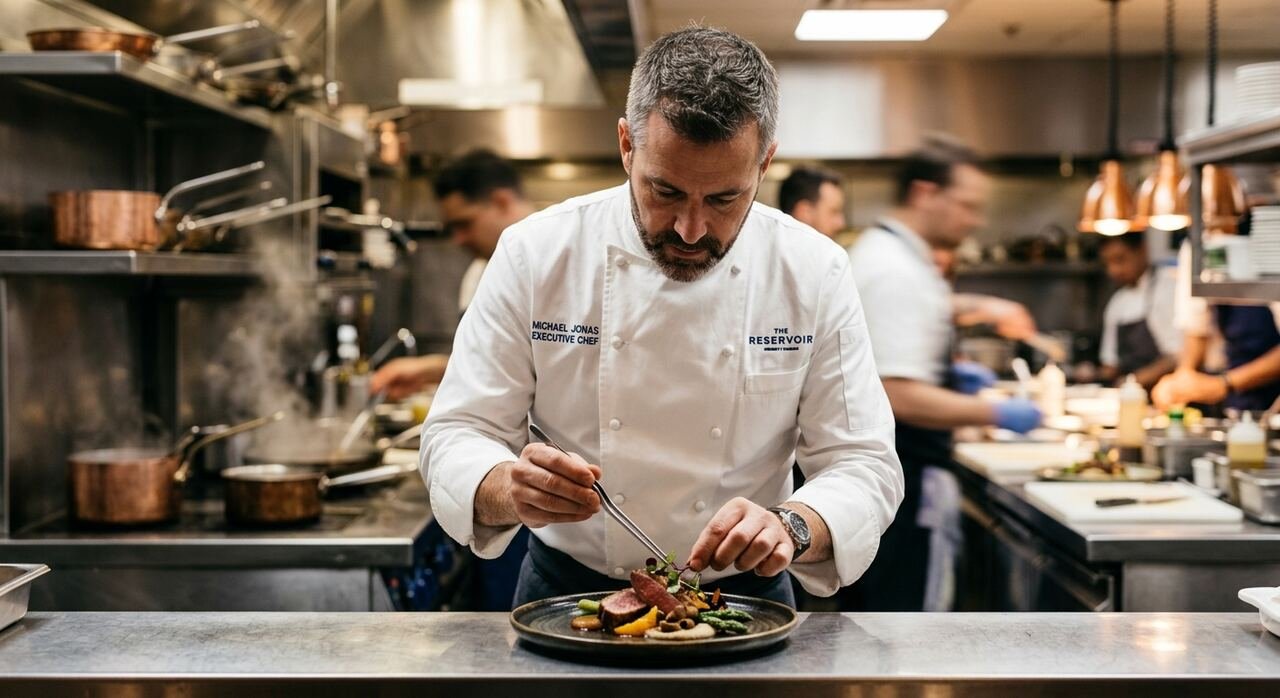
Executive Chef Pro is the AI Sous Chef for the corner office. It helps executive chefs, kitchen managers, and owner-operators translate culinary vision into a business plan that runs tight on numbers without crushing creativity. From engineering a menu matrix that boosts contribution margin, to costing a dish with real shrinkage on the prep sheet, to drafting brigade station guides and HACCP-based SOPs, this agent builds the operational backbone that lets you lead the line and the P&L at the same time. It serves as your strategic partner for annual planning, KPI dashboards, and the conversations with ownership where a wrong food-cost decimal can cost you a capital request.
Why prompts matter with Executive Chef Pro
Ask any AI for a menu suggestion and you’ll get a list of dishes. Ask it to engineer a menu with an average 32% food cost, a minimum 68% gross profit per item, and cross-utilization of proteins across three stations — and you get a profit engine. Executive Chef Pro’s output is only as sharp as the constraints you feed it. If you don’t define your target plate cost, acceptable trim loss, or the reality that your prep cooks have 90 minutes to mise out a station, the agent will assume a blank-slate kitchen that doesn’t exist.
Precise prompts turn the agent from a recipe generator into a decision-support tool. When you include your actual yield percentages from butcher tests, your supplier price book, and the HACCP flow for a new menu item, the agent builds costing sheets that mirror your kitchen’s reality. Vague prompts produce generic “leadership advice”; targeted prompts generate brigade-specific station checklists, talking points for pre-shift, and corrective-action plans that respect your existing SOPs. For an executive chef, the difference between a prompt that saves you an hour of spreadsheet work and one that wastes ten minutes is all in the numbers you give it.
Prompt examples for Executive Chef Pro
This library packs 105 prompts organized into the daily workblocks of an executive chef: menu engineering and plate costing, brigade leadership and pre-shift communication, SOP writing and HACCP documentation, financial modeling for ownership presentations, and seasonal planning. Each prompt is a starting point you’ll customize with your own cost targets, labor model, and supplier data. You’ll find everything from “Calculate contribution margin for a 12-item dinner menu” to “Draft a 15-minute line-check SOP with corrective actions for temperature deviations.” Dive in, grab a prompt, and make the AI work the way your kitchen actually runs.
Prompts for Kitchen Strategist: Vision, KPIs & Direction in Executive Chef Pro
In this area, the executive chef acts as a culinary strategist, defining the restaurant’s identity and market positioning, building annual plans, budgets, and KPIs that tie the menu to the business’s financial goals. Executive Chef Pro supports data-driven decision-making, negotiations with ownership and management, and the creation of executive reports that prove the kitchen’s value as a profit center. It helps chefs align culinary excellence with financial targets, using HACCP-based controls and FDA Food Code compliance as part of the strategic framework.
How to use these prompts
These are starting points you can adapt to your kitchen and your menu. For example, if you start with the prompt “Give me ideas to improve the menu,” you could customize it like this: “Analyze the current menu of my 45-seat fine-dining restaurant in Chicago (two dinner services, average check $85) and propose a seasonal refresh plan for spring-summer that keeps the most profitable signature dishes, incorporates local seasonal ingredients, optimizes the sales mix to raise the average check by 8%, and reduces the current average food cost from 31% to 28% through menu engineering and cross-utilization.” The more specific you are, the better the result.
| Prompt / Request | Area / Goal / Pain point | Category |
|---|---|---|
| «Create an annual kitchen plan for a 45-seat fine-dining restaurant in San Francisco with two dinner services, average check $85, target food cost 28%, labor cost 32% of sales, including annual revenue goals, a quarterly training plan, a menu refresh calendar, and an equipment investment plan» | Strategic Planning & Objectives | Annual Kitchen Plan |
| «Analyze the fine-dining market in New York City in the high-end tasting menu segment ($100–$150 per person) and identify the main trends for 2024–2025, direct competitors, positioning opportunities, and threats for a restaurant offering a contemporary American menu with French techniques» | Market & Competitor Analysis | Positioning Study |
| «Generate a quarterly executive report for management with the following kitchen KPIs: actual vs. theoretical food cost (currently 31% vs. 28%), labor cost (33%), average check ($82), productivity per cover (12 minutes service time), complaint rate (0.8%), with trend charts, variances, and a corrective action plan» | Executive Reporting to Management | Kitchen KPI Report |
| «Calculate the full cost breakdown for the signature dish ‘Champagne-Poached Turbot with Sturgeon Caviar’ including weights, turbot purchase price ($28/lb with 45% trim loss), champagne ($32/bottle, using 3 fl oz), caviar ($180/kg, using 0.7 oz), accompaniments and garnish, determining actual food cost against a $125 menu price and contribution margin» | Food Cost Control & Profitability | Costing with Trim Loss |
| «Diagnose the causes of the current variance where theoretical food cost is 28% but actual reaches 33% in a 60-seat restaurant, identifying possible causes (excessive trim waste, theft, poor storage, outdated recipe cards, uncontrolled portions) and proposing an action plan with corrective measures and weekly tracking» | Problem Solving | Food Cost Variance |
| «A menu item currently has a food cost of 42% (menu price $68) due to the high cost of A5 wagyu tenderloin ($180/lb). Propose 3 options to reduce food cost to 30% without losing positioning: reduce portion size with a compensating element, partially substitute a lower-cost product, change technique (tartare vs. grilled), or fully reformulate the dish, with analysis of impact on perceived value and sales mix» | Menu Engineering | Dish Optimization |
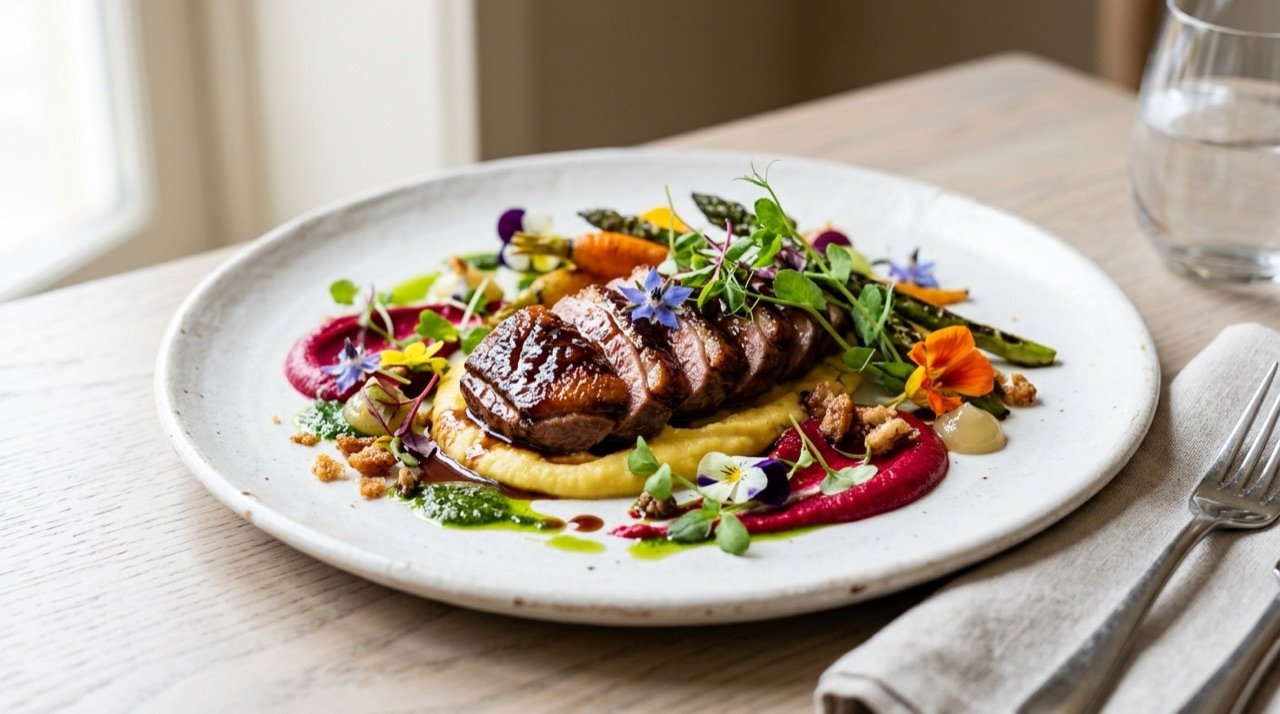
| «Generate a realistic contemporary plating image for the dish ‘Venison Loin with Red Wine Reduction, Chestnut Purée, and Seasonal Vegetables’, in a fine-dining format with minimalist presentation, edible flowers, and tableside plating technique» | Innovation & Presentation | Dish Image Generation |
| «Export to PDF the full recipe card for ‘Roast Suckling Lamb with Provençal Herbs’ including: ingredients with exact gram weights, step-by-step procedure, cost breakdown with trim loss included (suckling lamb $45/lb, 30% trim), target food cost 28% on a menu price of $89, allergens (sulfites, lactose), prep time, serving temperature, and photo of the finished dish» | Documentation & Export | PDF Recipe Card |
| «Research current wholesale prices in the US for the following premium ingredients: wild East Coast striped bass ($18–22/lb), Japanese A5 wagyu ($150–200/lb), black truffle ($800–1,200/lb), oscietra caviar ($250–350/lb), identifying approved suppliers and price trends for the coming months» | Suppliers & Costs | Current Wholesale Prices |
| «Perform a menu engineering analysis for my current 28-dish menu (8 appetizers, 10 mains, 6 desserts, 4 paired cocktails), classifying each dish in the popularity-profitability matrix (stars, cash cows, puzzles, dogs), calculating current vs. optimal sales mix, and proposing specific actions for each quadrant to raise the average check from $78 to $85» | Menu Engineering | Popularity-Profitability Matrix |
| «Compare the menu structures and pricing strategies of 3 leading US fine-dining restaurants (e.g., Alinea, The French Laundry, Eleven Madison Park) identifying: number of dishes on the menu, tasting menu progression, average prices, signature techniques, hero ingredient usage, and culinary storytelling strategies to adapt best practices to my establishment» | Competitive Benchmarking | Menu Analysis |
| «Design a quarterly training plan for a 12-person brigade (1 executive chef, 1 sous chef, 2 chefs de partie, 8 cooks) including: technical competencies by level, a mentoring plan from sous chef to chefs de partie, quarterly evaluations, career pathing, HACCP and allergen training (FDA Food Code), and estimated budget with an external trainer at $150/hour» | Leadership & Team Management | Training Plan |
| «Propose a brigade org chart for a multi-outlet fine-dining operation (1 main restaurant 60 seats + 1 brasserie 40 seats + event catering) with 25 cooks total, defining positions, reporting lines, cross-utilization between outlets, target labor cost (30% of combined sales), and profile for each position» | Org Chart & Staffing | Brigade Structure |
| «Evaluate the feasibility of opening a third outlet, a wine bar with a reduced menu of 12 upscale small plates and 40 wine references, estimating: required investment (build-out, equipment, furnishings), projected break-even point (covers per day, average check), target food cost, labor cost, 3-year ROI, and synergies with the current operation» | Expansion & New Projects | New Outlet Feasibility |
| «Develop a daily kitchen opening checklist that includes: verifying walk-in and freezer temperatures (refrigerator 32–40°F, freezer 0°F or below), checking expiration dates, mise en place for each station (appetizers, fish, meat, sides, pastry), equipment check, confirming the day’s order, and a first-hour protocol with assigned responsibilities by position» | Operations & Quality | Opening Checklist |
Prompts for Menu Engineer (Profitability & Sales Mix) in Executive Chef Pro
As a Menu Engineer within Executive Chef Pro, your mission is to maximize menu profitability without sacrificing culinary excellence. Executive Chef Pro helps you make data-driven decisions: from analyzing the popularity-profitability matrix to strategic pricing that lifts the average check, solving food cost deviations, and building executive reports for ownership. Every recommendation is grounded in your actual sales data, costing sheets, and the realities of a working professional kitchen.
How to use these prompts
These are starting points you can adapt to your kitchen and your menu. For example, if you start with “Give me an example of a costing sheet,” you might customize it to: “Generate the full costing sheet for ‘Pan-roasted halibut with spring pea purée and morel mushrooms,’ including yield loss (halibut 15% trim), target food cost of 28% on a $42 menu price, exact weights per cover in ounces, step-by-step prep procedure, allergens, and a high-resolution plated photo, exportable as a PDF for the line.” The more specific you are, the better the result.
| Prompt / Request | Area / Goal / Pain point | Category |
|---|---|---|
| «Analyze the last 3 months of sales mix for my upscale restaurant (120 covers per service, $85 average check) and classify all 25 menu items into the menu engineering matrix (stars, plowhorses, puzzles, dogs). Provide concrete actions per quadrant and propose 3 pricing adjustments to optimize the average check without sacrificing positioning.» | Sales Mix Analysis | Menu Engineering |
| «Calculate the complete costing sheet for “Roasted Colorado lamb rack with black truffle potato purée and Cabernet reduction” for 4 covers. I need exact weights per ingredient in ounces (Colorado lamb rack, Yukon Gold potatoes, fresh black truffle, Cabernet Sauvignon), trim and yield percentages (lamb 28% loss, potatoes 12%), total raw material cost, target food cost of 28% on menu price, and recommended menu price using psychological pricing.» | Costing & Tech Sheets | Food Cost & Profitability |
| «My actual food cost last month was 34.5% against a 31% target. The most deviated dishes are wild mushroom risotto (actual 38%) and hand-cut beef tartare (actual 41%). Analyze the tech sheets, identify root causes (portion drift, unaccounted trim, prep waste), and propose a corrective action plan with new weight specs, portion controls, and waste reduction targets for next month.» | Deviation Resolution | Food Cost Control |
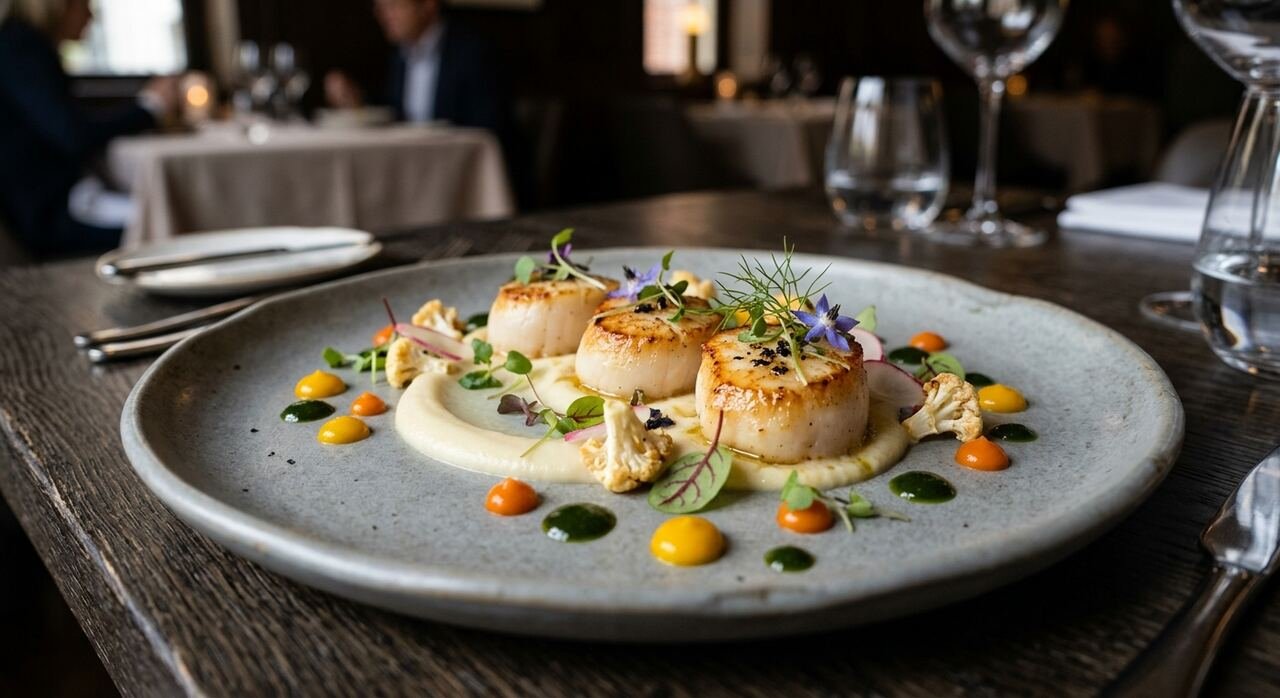
| «Generate a photorealistic image of the signature dish “Montauk striped bass en papillote with spring vegetables, shellfish consommé, and Arbequina extra virgin olive oil,” showing contemporary plating on a black slate plate, garnish of fresh herbs, visible portion of bass with golden sear, professional restaurant lighting, and editorial food style.» | Image Generation | Plating & Presentation |
| «Export to PDF the full technical sheet for “Pan-seared duck breast with Pedro Ximénez reduction, caramelized sweet potato purée, and seasonal pomegranate.” I need a professional sheet to laminate and hand to the line with all data: ingredients with recommended supplier, weights, step-by-step procedure, critical control points, serving temperature, allergens, cost per portion, and a photo of the finished plate.» | Document Export | Tech Sheets & SOPs |
| «Research current foodservice wholesale prices for my star ingredients: wild Alaskan halibut, day-boat Maine scallops, USDA Prime beef tenderloin, Duroc pork collar, and fresh black truffle. Include 3 approved suppliers by geographic region, price per pound at origin and delivered (with tax), price trends for the next 3 months, and substitution recommendations if increases exceed 15%.» | Pricing & Trends | Purchasing & Suppliers |
| «Perform a full menu engineering analysis of my winter menu (45 dishes, 3 tasting menus). I need the matrix classifying each dish by popularity (sales data) and profitability (actual food cost), identification of the 5 stars generating 60% of revenue, the 3 dogs to reformulate or remove, puzzles needing repositioning, and specific actions per quadrant with estimated impact on average check and food cost.» | Menu Engineering | Popularity-Profitability Matrix |
| «Applying price psychology, propose a pricing strategy for my new seasonal tasting menu (8 courses, actual cost $42 per person). Analyze anchoring with competitor prices (3 Michelin-starred restaurants in New York, average check $180–$250), digit effects ($99.99 vs $149 vs $149.50), menu price presentation, and recommend a final menu price that maximizes perceived value with a target food cost of 28–30%.» | Pricing Strategy | Psychology & Positioning |
| «The analysis shows that “Maine lobster mac and cheese” is in the dog quadrant (low popularity 8%, negative profitability with food cost 36%). Propose 3 options: reformulation with cost reduction (substitute lobster with langoustine or lump crab, adjust portion, renegotiate supplier), reposition as a seasonal dish with origin storytelling, or remove from the menu with a substitute dish that maintains menu identity.» | Quadrant Actions | Menu Optimization |
| «Design the spring/summer menu for my contemporary Mediterranean restaurant (80 covers, target average check $72). I need 12 starters, 6 fish mains, 6 meat mains, 4 desserts, and 2 vegetable-forward options. The selection must maximize cross-utilization of ingredients (olive oil, heirloom tomatoes, fresh herbs, seasonal fish), maintain average food cost below 31%, and create a logical progression for 5- and 7-course tasting menus.» | Menu Design | Seasonality & Coherence |
| «Benchmark the leading restaurants in my segment (fine dining, 1 Michelin star, 150–200 covers) in San Francisco and Chicago. Analyze their menu structure (number of dishes, starter-to-main ratio, average price, tasting menus), typical sales mix, pricing strategies, and actual average check. Conclude with differentiating recommendations for my value proposition.» | Benchmark & Competition | Market Analysis |
| «Design a pricing plan to increase my average check from $78 to $95 within 6 months without losing occupancy (currently 65% at dinner). Propose menu actions (introduce high-margin premium items, adjust starter portions, bundle desserts with coffee/digestifs), service actions (wine pairing suggestions, upselling on aperitifs), and perception actions (new menu design with photography, ingredient storytelling).» | Check Average Increase | Commercial Strategy |
| «Analyze the deviation between theoretical food cost (29.4%) and actual (33.8%) for my restaurant last quarter. Identify the main causes by station (hot line, garde manger, pastry), calculate the economic cost of each deviation point (e.g., 4.4% on $185,000 revenue = $8,140 lost), and propose an improvement plan with monthly targets, portion controls, line training, and an early warning system.» | Theoretical vs Actual | Management Control |
| «Develop 2 versions of “Porcini mushroom risotto with 24-month aged Parmesan” to capture additional demand: a vegetarian version (substitute Parmesan with a plant-based alternative, add truffle to maintain premium perception) and a premium version (add jumbo lump crab, increase price by $12). Calculate the estimated sales mix impact, new food cost for each version, and recommended menu price.» | Version Development | Offer Diversification |
| «Prepare the quarterly executive report for ownership on kitchen profitability. I need a dashboard with key KPIs (average food cost by station, average check, sales mix by category, top-selling dish, most profitable dish, gross margin per service), trend analysis vs the previous quarter, major deviations, and an action plan for the next quarter with quantified targets.» | Executive Reporting | Management & Direction |
Prompts for Creative Menu Developer (Product, Trends & Signature) in Executive Chef Pro
Executive Chef Pro is your creative menu development partner. It helps you craft signature dishes with a distinct identity, adapt culinary trends with business judgment, work with seasonal and local product with traceability, build a coherent menu narrative, and apply culinary storytelling that connects with diners—always aligned with profitability and the dining room experience.
How to use these prompts
These are starting points you can adapt to your kitchen and menu. For example, a prompt like "Give me ideas for the fall menu" could become: "I need to develop three signature fall-winter dishes for my 45-seat fine dining restaurant in downtown Chicago. I want to work with local product from the Midwest (mushrooms, game birds, heirloom legumes), create a progression of textures (crunchy-creamy-gelled), and each dish should have a food cost below 30% with a menu price between $28–35. Also give me the storytelling for each plate and..." The more specific you are, the better the result.
| Prompt / Request | Area / Goal / Pain point | Category |
|---|---|---|
| «Analyze global culinary trends for 2024-2025 and tell me which ones apply to an upscale urban fine dining restaurant in the US, with examples of adapting 2-3 dishes to the current menu» | Culinary Trends | Innovation & Strategy |
| «Design a complete recipe costing card for a signature dish of wild striped bass with a seaweed crust, shellfish emulsion, and seasonal vegetables, including precise weights in ounces, preparation procedure, raw material cost with trim loss (bass 45% waste), target food cost of 28% of menu price, and recommended menu price for a 60-seat restaurant» | Costing & Recipe Cards | Food Cost Control |
| «My best-selling menu item (roasted suckling lamb with blue potato purée and red wine reduction) has seen its actual food cost rise to 38% due to supplier price increases. Analyze optimization options: partial substitution, portion weight adjustment, price repositioning, or menu change, with calculations of impact on sales mix and average check» | Food Cost Problem | Management & Optimization |
| «Generate a photorealistic image of a line-caught monkfish en papillote with seasonal vegetables, shellfish sauce and parsley oil, contemporary presentation on a dark stone plate, minimalist plating with vertical elements» | Dish Image | Presentation & Plating |
| «Export to PDF the complete recipe card for the signature menu item (including costing with yield, preparation procedure, allergen control, critical temperature point, and plating photo) for brigade standardization» | Export to PDF | Operational Documentation |
| «Look up current wholesale prices for line-caught monkfish, Maine lobster, and domestic black truffle from US suppliers to update winter menu costing cards» | Wholesale Prices | Supply & Vendors |
| «Develop a 7-course tasting menu for winter season in a contemporary fine dining restaurant, with flavor progression (sweet-salty-umami-sour), differentiated techniques (sous vide, flambé, fermentation, smoking) and a menu price of $95, estimating total food cost and resulting average check» | Tasting Menu | Menu Engineering |
| «Create the culinary storytelling for a dish of creamy lobster rice with black garlic aioli and extra virgin olive oil from California, narrating the product's origin, the chef's technique, the sensory experience, and why it should be ordered, to train the front-of-house team» | Culinary Storytelling | Training & Service |
| «Design the vegetarian and gluten-free versions of my signature Basque-style hake dish, maintaining the same organoleptic structure (protein-texture-base-sauce), with the same perceived value and food cost under 32%; include comparative costing card» | Menu Versions | Creative Development |
| «Propose a plan for visits to local producers in my area (Willamette Valley, Oregon) to establish direct seasonal sourcing relationships, including target products (vegetables, berries, hazelnuts), visit frequency, purchase terms, and traceability required for the menu» | Producer Relationships | Sustainability & Sourcing |
| «Analyze the coherence of my current 28-dish menu (8 starters, 12 mains, 8 desserts) in terms of technique balance (4 fried, 5 roasted, 6 steamed), protein distribution (fish, meat, vegetable), flavor profiles (acid-salt-umami balance), and price (range $14-45 for starters, $28-58 for mains), and suggest adjustments to optimize sales mix» | Menu Coherence | Menu Engineering |
| «Develop a new signature dish for the seasonal menu that subtly uses molecular gastronomy techniques (spherification, gelification, aeration) with sensory justification, featuring seasonal US product, including technical description, equipment needed, and preparation process for the kitchen team» | Avant-Garde Techniques | Creative Innovation |
| «Propose a complete food pairing to match my winter tasting menu with a selection of wines from California and Oregon (sparkling, barrel-fermented Chardonnay, Pinot Noir, Cabernet Sauvignon), explaining the reason for each pairing per course and the resulting taste experience» | Food Pairing & Wine Matching | Gastronomic Experience |
| «Design the dessert menu structure (8 items) for a fine dining restaurant, balancing textures (creamy, crunchy, airy), profiles (sweet, bitter, sour), temperatures (cold, warm, hot) and price ($8-14), with the goal of representing 15% of the average check» | Dessert Menu | Menu Engineering |
| «Evaluate the profitability of my top 5 best-selling dishes versus their contribution to gross margin, classify them in the popularity-profitability matrix (stars, cash cows, workhorses, dogs), and propose concrete actions by quadrant to optimize the sales mix toward a 30% average food cost» | Popularity-Profitability Matrix | KPIs & Strategy |
Prompts for Food Cost Controller (Plate Costing, Ratios & Purchasing) in Executive Chef Pro in Executive Chef Pro
As a food cost controller, your job is to safeguard the profitability of every plate through precise costing, strict food cost discipline, and smart purchasing. Executive Chef Pro backs you up with complete tech sheets, theoretical-versus-actual deviation analysis, supplier negotiation tactics, and cross-utilization strategies that maximize margins without sacrificing quality. You’ll build HACCP-aligned documentation, benchmark wholesale prices across US broadline distributors, and generate reports that speak the language of ownership—all while keeping your kitchen crew on the same page with clear, actionable specs that meet FDA Food Code and FALCPA allergen standards.
How to use these prompts
These are starting points you can tailor to your kitchen and your menu. For instance, if you start with the prompt “Give me a basic plate cost for a dish,” you could personalize it like this: “Give me the full plate costing with trim applied, food cost based on menu price, and recommended selling price for a wild Alaskan halibut portion (10 oz gross weight) oven-roasted with brown butter and fresh herbs, considering a supplier price of $18.50/lb from a Seattle fish purveyor and a target food cost of 30%.” The more specific you are, the better the result.
| Prompt / Request | Area / Goal / Pain point | Category |
|---|---|---|
| «Analyze the actual vs theoretical food cost deviation for last month in our 100-seat restaurant: theoretical food cost was 29.5% but actual hit 34.2%. Identify main causes, the most deviated dishes, and propose concrete corrective actions to get back to the 30% target» | Theoretical-Actual Food Cost Deviation | Deviation Control & Analysis |
| «Generate the complete tech sheet for the signature dish ‘45-Day Dry-Aged Prime Ribeye’ for a 10 oz (280g) gross weight portion: include precise grammages per ingredient, butchery trim percentage (22%), sous vide cooking procedure at 133°F (56°C) for 2 hours plus sear, plate cost, recommended menu price with 31% margin, and allergen classification per FDA FALCPA» | Signature Dish Tech Sheet | Menu Engineering & Food Cost |
| «Calculate the plate cost for a porcini mushroom risotto with Alba black truffle: determine mushroom trim (15%), truffle trim (40%), cost per portion assuming truffle is purchased at $80 per ounce and mushrooms at $18 per pound, and the resulting food cost if the menu price is $32» | Plate Cost with Trim | Food Cost Calculation |
| «I need to compare current wholesale prices for Atlantic cod, monkfish, and wild striped bass from major US broadline distributors to renegotiate contracts and optimize the weekly 100 lb fish order» | Wholesale Fish Prices | Benchmarking & Negotiation |
| «Design a cross-utilization plan to fully utilize a 44 lb supply of octopus: list possible preparations (Galician-style octopus, octopus salad, empanada filling, fideuà), expected yields, impact on food cost, and how to reduce waste» | Cross-utilization Octopus | Yield Optimization |
| «Generate a professional image of a dish of wild sole fillets with mushroom sauce and chervil, plated in a contemporary style with elegant presentation for a fine dining menu» | Dish Image Fish | Visual Generation |
| «Export to PDF the complete tech sheet for the plate costing of venison rack with Tempranillo reduction, including all grammages, procedure, cost, and menu price to hand to the kitchen team» | Export Tech Sheet PDF | Technical Documentation |
| «Prepare the quarterly food cost executive report for management: include monthly food cost trend, deviations by category (meat, seafood, produce), comparison to budget, dollar deviation, and actions implemented» | Food Cost Report Management | Executive Reporting |
| «Calculate theoretical vs actual food cost for the hake casserole (menu item at $26): theoretical cost is $7.80 but actual average consumption has been $9.20 per portion. Analyze causes and propose grammage or price adjustment» | Dish Deviation | Deviated Dish Analysis |
| «Develop the plate costing for a 7-course tasting menu priced at $95: determine total cost per guest, resulting food cost, distribution by category, and recommendations to optimize margins while maintaining quality» | Tasting Menu Costing | Menu Engineering |
| «Create the SOP for temperature control and traceability for the seafood walk-in: objective, scope, logging procedure, critical control points (receiving, storage, thawing, cooking), monitoring frequencies, and internal audit format» | SOP Temperature Control | Operations & Quality |
| «Calculate the beverage cost ratio for the restaurant knowing that beverage sales represent 28% of total revenue (average check $78) and monthly beverage cost is $18,200. Compare with the 24% target and propose actions» | Beverage Cost Ratio | Profitability Analysis |
| «Design the kitchen department organization chart for a 120-seat restaurant with an 18-person brigade: define positions, responsibilities, reporting lines, and shift structure to optimize labor cost» | Kitchen Brigade Org Chart | Team Management |
| «Negotiation with beef supplier: we have an annual contract for prime beef tenderloin at $14.50/lb. The market has dropped to $12.95/lb. Prepare negotiation arguments, request a 12% price cut, and offer alternatives» | Beef Supplier Negotiation | Purchasing & Suppliers |
| «Generate the annual purchasing and storage plan for a hotel with three restaurants: forecast monthly needs for key items (extra virgin olive oil, caviar, truffles), calculate min and max stock levels, turnover, and waste control» | Annual Hotel Purchasing Plan | Planning & Stocks |
Prompts for Brigade Leader (Team, Talent & Culture) in Executive Chef Pro in Executive Chef Pro
Executive Chef Pro is your partner for leading kitchen people: it designs brigade charts optimized by volume and service style, builds tailored training and talent development plans, helps you manage conflicts and mediate critical team situations, and gives you concrete tools to build a culture of excellence, well-being, and retention that reduces turnover and sustains quality night after night. From the first day onboarding to succession planning, you get real, actionable support—not generic advice—to run a kitchen where people stay, grow, and deliver.
How to use these prompts
These are starting points you can adapt to your kitchen and your menu. For instance, if you begin with the prompt “Tell me how to organize my restaurant’s brigade,” you might customize it to: “How do I size and organize the brigade for an 85‑cover restaurant in Chicago’s West Loop with lunch and dinner service, a $72 average check, and a private dining room that runs separate events, when my current grill cook keeps walking out?” The more specific you are, the better the result.
| Prompt / Request | Area / Goal / Pain point | Category |
|---|---|---|
| «Design a complete brigade chart for a commercial restaurant kitchen with 80 covers per service, two daily shifts, $65 average check, current brigade of 12 people with high turnover on the meat station. Indicate roles, stations, reporting lines, and hiring proposals to close critical skill gaps.» | Organizational chart and brigade sizing | Team leadership and structure |
| «Develop a quarterly training plan with a weekly session calendar for the sauté station: fire management techniques and emission control, mise en place protocols, execution timing during slow and peak hours, and a performance evaluation with a 5-level rubric per competency.» | Training and talent development plan | Training and skills |
| «A hot line sous chef has had a negative attitude for 3 months, causing friction with the garde manger team, and his execution quality has dropped: plate errors, sauces out of spec. Manage the mediation and create an individual improvement plan with measurable goals and 30/60/90-day timelines.» | Conflict management and mediation | Leadership and retention |
| «Create an internal promotion policy and career plan for a brigade of 18 cooks in a 2-Michelin-star fine dining restaurant: cook levels, promotion criteria based on technical competence and soft skills, a cross-shift mentoring program, and an annual training budget per cook.» | Career plans and internal promotion | Talent development |
| «Analyze the brigade turnover KPIs from the last 12 months: average turnover 28%, replacement cost per departure $4,200, absenteeism 6%, and team satisfaction 3.2 out of 5. Propose corrective actions with a target of reducing turnover to 15% in 12 months and an estimated budget.» | Turnover, absenteeism and retention KPIs | Reporting and team strategy |
| «Design a comprehensive wellness program for the brigade: legally mandated rest breaks, merit pay policy tied to performance evaluations, quarterly team-building activities with content proposal and budget, and a burnout response protocol.» | Well-being, motivation and engagement | Culture and retention |
| «Generate the organizational chart for a multi-outlet operation with a main restaurant (120 covers), rooftop bar (60 covers), and banquet service: centralized vs. decentralized brigade structure, shared roles, line cook pool, and management costs versus operational efficiency.» | Multi-outlet organizational chart | Structure and scalability |
| «Create the complete SOP documentation for a kitchen brigade performance evaluation: purpose, scope, responsible person, evaluation criteria (technical quality, cleanliness, punctuality, teamwork, innovation), frequency, fillable evaluation template, and improvement action plan.» | Performance evaluation SOP | Standardization and quality |
| «Generate a high-resolution realistic image of the final plating of a Beef Steak Tartare with truffle oil gel, fried capers, pickled shallot, and cured egg yolk. Contemporary fine dining style, minimal white plate, studio lighting.» | Plating image generation | Innovation and presentation |
| «Export to PDF the complete onboarding manual for new brigade members: restaurant culture and values, organizational chart, assigned station, hygiene and safety protocols (HACCP), internal communication flowchart, and first-day checklist.» | Export complete document to PDF | Tools and deliverables |
| «Find current US foodservice wholesale prices for jumbo shrimp, line-caught monkfish, and organic farmed sea bream for week 25 of 2025 and propose a weekly menu that optimizes seasonal product for the best food cost ratio.» | Foodservice pricing and benchmarking | Suppliers and costs |
| «Analyze the current menu sales mix: Wagyu beef tenderloin (selling price $42) in the star quadrant, steak tartare (selling price $28) in the plowhorse, porcini risotto (selling price $24) in the dog, and Iberian pork cheeks (selling price $38) in the puzzle. Propose menu engineering actions to move the risotto to star and optimize profitability.» | Menu engineering and sales mix | Menu profitability |
| «An 18 lb (8 kg) lot of line-caught monkfish shows an actual trim loss of 58% instead of the expected 45%. The plate’s selling price is $46 with a target food cost of 30%. Calculate the deviation in dollars per service, propose corrective purchasing actions, and recommend renegotiating with the supplier.» | Trim loss deviation and control | Food cost and control |
| «Design the complete annual talent development plan for a restaurant group with 4 outlets: $35,000 training budget, per-cook training budget, key competencies per station, a schedule of internal competency audits, and a succession plan to fill 3 chef de partie positions in 18 months.» | Annual talent plan and budget | Strategy and reporting |
| «Create a complete kitchen closing checklist for each station: next-day mise en place, HACCP cleaning and sanitation, cold storage temperature logs, station trim waste recording, and security check. Format usable for brigade review.» | Closing and opening checklist | Operations and quality |
Prompts for Director of Operations and Quality (SOPs, HACCP & Workflows) in Executive Chef Pro
Executive Chef Pro is your culinary operations and quality advisor. It helps you design and document standard operating procedures (SOPs), implement effective HACCP systems, optimize workflows and mise en place, and maintain quality control with audits that ensure operational excellence in your kitchen. From opening checklists and allergen-control protocols to production timing and KPI dashboards, you’ll build a systematic, audit-ready operation that runs smoothly under pressure. Whether you run a 95-seat tasting-menu spot or a high-volume à la carte kitchen, the tools adapt to your brigade size, menu complexity, and local health department expectations.
How to use these prompts
These are starting points you can adapt to your kitchen and menu. For example, if you start with the prompt “Develop a complete SOP for allergen control in our fine-dining kitchen with 95 seats, where we serve an 8-course tasting menu and an à la carte menu with frequent modifications,” you could personalize it like this: “I need a specific SOP for allergen control in my 95-seat gastronomic restaurant in downtown Chicago, with a brigade of 14 people, where we serve an 8-course tasting menu with wine pairings and an à la carte menu that includes options like dairy-free, nut-free, and shellfish-free modifications daily.” The more specific you are, the better the result.
| Prompt / Request | Area / Goal / Pain point | Category |
|---|---|---|
| «Design an operational KPI dashboard for my 95-seat kitchen, including quality metrics (return rate, mise en place time, SOP compliance), productivity metrics (covers per hour per cook, average ticket time), and cost metrics (actual vs theoretical food cost, waste by category), with monthly targets and a weekly reporting format for management.» | Strategy & Reporting | KPIs & Dashboard |
| «Generate the complete spec sheet for my low-temperature confit wild striped bass with herb crust, side of asparagus and sparkling wine beurre blanc, for an à la carte dish priced at $42, considering 42% yield loss on the fish, 58% yield on the asparagus, and calculate actual food cost percentage with updated ingredient cost.» | Food Cost & Spec Sheets | Costing & Spec Sheet |
| «We have a critical bottleneck at the pass between 1:00 and 2:30 p.m. when we serve 45 covers simultaneously in our modern Mediterranean restaurant in Seattle. Appetizers pile up and mains lag behind. Analyze production flow, identify friction points, and propose a reorganization of stations and timings with a new mise en place and production schedule to eliminate the jam.» | Operations & Workflows | Flow Optimization |
| «Generate a photorealistic image of a contemporary plating for my signature dish: 48-hour braised beef cheek in reserve red wine with truffle potato parmentier, glazed vegetables, and braising reduction, in an avant-garde presentation with texture and color details.» | Innovation & Presentation | Image Generation |
| «Export to PDF the complete SOP manual we’ve developed for our kitchen, including opening procedures (temperature checklist, walk-in verification, initial mise en place), production (spec sheets, yield ratios, cooking times), closing (deep cleaning, product rotation, temperature logs), and allergen control, to hand over to the team and management.» | Documentation & Export | Export to PDF |
| «Search for updated foodservice wholesale prices in the US for the following critical winter menu items: wild striped bass (lb), USDA Prime beef tenderloin (lb), premium asparagus (lb), black truffle (lb), and reserve brut nature sparkling wine (bottle). Indicate reference supplier and price trend vs last year.» | Supplier Management | Wholesale Prices |
| «Create the complete spec sheets for the 6 main courses of my winter tasting menu (appetizer, fish, meat, intermezzo, dessert, petit fours), including for each: ingredients with exact weights, summarized procedure, raw material cost per portion, selling price, target food cost of 31%, and classification in the popularity-profitability matrix of menu engineering.» | Menu Development | Menu Spec Sheets |
| «Write the detailed SOP for comprehensive allergen control in my kitchen, including: identification of the 9 major allergens (FALCPA), segregated receiving and storage protocol, mise en place procedure without cross-contact, front-of-house communication and real-time order modifications, traceability from supplier to end customer, and documentation record for audit.» | HACCP & Food Safety | Allergen SOP |
| «Design the complete HACCP plan for the fish and seafood station of my kitchen, identifying the 7 HACCP principles (hazard analysis, critical control points, critical limits, preventive measures, corrective actions, verification, documentation), with special attention to storage temperature (32–36°F for fresh fish), freshness checks (sensory test, temperature), and traceability from dock to service.» | HACCP & Food Safety | HACCP Plan |
| «Organize the mise en place schedule for dinner service in my gastronomic restaurant, with a brigade of 12 including chef de partie, sous chef, and assistants. Include for each station (garde-manger, roast, saucier, poissonier, pastry): items to prep, quantities based on a forecast of 70 covers, start times, duration of each prep, finishing point, and quality check before service.» | Operations & Mise en Place | Mise en Place Schedule |
| «Generate the complete kitchen opening checklist for my 95-seat restaurant, including temperature verification of walk-ins and blast chillers (log with allowed ranges), inventory control and FIFO rotation in all coolers, equipment status (ranges, griddles, fryers), initial mise en place for each station with target times, and shift supervisor signature.» | Operations & Quality | Opening Checklist |
| «Design the internal quality audit format for my kitchen, including: zone inspection checklist (receiving, storage, production, pass, dishwashing), evaluation criteria scored 1 to 5, audit frequency (weekly/monthly), non-conformance management process with assigned corrective actions and resolution deadline, and executive report template for management.» | Quality & Audit | Internal Audit |
| «Implement a traceability system for the fresh fish on my menu, from purchase at the fish market to customer service. I need: receiving document with supplier info and catch date, internal storage label with lot and use-by date, consumption log per dish for backward traceability, and procedure for managing near-expiry or non-conforming product.» | HACCP & Traceability | Traceability System |
| «Optimize the production timing for my 8-course tasting menu served to 40 guests simultaneously, considering that each seat must be ready within a 3-minute window between courses. Define the sequence of preparation for each dish, start times per station, coordination with the maître d’ for service timing, and pass checkpoints to ensure correct quality and temperature.» | Operations & Workflows | Production Timing |
| «Develop the quarterly HACCP training plan for my kitchen team of 14 (1 executive chef, 1 sous chef, 4 chefs de partie, 8 assistants), including: curriculum covering the 7 HACCP principles, safe allergen handling practices, temperature controls and logs, crisis simulation exercises (non-conforming product, power outage, suspected foodborne illness), and competency assessment with internal certification.» | Leadership & Training | HACCP Training Plan |
Prompts for R&D and Innovation Chef (Technique, Food Pairing & Plating) – Executive Chef Pro in Executive Chef Pro
A culinary R&D and Innovation Chef who commands cutting-edge technique, culinary science, and contemporary plating. Executive Chef Pro supports you in creating fully documented signature dishes, wine-paired food-and-beverage experiences, innovative technique development, and photorealistic plating imagery — crafting complete sensory experiences that distinguish your operation from the competition.
How to use these prompts
These are starting points you can adapt to your kitchen and your menu. For instance, if you begin with the prompt “Give me ideas for a fall dish with mushrooms and game,” you might customize it like this: “Design a signature fall dish for my fine-dining restaurant in Asheville, NC: starring shiitake mushrooms and venison tongue, main technique sous vide at low temperature, accompanied by smoked chestnut purée, a reduction of Paso Robles Cabernet with forest-floor notes, and garnish with powdered oak leaves. Include contemporary plating on dark stoneware with height, asymmetrical composition, and an edible flower.” The more specific you are, the better the result.
| Prompt / Request | Area / Goal / Pain point | Category |
|---|---|---|
| «Design a signature striped bass dish with sea impressions: alginate spherification technique, crispy fried nori crisps, California Arbequina olive oil emulsion with kaffir lime, yuzu gel, and presentation on a black slate slab with moss and edible flowers. Include the complete spherification procedure, times, temperatures, and service point» | Signature dish with avant-garde technique | Technical innovation and documentation |
| «Generate a photorealistic image of a contemporary plating of A5 wagyu steak tartare with a 145°F confit egg yolk, fried capers, purple potato chips, wasabi mayo, and pickled parsley, served on a dark rectangular stone plate with black steel flatware» | Contemporary plating and presentation | Image generation |
| «Create the complete technical spec for this dish: lobster ravioli with black squid ink cream, Meyer lemon brown butter, Oscietra caviar pearls, and cilantro oil. Include ingredient weights in ounces, step-by-step procedure, lobster trim (45%), cost per portion, recommended menu price at 30% food cost, and a photo of the finished plate» | Recipe costing and technical spec | Food cost and technical documentation |
| «Develop a complete food-and-beverage pairing for an 8-course tasting menu centered on Pacific Northwest ingredients: geoduck, line-caught halibut, octopus à la plancha, dry-aged ribeye of Painted Hills beef, aged goat cheese, and huckleberry tart. Pair each course with wines from Willamette Valley, Walla Walla Valley, and Columbia Valley AVAs, and suggest a signature cocktail between the third and fourth courses» | Food pairing and beverage match | Beverage selection |
| «Write a complete SOP for sous-vide beef cheeks: exact temperature (133°F for medium-rare), cooking time (24 hours), vacuum-sealing with herbes de Provence, resting, and high-heat sear on a plancha. Include objective, scope, equipment/materials, step-by-step procedure, critical control points for temperature, logs, and quality assurance checks» | Sous-vide technical procedure | SOP and standardization |
| «Research current US foodservice prices for these premium ingredients: Japanese A5 wagyu, Oscietra caviar, black winter truffle (Tuber melanosporum), fresh geoduck, and premium California extra-virgin olive oil (Arbequina variety). Provide per-pound price, recommended supplier, and 2024–2025 price trend» | US foodservice pricing and trends | Cost benchmarking |
| «Propose 5 cutting-edge techniques for your menu that use liquid nitrogen: spherification, frozen foams, instant granitas, flash-frozen creams, and cold-smoke technique. Explain necessary equipment, FDA Food Code and HACCP safety measures, practical applications, and a dish example for each» | Avant-garde techniques with nitrogen | Technical innovation |
| «Design a testing and validation protocol for new dishes before menu inclusion: phases (creation, technical test, team test, guest preview, adjustment, launch), evaluation criteria (presentation, flavor, texture, timing, cost, feedback), evaluation template, and technical documentation process» | R&D creation and testing methodology | R&D process |
| «Analyze contemporary plating trends for 2025: neutral and earthy tones, irregular artisan tableware, height and volume, natural elements (stone, wood, leaves), negative space technique, social-media-optimized food photography, and Japanese minimalism. Provide visual examples and apply to the design of a dessert plate» | Plating and presentation trends | Visual innovation |
| «Develop a culinary innovation plan for the next quarter: objectives (launch 3 signature dishes, implement 2 new techniques, create 1 seasonal menu), timeline, project lead per initiative, estimated budget, innovation KPIs (number of dishes tested, approval rate, impact on average check), and a team training plan in new techniques» | Strategic innovation plan | Strategy and reporting |
| «Troubleshoot a real problem: my mushroom risotto is getting sent back for mushy texture and lack of flavor. The actual food cost is 38% when it should be 32%. Analyze causes (rice variety, stock, toasting method, cheese choice), propose a corrected technique with step-by-step procedure, new costing with adjusted weights in ounces, and a menu price that delivers 30% food cost» | Quality and cost problem resolution | Operational management |
| «Create an R&D brigade org chart for a luxury hotel with three restaurants: include roles of Executive R&D Chef, specialty chefs de partie (cold techniques, hot techniques, pastry, bakery), food safety technician, plating and presentation lead, and development assistant. Define functions, hierarchy, and job profile for each position» | R&D brigade org chart | Team management |
| «Export to PDF the complete costing for a 7-course tasting menu priced at $95: include all ingredients with weights in ounces, cost per course, food cost per course (target 28–32%), total menu cost sum, expected gross margin, and a technical spec with photograph for the three main dishes» | Tasting menu costing | PDF export |
| «Design the visual presentation of a squab dish with parsnip purée, caramelized Brussels sprouts, red wine–chocolate sauce, and fried sage leaves. Consider plateware (deep white porcelain bowl or dark stone bowl), composition (centered, symmetric, or asymmetric), height, color, visual texture, negative space, and menu photography» | Plating and visual presentation | Culinary design |
| «Develop a training program for the kitchen team in avant-garde techniques: modules (1) sous vide and low-temperature cooking (8 hours), (2) spherification and gelification (6 hours), (3) emulsions and foams (4 hours), (4) fermentation and koji (6 hours), (5) contemporary plating (4 hours). Include objective of each module, hands-on content, assessment, and internal certification» | Innovative technique training plan | Talent development |
Tips for getting more out of Executive Chef Pro
OPTIMIZE WITH TARGETS
Always provide your target menu price and desired food-cost percentage so the agent can back-calculate the maximum allowable plate cost. Example: "I need a dish at 28% food cost and a $34 menu price — what's my cost ceiling?"
SPECIFY YOUR BRIGADE
State your team size and skill level so procedures match your reality. Example: "We're a 12-cook brigade with medium turnover. Give me an SOP for fish station mise en place that a commis can follow."
INCLUDE MARKET CONTEXT
Mention your location and guest profile to sharpen recommendations. Example: "Restaurant in Austin, mix of tourists and locals, $45 average check." For UK/ANZ/India, name the city — the agent adapts sourcing and pricing cues.
REQUEST REAL YIELDS
Always ask for yield percentage per ingredient, not just net weight, for accurate cost cards. Example: "Cost a roast chicken for 6 covers, factoring in deboning waste and cooking loss."
ITERATE IN STAGES
For complex projects, break the work into steps: cost card first, then tech sheet, then SOP. Example: "Give me the tuna tartare cost card. Once I validate it, we'll build the full spec sheet."
USE ENGINEERING REFERENCES
Ask for menu-engineering analysis using the popularity–profitability matrix. Example: "Analyze my current starter menu and classify the 8 plates into stars, plowhorses, puzzles and dogs."
BALANCE QUALITY AND COST
Request product swaps that preserve the dish's value proposition. Example: "What can replace oscietra caviar, keeping the luxury perception but cutting cost by at least 40%?"
REQUEST SCENARIOS
Ask for cost simulations when commodity prices swing. Example: "If olive oil jumps 15%, how does that hit food cost on the tasting menu? Show me the before-and-after."
ADAPT TO SERVICE FORMAT
Specify à la carte, tasting menu, or banquet so the agent formats specs correctly. Example: "I need tech sheets for a 7-course plated dinner for 80 covers, produced in 3 hours."
EVALUATE PROFITABILITY HOLISTICALLY
Ask the agent to weigh food cost, labor cost, and execution time together. Example: "Compare two versions of the same dish: a 45-minute traditional prep versus a 4-hour sous-vide approach, both with labor cost factored in."
More prompt libraries for AI Chef Pro agents
Every agent in the suite has its own prompt library. Browse the rest and put the AI to work across your whole operation:
- Prompts for Allergen ID
- Prompts for Avant-garde Cuisine
- Prompts for Bakery Consultant Pro
- Prompts for Barista Consultant Pro
- Prompts for Bartender Consultant Pro
- Prompts for Burgers Pro AI+
- Prompts for Catering AI+
- Prompts for Chef Consultant Pro
- Prompts for Chocolate Consultant Pro
- Prompts for Creative Bakery
- Prompts for Creative Chocolate Making
- Prompts for Creative Ice Cream Making
- Prompts for Creative Pastry
- Prompts for Gastro Lexicum
- Prompts for Fermentus Pro AI+
- Prompts for Food Pairing AI
- Prompts for Waste GenCal
- Prompts for Gastronomy Consultant Pro
- Prompts for Gelato & Ice Cream Consultant
- Prompts for Pastry Consultant Pro
- Prompts for Pizza Consultant Pro
- Prompts for VegChef Plant-Based
- Prompts for Restaurant Manager Pro
- Prompts for Sommelier Consultant Pro
- Prompts for Staff Meal
Frequently asked questions
What is Executive Chef Pro?
Executive Chef Pro is the most advanced profile in the AI Chef Pro suite. Built for executive chefs and culinary directors, it supports high‑volume operations with 20+ years of experience and the ability to steer brigades of 50 or more cooks through strategy, cost control, and menu leadership.
How can I reduce food cost without sacrificing quality?
Executive Chef Pro analyzes a menu’s sales mix and margin using menu engineering, recommends seasonal or local ingredient swaps, adjusts portion weights, and identifies opportunities to renegotiate supplier contracts with aggregated volume data, all while protecting the guest’s value perception.
What’s the difference between a recipe cost card and a technical specification sheet?
A recipe cost card gives the true portion cost by factoring in trim and yield. A technical spec sheet adds the full preparation method, plating guide, allergen declarations, and presentation details. Executive Chef Pro outputs both in formats ready for the pass and inventory team.
How do I use Executive Chef Pro to plan a large event?
Provide the number of covers, event style, per-guest budget, and dietary preferences. Executive Chef Pro generates a tailored menu, a phased production timeline, and a complete procurement list so the brigade hits every timing mark without waste or last‑minute panic.
Can it design a new menu from scratch?
Yes. Share your concept, target customer profile, desired average check, number of dishes per section, and what sets you apart from competitors. Executive Chef Pro delivers a full menu blueprint with item mix, suggested plate costs, and a roadmap for roll‑out.
How do I integrate the agent’s SOPs into my brigade?
Distribute the station‑specific SOPs Executive Chef Pro generates, embed them in the kitchen operations manual, review them in pre‑service meetings, and refresh the documents every quarter. The agent can also flag process drift from audit data so corrections stay current.
What is menu engineering and how do I apply it?
Menu engineering classifies dishes by profitability and popularity into stars, puzzles, workhorses, and dogs. Executive Chef Pro runs that analysis on your sales data, then suggests repositioning moves and price adjustments so you can push the high‑margin items that guests actually order.
How do I calculate the labor cost of a dish?
Multiply the preparation time in minutes by your kitchen’s per‑minute labor rate, then divide by the number of covers the station can produce simultaneously. Executive Chef Pro automates the math and folds the labor cost into a complete plate‑cost breakdown.
Does Executive Chef Pro work with real market prices?
It references updated foodservice pricing data from broadline and specialty channels. Because local deals vary, executive chefs should always validate against their own suppliers and refresh costing cards monthly. The agent treats prices as a living benchmark, not a fixed quote.
How do I guarantee quality consistency with this agent?
Executive Chef Pro creates detailed technical spec sheets and clear SOPs. Daily visual audits at the pass, combined with the agent’s variance reports, surface deviations early. Chefs can then retrain or tweak specs immediately, locking in consistency plate after plate.