Prompt Library for Creative Chocolate Making: Temper, Bonbons & Profit
Over 105 professional prompts for AI Chef Pro’s Creative Chocolate Making agent: tempering, bonbon fillings, showpieces, craft bars, and cost analysis.
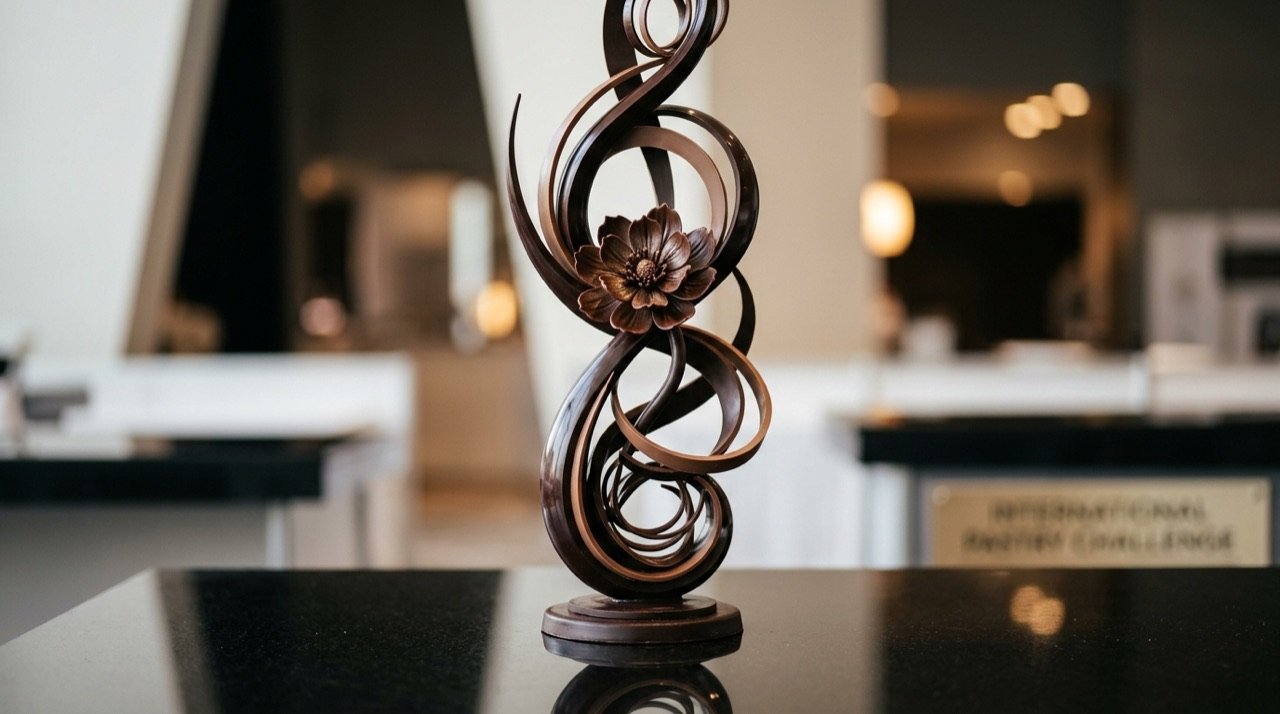
For the pastry chef, chocolatier, or kitchen manager, the obsession is the tightrope between brand identity, unbridled creativity, and rock-solid financial control. The Creative Chocolate Making agent inside AI Chef Pro acts as your R&D director and technical sparring partner—prototyping concepts, calculating the economic viability of every bonbon and bar, and troubleshooting production defects before they hit the pass. It bridges the gap between your vision and a scalable, profitable chocolate program, whether you’re crafting a seasonal truffle collection, a towering showpiece for the buffet, or a bean-to-bar line that tells a story.
Why prompts matter with Creative Chocolate Making
In chocolate work, a vague prompt is like guessing a tempering curve—you’ll get bloom, not shine. Precise prompts unlock production-ready formulas that account for your equipment, ambient conditions, and target shelf life. Ask for a generic dark chocolate ganache and you’ll get a home-kitchen ratio; specify your desired water activity, enrobing line speed, and 14-day cold-chain window, and the agent returns a ganache with the correct sugar inversion, fat composition, and preservative strategy. That level of detail separates a leaking bonbon from a flawless piece.
Precision also pays off in compliance and cost. A well-framed prompt can incorporate FDA Food Code requirements, FALCPA’s nine major allergens, and your state’s commercial kitchen regulations. Request a nut-free, soy-free, and gluten-free bonbon matrix that still delivers the snap and mouthfeel your brand demands, and you’ll get a HACCP-style risk summary alongside the formula. On the money side, include your target food cost percentage, labor rate, and packaging specs, and the agent delivers a per-piece cost analysis with a suggested wholesale and menu price—turning it into your pastry kitchen’s profit protector, not just a recipe generator.
Prompt examples for Creative Chocolate Making
Below, you’ll find over 105 prompts organized by the real-world workflow of a professional chocolate kitchen. The library moves from daily production—tempering methods and ganache ratios—to high-impact showpieces and centerpieces, then into craft chocolate bar development, seasonal LTOs, allergen-friendly lines, and finally the financial analysis that keeps the program in the black. You’ll also find troubleshooting prompts for common defects like fat bloom, sugar bloom, and cracking, plus prompts that help you scale from a test batch to full production while maintaining consistency. Whether you’re a small-batch chocolatier in Portland or the executive pastry chef of a 300-room hotel in Chicago, these prompts are built to make the agent a true extension of your team.
Prompts for Master Chocolatier in Creative Chocolate Making in Creative Chocolate Making
As a Master Chocolatier, my obsession is the intersection of brand identity, pure creativity, and financial control. The Creative Chocolate Making agent is my R&D director, acting as a technical sparring partner that helps me prototype concepts, calculate the economic viability of each piece, and resolve production defects before they ever reach the guest. It’s the tool that connects my artistic vision with the demands of a real chocolate workshop, ensuring every truffle, bar, and showpiece is both stunning and profitable.
How to use these prompts
These are launch points you adapt to your kitchen and your collection. Say you start with "I need a bonbon collection for Valentine's Day." You could sharpen it to: "Design a 4-piece molded bonbon collection for Valentine's 2026 with a 'Tropical Rainforest' identity, using Peru 64% origin chocolate, passion fruit, and a crunchy element; define each filling, airbrush finish, and a packaging suggestion for a $48 box." The more specific you are, the better the result.
| Prompt / Request | Area / Goal / Pain point | Category |
|---|---|---|
| «Calculate a detailed cost breakdown for a 2.5 oz (70 g) single-origin bar using Tanzania 75% chocolate with caramelized cacao nibs and smoked sea salt, priced for wholesale in Chicago, 2026.» | Profitability of a single-origin bar | Costing & Margins |
| «I need a sculptural showpiece for a window display with an origami theme, using 70% dark chocolate and precise curves; describe the assembly process, the cuts, and the template needed to build it.» | Creating a themed showpiece | Sculptural Technique |
| «Generate an editorial image of a semi-sphere bonbon with a ruby-red gloss veil, decorated with an edible gold ring, resting on a stone-like texture of chocolate and cocoa powder.» | Visualizing a luxury bonbon | Editorial Imagery |
| «Formulate the exact tempering curve for a 45% almond-based vegan coating with 35% cocoa butter, detailing melting and crystallization temperatures for an enrobing line.» | Tempering curve for a vegan coating | Technical Precision |
| «I'm getting fat bloom on milk chocolate bars after 3 weeks; I need a diagnostic checklist that reviews my tempering curve, inclusions, and cooling tunnel settings.» | Resolving fat bloom on bars | Defect Troubleshooting |
| «Create a whipped ganache filling with passion fruit and wasabi, stable at a water activity of 0.75 for a dipped bonbon, indicating the exact percentage of sorbitol and the estimated shelf life.» | Formulating a water activity-controlled ganache | Advanced Fillings |
| «I'm looking for a substitute for hazelnut praliné with an equally unctuous ingredient but completely nut-free for an inclusive bonbon line, keeping that creamy mouthfeel.» | Nut-free praliné substitute | Inclusive & Vegan Adaptation |
| «Give me 3 proposals for textured spray-gun finishes for a white chocolate bar inspired by ice, using only cocoa butter and oil-soluble colors.» | Spray-gun finishes for a themed bar | Artistic Technique |
| «Export to PDF the complete recipe for the 'Citrus 24h' bonbon with its tempering curves, the magnetic molding process, and the unit cost breakdown.» | Exporting a recipe with costs to PDF | Documentation & Export |
| «As a luxury chocolate trend for 2026, suggest 5 disruptive combinations of spices and balsamic vinegars to incorporate into bonbons, and how to stabilize them in the ganache.» | Flavor trends for 2026 bonbons | Innovation & Trends |
| «I'm designing a dipped bonbon meant to emulate a black olive; I need an Arbequina olive gel filling that won't weep when bitten, with percentages for NH pectin and glucose.» | Gel filling to prevent syneresis | Defect Resolution |
| «Define the precise formulation for a mirror-black gloss lacquer for molded bonbons that is 100% cocoa butter-based with a perfect melting point for clean demolding.» | Black gloss lacquer from cocoa butter | Finish Formulation |
| «Calculate the per-unit cost and recommended menu price with a 70% margin for a plated chocolate dessert that includes a bonbon filled with liquid smoke, priced for a fine-dining restaurant in New York City, 2026.» | Costing a fine-dining plated dessert | Costing & Margins |
| «I want to design a custom artistic transfer sheet with our logo to decorate the bar; describe the pattern and the application technique onto chocolate tempered at 84°F (29°C) so it doesn't melt out.» | Applying a transfer to tempered chocolate | Decoration & Finishes |
| «Plan the preservation and modified-atmosphere packaging strategy for a vegan bonbon collection with avocado and lime filling to guarantee a 4-month shelf life without losing the gloss.» | Modified-atmosphere packaging for vegan bonbons | Shelf Life & Preservation |
Prompts for Designer Bonbon Studio in Creative Chocolate Making
As a specialist chocolatier, your day revolves around absolute precision: every fraction of a degree in tempering, every fat percentage in a ganache, and every water activity point can doom a batch. The Creative Chocolate Making agent gives you instant answers with rigorous technical depth, calculates real production costs, and helps you push flavor and design boundaries without leaving the kitchen. Whether you’re scaling a collection for a Chicago boutique or diagnosing a bloom defect, you get kitchen-tested guidance that respects FDA Food Code requirements and HACCP workflows, so your bonbons look as flawless as they taste.
How to use these prompts
These are starting points you can adapt to your own kitchen and collection. For example, if you start with “Give me a recipe for a dark chocolate bonbon with raspberry and lychee filling,” you could customize it like: “Formulate a molded bonbon with Tanzania 75% couverture, a thin 1.2 mm shell, and a fluid heart of lychee and freeze-dried raspberry; I need the exact tempering curve to prevent fat bloom, a filling water activity below 0.65, and the cost breakdown for 200 pieces in Chicago.” The more specific you are, the better the result.
| Prompt / Request | Area / Goal / Pain point | Category |
|---|---|---|
| «Adjust working temperature for a Vietnam-origin 73% couverture with 38% cocoa butter; I need stable crystallization even at 60% relative humidity in the kitchen—give me the full tempering curve in degrees and times.» | Fat bloom control through tempering | Tempering technique |
| «I need to formulate a whipped ganache with 40% chocolate infused with jasmine that stays creamy and shows zero syneresis for 8 weeks at 68°F (20°C); calculate exact percentages of glucose and sorbitol required.» | Preventing syneresis in ganache | Filling formulation |
| «Cost out a box of 12 assorted bonbons (truffle, hazelnut praliné, passion fruit) sold in New York City at 2026 foodservice pricing: break out couverture costs, shelling waste, and labor per piece.» | Cost of assorted box in New York | Costing and breakdown |
| «Do a detailed cost breakdown for a hand-dipped bonbon with gold coating and 50% pistachio praliné filling, including hand-dipping waste and gold powder cost for 500 pieces in Los Angeles.» | Cost with luxury inclusions | Costing and breakdown |
| «Generate an editorial image of a molded bonbon with airbrushed red dots and edible glitter on dark ruby couverture, half shell open to reveal the creamy vanilla interior.» | Visualizing a decorated bonbon | Image and presentation |
| «Export to PDF the full recipe and cost breakdown for the black sesame and yuzu praliné bonbon we just calculated, including tempering curves and storage parameters.» | Professional bonbon documentation | Export and data |
| «What flavor and texture combinations for bonbons will dominate 2026 menus? Give me 5 concrete ideas with technique (molded, dipped, dual texture) and recommended couvertures for each.» | 2026 filling trends | Trends |
| «Adapt my classic milk chocolate and Earl Grey tea ganache bonbon to a vegan version: replace the cream with non-dairy alternatives while keeping the shell’s shine and a similar melt-in-the-mouth texture.» | Vegan ganache without losing shine | Vegan adaptation |
| «Create a sugar-free, diabetic-friendly bonbon with raspberry and white chocolate filling using maltitol and inulin; adjust percentages to prevent crystallization in the filling and ensure balanced sweetness.» | Sugar-free bonbon with polyols | Sugar-free substitution |
| «My molded bonbons with 64% couverture show whitish streaks 5 days after packaging—tempering seemed correct. Diagnose the cause and give me a protocol to prevent it.» | Post-packaging fat bloom | Defect resolution |
| «The passion fruit jelly filling is pulling away from the shell and leaking water on the bite. Adjust pectin and pH to eliminate syneresis without losing transparency or gloss.» | Syneresis in fruit filling | Defect resolution |
| «Formulate a dual-texture bonbon: a thin, crispy cocoa wafer shell and a liquid Marcona almond praliné, all contained in a molded Ecuador 70% couverture bonbon. Give me exact couverture viscosity points for a perfect shell.» | Bonbon with crunchy inclusion and liquid center | Technical creation |
| «I want to apply a geometric gold transfer onto white chocolate spherical bonbons—tell me the application temperature for the colored cocoa butter and the best method to fix the transfer without wrinkles.» | Artistic transfer on a sphere | Decoration and finish |
| «I need to calculate the shelf life of a bonbon with citrus cream filling and ruby chocolate, given a final water activity of 0.70 and modified atmosphere packaging. Give me the estimated best-by date and storage conditions.» | Shelf life in modified atmosphere | Preservation |
| «Develop a collection of 4 bonbons inspired by the landscapes of the Pacific Northwest, with spec sheets that include design sketches, color transfers, and fillings using local products; export to CSV to share with the team.» | Exportable themed collection | Creation and export |
Prompts for Chocolate Sculptor & Artist in Creative Chocolate Making
As a chocolate sculptor and artist, you handle pieces where structural precision, flawless aesthetics, and tight cost control are non-negotiable. The Creative Chocolate Making agent frees you from manual calculations, delivers exact formulas for modeling pastes, structural cements, and finishes, and turns you into a profitability strategist without sacrificing a gram of creativity. Whether you're building a showpiece for a gala, costing a serial run of bonbon figures, or troubleshooting fat bloom, you get actionable, kitchen-tested answers built for a US professional kitchen operating under FDA Food Code, FALCPA, and HACCP standards.
How to use these prompts
For example, if you start from the prompt "Design a chocolate sculpture for an event," you could customize it like this: "Design a 70% dark chocolate sculpture with caramelized nib inclusions, an edible honeycomb internal structure, and volcanic airbrushing in bronze tones for the ‘Cocoa Solidario’ gala in New York City, with a full cost breakdown in USD and stability analysis in a room at 73°F (23°C) and 55% relative humidity." The more specific you are, the better the result.
| Prompt / Request | Area / Goal / Pain point | Category |
|---|---|---|
| «Calculate the full cost breakdown for my 'Two-Headed Dragon' sculpture in 75% dark and 40% milk chocolate, with silicone molds, polycarbonate armature, and gold airbrushing, for a one-off piece in Chicago, including yield loss and 2026 foodservice pricing.» | One-off sculpture costing | Costs |
| «Get the total and per-piece cost for 24 hummingbird figures in ruby chocolate, finished with gloss lacquer and floral transfer decoration, invoiced in Austin, TX, with a raw materials breakdown and suggested selling price.» | Serial figure costing | Costs |
| «Generate a backlit editorial image on a black background of my sculptural piece ‘Crystal Column,’ built from white chocolate sheets and magenta airbrushing with gold veins, as a high-gastronomy studio photograph.» | Abstract showpiece image | Image |
| «Export to CSV the cost table for my ‘Cocoa Cascade’ sculpture, with all line items, yield loss percentages, and hourly labor cost, ready to present to the client.» | Export cost breakdown to CSV | Export |
| «Show me the international trends in chocolate sculpture for museums and exhibitions in 2026, focusing on hanging structures, bio-chocolate, and edible earth finishes.» | 2026 sculptural trends | Trends |
| «Reformulate my modeling paste recipe for aerial sculpture to be vegan and free of refined sugar, using maltitol, inulin, and cocoa butter, while maintaining the same elasticity and post-smoothing gloss.» | Functional vegan modeling chocolate | Adaptation |
| «A white chocolate sculpture displayed in a showcase at 75°F (24°C) developed fat bloom after 72 hours; I need a recovery protocol using a heat gun and an adjustment of the tempering curve with Mycryo seed to avoid it on the next replica.» | White chocolate fat bloom remedy | Defects |
| «Give me the exact formula for a ‘chocolate cement’ that bonds 8.8 lb (4 kg) vertical volumes without slipping, using 85% dark chocolate, defatted cocoa powder, and cocoa butter, with its open time at 63°F (17°C).» | High-load structural cement | Technique |
| «Provide the 1% seed tempering curve for milk chocolate with 42% cocoa butter that I’ll roll to 0.02 in (0.5 mm) to create petals that won’t crack when curved cold.» | Tempering for ultra-thin sheet | Tempering |
| «Describe the airbrushing procedure with colored cocoa butter for a marbled effect on a concave glossy dark chocolate surface, including airbrush pressure, cocoa butter dilution, and number of passes to avoid drips.» | Marble-effect airbrushing | Finish |
| «Formulate an artistic transfer with ethnic motifs etched on a polycarbonate sheet, using cocoa butter, turquoise oil-soluble color, and silver powder, and calculate the exact crystallization time at 54°F (12°C) to apply it to a 3.15 in (8 cm) diameter cylindrical surface.» | Curved artistic transfer | Decoration |
| «Adjust the added cocoa butter percentage and working temperature for a 66% dark chocolate that I’ll carve geometric filigree into with a stylus, targeting maximum break resistance and a clean cut without chipping.» | Chocolate for precision carving | Texture |
| «Modify the modeling chocolate recipe for small dragon heads that will sit in a showcase at 82°F (28°C) during an 8-hour trade show, without deforming or sweating fat; I need the water activity (aw) of the filling and the gelatin or agar-agar ratio to stabilize.» | Heat-resistant modeling paste | Consistency |
| «Detail the complete protocol for fixing 23.75-karat gold leaf onto a freshly tempered dark chocolate surface still in a plastic state, including the sealing technique with clarified cocoa butter to prevent peeling from humidity.» | Gold leaf on fresh temper | Finish |
| «Develop a semi-transparent chocolate veil to cover a fruit sculpture, using cold-atomized cocoa butter and a vegetable gelatin mesh, with storage conditions that prevent fogging or loss of elasticity in a climate chamber.» | Translucent chocolate veil | Innovation |
Prompts for Bean-to-Bar Chocolate and Signature Bars in Creative Chocolate Making
As a bean-to-bar chocolate maker in the US, you turn single-origin cacao into craft bars, bonbons, and snacks that showcase terroir and technique. The Creative Chocolate Making agent inside AI Chef Pro helps you nail precise formulations, dial in tempering curves, run cost breakdowns, and stay ahead of market trends—all while keeping your process aligned with FDA Food Code, HACCP, and FALCPA allergen requirements. Whether you're working with Ecuadorian beans, developing a vegan line, or troubleshooting fat bloom, the agent gives you practical, production-ready guidance so every bar reflects your creativity and meets professional standards.
How to use these prompts
These are starting points you can adapt to your workshop and your collection. For example, if you start with the prompt "I want a 70% chocolate bar with caramelized nibs," you could customize it as: "I need to design a 3.5 oz (100 g) signature bar using Hacienda Victoria, Ecuador origin 70% cacao chocolate, no lecithin, and include 12% dry-caramelized cacao nibs with panela, targeting a red fruit tasting profile; give me the exact tempering curve for that origin and the inclusion process to avoid fat bloom." The more specific you are, the better the result.
| Prompt / Request | Area / Goal / Pain point | Category |
|---|---|---|
| «Calculate the detailed cost breakdown for a 3 oz (85 g) 72% Nicaragua chocolate bar with freeze-dried blueberry inclusion (8%) and fleur de sel, with 3% molding loss, at wholesale prices in New York City.» | Nicaragua bar cost breakdown | Costing/Cost Breakdown |
| «I need a full cost sheet for a chocolate-coated snack using 65% Peruvian origin chocolate with a crunchy popped quinoa filling, production run of 200 units, ingredient prices in Austin, TX.» | Quinoa pop snack cost | Costing/Cost Breakdown |
| «Generate an editorial image of an 80% Madagascar chocolate bar with blue and gold colored cocoa butter streaks, and freeze-dried raspberry decoration.» | Madagascar bar image | Visual Generation |
| «Export the recipe and cost breakdown for a 55% sheep milk chocolate bar with carob to a professional PDF ready for the production kitchen.» | Export sheep milk chocolate recipe | PDF Export |
| «What are the 2026 trends in bean-to-bar craft chocolate bars, especially in sensory profiles and unexpected inclusion combinations?» | 2026 bar trends | Trends/Market |
| «Convert my 45% milk chocolate bar with butter caramel recipe into a vegan and sugar-free version, substituting dairy and sugar without losing the snap texture.» | Vegan caramel adaptation | Substitutes/Sugar-free |
| «My 75% chocolate bars with candied almond inclusion are developing fat bloom after 2 weeks. Analyze the cause and give me the corrected tempering curve and cooling conditions.» | Fat bloom candied almond bars | Defect Resolution |
| «I want to formulate a white chocolate bar with toasted black sesame paste and an umami tasting profile. Give me the tempering curve for white chocolate and the optimal crystallization point for that fatty addition.» | White sesame tempering curve | Tempering/Creation |
| «Design a ruby chocolate bar with a citrus transfer sheet and rose petals, for a 3.5 oz (100 g) magnetic mold. Indicate the spraying temperature for the colored cocoa butter.» | Ruby citrus transfer | Technique/Airbrushing |
| «Calculate the per-bar cost for a 2.8 oz (80 g) 68% Colombia chocolate bar with nibs, ground coffee, and Maldon salt, considering wholesale prices in Chicago and 2.5% loss.» | Colombia trio bar cost | Costing/Cost Breakdown |
| «My 75% Ecuador origin chocolate has highly variable cocoa butter content; give me the seeding tempering curve to achieve a perfect shine in polycarbonate molds.» | Variable chocolate tempering | Technique/Tempering |
| «After demolding, my bars have a dull shine and streaks. What adjustments should I make to the cooling curve and mold polishing?» | Dull shine demolding | Defect Resolution |
| «Generate an image of a 70% dark chocolate snack with a creamy salted caramel filling, cross-section showing the liquid center.» | Salted caramel snack image | Visual Generation |
| «Export to CSV the ingredient list and critical steps for making my 85% chocolate bar without lecithin, with 2% added cocoa butter.» | Export CSV 85% bar | Data Export |
| «What innovations in conching and refining for bean-to-bar are emerging in 2026 to enhance volatile aromatic notes?» | 2026 conching trends | Trends/Processes |
Prompts for Creative Chocolate Desserts: Precision Pastry for the Professional Kitchen in Creative Chocolate Making
You're the pastry chef-chocolatier who lives by the thermometer and piping bag—turning out coulants that ooze at the exact second, airy, glossy mousses, butter-smooth cremeux, and flawless mirror glazes under the heat lamps. With the Creative Chocolate Making agent, you'll control tempering to the half-degree, formulate fillings that hold through service, and transform every dessert into a high-end plated masterpiece, complete with costed recipe, shelf-life tracking, and an image ready for the menu.
How to use these prompts
These are starting points you can adapt to your shop and collection. For instance, if you start from the prompt “I need a chocolate dessert that unmolds cleanly and keeps its shine in the display case,” you could personalize it like this: “Develop a single-portion dessert with a 70% Ocoa chocolate mousse, passion fruit center, and alcohol-free mirror glaze that unmolds without cracking and holds its gloss for 14 hours in a 70°F (21°C) display case. I need the couverture’s tempering curve, the NH pectin percentage for the creamy, freezing times, and a real-cost breakdown for Atlanta.” The more specific you are, the better the result.
| Prompt / Request | Area / Goal / Pain point | Category |
|---|---|---|
| «Calculate a full cost breakdown for an entremet for 8 covers with a brownie base, 64% chocolate mousse, and mirror glaze, in New York City, factoring shrinkage and cost per portion.» | Entremet cost per portion | Costing & Expenses |
| «Generate a cost table for an assortment of mini chocolate desserts (creamy cups, ganache tartlets, and liquid-center bonbons) for a 50-person catering event in Chicago, with 2026 wholesale pricing.» | Catering dessert budget | Costing & Expenses |
| «Generate an editorial-quality image of a plated chocolate dessert with a 72% chocolate lava cake, cocoa ice cream, and cocoa crumble, plated with caramel lines and gold dust.» | Plated dessert image for menu | Generate Image |
| «Export to PDF the recipe and cost breakdown for the ‘Chocolate & Passion Fruit Sphere’ with all production times and tempering curves.» | Dessert spec sheet | Export to PDF |
| «Develop a chocolate dessert that incorporates 2026 restaurant trends: sugar reduction, fermented textures, and use of cacao byproducts such as cocoa husk.» | 2026 trends in chocolate desserts | Trends & Creativity |
| «Adapt my classic chocolate mousse to a vegan, sugar-free version using aquafaba and maltitol, maintaining the same airy structure and preventing fat bloom on the vegan coating.» | Vegan sugar-free mousse | Adaptation & Substitutions |
| «My mirror glaze on frozen mousse develops micro-droplets and loses shine after 4 hours. Diagnose the cause and correct the formula to ensure a flawless finish with long-lasting gloss.» | Glaze shine defect | Troubleshooting Defects |
| «Provide the exact tempering curve for Valrhona Caribe 66% chocolate used in a whipped ganache to fill a cylinder, ensuring stable crystallization at 70°F (21°C) ambient.» | Tempering curve for whipped ganache | Tempering & Crystallization |
| «Design a hot-cold chocolate dessert combining a liquid ruby chocolate fondant with raspberry sorbet and pink peppercorn gel, with precise baking times to guarantee fluidity.» | Ruby chocolate and thermal contrast dessert | Dessert Creation |
| «Formulate a 70% chocolate creamy with a clean-cut texture at 10°F (-12°C) for plated service, calculating the NH pectin and gelatin percentage to prevent syneresis.» | Syneresis-free creamy | Textures & Stabilizers |
| «Run a comparative cost analysis between using Barry Callebaut 811 and single-origin Chuao 72% chocolate for a 12-portion lava cake, showing cost per unit and yield loss during heating.» | Chocolate cost comparison | Costing & Expenses |
| «Export to CSV the ingredient table and production times for 5 mini chocolate desserts for an event, with make dates and estimated shelf life.» | Mini dessert production sheet | Export to CSV |
| «Generate an image of a single-layer chocolate dessert in a glass with white chocolate mousse, passion fruit heart, and cocoa soil, top-down view with overhead lighting.» | Tasting menu image | Generate Image |
| «My chocolate mousse unmolds with a dull surface and white streaks after 24 hours of freezing. Identify the fat bloom issue and propose adjustments to the formula and tempering process.» | Fat bloom on frozen mousse | Troubleshooting Defects |
| «Propose a plated chocolate dessert using a cocoa crackling technique, edible soil texture, and cocoa liqueur spherification, aligned with 2026 avant-garde cuisine.» | Avant-garde cacao technique | Trends & Creativity |
Prompts for Head of Production & Chocolate Kitchen in a Creative Chocolate Shop in Creative Chocolate Making
As Head of Production, my day is a nonstop fight against raw-material variability, enrobing bottlenecks, and the pressure to keep margins razor-sharp. This agent has become my go-to technical consultant, giving me precise formulation fixes, exact tempering curves, and automatic cost sheets that save me hours of spreadsheet work, so I can standardize excellence without losing an ounce of creativity.
How to use these prompts
These are starting points you can adapt to your kitchen and your collection. For example, if you start with the prompt “Design a Valentine’s 2026 bonbon collection with 3 different flavors,” you could customize it to: “Develop 3 signature molded bonbons for Valentine’s 2026: a 70% Peru dark chocolate bonbon with whipped lucuma and Sichuan pepper ganache, a ruby chocolate heart with fluid pistachio praliné and freeze-dried raspberry, and a single-origin 41% Java milk chocolate bar with salted caramel and caramelized cocoa nibs. Include organoleptic profile, shelf life at 65°F, and a HACCP-compliant production card for my Chicago kitchen.” The more specific you are, the better the result.
| Prompt / Request | Area / Goal / Pain point | Category |
|---|---|---|
| «Standardize the tempering curve for a 35% milk chocolate couverture with high fluidity for enrobing at 82°F in my Seattle kitchen. Give me the exact steps, cooling temperatures, and a control protocol to prevent fat bloom during storage.» | standardizing tempering on a continuous enrober | technique & quality control |
| «I found white streaks on this morning's molded bonbon batch. Diagnose the causes of fat bloom by type (fat vs. sugar) based on my process: mold at 79°F, capping at 86°F, and cooling tunnel at 43°F, and give me an immediate correction checklist.» | diagnosing & resolving fat bloom in production | defect control |
| «Generate the full cost sheet for the Gianduja-Orange bonbon already defined for my Austin kitchen. Include a 3% loss factor at each stage and calculate the cost per piece and a tech sheet with estimated aw and shelf life. Export the cost table to CSV.» | cost sheet & CSV export with technical loss | costing & data management |
| «I need the exact formulation for a fluid yuzu and basil filling with an aw below 0.65 for a molded bonbon, using a 9 g polycarbonate mold. I want it to keep its color vibrancy and show no syneresis at 60 days.» | stable, low-aw filling formulation for long shelf life | product development & preservation |
| «Adapt our classic cream-and-butter truffle recipe to a vegan, sugar-free version, using dairy-cream alternatives and maltitol/stevia, while keeping an equivalent silky texture and a glossy finish for hand dipping with a fork.» | vegan & sugar-free reformulation of a kitchen classic | adaptation & trends |
| «Request a photo-realistic editorial image of a signature 80% dark chocolate bar, with abstract red and orange cocoa-butter swirls, decorated with toasted cocoa nibs and flaky salt on a black slate surface.» | product image generation for internal marketing | visualization & design |
| «Define the production protocol for a crunchy chocolate bark with salted caramel, speculoos cookie, and Marcona almond inclusions, for a 440 lb run. Include the crystallization method on a marble table at 70°F and controlled-impact breaking.» | large-scale production protocol for a chocolate snack | production management |
| «Compile a table of the three latest airbrush coloring and finishing techniques for designer bonbons following 2026 trends, specifying cocoa butter blends, oil-soluble colorants, and working pressures for Fuji and Harder & Steenbeck guns.» | airbrush techniques & 2026 color trends | innovation & finishing |
| «Reformulate our whipped passion fruit ganache for glass jar packaging with a 90-day shelf life at 39–46°F without destabilizing. I need the exact ratios of glucose, sorbitol, and pectin, and the filling temperature curve to prevent condensation.» | extending shelf life of a cold jarred ganache | preservation & advanced formulation |
| «I want to optimize the cost of my star Piedmont hazelnut praliné bonbon by switching the 55% couverture chocolate for an alternative. Run a comparative cost sheet with HORECA pricing in New York, including the difference in cocoa butter ratio and how it affects viscosity in the tempering machine.» | comparative cost sheet to optimize couverture cost | costing & substitutes |
| «Create a professional tech sheet for production on a Selmi enrober, for a milk chocolate and almond nougat bar, with the exact couverture viscosity, chocolate curtain height, and blower parameters for a fixed weight of 0.78 oz per unit. Export it to PDF.» | creating a tech sheet for industrial enrobing & PDF export | production & documentation |
| «I'm going to spray a magnetic mold with a honeycomb design. Describe the two-tone cocoa butter technique, first a matte color in the cell bottoms and then a perimeter gold shine, including pressures and the cleaning sequence for a perfect unmolding.» | two-tone airbrush technique on a magnetic mold | decoration & mold artistry |
| «Propose 3 crunchy inclusions for 45% milk chocolate bars that stay stable without fat migration for 9 months. Evaluate options like black sesame praliné, dehydrated noisette butter cookie, and vacuum caramelized corn.» | designing crunchy inclusions stable without fat bloom | signature bar development |
| «Structure the weekly production of a 5-bonbon collection, starting Mondays with long-maturation fillings and finishing Thursdays with the enrobed pieces, to optimize use of the tempering machine and cooling tunnel and guarantee Friday batch freshness. Give me the justified schedule.» | weekly production planning optimized by equipment | kitchen management |
| «I have a recurring problem of microscopic cracks in the shell of my 70% dark chocolate spheres when unmolding. Detail a possible cause linked to thermal shock and irregular thickness, and propose a solution based on 1% Mycryo pre-crystallization and a thermal stabilization cycle.» | resolving cracks in spheres from thermal shock | defects & technical solution |
Prompts for Creative Chocolate Making in Creative Chocolate Making
As a chocolatier in the early stages of your career, you're focused on nailing the fundamentals. The Creative Chocolate Making agent is your round-the-clock digital mentor, delivering precise technical answers on tempering, diagnosing common flaws like fat bloom before they ruin a batch, and walking you through cost calculations so you understand the value of every gram of chocolate. It's built for the reality of a US production kitchen, referencing FDA Food Code and HACCP principles, and it speaks in the practical, no-fluff language of someone who has worked a line.
How to use these prompts
Take a starting prompt like "Walk me through the seeding method for tempering 70% dark chocolate, with the exact temperature curve and how to check the working point," and make it yours. For instance: "I'm working with 2.2 lb (1 kg) of 70% dark couverture with 38% cocoa butter. Guide me step-by-step to temper 1.1 lb (500 g) using the seeding method with 1% Mycryo. I need the full temperature curve in °F (melting, cooling, reheating, and working temperature), the texture and viscosity I should see at each stage, and the quickest test to confirm the temper is spot-on before I start molding." The more specific you are, the better the result.
| Prompt / Request | Area / Goal / Pain point | Category |
|---|---|---|
| «I just unmolded a batch of milk chocolate bonbons and they're dull with white streaks all over. What went wrong? Give me a diagnostic guide and a correction plan for the next round.» | Fat bloom and gloss defect | Troubleshooting defects |
| «I need the full cost breakdown for 100 hazelnut praline bonbons using a 9g polycarbonate mold. My operation is in Chicago, IL. Include the estimated waste factor for the filling prep and the molding process.» | Basic bonbon costing | Costing and scaling |
| «What's the practical difference between a whipped ganache and a cocoa butter cream for bonbon fillings? I need to understand the stability, water activity (aw), and shelf life of each to decide which one to use for a summer catering order in Austin, TX.» | Comparing fillings and water activity | Filling technique |
| «Generate an editorial image of a square bonbon with a single fine white chocolate line decoration on a glossy dark chocolate shell, featuring a clean cut that reveals a passion fruit ganache interior.» | Visualizing a clean-cut bonbon | Image generation |
| «I'm doing the mise en place for a molding session. List the complete protocol for cleaning, drying, and polishing both new and used polycarbonate molds to guarantee a perfect shine, and tell me what temperature the molds should be at before I pour the chocolate.» | Mold polishing protocol | Molding technique |
| «Can you export a PDF process spec sheet for tabling white chocolate on a marble slab, including the target workshop temperature and humidity ranges?» | Tempering spec sheet as PDF | Export document |
| «I've been asked to adapt a milk chocolate and honey ganache recipe to a vegan version. What plant-based substitutes do you recommend for the heavy cream and honey, and how do I adjust the formula to maintain the same texture and water activity?» | Vegan ganache adaptation | Substitutions and adaptation |
| «What are the emerging bonbon trends for summer 2026 in terms of crunchy inclusion flavors and airbrush finishes? I want to pitch some fresh ideas to my head chef here in Portland, OR.» | Bonbon trends for 2026 | Innovation and trends |
| «When I make a raspberry jam filling with NH pectin for bonbons, it weeps after a few days. What percentage of pectin should I actually be using, and what's the correct Brix level for optimal stability inside the chocolate shell?» | Syneresis defect in fillings | Troubleshooting defects |
| «Prep a mise en place plan for tomorrow: I need the list of materials and steps to pre-crystallize 4.4 lb (2 kg) of ruby chocolate and 4.4 lb (2 kg) of white chocolate, color 1.1 lb (500 g) of cocoa butter with red oil-soluble colorant for the airbrush, and temper the piping bags and molds.» | Daily mise en place plan | Kitchen organization |
| «How do you properly store decorative chocolate pieces made with cocoa butter transfers? Specify the temperature and humidity conditions, plus the type of packaging, to prevent the design from smudging or moisture from migrating.» | Storing transfer sheets | Decoration technique |
| «I want to calculate the true cost of an 80g single-origin bar made with 72% Dominican Republic couverture, cacao nibs, and fleur de sel. My supplier is in Miami, FL. Include the cost of the cellophane bag and the label in the breakdown.» | Single-origin bar costing | Costing and scaling |
| «My bonbons release from the mold easily, but the chocolate shell is way too thick on the edges. Is the problem the fluidity of my couverture, the crystallization time in the mold, or the temperature of my workshop?» | Diagnosing shell thickness | Molding technique |
| «Generate a top-down image of a batch of 4 different bonbons with a glossy finish and an iridescent airbrush effect, still in a magnetic mold before unmolding, to inspire the next collection.» | Collection image in a mold | Image generation |
| «Create and export to CSV a simple spreadsheet to log the temperatures of 5 consecutive tempering cycles, with columns for chocolate type, melting temp, working temp, and the acetate test result (pass/fail).» | Tempering control log as CSV | Export document |
Tips for getting more out of Creative Chocolate Making
Specify couverture type and origin
Always define the chocolate’s cocoa percentage and country of origin so Creative Chocolate Making can adjust the tempering curve and predict bloom behavior. Example: ‘Temper 72% Madagascar dark chocolate; give me the three key temperatures in °F for a kitchen at 68°F and 55% humidity.’
Include your kitchen’s ambient conditions
Temperature and relative humidity are critical for realistic crystallization times and preventing defects. Prompt Creative Chocolate Making with your actual kitchen conditions. Example: ‘For a fruit ganache bonbon, estimate shelf life if my kitchen runs at 72°F and 65% humidity.’
Activate water activity control in the prompt
Mention your target aw or high-moisture ingredients to get a microbiologically stable filling formula. Example: ‘I need a fresh lychee bonbon recipe, no alcohol, guaranteeing aw below 0.85. What ratio of sorbitol to glucose do you recommend?’ This aligns with FDA guidelines for shelf-stable confections.
Request the tempering curve in both measurement systems
Avoid manual conversions and reduce workshop errors by asking Creative Chocolate Making for temperatures in °F and °C. Example: ‘Tempering curve for satin white chocolate: give me melting, cooling, and working temperatures in both Fahrenheit and Celsius.’
Optimize waste in the cost breakdown
Ask for a realistic waste percentage to get precise unit costs. Example: ‘Cost a Piedmont hazelnut praliné bonbon for HORECA sales in Chicago, factoring 5% total waste and using distributor prices in USD.’ Also works for London in GBP or Sydney in AUD.
Describe the aesthetic finish with technical precision
For airbrushing, transfers, or mirror glazes on chocolate, specify the colorant type (oil-based) and the desired effect. Example: ‘Design an airbrush decoration on a dark chocolate bonbon with a midnight blue velvet effect using oil-based color; give me the cocoa butter mixture recipe and airbrush pressure in psi.’
Force editorial image generation in the same prompt
Validate the concept visually before production. Example: ‘Generate an editorial image of a 16-inch chocolate sculpture with organic shapes and colored veins inspired by marble, and include the assembly spec sheet.’ Creative Chocolate Making can output an image with your prompt.
Specify currency and city for HORECA costs
The costing module uses local price databases, so give a location for an accurate quote. Example: ‘Calculate the per-unit cost in USD for a 3.5 oz fair-trade chocolate bar in New York City, including packaging and 3% waste.’ For Toronto, request CAD; for Mumbai, INR.
Reference artistic movements or styles
Creative Chocolate Making can translate abstract concepts into technical parameters if you anchor them to concrete movements. Example: ‘Bonbon collection using abstract splash art technique; give me the colors, stencils, and ideal viscosity of colored cocoa butter.’
Close the prompt requesting PDF or CSV export
Integrate the information into your management system or share with your production team. Example: ‘Once the recipe is defined, export a complete PDF with cost breakdown, tempering curve, and image of the finished piece for my recipe archive.’
More prompt libraries for AI Chef Pro agents
Every agent in the suite has its own prompt library. Browse the rest and put the AI to work across your whole operation:
- Prompts for Allergen ID
- Prompts for Avant-garde Cuisine
- Prompts for Bakery Consultant Pro
- Prompts for Barista Consultant Pro
- Prompts for Bartender Consultant Pro
- Prompts for Burgers Pro AI+
- Prompts for Catering AI+
- Prompts for Chef Consultant Pro
- Prompts for Chocolate Consultant Pro
- Prompts for Creative Bakery
- Prompts for Creative Ice Cream Making
- Prompts for Creative Pastry
- Prompts for Gastro Lexicum
- Prompts for Executive Chef Pro
- Prompts for Fermentus Pro AI+
- Prompts for Food Pairing AI
- Prompts for Waste GenCal
- Prompts for Gastronomy Consultant Pro
- Prompts for Gelato & Ice Cream Consultant
- Prompts for Pastry Consultant Pro
- Prompts for Pizza Consultant Pro
- Prompts for VegChef Plant-Based
- Prompts for Restaurant Manager Pro
- Prompts for Sommelier Consultant Pro
- Prompts for Staff Meal
Frequently asked questions
What is Creative Chocolate Making?
Creative Chocolate Making is an AI agent within the AI Chef Pro suite dedicated exclusively to artistic and professional chocolate work. It functions as a digital master chocolatier, delivering formulas with precise cocoa and butter percentages, exact tempering curves, shelf-life control, and cost sheets inspired by the techniques of renowned chocolatiers.
Can I use this tool for chocolate ice creams or general pastry desserts?
No, Creative Chocolate Making is strictly for pure chocolate work: bonbons, showpieces, craft bars, chocolate snacks, and decorations. AI Chef Pro has separate agents for general pastry, ice cream, and bakery, each operating on its own specialized knowledge base.
How does the tool ensure my chocolate tempering will be correct?
You provide the couverture type, its cocoa percentage, and your kitchen's ambient conditions in the prompt. With that data, the agent calculates and delivers the full crystallization curve—melting, cooling, and working temperatures in both Fahrenheit and Celsius—mapped to that specific couverture’s tempering curve.
What happens if I want a fresh fruit filling with high water activity?
The agent analyzes the requested composition. If it detects a microbiological or moisture-migration risk, it proposes concrete modifications, suggesting additions like sorbitol, glucose, or mycryo to drop water activity below 0.85, while specifying exact ratios and recalculating the bonbon’s new shelf life.
Do the cost sheets actually adjust to my city?
Yes, the costing module uses updated databases of raw-material prices and operational costs segmented by city. Just specify the location—for example Chicago, London, or Mumbai—and the currency in your prompt, and you get a realistic unit cost that already includes the waste percentage you defined.
Can I design complete collections with a conceptual identity?
Absolutely. The richer your prompt in conceptual details—from an emotion to an art movement—the more cohesive the proposal. The agent defines the decorative technique, fat-soluble colors, flavor profile, and production parameters for each piece, even generating editorial images to validate the entire collection.
Does the tool generate images of my bonbons or sculptures before I make them?
Yes, Creative Chocolate Making can generate highly realistic editorial images from the technical description. Just request it explicitly in your prompt, specifying whether you want an overhead shot, a macro detail of the shine, or a group composition, and the image will respect the described design.
Can I save my recipes and technical sheets in a professional format?
Yes, the agent can export the full recipe, tempering curve, cost sheet, and generated image as a print-ready PDF file, or as a CSV if you need to integrate the cost data into your management software. Just indicate your preference at the end of your prompt.
What types of couvertures does the agent know?
It works across the full spectrum: dark, milk, white, and ruby chocolates of various origins and percentages, plus workhorse couvertures like high-cocoa-butter formulations or those specifically designed for molding. It also understands mycryo cocoa butter behavior and fat-soluble colors for airbrushing and transfers.
Do I need to be an expert chocolatier to get good results from Creative Chocolate Making?
It is not essential, but your level of detail in the prompts will determine the technical depth of the response. A professional who sharpens their requests gets precise tempering curves and bloom control; a less experienced entrepreneur, if they frame the basic context well, receives step-by-step guides and warnings to avoid common kitchen mistakes.