Prompt Library for Pastry Consultant Pro: Audits, Costing & Menu
Master Pastry Consultant Pro with prompts for kitchen audits, dessert menu engineering, viennoiserie costing, shrinkage-adjusted recipe cards, and allergen management.
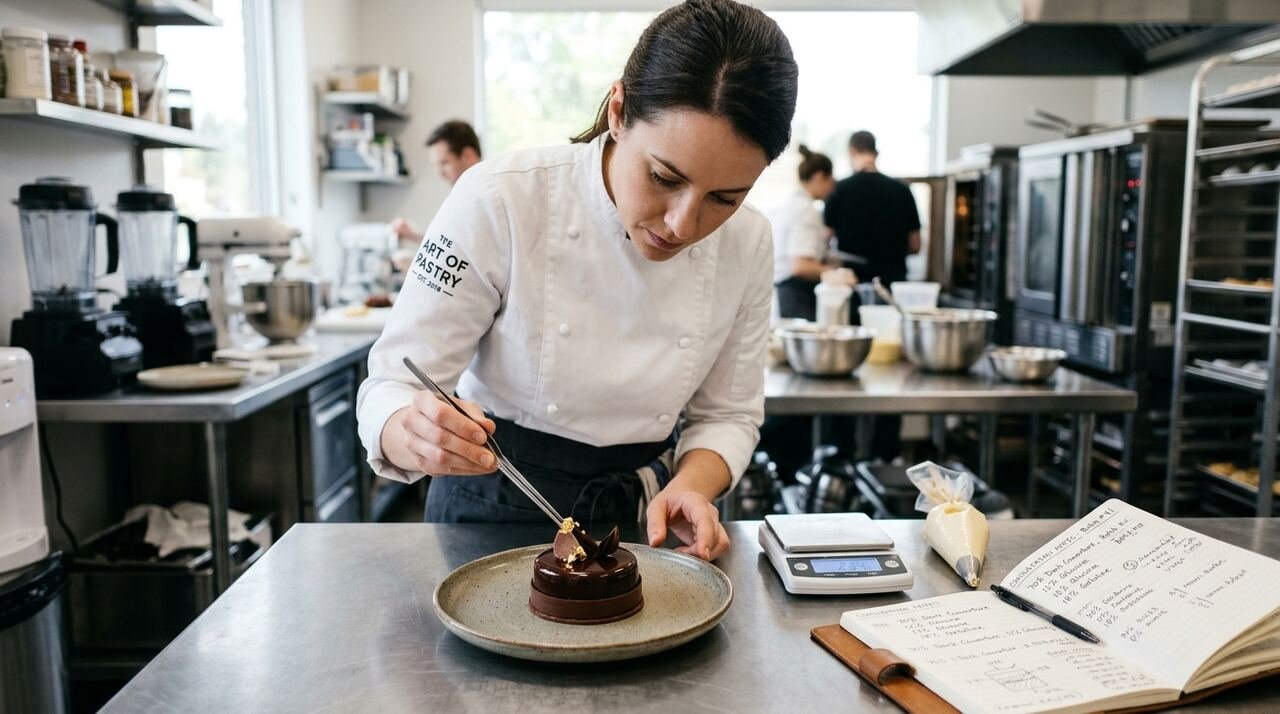
Pastry Consultant Pro is the AI agent that turns a pastry kitchen’s operational data into profit-driving decisions. It audits existing pastry shops: diagnostic of equipment, production flow, recipe specs, and team output; benchmarks actual food cost against theoretical, quantifies process shrinkage, and analyzes dessert menu sales mix. The agent delivers objective data, market comparisons, and actionable prompts—so executive chefs, pastry chefs, and kitchen managers can tighten margins without sacrificing creativity. This prompt library gives you 105 precise ways to audit, cost, engineer, and safeguard your pastry program, from viennoiserie to plated desserts.
Why prompts matter with Pastry Consultant Pro
In a pastry kitchen, a lazy prompt like 'help me lower food cost' gets generic advice. But ask Pastry Consultant Pro to 'audit my croissant production: track butter shrinkage through each fold, compare actual plate cost against a 28% target with butter at $3.89/lb, and flag yield gaps in the sheeting step' and you’ll get a line-by-line variance report, rework suggestions, and a re-costed recipe card. The agent respects real variables—equipment capacity, bench time, ingredient yields—so precision separates a guess from a P&L-ready analysis.
Allergen prompts demand equal precision. Instead of 'check my dessert menu for allergens,' tell the agent 'map dairy and tree nut cross-contact through every plated dessert on my spring menu, cross-reference FDA FALCPA labeling, and draft a menu advisory that treats coconut as a tree nut per FDA.' The response is a compliance-ready matrix, not a generic checklist. Feed the agent your actual recipes, flow, and service style, and you get HACCP-smart, legally sound results that protect guests and reputation.
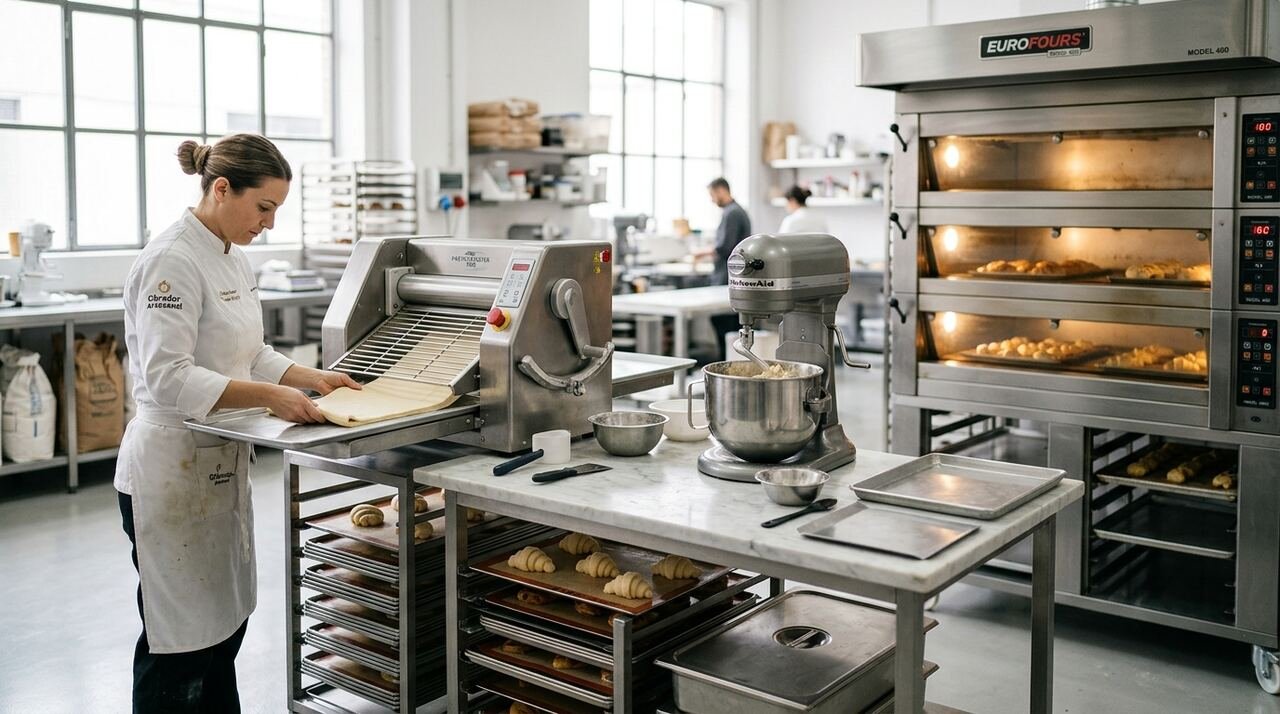
Prompt examples for Pastry Consultant Pro
These 105 prompts are organized into five practical categories: Technical Kitchen Audit (equipment, layout, throughput), Recipe Costing & Shrinkage (viennoiserie, chocolate, plated desserts with real loss factors), Dessert Menu Engineering (sales mix, contribution margin, seasonal rotation), Allergen & Regulatory Compliance (FALCPA mapping, cross-contact protocols, menu adverbs), and Production & Labor (scheduling, par levels, staff training scripts). Each prompt is ready to paste into Pastry Consultant Pro—simply insert your numbers, ingredients, and house standards to get output you can act on before the next service, whether you’re running a hotel pastry shop or a standalone bakeshop.
Prompts for Pastry Technical & Financial Audit in Pastry Consultant Pro
Pastry Consultant Pro’s Technical and Financial Audit evaluates existing pastry operations with deep analytical rigor: it diagnoses equipment, production flow, recipe costing, and team performance; compares actual vs. theoretical food cost, quantifies per-process waste, and analyzes dessert menu sales mix. The agent delivers objective data, current market benchmarks, and a prioritized roadmap with quick wins and structural improvements at 30/60/90 days to drive profitability and quality.
How to use these prompts
These are starting points you can adapt to your own operation. For example, a short prompt like “Run a technical and financial audit of my pastry kitchen” can become: “Audit my artisan pastry kitchen (1,200 sq ft, daily production of 400 units across viennoiserie, tarts, and plated desserts) in Austin, TX. I need: an equipment assessment (2 convection ovens, 1 spiral mixer, 1 dough sheeter) against volume needs; a production flow analysis identifying bottlenecks in baking and finishing; a diagnosis of actual vs. theoretical food cost per category; and a prioritized 30/60/90 day improvement plan.” The more specific you are, the better the result.
| Prompt / Request | Area / Goal / Pain point | Category |
|---|---|---|
| «Generate a complete technical sheet for a laminated croissant with 55% butter (using 80% butterfat for lamination), including: formula with baker’s percentages (flour = 100%), actual yield per batch (60 units from 8 kg flour), lamination waste (18%), baking loss (12%), cost per finished unit, recommended selling price for a 20% food cost (tax excluded), and full allergen declaration (wheat, milk, egg).» | Technical Sheets & Costing | Technique & Costs |
| «Calculate the cost breakdown for a chocolate and praline entremets (recipe for 8 units, 7‑inch mold) with current US foodservice prices: European‑style butter 82% butterfat $8.50/lb, heavy cream 35% $4.20/qt, dark chocolate 60% Valrhona $19.50/lb, hazelnut praline paste $14.00/lb, cage‑free eggs $5.50/doz. Include actual yield considering molding waste (10%) and finishing waste (8%), raw material cost per unit, labor cost (pastry chef at $22/hr), total unit cost, and selling price for an 18% food cost on a restaurant dessert menu.» | Technical Sheets & Costing | Technique & Costs |
| «My croissants lose layers and butter leaks out during baking (yellow spots on the sheet pan). The dough has 55% butter, I did three simple folds (3+1+1), baked at 375°F for 15 minutes. Diagnose the technical cause and propose a solution with adjusted parameters (dough temperature, ambient temperature, resting time between folds, butter weight, baking temperature and time).» | Troubleshooting Defects | Production & Technique |
| «Generate a photorealistic image of a berry entremets with kirsch mirror glaze, Bourbon vanilla mousse, red fruit coulis insert, and almond joconde base. Professional restaurant pastry finish, presented on a black plate, decorated with edible gold leaf and fresh berries.» | Image Generation | Presentations & Plating |
| «Export a PDF audit report of the pastry kitchen with: current equipment valuation, food cost variances by product family (viennoiserie 22.3% vs. theoretical 19%, tarts 17.8% vs. 16%, plated desserts 20.1% vs. 18%), quantified waste by process benchmarked against industry standards, and a prioritized 30/60/90-day roadmap with quick wins (reduce lamination waste from 18% to 14%) and structural improvements (invest in an additional spiral mixer at $4,200 with an 8-month ROI).» | Document Export | Reports & Analysis |
| «Look up current US foodservice prices for unsalted butter (European‑style vs. standard), heavy cream 35% (UHT vs. fresh), vanilla beans (Bourbon Madagascar vs. blend), shelled nuts (Oregon hazelnuts, California almonds, US walnuts), and dark chocolate 60% (Valrhona, Barry Callebaut, Guittard). Provide price per pound, recommended supplier, minimum order quantity, and compare with prices six months ago to identify market trends.» | Benchmark & Current Prices | Suppliers & Ingredient Costs |
| «Generate the allergen technical sheet for a restaurant dessert menu (12 items) per FDA FALCPA (the 9 major allergens: milk, eggs, fish, shellfish, tree nuts, peanuts, wheat, soybeans, sesame). Identify allergens present in each dessert, note if any contain undeclared traces due to shared equipment, create a summary allergen chart for front‑of‑house service, and outline a kitchen allergen management procedure (traceability, cross‑contact prevention, staff training).» | Allergen Management | Regulations & Food Safety |
| «Analyze the sales mix of a dessert menu (35 items, average daily sales 85 units, average ticket $5.50) and propose optimization: ABC sales classification (identify the 20% of items generating 80% of revenue), calculate gross margin per item considering actual food cost, identify low‑performing products (sales < 3 units/day or food cost > 25%), and propose an optimized menu (replace 6 low performers with 3 new items with higher margin and turnover).» | Dessert Menu & Offer | Sales & Profitability |
| «Create a weekly production schedule for a restaurant pastry kitchen with 2 convection ovens, 6‑sheet‑pan blast chiller capacity, and 4 pastry cooks: daily production distribution (Monday to Sunday), optimal sequencing (base doughs early morning, creams and mousses with blast chiller, finishing and decorating in the afternoon), controlled fermentation times for viennoiserie, oven occupancy by product (350°F vs 320°F, durations), and peak management (Friday and Saturday night 120 covers, private event for 50 guests).» | Production Planning | Flow & Capacity |
| «Prepare a technical audit report of the pastry kitchen with a full diagnosis: assessment of current equipment (2 Rational convection ovens, 1 Varimixer 40‑qt spiral mixer, 1 Rondo dough sheeter, 1 Irinox blast chiller, 2 walk‑in coolers), production flow evaluation (raw material to finished product path, identification of HACCP cross‑contamination points, distance between prep and finishing zones), team technical skill level (practical test of 5 core techniques scored 1–10), and overall kitchen score with prioritized improvement areas.» | Audit Report | Diagnosis & Evaluation |
| «Design a training program for the pastry team (2 junior pastry cooks, 1 assistant) after an audit revealed technical gaps: Module 1 (laminated doughs: butter lock‑in, folds, temperature, common defects; assessment with a test croissant, score >7/10), Module 2 (custards and mousses: ribbon stage, stability, texture; assessment with crème brûlée and chocolate mousse), Module 3 (cost control: recipe costing, waste, food cost; goal to reduce variance from 3% to 1%), Module 4 (allergens: identification, cross‑contact, traceability; internal certification). Include calendar, hours per module, methodology, and evaluation criteria.» | Training Plan | Team Development |
| «Differentiate quick wins from structural improvements in my pastry kitchen: list 5 quick wins for immediate implementation (less than 1 week, investment <$500) with estimated profitability impact (reduce lamination trim waste from 18% to 14% = savings $200/month; optimize production schedule = +15% capacity without hiring) vs. 5 structural improvements requiring investment within 60/90 days (invest in an automatic depositor $3,800 with 6‑month ROI; add a controlled fermentation cabinet $3,200 to increase viennoiserie production 40%; hire a second lead pastry cook to expand the menu) with comparative ROI and payback period analysis for each structural improvement.» | Quick Wins vs Structural Improvements | Strategy & Investment |
| «Calculate actual vs. theoretical food cost for the pastry kitchen last month: revenue by product family (viennoiserie $10,000, tarts $6,200, plated desserts $8,100, individual pastries $4,300), actual raw material cost (butter $5,000, flour and dry goods $2,100, eggs and dairy $3,700, chocolate and specialties $3,500, fruit and nuts $1,800), compute actual food cost per family and overall (target 19%), identify variances >2% with root cause (viennoiserie 22.3% due to excessive lamination waste, tarts 17.8% due to yield optimization), and corrective action plan with 30‑day goal.» | Actual vs. Theoretical Food Cost | Costs & Profitability |
| «Quantify process waste in my pastry kitchen and benchmark against industry standards: lamination waste (trim and defective layers, standard 15–18%, my figure 21%), baking loss (moisture loss and collapse, standard 10–12%, my figure 14%), assembly and finishing waste (breakage, decoration errors, standard 5–8%, my figure 11%), fruit prep waste (peeling, cutting, oxidation, standard 20–30%, my figure 33%), shelled nut waste (standard 45–55%, my figure 52%). Provide economic cost of each waste type, root cause per process, and corrective actions with reduction targets.» | Waste Analysis | Production & Efficiency |
| «Generate an opening plan for a pastry shop (860 sq ft, total investment $115,000) with feasibility analysis: 3‑year business plan (first‑year sales $216,000, 15% annual growth), investment breakdown (equipment $50,000, build‑out $33,500, initial inventory $9,500, working capital $22,000), projected P&L (target gross margin 70%, labor $2,900/month, fixed costs $5,800/month), profitability analysis (break‑even at 14 months), opening timeline (construction 6 weeks, testing 2 weeks, soft opening 1 week, grand opening), and initial product portfolio (12 tarts, 8 entremets, 6 viennoiserie, 4 specialty cakes).» | Opening Plan | Business & Viability |
Prompts for Pastry Shop Designer and Build-Out Specialist in Pastry Consultant Pro
You are a pastry shop designer and build-out specialist with more than 15 years in the trade. Your role covers floor-plan dimensioning, production-zone layout and HACCP flow design, technical equipment specification (deck ovens, spiral mixers, sheeters, blast chillers), and infrastructure installation. The Pastry Consultant Pro agent supports you with sizing calculations, shop audits, production-floor plans, equipment selection, and regulatory compliance under the FDA Food Code. Whether you are laying out a new 1,200 sq ft commissary in Chicago or re-tooling a hotel pastry kitchen in Miami, you get shop-tested answers.
How to use these prompts
Start with one of the prompts below and dial it in for your shop and your product line. For example, take “Size a pastry shop for daily production of 1,500 pieces, split between retail pastry and viennoiserie” and sharpen it like this: “Calculate the square footage for a pastry shop producing 1,500 pieces a day (600 croissants and laminated doughs, 400 tarts and entremets, 300 tea cookies, 200 panettone in season) in two shifts in a 1,200 sq ft space in Austin, TX, with dough and sheeting at 35% of floor area, bake zone at 25%, finishing and decorating at 20%, cold zone including walk-in and blast chiller at 15%, and dry storage at 5%, all laid out in a U-shaped HACCP flow.” The more specific you are, the better the result.
| Prompt / Request | Area / Goal / Pain point | Category |
|---|---|---|
| «Generate a full formula sheet for croissants with baker’s percentages on flour=100% (laminating butter 200%, strong bread flour 100%, water 55%, whole milk 25%, sugar 8%, salt 1.8%, levain 20%, fresh yeast 3%), including lamination temperatures (butter block 64–68°F, ambient 68–72°F), final proof time (60–90 min), true yield (85–90% after 10–15% trim loss), target food cost (18–22%), cost per unit, and allergens (wheat, milk, egg)» | formula sheet with numbers | formula sheet and costing |
| «Calculate the footprint of a pastry shop for 2,000 pieces a day split between retail pastry (tarts, entremets) and viennoiserie (croissants, pain au chocolat), covering prep, bake, finishing, and cold zones, with minimum recommended square footage and HACCP flow» | shop sizing | shop design |
| «Generate an audit report for an existing pastry shop producing 800 pieces a day, assessing equipment (convection oven, spiral mixer, sheeter), production flows, cold-chain management, facility condition, and HACCP compliance, with quick wins (utensil reorganization, temperature adjustments, traceability upgrade) and structural improvements over 6–12 months (professional sheeter investment, HVAC for ambient control, zone re-layout)» | shop audit | diagnostics and audit |
| «Compare current technical specs and foodservice pricing for convection ovens (Rational, Unox, Convotherm) for a pastry shop producing 1,500 pieces a day, covering power draw, pan capacity, steam functions, and core-temperature probe, with a recommendation by production type» | equipment specifications | equipment and suppliers |
| «Design a zone plan for a 1,300 sq ft pastry shop in Seattle doing mixed production (restaurant plus retail counter), defining the dough and sheeting zone, bake zone, finishing and decorating zone, cold zone (walk-in and blast chillers), dry and ambient storage, with S-shaped workflow, physical allergen segregation, and FDA Food Code HACCP compliance» | zone design | shop design |
| «Generate a weekly production schedule for a pastry kitchen running a 12-plated-dessert restaurant menu (cremeux, mousses, entremets, tarts) and 8 retail pastry SKUs, accounting for a 4-sheet oven (18×26 in), a blast chiller holding 20 sheets, labor times, shelf life by product, and priority by storage method» | production schedule | planning and production |
| «Create the SOP for allergen management in a pastry shop covering the FDA Big 9: receiving allergen-containing ingredients, segregated storage (wheat, tree nuts, milk, egg), production sequencing (allergen-free first), inter-batch sanitation, traceability, and allergen labeling under FALCPA» | allergen management | food safety and regulations |
| «Troubleshoot the technical defect of butter leakage during croissant baking: likely causes (butter block above 72°F, dough too warm, cold brittle butter during lamination), immediate fix (chill dough 30 min between turns, ambient 64–68°F, AOP-style butter with 93–97°F melting point), and a prevention protocol» | defect resolution | technical quality control |
| «Generate an image of a chocolate-hazelnut entremets with hazelnut mousse, 70% chocolate cremeux, black mirror glaze, and toasted hazelnut shard garnish, for a four-star hotel dessert menu in Boston» | image generation | presentation and design |
| «Export to PDF the full formula sheet for an apple tart with Breton sablé base, Golden Delicious apple compote, and hazelnut streusel, including baker’s percentages on flour=100%, yield (12 slices per tart), cost per slice ($3.40), food cost (19%), allergens (wheat, egg, milk, tree nuts), step-by-step build procedure, and a photo of the finished product» | document export | formula sheets and documentation |
| «Provide current US foodservice benchmark pricing for pastry raw materials: AOP-style butter (82% butterfat, $5.80–$7.20/lb), heavy cream 36% milkfat ($4.20–$5.00/qt), Madagascar vanilla beans ($220–$280/lb), raw shelled hazelnuts ($7.50–$9.00/lb), almond flour ($6.00–$7.80/lb), comparing major suppliers (Valrhona, Barry Callebaut, Puratos, Lesaffre) with volume-tier pricing» | current raw-material pricing | benchmarking and costs |
| «Design a dessert menu for a fine-dining restaurant with a seven-course tasting menu in New York City, including 3 plated desserts (dark chocolate 70% cremeux, tropical fruit tartare with coconut sorbet, burnt Basque cheesecake with red berry coulis), 2 tableside desserts (profiteroles with vanilla bean ice cream, Grand Marnier soufflé), 4 petit fours (macarons, financiers, cannelés, chocolate bonbons), with technical balance (crunchy-creamy-frozen textures, warm-cold temperatures, visual complexity), average plated-dessert price ($12–$16), and target food cost (18–22%)» | dessert menu design | dessert menus |
| «Generate an opening plan for an artisan pastry shop in Portland, OR, with an $85,000 investment and estimated 18–24-month payback, including a 900 sq ft shop in a mixed-use neighborhood, required equipment (6-sheet convection oven, 20 qt spiral mixer, sheeter, blast chiller, walk-in), opening menu (8 tarts, 6 entremets, 4 viennoiserie items, seasonal rotation), average price point ($3.50–$5.50 in the case), target gross margin (68–72%), key suppliers, and a launch plan with a two-week soft opening» | opening plan | project and business |
| «Create a technical training plan for a team of 3 pastry cooks in a restaurant pastry kitchen, covering an initial skills assessment (basic-intermediate-advanced by station), an 8-week training program (weeks 1–2: base doughs and laminated doughs, weeks 3–4: creams and fillings, weeks 5–6: viennoiserie and controlled fermentation, weeks 7–8: plated desserts and decoration), technical evaluations, food-cost controls, and allergen management» | training plan | team development |
| «Distinguish quick wins from structural improvements in a pastry-shop audit with performance issues: quick wins (reorganize finishing zone to cut travel 20%, recalibrate blast-chiller temps to reduce waste from 12% to 8%, implement true-yield formula sheets to drop food cost 3%, adjust shift times to smooth peak load) vs structural improvements (invest in a temperature-controlled sheeter to boost lamination yield 15%, install dedicated HVAC for year-round ambient control, re-layout the shop for U-shaped flow, hire an outside trainer for the team for 3 months)» | quick wins vs structural improvements | diagnostics and audit |
Prompts for Dessert Menu Developer & Pastry Creations in Pastry Consultant Pro
You are the dessert menu and pastry creations developer for a Michelin-starred restaurant or a high-end pastry shop. Pastry Consultant Pro helps you design and optimize your dessert menu and pastry portfolio with precise technical construction, flawless balance of flavors and temperatures, and seamless dietary adaptations. Whether you’re building a tasting-menu progression, costing a complex entremets, troubleshooting a lava cake, or training your team on chocolate namelaka, every response is built for the reality of a US professional kitchen—using FDA Food Code, FALCPA allergen rules, HACCP logic, and real-world wholesale pricing.
How to use these prompts
These are starting points you can adapt to your kitchen and your collection. For example, if you start with the prompt “Develop a full technical sheet for a 70% dark chocolate lava cake with Madagascar vanilla cream center, including actual yield, waste per unit, and selling price for an 18% food cost,” you could customize it to: “I need the full technical sheet for an Ecuadorian 70% dark chocolate lava cake with bourbon vanilla center, including: formula percentage based on flour at 100%, baking temperature and exact time, yield for a batch of 24 units, waste from trimming and unmolding (%), cost per unit using current US wholesale prices for Valrhona chocolate and vanilla beans, and selling price for a 70% gross margin.” The more specific you are, the better the result.
| Prompt / Request | Area / Goal / Pain point | Category |
|---|---|---|
| «Develop an 8-course dessert menu for a 12-course tasting menu, balancing temperatures (cold-hot-warm), textures (crunchy-creamy-aerated), and flavors (bitter-sweet-sour), including petit fours and mignardises, and calculate the expected average food cost.» | Dessert menu design | Menu & tasting |
| «Generate the full technical sheet for a white chocolate mousse and passion fruit crémeux entremets on an almond dacquoise base, red mirror glaze, individual 3.2 oz (90 g) format: complete formula on a flour = 100% basis, dacquoise baking temperature, yield for a batch of 30 units, cutting and glazing waste (%), cost per unit using current US wholesale prices for Valrhona and passion fruit purée, and selling price for a 70% gross margin.» | Technical sheet & costing | Costing & margins |
| «Troubleshoot a lava cake that loses its shape when unmolded and has a center that is too runny: possible causes (bake time, temperature, butter ratio in the batter, resting before baking) and a technical solution with corrected parameters.» | Defect resolution | Baking technique |
| «Generate a realistic image of a dessert plate: hazelnut crumble with coffee mousse, 40% milk chocolate crémeux, and espresso spheres, for a modern tasting menu, professional plating with lime zest and salt crystals.» | Image generation | Visual & plating |
| «Export to CSV the full technical sheets for 5 cakes on the shop menu (apple pie, cheesecake, Black Forest, mille-feuille, and mixed berry tartlet), including: ingredients with quantities, cost per unit, selling price, food cost %, yield, and allergens.» | Data export | Technical sheets |
| «Search current US wholesale prices for AOP butter (Charentes-Poitou, Isigny), Madagascar gourmet vanilla beans, heavy cream 35% fat, and raw hazelnuts in shell, to cost out a classic kouign-amann.» | Price benchmarking | Ingredient costs |
| «Design the weekly production schedule for a retail pastry shop producing 200 units/day across round cakes (6–8 servings), individual pastries (éclairs, religieuses, tartlets), and entremets, including: work zones, bake times, blast chilling, decoration, and sequencing to minimize waste and labor.» | Production planning | Kitchen organization |
| «Create a dessert cart menu for a five-star hotel restaurant with 12 options: 4 hot (crème brûlée, fondant, soufflé, lava cake), 4 cold (mousse, panna cotta, semifreddo, tiramisu), 4 fruit-based (mixed berry tart, fruit bavarois, exotic fruit parfait, fruit composition), with wine pairing suggestions and average menu price.» | Dessert menu | Menu design |
| «Develop a gluten-free version of the dark chocolate mousse cake with mirror glaze, using rice flour, tapioca starch, and xanthan gum, maintaining identical texture, flavor, and presentation: adapted formula, process, critical control points, and additional cost per unit.» | Dietary adaptations | Gluten-free |
| «Cost out a complete dessert tasting menu (fruit amuse-bouche, acidic pre-dessert, main dessert, petit fours, and coffee) for a restaurant with an average check of $85, determining total raw material cost, target food cost of 16%, and menu selling price.» | Menu costing | Costs & profitability |
| «Differentiate quick wins from structural improvements on a restaurant dessert menu: quick wins (reduce decoration waste, renegotiate chocolate price with supplier, simplify complex plating, drop 2 low-turn desserts) vs. structural (redesign entire menu, invest in a blast chiller, train team in chocolate techniques, change menu concept), with estimated impact on profitability.» | Audit & diagnosis | Improvements & roadmap |
| «Generate the allergen technical sheet for the pain au chocolat on the breakfast menu: complete ingredients with allergens flagged per FALCPA 9 major allergens, potential cross-contact, manufacturing process that avoids contact with tree nuts, and labeling for the end customer.» | Allergen management | Regulation & safety |
| «Develop a standard training module for the pastry team on chocolate namelaka technique (crème anglaise temperature, chocolate incorporation temperature, emulsification, resting), including: base recipe, common errors (graininess, grainy texture, lacking structure), and quality control protocol before service.» | Team training | Cream technique |
| «Design the celebration pastry portfolio for a premium pastry shop: 5 decorated cakes (wedding, birthday, events), 5 individual designer entremets, 3 sheet cake options for events, with technical sheets, selling price per pound, production time, and suggested minimum order lead time (48h, 72h, 1 week).» | Celebration portfolio | Product & commercial |
| «Create the full technical specification for a silicone mold to produce 50 units/day of chocolate petit fours (ganache-covered marshmallows): mold dimensions, production capacity, ganache pouring temperature, cooling time, and recommended equipment (refrigerated worktop, tempering tunnel if necessary).» | Technical specification | Equipment & tooling |
Prompts for Viennoiserie & Laminated Dough Specialist in Pastry Consultant Pro
As a viennoiserie and laminated dough specialist, you need to optimize daily production, resolve technical lamination defects, and manage fermentation precisely. The Pastry Consultant Pro agent helps with detailed formula sheets, costing with real-world shrinkage, defect diagnosis, production scheduling, and training your team in advanced laminated dough techniques. From croissant butter percentages to panettone fermentation timetables, the agent gives you actionable specs for your kitchen.
How to use these prompts
These are starting points you can adapt to your bakery and your collection. For example, if you start with the prompt “Give me a croissant recipe,” you could personalize it like this: “Generate the full technical sheet for a butter croissant with all lamination parameters: butter block percentage (60–65% of flour weight), number of turns (3 single or 1 double + 2 single), dough temperature (65–68°F), butter temperature (57–60°F), chill times (30 min at 40°F), proof (82°F, 75% RH, 2–2.5 h), bake temperature (375–390°F with steam), yield per batch, and cost per piece targeting 70% gross margin.” The more specific you are, the better the result.
| Prompt / Request | Area / Goal / Pain point | Category |
|---|---|---|
| «Generate the kouign-amann formula sheet with lamination specs: butter percentage (50% of flour weight), folding technique (4 single turns), working temperature (64°F ambient, 61°F dough), proofing and baking (410°F, 18–20 min), actual batch yield (8–10 pieces at 4.2 oz each), trim scrap (25–30%), cost per piece, and suggested menu price for 70% gross margin.» | Formula sheets & costing | Production & costs |
| «Calculate the full cost sheet for artisan pain au chocolat (2.8 oz) including: ingredient cost per unit (bread flour, 82% butterfat butter, 60% dark chocolate, milk, egg, yeast, salt), actual yield accounting for lamination waste (18%), bake-off loss (8%), finishing waste (5%), total unit cost, target food cost (18–20%), and menu price for a restaurant ($3.50–$4.50).» | Costing with shrinkage | Cost & profitability |
| «Diagnose why my croissant loses layers and leaks butter during baking. Provide a technical fix: dough temp before sheeting (>72°F), butter temp (should be 57–60°F), shop humidity (>65%), common folding errors, insufficient rest between turns, oven too low.» | Defect diagnosis | Lamination technique |
| «Generate a photorealistic image of a premium viennoiserie assortment for a five-star hotel breakfast menu: classic croissant, almond croissant, pain au chocolat, braided brioche, caramelized kouign-amann, cream-filled danish, tutti frutti. Presentation on a wooden board with a linen napkin, professional studio lighting.» | Image generation | Presentation & menu |
| «Export to PDF the full formula sheet for artisan panettone with sourdough: baker’s percentages (hydration 65–70%, sugar 30–35%, butter 25–30%, eggs 40–45%, sourdough 30–35%), folding and fermentation process (3 bulk ferments of 4 h each + final proof 6–8 h at 82°F), bake temp (330–340°F, 50–55 min), yields, allergens, shelf life (7 days ambient, 15 days sealed), cost per unit (26 oz) and menu price.» | Document export | Formula sheets |
| «Research current foodservice prices for 82% butterfat fresh butter ($/lb), heavy cream 35% fat ($/qt), Madagascar vanilla ($/lb), ground almonds ($/lb), and nuts (walnuts, pistachios) to calculate the real cost of premium viennoiserie. Provide professional supplier sources in the US (e.g., Plugrá, President, Puratos, Nielsen-Massey).» | Price benchmarking | Cost & suppliers |
| «Generate a restaurant dessert menu with an artisan viennoiserie section: describe 8 technical items (truffle croissant, brioche perdue with crème anglaise, individual kouign-amann, red fruit danish, molten pain au chocolat, financiers with berries, madeleines with orange blossom honey, canelé bordelais). Include technical description of each, menu price ($8–$12), target food cost (18–22%), recommended pairing, and allergens.» | Dessert menu | Menu development |
| «Differentiate quick wins from structural improvements in my viennoiserie bake shop: quick wins (adjust butter refrigeration temp, improve rest protocols, optimize sheeter layout, install a controlled proof box, train team on folding technique) vs structural improvements (new professional sheeter, new steam-injection oven, high-capacity spiral mixer, full climate control system, reorganize production zones).» | Audit & improvement | Shop diagnosis |
| «Design the weekly production schedule for a pastry shop with a viennoiserie section: daily production of croissant (150 pieces), pain au chocolat (80 pieces), danishes (60 pieces), brioche (40 pieces), kouign-amann (30 pieces). Include mixing, resting, sheeting, laminating, proofing, baking, cooling, and finishing times. Factor in a morning shift (5:00 a.m.–1:00 p.m.) and proof box capacity (full sheet pans 18″×26″).» | Production schedule | Production organization |
| «Develop a training plan for my pastry team in lamination technique: levels (beginner, intermediate, advanced), content (butter block, single/double turns, temperature and humidity, common defects, fermentation), methodology (demonstration, guided practice, autonomy), evaluation (technical test on classic croissant), duration (20 hours total), materials and tools required.» | Training plan | Team management |
| «Create the SOP (Standard Operating Procedure) for butter croissant production: complete protocol from receiving raw materials to finished product, including storage specs (temperature, humidity), quality checks at each phase (dough temp, lamination appearance, proof, bake), HACCP critical control points, closing checklist, and traceability record.» | SOP & HACCP | Quality management |
| «Calculate the real cost of producing artisan panettone (26 oz) with sourdough: raw material cost breakdown (Manitoba flour, butter, sugar, eggs, vanilla, candied fruit, sourdough), labor cost (work hours, hourly rate), energy cost (oven, refrigeration), equipment amortization, total cost per unit, minimum selling price for 65% gross margin, and batch profitability analysis (50 units).» | Costing & profitability | Cost & viability |
| «Diagnose my sourdough brioche: low volume, tight crumb. Possible causes: overhydration (>75%), proof temperature too low (<79°F), sourdough percentage low (<20%), under-developed gluten from insufficient mixing, short fermentation, inactive levain. Provide an improvement protocol and controlled fermentation chart.» | Defect resolution | Fermentation & sourdough |
| «Generate the danish formula sheet with lamination parameters: butter percentage (50% of flour weight), number of turns (3 single), critical temperatures (dough 68°F, butter 57°F), proofing times (90 min at 82°F, 80% RH), apple filling (20% of dough weight), final wash (egg + milk), yield (10 pieces per 2.2 lb dough), cost per unit, and menu price ($4–$5).» | Formula sheets | Production & costs |
| «Develop the sourdough starter maintenance protocol for brioche and panettone production: feeding frequency (daily or every 12 h), flour/water ratio (1:1 or 1:1.5 based on strength desired), holding temperature (68–75°F), signs of starter health (activity, aroma, float test), refresh before use (2–3 hours after last feed), long-term storage (refrigeration at 40°F, weekly feeding), troubleshooting (weak starter, excessively sour aroma, irregular activity).» | Starter management | Fermentation & process |
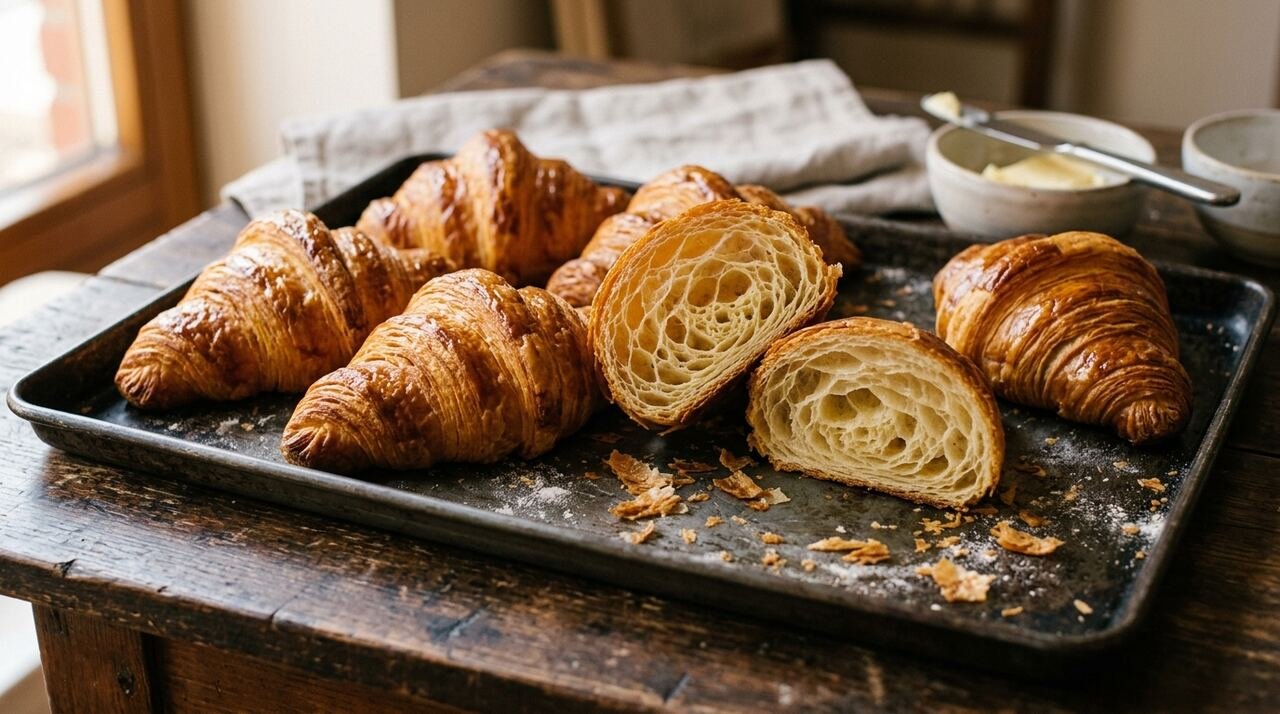
Prompts for Costing & Recipe Scaling Specialist in Pastry Consultant Pro
I'm a specialist in professional pastry costing and recipe scaling. I calculate the real profitability of every product, optimize food cost, and manage procurement of premium ingredients to maximize margins without cutting corners on quality. Whether you're running a high-volume bakery in Chicago or a fine-dining pastry kitchen in New York, I bring a data-driven approach to recipe costing, yield analysis, waste control, and supplier benchmarking—all grounded in HACCP principles and FDA Food Code compliance. My goal: give you the numbers you need to make smart decisions, from daily par levels to menu engineering.
How to use these prompts
For example, if you start with the prompt "Cost out my butter croissant," you could personalize it like this: "Generate the full cost breakdown for a butter croissant (2.1 oz laminated dough, 82% butterfat European-style butter) with actual yield per batch of 80 units, lamination waste 18%, baking loss 12%, finishing waste 9%, target food cost 18%, cost per unit, recommended selling price, and target gross margin 70%. Include a cost breakdown for bread flour, Plugrà butter, whole milk, sea salt, and fresh yeast. Use pricing from my Chicago bakery's Sysco and US Foods quotes as of February 2025." The more specific you are, the better the result.
| Prompt / Request | Area / Goal / Pain point | Category |
|---|---|---|
| «Calculate the full cost breakdown for an almond financier (1.6 oz each) with actual yield per batch of 50 units, 14% baking loss, 8% finishing loss, target food cost 16%, cost per unit, and selling price for a 72% gross margin.» | Costing with technical figures | Spec sheets |
| «Analyze specific waste in production of a fruit marzipan tart (serves 6): dough trimmings 20%, baking loss 11%, assembly waste 13%, candied fruit loss 28%. Calculate actual raw material cost and effective margin.» | Specific waste analysis | Costs & profitability |
| «Set target food cost by category: plated desserts (18%), individual pastry tarts (22%), viennoiserie (20%). Justify ranges based on sales mix and pricing policy.» | Setting food cost targets | Cost management |
| «Generate a January 2025 price benchmark for premium butter (55 lb case of 82% butterfat), heavy cream 36% (gallon), Tahitian vanilla beans (lb), almond flour, and blanched hazelnuts. Compare foodservice vendors: Plugrà, Président, Valrhona, Puratos.» | Ingredient price benchmarking | Vendors |
| «Generate a professional image of a chocolate-hazelnut entremets (serves 6) for a premium pastry menu. Visual format for menu presentation.» | Generate dessert image | Presentations |
| «Export to PDF the complete costing of a dessert menu (12 items) with per-product breakdown, food cost %, selling price, gross margin, and profitability ranking.» | Export costing to PDF | Documentation |
| «Resolve the defect of excessive tearing during croissant dough lamination due to ambient temperature above 75°F in the kitchen. Technical solution with dough and butter temperature protocol.» | Troubleshooting technical defect | Production |
| «Generate an allergen spec sheet for a kouign-amann (2.8 oz each): wheat (gluten), milk, eggs. Include lot traceability, consumer information, and handling protocol in a shared kitchen per FDA Food Code and FALCPA.» | Allergen spec sheet | Allergens |
| «Differentiate quick wins (immediate portion adjustment, supplier renegotiation, eliminating 2 low-margin SKUs) from structural improvements (recipe re-engineering, investment in depositing equipment, kitchen layout change) to boost gross margin by 8 points.» | Quick wins vs. structural improvements | Audit |
| «Calculate kitchen cost per production hour including: equipment depreciation (mixer, oven, sheeter, blast chiller), electricity, natural gas, maintenance, head pastry chef labor ($/hr), and indirect costs. Apply to a production of 800 units/day.» | Hourly kitchen cost | Costs |
| «Design a weekly production schedule for a pastry kitchen with 4 tart SKUs, 6 entremets, 8 viennoiserie items. Consider oven capacity (12 sheet pans), blast chiller (8 sheet pans), fermentation times, and demand-based prioritization.» | Production planning | Management |
| «Evaluate actual profitability of pain au chocolat vs. plain croissant considering: raw material cost, labor time (lamination + proofing + baking), waste, and turnover at point of sale.» | Profitability comparison | Costs |
| «Generate a kitchen cost audit report with quick wins and a 30/60/90 roadmap. Identify the 5 products with food cost above target and propose a corrective action for each.» | Audit report | Audit |
| «Create an SOP for waste control in the kitchen: category weigh-off log, weekly variance analysis, corrective actions, and KPI of 5% monthly waste reduction target.» | SOP for waste control | Management |
| «Develop a restaurant dessert menu (7 items) with an average price of $12.50 and average food cost of 19%. Balance per-plate profitability, estimated sales frequency, and execution complexity.» | Restaurant dessert menu | Development |
Prompts for Allergen & Dietary-Restriction Pastry Consultant in Pastry Consultant Pro
As an allergen and dietary-restriction pastry consultant, you design traceability and labeling systems for the 9 major FDA allergens, establish cross-contamination cleaning protocols, and develop gluten-free, lactose-free, vegan, and sugar-reduced pastries that meet professional standards. The Pastry Consultant Pro agent provides complete spec sheets, costings with allergen declarations, workshop protocols, and adapted recipe development. Your role covers everything from R&D to line-level implementation, ensuring compliance with FDA Food Code, FALCPA, and HACCP principles while maintaining the flavor, texture, and visual appeal that fine-dining and high-volume operations demand.
How to use these prompts
Start with a prompt like “Design a standard spec sheet for a pastry kitchen that includes the 9 major allergens, storage conditions, and lot traceability.” Then customize it for your operation: “Design a professional spec sheet for a gluten-free and nut-free pastry kitchen in Austin, Texas, producing almond-flour financiers with a dairy-free hazelnut cream (egg-free). Include the 9 major FDA allergens, storage conditions (38°F, ≤60% RH, 48-hour shelf life under refrigeration), lot traceability with batch codes linking to supplier COAs, and cost per unit based on $0.42 food cost and a 72% gross margin target.” The more specific you are, the better the result.
| Prompt / Request | Area / Goal / Pain point | Category |
|---|---|---|
| «Generate a complete spec sheet for a gluten-free butter croissant with sourdough starter, including the 9 major FDA allergens, baker’s percentages (rice flour 100%, tapioca starch 25%, psyllium husk 2%, sourdough starter 40%), fermentation temperatures (79°F, 75% RH), rest times between folds (30 min cold at 39°F), baking temperature (383°F/15 min then 356°F/8 min), actual yield (92% without trim, 85% with trim), lamination loss (12–15%), unit food cost ($1.45), production cost, and lot traceability» | spec sheet with allergens | technical documentation |
| «Calculate the cost breakdown for a lactose-free Red Velvet cake (6 servings) using lactose-free butter (President, $8.50/lb), plant-based heavy cream (Elvea, $4.20/qt), lactose-free cream cheese (Galbani, $6.80/lb), natural red color (Rousselot, $45/lb), actual yield (88% after frosting), assembly loss (7%), cake baking loss (8%), target food cost (16–18%), cost per serving, and recommended selling price ($6.50–7.50)» | cost breakdown with losses | cost control |
| «Diagnose the grainy texture defect in a gluten-free crème brûlée made with rice milk and tapioca starch: cooking temperature (180°F vs 185°F recommended), resting time (2 h vs 4 h recommended), starch ratio (4% vs 6% of liquid weight), homogenization (turbo 2 min vs 4 min recommended), possible causes, and a step-by-step corrective protocol» | technical defect resolution | quality control |
| «Generate a professional image of a gluten-free entremets with almond dacquoise base, 70% chocolate mousse (lactose-free), red berry coulis insert, and red mirror glaze for a fine-dining restaurant menu, displayed on a black plate with edible gold leaf and studio lighting» | image generation | visual presentation |
| «Export to PDF the complete allergen management protocol for a pastry kitchen, including: list of the 9 major FDA allergens with color coding, compatibility matrix by production zone, daily cleaning checklist between preparations, lot traceability log, customer information form, quarterly staff training plan, and monthly internal audit checklist» | export to PDF | regulatory documentation |
| «Get current foodservice pricing for lactose-free butter (President, Elle & Vire), plant-based whipping cream (Elvea, Veg Whip), brown rice flour (Toper, Gallina Blanca), almond flour (J. Hernández), hazelnuts (Vicente Vidal), psyllium husk (Mivil, $4.50/250 g), Bourbon vanilla (Madagascar, $180/lb), and compare with conventional equivalents to calculate the production cost premium for gluten-free and lactose-free items in a professional kitchen» | price benchmark | procurement |
| «Design a gluten-free dessert menu for a Michelin-starred restaurant, including: à la carte desserts (5 options), tasting menu (4 desserts), petit fours (3 types), dietary adaptations (lactose-free, vegan, no added sugar) with spec sheets for each, average cost per cover ($4.20–5.80), average menu price ($12–16), and estimated sales mix (60% classic, 25% gluten-free, 15% special diet)» | gluten-free dessert menu | menu development |
| «Develop a quarterly training plan for a team of 4 pastry cooks on allergen management, including: Module 1 (Weeks 1–2) – current FDA Food Code and FALCPA requirements, visual allergen identification, label reading; Module 2 (Weeks 3–4) – cross-contamination protocols, specific cleaning, separation of utensils; Module 3 (Weeks 5–6) – gluten-free production in a shared kitchen, designated zone, exclusive tools; Module 4 (Weeks 7–8) – hands-on practice simulating real orders and internal audit; includes a 20-question knowledge test and internal certification» | training plan | team management |
| «Establish a cross-contamination cleaning protocol for a pastry kitchen that handles both gluten and gluten-free items in the same facility: zoning (exclusive green gluten-free zone), dedicated utensils (cutting boards, bench scrapers, pastry bags, bowls with color coding), cleaning between preparations (specific sanitizer, 5-minute contact time), production order (gluten-free first), separate storage (gluten-free on top shelves), daily cleaning log, visual zone checklist, and penalties for non-compliance» | cross-contamination protocol | food safety |
| «Diagnose an artisan pastry kitchen with an allergen issue and differentiate quick wins (implementation in 7 days) from structural improvements (implementation in 30–60 days): quick wins – allergen signage in critical zones, supplier registry with gluten-free certification, 2-hour express team training, visual cleaning checklist, temporary physical separation of products; structural improvements – installation of a gluten-free zone with one-way workflow, digital traceability system with barcodes, replacement of dedicated equipment, external audit protocol, FSSC 22000 or equivalent certification» | quick wins vs structural improvements | audit and roadmap |
| «Design the layout of a gluten-free production zone within a shared artisan bakery kitchen, including: location (near the baking area but with 10 ft physical separation, independent airflow), dedicated equipment (small 5 qt mixer, tabletop sheeter, hand mixer, silicone molds), storage (closed cabinet with ventilation, temperature 64–68°F, humidity <65%), exclusive utensils (pastry bags, spatulas, boards with visible marking), plating area with independent exhaust hood, entry protocol (dedicated footwear, coat, handwashing), estimated installation cost ($8,500–12,000), and expected payback (8–14 months depending on volume)» | gluten-free production in shared kitchen | facility design |
| «Generate a spec sheet for gluten-free financiers with almond flour (35% on base flour), Italian meringue (40% egg whites), beurre noisette (25%), rice flour (100%), baking powder (2%), baking temperature (329°F/12 min), yield per mold (3 oz unit, 12 per sheet pan), trim loss (8%), unit food cost ($0.38), recommended selling price ($1.80–2.20), allergens (egg, almond, sulfites in trace), shelf life (72 h sealed, 48 h exposed), and batch traceability with production date» | spec sheet with formula percentages | technical documentation |
| «Develop a weekly production schedule for a lactose-free pastry kitchen with a capacity of 500 units/day, including: dough production (croissant, brioche, pain au chocolat) Monday and Tuesday, creams and fillings (crème pâtissière, namelaka, ganache) Wednesday and Thursday, baking and finishing Friday and Saturday, lactose-free raw material inventory (oat milk, lactose-free butter, plant-based cream), controlled fermentation times (16 h at 39°F for croissant, 2 h at 82°F for brioche), production sequence to avoid cross-contamination, cold storage (walk-in at 39°F, blast chiller for rapid cooling), staffing (2 specialized pastry cooks), and labor cost per unit ($0.85)» | production planning | operations |
| «Calculate production cost and selling price for sugar-free macarons (sugar reduction with polyols) using erythritol ($12/lb), stevia ($45/100 g), premium almond flour ($18/lb), pasteurized egg whites ($5/qt), AOP butter ($24/lb), fruit filling ($8/lb): actual yield (75% first quality, 15% second, 10% reject), meringue loss (5%), assembly loss (8%), unit food cost ($0.52–0.68 depending on filling), selling price ($2.80–3.50/unit), target gross margin (70–75%), comparison with conventional macarons, and economic feasibility analysis for a restaurant menu» | sugar-reduced pastry costs | economic viability |
| «Develop a complete traceability and labeling protocol for a pastry kitchen working with the 9 major FDA allergens: lot system with alphanumeric code (date + shift + line), label with mandatory information (product name, ingredient list with allergens in bold, simplified nutrition facts, best-by date, storage conditions), supplier registry with allergen certifications, finished-product traceability sheet with reverse traceability (lot → raw materials → supplier), sample retention system (48 h at 0°F), customer complaint form with response protocol (maximum 24 h), quarterly system audit, and documentation for health department inspection» | traceability and labeling | management system |
Prompts for Team Builder & Opening Director in Pastry Consultant Pro
As a team builder and opening director, you need to diagnose your team’s real technical level, design effective role-based training plans, select the right head pastry chef, and lead opening projects with all technical and financial guarantees. Pastry Consultant Pro helps you create custom training programs, define profiles and technical tests, and direct openings with detailed planning and investment control. Whether you’re scaling up a small shop or launching a high-end patisserie, this agent delivers actionable diagnostics, SOPs, and launch roadmaps tailored to US kitchens.
How to use these prompts
You can take a short prompt and turn it into a highly specific one for your real business. For example, if you start with “Design a 60-day training plan for a 4-person team,” you could turn it into “Design a 60-day training plan for a 4-person pastry team in an 800 sq ft artisan shop in Portland, Oregon, opening in 8 weeks. The team has 2 juniors with 6 months experience, 1 intermediate, and 1 senior. The plan must cover sourdough, laminated viennoiserie, cooked creams, and cost control using a blast chiller and spiral mixer.” The more specific you are, the better the result.
| Prompt / Request | Area / Goal / Pain point | Category |
|---|---|---|
| «Perform a technical level audit of a 6-person pastry team (2 assistants, 3 pastry cooks, 1 lead pastry cook) evaluating skills in: doughs (sourdough, brioche, pâte brisée), creams (pastry cream, ganache, mousses), viennoiserie (lamination, fermentation, defects), plated desserts (assembly, plating, decoration), cost control (costing sheets, food cost, waste), and allergen management (FALCPA 9 major allergens). Give me a report with a 1-10 score per area, priority gaps, and a 30/60/90-day improvement plan.» | Team technical level diagnosis | Audit & evaluation |
| «Define the complete profile of a head pastry chef for a high-end artisan pastry shop (celebration cakes, weddings, events) with an 860 sq ft workshop and a 5-person team. Include: minimum experience, mandatory and desirable technical competencies, team management and scheduling skills, knowledge of HACCP and FDA Food Code allergen regulations, and design a practical technical test with 3 exercises (1 dough, 1 cream, 1 decoration) evaluated with a scoring rubric.» | Head pastry chef profile & technical test | Staff selection |
| «Generate a weekly production schedule for an artisan pastry shop that produces: 150 croissants/day (3 baking shifts), 80 pain au chocolat, 50 braided brioche, 40 individual tarts (3 rotating varieties), 25 entremets (2 varieties), 20 celebration cakes. The workshop has: 2 convection ovens, 1 spiral mixer, 1 dough sheeter, 1 blast chiller, and a controlled fermentation chamber. Include: production order, resting and fermentation times, baking sequence, equipment occupancy, and daily finishing schedule.» | Weekly production planning | Operational planning |
| «Create a restaurant dessert menu with 8 items (4 à la carte, 2 tasting menu, 2 dessert cart) for a modern French cuisine restaurant with 40 covers. Each dessert must include: technical construction (base, main component, texture contrast, decoration), flavor balance, production feasibility (prep time, storage, service temperature), recommended selling price (food cost 18-20%), and adaptation to dietary restrictions (gluten-free, lactose-free, vegan). Format: a card per dessert with a reference photo.» | Restaurant dessert menu | Menu development |
| «My workshop has a critical problem: butter melts during croissant lamination, I lose layers and the product turns out greasy. Workshop temperature is 72°F, I use standard butter (82% butterfat) and do 3 single turns. I need a diagnosis of possible causes (dough temperature, humidity, butter quality, locking-in technique, resting times) and a detailed technical solution with exact parameters (dough °F, butter °F, hydration %, resting times between turns, type of fold).» | Lamination defect resolution | Technical viennoiserie |
| «I need a current benchmark of HORECA prices for professional butter (Plugrà European Style 82% vs standard 82% butter), heavy cream for pastry (35% milkfat), Tahitian vanilla beans, raw hazelnuts in shell, and sliced almonds. I need prices per lb for a monthly purchase of: butter 176 lb, cream 16 gal, vanilla 20 beans, hazelnuts 33 lb, almonds 22 lb. Use an updated search and specify a reference supplier (Plugrà, Challenge, Sysco, etc.).» | Raw material price benchmark | Costs & suppliers |
| «Perform an audit report of a 645 sq ft workshop producing restaurant pastry (40 covers) and direct sales. Include: equipment evaluation (oven, mixer, blast chiller, refrigeration), production flows (separation of cold/hot/dry zones), cold chain management, HACCP compliance, estimated technical level of the team (3 people). Differentiate: quick wins (immediate high-impact, low-cost improvements in under 2 weeks) vs structural improvements (investment >$2,000 or time >1 month). Prioritize by ROI and urgency.» | Workshop audit with quick wins | Diagnosis & improvement |
| «Generate a high-quality image of an entremets with layers of 70% dark chocolate mousse, hazelnut praliné heart, hazelnut dacquoise base, black mirror glaze, and decoration with edible gold flakes and toasted hazelnuts. Specify dimensions: 7 in diameter, 2.4 in height, service temperature 57-61°F, and suggest plating on a matte black plate with texture.» | Professional entremets image | Visual generation |
| «Export to PDF a complete opening plan for an artisan pastry shop with integrated café in a city of 200,000 inhabitants. Include: concept (artisan French pastry with café area), business model (counter sales + on-site consumption), detailed investment (645 sq ft workshop, equipment $85,000, build-out $25,000, initial stock $8,000, working capital $15,000), construction and installation timeline (8 weeks), hiring plan (1 head pastry chef, 2 pastry cooks, 1 counter staff), launch schedule (1-week soft opening, social media campaign, collaboration with local influencers), first-year sales projection (croissants 120/day, cakes 15/week, revenue $180,000), and break-even point.» | Opening plan in PDF | Opening project |
| «Design a specific training program on managing the 9 major allergens in a pastry workshop for a team of 5 people with no prior food safety training. Include: allergen identification in raw materials (wheat flour, eggs, milk, tree nuts, peanuts, soy, sesame), segregated handling protocols, traceability and lot tracking, finished product labeling per FALCPA, prevention of cross-contamination (utensils, surfaces, zones), allergen management on the menu (symbols, front-of-house training), and a weekly compliance checklist. Format: SOP by area.» | Allergen training program | Food safety training |
| «Generate the complete technical sheet for a Chocolate Coulant (6 units) with: formula in baker’s percentage based on flour = 100% (flour, eggs, sugar, butter, 70% dark chocolate, cocoa powder, vanilla, salt), final unit weight 3 oz, baking temperature and time (400°F 12 min), actual yield (6 units from 18.3 oz batter), estimated waste (portion of batter that doesn’t become Coulant: 5-8%), raw material cost per unit (based on current prices), labor cost (hourly rate $18), recommended selling price (food cost 20%), and allergen table.» | Chocolate coulant technical sheet | Technical sheets & costing |
| «Design a technical selection test to hire a head pastry chef for a celebration cake shop (naked cakes, drip cakes, sculpted cakes). The test must be completed in 4 hours and include: baking a genoise sponge (2 sheet pans), preparing stabilized buttercream (1 qt), assembling and decorating an 8-inch cake (3 tiers, drip effect with chocolate, buttercream flowers), and presenting a portfolio with 10 photos of own work. Evaluation criteria: sponge texture (25 pts), buttercream consistency (20 pts), assembly precision (25 pts), decoration aesthetics and creativity (25 pts), hygiene and organization (5 pts). Minimum score: 70/100.» | Head pastry chef technical test | Staff selection |
| «Create a standard operating procedure (SOP) for the professional croissant dough lamination process: optimal workshop temperature 64-68°F, dough temperature before lamination 64°F, butter temperature 57°F (plasticine consistency), locking-in process (first fold, rest 30 min), number of turns (3 single or 1 double + 1 single), resting times between turns (20 min in cold storage at 39°F), final thickness 3/16 in, common defects (fused layers, melted butter, shrinkage) and root cause of each.» | Croissant lamination SOP | Technical viennoiserie |
| «Compare the average food cost of pastry in a restaurant (dessert menu) vs artisan pastry shop (counter sales). Include: target food cost range (restaurant 15-22%, shop 28-35%), ideal gross margin (restaurant 78-85%, shop 65-75%), cost breakdown by category (raw materials, labor, packaging, waste). Explain why the difference and what optimization strategies are specific to each model (restaurant: portion control, small menu; shop: product mix, yield optimization).» | Comparative food cost analysis | Costs & profitability |
| «Generate a launch schedule for the soft opening of an artisan pastry shop (week 0) and the 4 weeks following progressive opening. Week 0: invite-only opening (50 guests, limited products, feedback), Week 1: reduced hours (9am-2pm), minimum viable product (croissants, pain au chocolat, 2 cakes), Week 2: extended hours (9am-6pm), adding entremets, Week 3: full menu (viennoiserie, cakes, pastries, bread), Week 4: maximum operational output. Include: daily sales targets, inventory management, production adjustments based on actual sales, weekly communication plan.» | Launch schedule | Opening project |
Tips for getting more out of Pastry Consultant Pro
USE BAKER’S PERCENTAGES
Always express formulas as a percentage of flour weight so ratios stay consistent at any batch size. Example: “Croissant formula: flour 100%, butter 60%, sugar 8%, salt 1.8%, milk 10%, yeast 2%, egg 5%.” That way every baker reproduces the exact same dough.
ACCOUNT FOR YIELD & SHRINKAGE
Ask for real-world yield after baking and handling losses. For instance: “Calculate the yield of 100%-hydration liquid levain assuming an 8% fermentation loss.” This prevents shortages and keeps food cost accurate.
SET GROSS MARGIN TARGET
State the margin percentage you need so the AI can back-calculate the selling price. Example: “Give me the selling price for a 65% gross margin on a chocolate lava cake.” That ties recipe costing directly to your P&L.
INCLUDE ALLERGEN DECLARATION
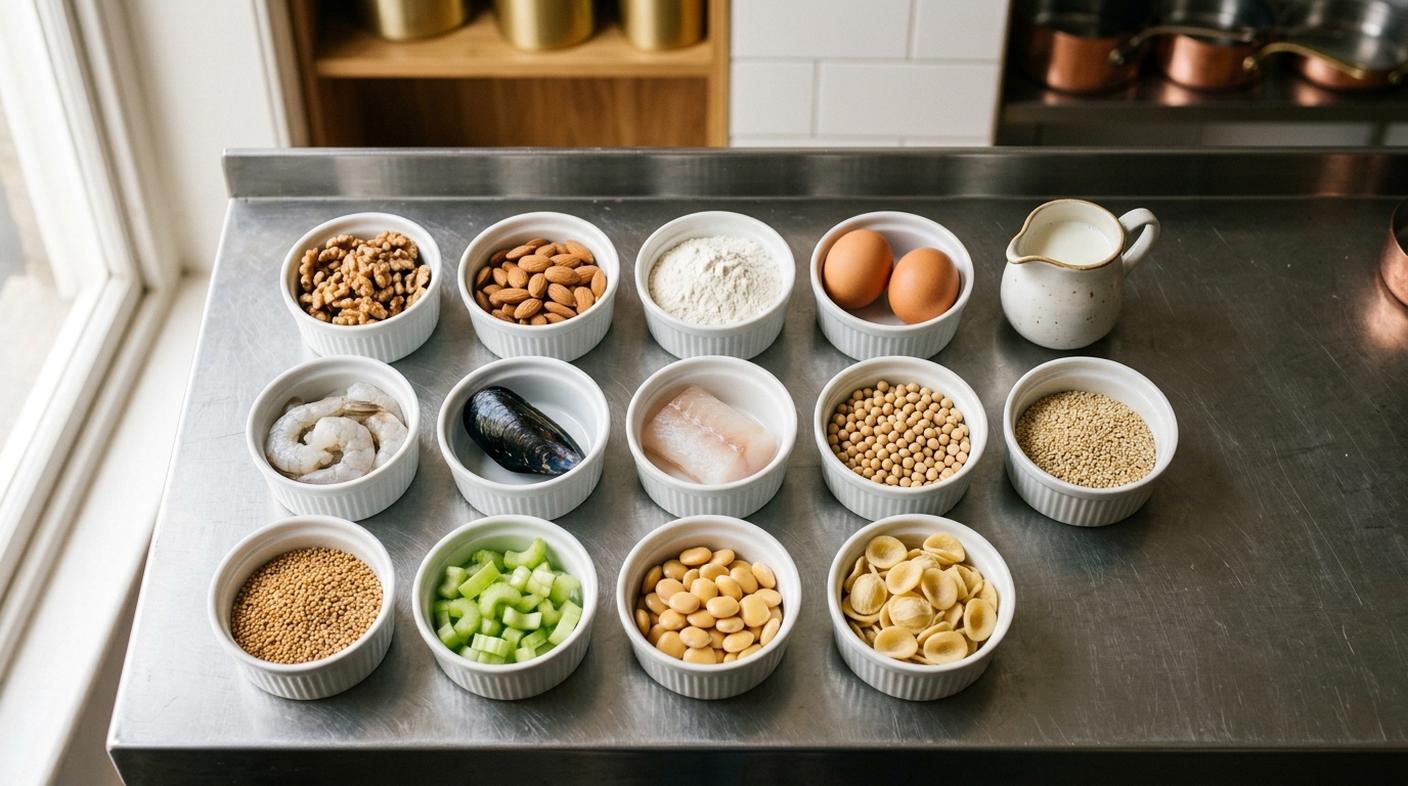
Always name the regulatory framework so you get a complete, compliant statement. For US kitchens, say “List the 9 major allergens per FDA FALCPA” rather than a generic warning—this ensures the output matches your legal duty.
BUILD TEAM TRAINING TOOLS
If the goal is to train staff, ask for station guides, checklists, or protocols. Example: “Create a pastry assistant station guide for viennoiserie production.” The AI can structure a step-by-step mise en place sheet your team will actually use.
SPECIFY EQUIPMENT & THROUGHPUT
For new shops or remodels, quantify the daily output you need. Example: “Equipment list for a pastry shop producing 500 units of laminated dough daily.” That forces the AI to size mixers, sheeters, proofers, and ovens realistically.
USE CURRENT FOODSERVICE PRICES
Request real professional cost data, not retail numbers. Example: “Cost prices for Charentes-Poitou butter and Madagascar vanilla for recipe costing.” This keeps your food cost calculations grounded in what you actually pay your distributor.
DEFINE DIETARY RESTRICTIONS
If a portion of your guests need modifications, spell it out. Example: “Gluten-free and lactose-free dessert for 15% of diners with intolerances.” The AI can then adjust recipes and cross-contamination notes accordingly.
ASK FOR TECHNICAL SUBSTITUTIONS
When an ingredient is unavailable or must be avoided, request valid replacements. Example: “Replace crème anglaise with an egg-free vegan version using plant milk and starch.” The AI can suggest swaps that maintain texture and flavor.
AUDIT-READY TRACEABILITY
For third-party audits, include supply-chain and quality-control steps. Example: “HACCP plan for a pastry shop with critical control points.” The AI can outline receiving, storage, cooking, cooling, and holding checks that satisfy a health inspector.
More prompt libraries for AI Chef Pro agents
Every agent in the suite has its own prompt library. Browse the rest and put the AI to work across your whole operation:
- Prompts for Allergen ID
- Prompts for Avant-garde Cuisine
- Prompts for Bakery Consultant Pro
- Prompts for Barista Consultant Pro
- Prompts for Bartender Consultant Pro
- Prompts for Burgers Pro AI+
- Prompts for Catering AI+
- Prompts for Chef Consultant Pro
- Prompts for Chocolate Consultant Pro
- Prompts for Creative Bakery
- Prompts for Creative Chocolate Making
- Prompts for Creative Ice Cream Making
- Prompts for Creative Pastry
- Prompts for Gastro Lexicum
- Prompts for Executive Chef Pro
- Prompts for Fermentus Pro AI+
- Prompts for Food Pairing AI
- Prompts for Waste GenCal
- Prompts for Gastronomy Consultant Pro
- Prompts for Gelato & Ice Cream Consultant
- Prompts for Pizza Consultant Pro
- Prompts for VegChef Plant-Based
- Prompts for Restaurant Manager Pro
- Prompts for Sommelier Consultant Pro
- Prompts for Staff Meal
Frequently asked questions
What is Pastry Consultant Pro?
Pastry Consultant Pro is an AI agent delivering technical pastry consulting for production kitchens, restaurants, hotels, and investors. It addresses facility design, equipment selection, HACCP workflow, costing, allergen compliance, menu engineering, and team training, bridging the gap between creative pastry and operational excellence.
How does it differ from a recipe agent?
Unlike a recipe generator, Pastry Consultant Pro focuses on strategic and technical operations—costing, kitchen layout, allergen management, and workforce training. It does not create creative recipes for immediate production but supports the systems that make pastry programs profitable and compliant.
Can it design a pastry kitchen from scratch?
Yes, Pastry Consultant Pro can produce technical proposals, facility layouts, equipment lists, and production flow diagrams that comply with HACCP principles. It helps plan efficient, code-compliant pastry kitchens for new builds or renovations.
Does it calculate cost sheets with real yields?
Yes, it includes production yields, baking and handling loss, and current US foodservice ingredient pricing. Pastry Consultant Pro builds accurate per-unit cost breakdowns, factoring in shrinkage and labor, so chefs can price menus profitably.
Does it manage the nine major allergens?
Yes, Pastry Consultant Pro provides a complete allergen declaration per product according to FDA’s nine major allergens, cross-contact prevention protocols, and guidance on compliant labeling. It helps kitchens maintain rigorous allergen controls and avoid recalls.
Is it suitable for restaurants with a dessert menu?
It is specifically designed for that: Pastry Consultant Pro develops dessert menus, technical spec sheets, plating timelines, and per-portion cost breakdowns. It helps restaurants streamline dessert service, maintain consistency, and hit target food costs.
Can it train pastry teams?
Yes, it creates training programs, station job descriptions, quality control protocols, and skill assessments. Pastry Consultant Pro helps chefs onboard new hires, standardize techniques, and elevate the team’s capabilities without constant hands-on coaching.
Does it work with laminated doughs and viennoiserie?
It excels at croissant, brioche, sourdough, panettone, and all laminated doughs, providing detailed technical processes. Pastry Consultant Pro covers lamination schedules, butter specifications, proofing parameters, and troubleshooting for consistent, high-volume production.
Does it apply current ingredient costs?
Yes, it uses up-to-date US foodservice pricing for ingredient costing and menu pricing. Pastry Consultant Pro relies on current wholesale costs, so its cost breakdowns and suggested selling prices reflect real market conditions, not outdated estimates, helping chefs stay profitable.
Can I use it for pastry kitchen audits?
Absolutely, Pastry Consultant Pro can diagnose existing pastry kitchens, assess workflow, sanitation, and HACCP compliance, and propose technical and productivity improvement plans. It’s a structured audit tool that identifies bottlenecks and safety gaps before they become costly problems.