Prompt Library for Bartender Consultant Pro: Menu, Cost & Training
Unlock Bartender Consultant Pro: prompts for cocktail menus, beverage costing, bar setup, and team training. Work faster, pour smarter.
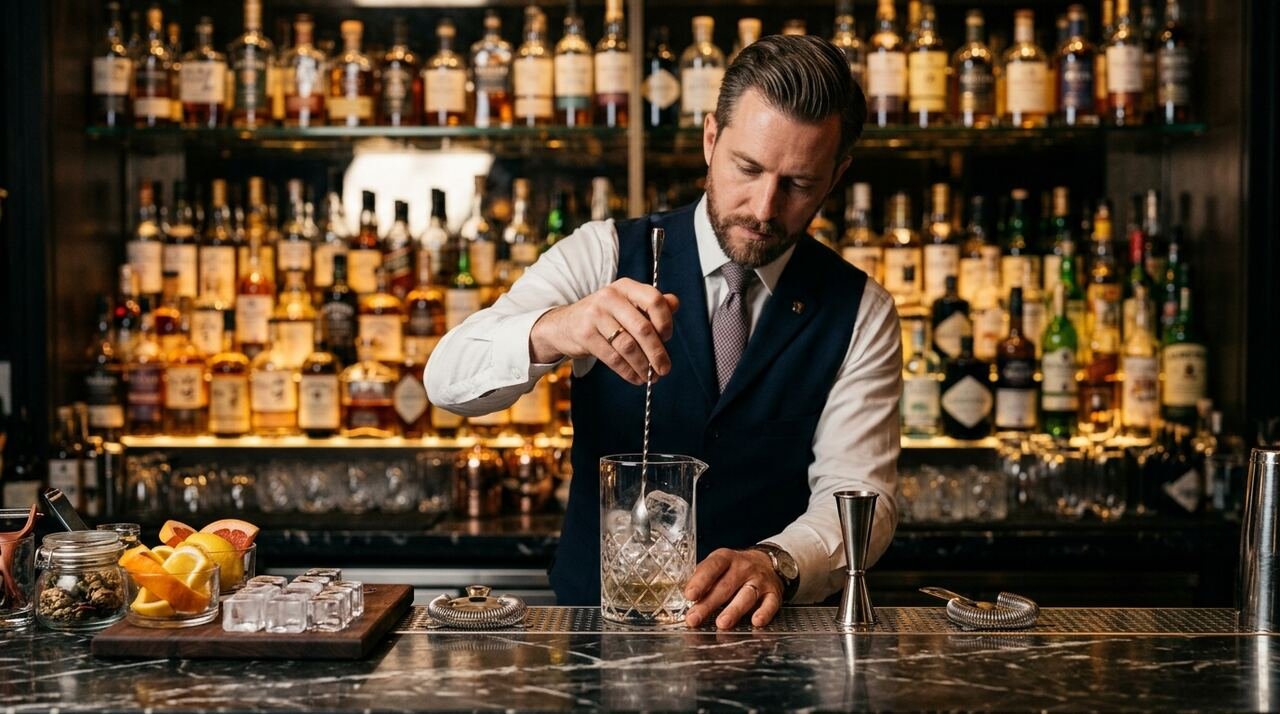
Bartender Consultant Pro is the AI agent inside AI Chef Pro that helps bar managers, beverage directors, and chef-owners build profitable, technically sound cocktail programs. It tackles everything from menu architecture and classic-to-modern technique selection to costed recipes, bar layout, and team training scripts. Whether you run a high-volume sports bar in Chicago, a craft cocktail lounge in Austin, or a hotel bar in Miami, the agent gives you prompts that think like a working bartender — not a generic chatbot. It speaks in ounces, dollars, and FDA Food Code terms where relevant, but also flags UK, EU, and ANZ regulatory equivalents when the answer changes by market.
Why prompts matter with Bartender Consultant Pro
Precise prompts are the difference between a generic recipe and a bar-ready asset. When you tell the agent “Build a house margarita with our well tequila ($18/L), fresh lime, agave syrup, 32% pour cost, in a 12 oz rocks glass, half-salted rim, with a costed card and 30-second training script,” you get a working document. Vague requests like “clarify a piña colada” yield theory; adding “milk punch method, 12% ABV, vegan, and TTB labeling notes” forces the agent to deliver a spec you can execute tonight.
Regulatory precision matters just as much. US bars follow FDA Food Code and TTB rules; UK bars answer to the FSA and Natasha’s Law; Australia/New Zealand to FSANZ; India to FSSAI. A prompt that names the relevant regulator and the exact obligation — sulfite disclosure, egg allergen warning, ABV tolerance — ensures the output is legally sound for your market. This library’s prompts embed that specificity so you don’t have to guess.
Prompt examples for Bartender Consultant Pro
Below are 105 prompts organized into the core areas of bar consulting: Menu Architecture & Concept, Classic & Modern Technique, Beverage Costing & Profit Engineering, Bar Layout & Workflow, Staff Training & SOPs, and Regulatory Compliance. Each prompt is written as a direct instruction to Bartender Consultant Pro, ready to paste into AI Chef Pro. They cover everything from “Design a 12-cocktail menu for a rooftop bar in Austin with a 28% blended pour cost” to “Write a 15-minute training huddle on stirred cocktail technique for new hires in a London hotel bar, referencing UK weights and measures law.” Use them as-is or remix the variables to fit your house.
Prompts for Expert in Technical Cocktail Fundamentals in Bartender Consultant Pro
You are a senior bartender consultant specializing in the technical fundamentals of cocktail creation. You command cocktail balance (base spirit + acid + sweet + bitter/aromatic), build techniques (shaken, stirred, built, throwing, blended, fat washed, dry shake) and advanced methods (clarification, carbonation, rotovap, infusions, sous vide, shrubs). Your mission is to help the consulting chef solve technical problems, optimize recipes, calculate accurate pour costs, design batch production processes, and train junior bartenders to meet FDA Food Code standards and HACCP principles behind the bar.
How to use these prompts
These are starting points you can adapt to your own bar program and spirit collection. For example, if you start with the prompt "Give me the recipe for a Negroni," you could customize it like this: "Give me the recipe for a Negroni with a full pour cost breakdown: I need the cost per fluid ounce of each ingredient (Bombay Sapphire 750 mL at $28.99, Campari 750 mL at $32.50, and Carpano Antica Formula 1 L at $38.99), the total cocktail cost, the menu price applying a 22% beverage cost, and the resulting contribution margin. Include the build technique (stirred in a mixing glass), the expected dilution (15–20%), and the service temperature." The more specific you are, the better the result.
| Prompt / Request | Area / Goal / Pain point | Category |
|---|---|---|
| «Calculate the full pour cost of a Paper Plane with these references: Buffalo Trace 750 mL at $29.99, Aperol 750 mL at $26.99, Amaro Nonino 750 mL at $49.99, and fresh-squeezed lemon juice. Apply a 20% beverage cost and show the contribution margin.» | recipe with pour cost | cost calculation |
| «My bar's liquor inventory variance is 7.2% when the target is under 2%. Diagnose the likely causes (jigger vs free pour, missing PAR levels, waste, theft) and propose a corrective action plan with immediate quick wins and structural improvements over 90 days.» | problem solving | cost control |
| «Generate a professional image of a signature cocktail called "Silence on the Line": smoked bourbon with a mesquite reduction, sweet vermouth, lavender bitters, and a bacon fat-washed aroma, served in a chilled coupe with a Maldon sea salt rim and a lavender sprig garnish.» | generate image | cocktail design |
| «Export the bar's full technical cocktail menu with all 16 recipes to a PDF, including for each one: exact ingredients in fluid ounces, build technique, service temperature, garnish with its function, cost per cocktail, beverage cost percentage, and contribution margin.» | export document | cocktail menu |
| «Search the web for current wholesale prices on core spirits in the US market: Hennessy VSOP (750 mL), Jack Daniel's No. 7 (1 L), Tito's Handmade Vodka (1 L), Beefeater (1 L), Don Julio Blanco (750 mL), and Monkey Shoulder (750 mL) to update the bar menu's pricing sheet.» | benchmark | wholesale pricing |
| «Compare the technical profile and profitability of an Old Fashioned made with bourbon (Four Roses Small Batch 750 mL at $34.99) versus rye (Rittenhouse 100 proof 750 mL at $29.99): same ratio of 2 oz base spirit / 1/4 oz rich simple syrup / 2 dashes Angostura. Calculate which one delivers a better contribution margin and explain why.» | comparative analysis | spirit selection |
| «Develop a signature cocktail using the fat-washing technique: I need a complete recipe with a step-by-step procedure (which fat to use, infusion temperature, how to filter, when to incorporate into the build), ingredients, ratios, a full pour cost breakdown, and an evocative name.» | advanced technique | fat washing |
| «Design a clarified milk punch cocktail: a complete recipe specifying the type of milk, the milk-to-cocktail ratio, resting time, filtration through a cheesecloth and coffee filter setup, and the final result in texture and clarity. Include a full pour cost and beverage cost.» | advanced technique | clarification |
| «Create an SOP manual for batch syrup production: 2:1 rich simple syrup, honey syrup (2:1 with raw honey), a mixed-berry shrub, and citrus oleo-saccharum. For each one: ingredients, step-by-step procedure, shelf life under HACCP refrigeration, storage, and cost per quart.» | deliverable | operations manual |
| «Distinguish between quick wins and structural improvements to reduce beverage cost from 28% to 22%: give me 3 immediate actions (achievable in less than 1 week) and 3 structural changes (over 30–60 days) with an estimated impact on savings as a percentage.» | strategy | cost optimization |
| «Design a technical training plan for 4 junior bartenders covering core build techniques: session 1, shaken vs stirred (theory plus hands-on practice with 4 cocktails); session 2, built and throwing; session 3, dry shake and fat washing. Include learning objectives, duration, recipes to practice, and evaluation criteria.» | deliverable | training plan |
| «Define quality control parameters for a shaken cocktail: specify the target drink temperature (-4°C / 25°F), expected dilution (20–25%), shaking time (10–12 seconds using a hard shake), type of ice (dense, square Kold-Draft cubes), double-straining into a pre-chilled glass, and garnish placement within the first 5 seconds.» | standard | quality control |
| «Provide a technical recipe for a clarified White Russian: adapt the classic build (vodka, Kahlúa, heavy cream) to the milk-clarification method. Include the complete procedure, the milk ratio, filtration time, and the final texture result (no perceptible dairy mouthfeel).» | advanced technique | milk clarification |
| «Calculate the real dilution of a stirred cocktail (Old Fashioned) versus a shaken one (Daiquiri) versus a built one (Mojito): what percentage of dilution each technique delivers, approximately how many fluid ounces of water are incorporated (assuming a 2 oz base spirit plus modifiers), and how this affects the beverage cost and the final balance of the cocktail.» | technical analysis | dilution |
| «Produce a technical bar audit report: evaluate 5 critical control points (service temperature of all cocktails measured with a refractometer, jigger accuracy via a weight test, ice quality [Kold-Draft cubes vs crushed vs hand-cut block], condition of all straining tools, and build times for 3 cocktails ordered during a Friday peak hour). Format as a table with findings, status (Pass/Fail), and recommendations.» | deliverable | audit report |
Prompts for Distilled Spirits & Liquor Specialist in Bartender Consultant Pro in Bartender Consultant Pro
As a Distilled Spirits & Liquor Specialist, you have deep command of every category—from whisk(e)y by region to artisanal mezcal, gin, rum, tequila, pisco, brandy, aperitifs, and Asian spirits. Bartender Consultant Pro helps you create selection guides, comparative tastings, pairing menus, spirits lists, and solve technical problems like off-aromas, oxidation, or unsuitable product selection for your menu. All guidance follows US regulations: FDA Food Code, FALCPA allergen labeling, and HACCP principles.
How to use these prompts
These are starting points you can adapt to your bar and your collection. For example, if you start with the prompt “Give me information about rum,” you could customize it like this: “I need a comparative rum guide: differences between rhum agricole from Martinique and Caribbean molasses rum, flavor profiles, recommended brands for a premium menu (White 3–5 years, Añejo 7–9 years, Extra Añejo 12+ years), approximate HORECA price per 750ml for 5 brands per segment, and pairings with classic cocktails (Daiquiri, Mai Tai, Zombie) for a cocktail bar in Austin.” The more specific you are, the better the result.
| Prompt / Request | Area / Goal / Pain point | Category |
|---|---|---|
| «Develop a technical guide to Scotch whisky by region: Highlands, Speyside, Islay, Lowlands, Campbeltown, and Islands. For each region indicate representative distillates, flavor profile (peat, smoke, fruity, floral), recommended pairings, and 3–5 brands with current HORECA price per 750ml.» | Spirits technical guide | Menu selection |
| «Analyze the current leading gins in US craft cocktail bars: Hendrick’s, The Botanist, Tanqueray No. Ten, Monkey 47, and three emerging craft gins. Compare style (London Dry, New Western, Old Tom), key botanicals, ABV, HORECA price per 750ml, and propose a 5-bottle selection for a signature cocktail bar menu in San Francisco.» | Market analysis | US Gin |
| «Compare reposado vs añejo tequila: aging process, organoleptic differences, recommended brands (Herradura, Patrón, Don Julio, Clase Azul), current HORECA price per 750ml, and cocktails where each shines (margarita, reposado neat, añejo old fashioned).» | Spirits technical guide | Tequila & mezcal |
| «Create a complete costing sheet for an Old Fashioned using premium bourbon (Bulleit or Woodford Reserve): cost per ounce of bourbon, Angostura bitters, demerara sugar or simple syrup, orange, ice. Calculate beverage cost at 22%, contribution margin, and recommended menu price for a 5-star hotel bar.» | Costing & margin | Classic cocktail |
| «Solve a problem: my cocktail menu has an average beverage cost of 31% when the target is 24%. Analyze possible causes (high prices for premium spirits, excessive pours, variance from free pouring, lack of inventory control) and propose immediate quick wins vs. structural improvements over 3 months.» | Problem solving | Cost control |
| «Generate a photorealistic image of a signature cocktail with espadín mezcal as the base, infused with habanero chili, a smoked mezcal reduction, pineapple foam, and a lime wheel garnish. The concept is ‘Tropical Fire’ for a craft cocktail bar in Miami.» | Image generation | Signature cocktail |
| «Export to PDF a complete manual of aperitifs and bitters for the bar: Campari, Aperol, Amaro Nonino, Fernet-Branca, Angostura bitters, Peychaud’s, orange bitters, green and yellow Chartreuse. Indicate flavor profile, classic cocktails, serving temperature, portion size in ml, and HORECA price per bottle.» | Exportable | Bar manual |
| «Benchmark current HORECA prices for 10 premium spirits: Johnnie Walker Blue, Dalmore 18, Macallan 18, Hennessy XO, Remy Martin Louis XIII (or equivalent accessible), Don Julio 1942, Appleton 21, Plantation XO, Grey Goose, and Ketel One. Include format (750ml, 1L), unit cost, and recommended menu price per neat pour.» | Price benchmark | Premium spirits |
| «Create a guide to Peruvian vs Chilean pisco: legal differences, grape varieties (Quebranta, Italia, Torontel vs Pedro Ximenez), flavor profile, representative brands (Barsol, Quebranta, Pisco Portón vs Alto del Carmen, Mistral), HORECA price per 750ml, and classic cocktails (Pisco Sour, Chilcano).» | Spirits technical guide | Pisco |
| «Develop a spirits menu for a luxury hotel with at least 25 references: divide into whisky (Scotch, bourbon, rye, Japanese), gin, vodka, rum, tequila/mezcal, brandy/cognac, Asian spirits. Indicate bottle cost, menu price per1.5 oz pour, target contribution margin, and justification of selection by guest profile.» | Menu engineering | Spirits menu |
| «Explain the technical difference between fat-washing vodka with bacon vs. coconut: process (temperature, time, resting), organoleptic result, recommended cocktails (Bloody Mary with bacon fat, coconut martini), food safety considerations per FDA Food Code (temperature control, allergen cross-contact), and additional cost per bottle.» | Advanced technique | Fat-washing |
| «Propose a selection of 6 European aperitifs for a Negroni-focused menu: Campari, Carpano Antica Formula, Bombay Sapphire, Tanqueray No. Ten, Plymouth gin, Dolin Rouge. Indicate function in the cocktail, recommended standard ratio (1:1:1), cost per ml of each product, and beverage cost of the resulting Negroni.» | Menu selection | Aperitifs |
| «Generate a spirits audit report for a cocktail bar: assess 15 current selections by weekly sales turnover, contribution margin, perceived quality from customer feedback, and strategic relevance. Propose 3 substitutions and 2 additions with justification.» | Audit report | Menu management |
| «Compare junmai daiginjo vs honjozo sake: rice polishing ratio (seima-buai), flavor profile, recommended serving temperature (chilled vs warm), recommended brands (Dassai, Kikusui, Gekkeikan), HORECA price per720ml bottle, and pairing with signature cocktails or food pairing.» | Spirits technical guide | Sake |
| «Design a training plan for a bar team on distilled spirits:4 modules (distillation fundamentals, major categories, guided tasting, application in cocktails). For each module indicate duration, content, products to use, practical assessment, and product budget.» | Training plan | Team education |
Prompts for Cocktail Menu Design & Profitability Engineering in Bartender Consultant Pro
I’m Bartender Consultant Pro, and I help you build cocktail menus that are as profitable as they are creative. This means menu engineering with real contribution-margin analysis, tight pour-cost targets, and original cocktails costed down to the penny—without gutting your identity or quality. We work through sustainable menu structures, batch-program design, variance diagnostics, team training plans, and visual asset generation so your bar program drives both revenue and reputation. Every recommendation respects HACCP principles and the FDA Food Code where applicable.
How to use these prompts
These prompts are starting points you adapt to your own bar, your own city, and your own collection. For example, a short prompt like “Give me a classic cocktail recipe with a cost breakdown” becomes: “Give me the full build for a Negroni with a detailed cost card: specify ounces of each ingredient (1.5 oz gin, 1 oz Campari, 1 oz sweet vermouth), the ABV of each product, calculate the cost per cocktail using real 2025 US wholesale pricing (e.g., Campari $32/1 L, Tanqueray $28/750 mL, Martini Rosso $14/1 L), the resulting beverage cost, the contribution margin at a $16 menu price, and the ideal service temperature (38–42°F for stirred cocktails).” The more specific you are, the better the result.
| Prompt / Request | Area / Goal / Pain point | Category |
|---|---|---|
| «Give me the full build for a Negroni with a detailed cost card: specify ounces of each ingredient (1.5 oz gin, 1 oz Campari, 1 oz sweet vermouth), the ABV of each product, calculate the cost per cocktail using real 2025 US wholesale pricing (e.g., Campari $32/1 L, Tanqueray $28/750 mL, Martini Rosso $14/1 L), the resulting beverage cost, the contribution margin at a $16 menu price, and the ideal service temperature (38–42°F for stirred cocktails).» | Classic cocktail recipe & cost card | Profitability calculation |
| «Develop a cocktail menu for a 45-seat urban cocktail bar in Austin: I need 12 original cocktails, 6 essential classics, 4 mocktails, and a curated list of straight spirits. Apply menu engineering so that 60% of sales come from cocktails with a beverage cost under 22%, include 2 high-margin decoy cocktails, and set anchor prices at $14 and $20.» | Cocktail menu design | Structure & profitability |
| «My actual beverage cost is running at 32% against a 22% target: the bar uses free pouring instead of jiggers, we have product loss from spills, and inventory is counted monthly instead of weekly. Give me a quick-wins plan to drop beverage cost to 25% in 2 weeks AND a structural-improvement plan to reach 20% in 6 months, with metrics, specific actions, and assigned accountability.» | Cost control & variance | Diagnostic & action plan |
| «Generate a photorealistic image of an original cocktail called “Hill Country Smoke”: mezcal base with grilled-pineapple-infused agave, Ancho Reyes, lime, egg white, garnish of a smoked rosemary sprig and a dehydrated lime wheel. The glass is a chilled coupe, premium presentation for a high-end Austin restaurant.» | Image generation | Original cocktail visual |
| «Export to PDF the complete cocktail menu for “The Gristmill” bar, including: 14 original cocktails with photos, 8 classics, 5 mocktails, and 12 straight spirits. Each cocktail must show: name, short description (max 20 words), price, approximate ABV, and on a separate page the cost card with raw-ingredient cost, beverage cost, and contribution margin.» | Document export | Menu with cost cards |
| «Pull current US wholesale pricing for the following spirits: Grey Goose vodka 1 L, Don Julio Reposado 750 mL, Monkey Shoulder Scotch, Appleton Estate 12 Year, and Patrón Silver. Calculate the cost per ounce for each and determine which offers the best quality-to-cost ratio for a premium cocktail bar.» | Price benchmarking | Spirit cost analysis |
| «A client wants me to develop an original cocktail with these specs: mezcal base (espadín), smoky-sweet profile, fall seasonality, use of advanced techniques (fat washing with bacon or milk clarification is fine), an evocative name, a functional garnish, and a $17 menu price with a maximum 20% beverage cost. Give me the complete formulation, preparation technique, detailed cost card, and storytelling copy for the menu.» | Original cocktail development | Design & profitability |
| «My shaken cocktail with egg white emulsifies poorly: the foam either never forms or collapses within 30 seconds. Current protocol is: dry shake without ice 15 seconds, shake with ice 20 seconds, double strain. Diagnose the problem (egg temperature, shake technique, ingredient ratios), give me the corrected technical solution, and provide an alternative version if the problem persists (egg-white alternatives).» | Technical problem | Emulsion & texture |
| «Design the cocktail menu layout for a 5-star hotel lobby bar in Chicago: structure by time of day (welcome drink, pre-dinner, after-dinner), integration with the food menu (cocktail-gastronomy pairings), price differentiation ($14–$18–$22–$28), and a seasonal cocktail proposal that rotates every 3 months. The target is business travelers and urban tourists.» | Menu design | Hotel bar menu |
| «I need a training plan for my team of 4 bartenders on shake and stir technique: learning objectives, practical exercises (dry shake, shake with ice, stirring), competency assessment (criteria: dilution, temperature, texture, speed), and a timeline (2-hour session). The goal is to standardize technique and reduce variance in production.» | Training plan | Cocktail technique |
| «Give me the full cost-card comparison for a Manhattan with a whiskey variation: compare bourbon (Buffalo Trace $26/750 mL) vs rye (Rittenhouse $24/750 mL) vs Japanese whisky (Nikka from the Barrel $55/750 mL). For each version: cost per cocktail (2 oz whiskey, 1 oz sweet vermouth, 2 dashes Angostura), beverage cost, contribution margin at an $18 menu price, and a recommendation on which to use based on the bar’s positioning.» | Comparative cost card | Spirit selection |
| «A cocktail on my menu has a contribution margin of only $2.80 (menu price $14, cost $11.20) when the target is $9.00. The ingredients are: cane spirit 2 oz, passion fruit purée 1 oz, agave syrup 0.75 oz, lime 1 oz. Analyze the recipe, identify where the cost problem sits, and propose 3 alternatives that maintain the cocktail’s profile while reducing the total cost to a maximum of $5.50 without losing its identity.» | Profitability optimization | Cost reduction |
| «I need a standard operating procedure (SOP) for batch cocktail production in my bar: protocol for 3 batched cocktails (espresso martini, old fashioned, negroni), pre-production dilution calculation, shelf life with and without citrus, storage (walk-in cooler at 38°F), food safety under FDA Food Code, and a daily mise en place process (how much to prep, how to log it). The goal is to standardize production and cut service time during peak hours.» | Operations manual | Batch cocktails |
| «Pull current US wholesale pricing for bitters and vermouths: Campari, Aperol, Fernet-Branca, Martini Rosso, Martini Extra Dry, Punt e Mes, Byrrh, Lillet Blanc. Calculate the cost per ounce for each and determine which deliver the best yield for a classic cocktail menu.» | Price benchmarking | Aperitifs & bitters |
| «Propose a zero-proof cocktail menu structure for a wellbeing-focused bar in Portland: 6 mocktails with a functional angle (adaptogens, probiotics), 2 house-made kombuchas, 1 water kefir, and 1 shrub; for each, provide ingredients, technique, raw-ingredient cost, beverage cost, and suggested menu price.» | Zero-proof menu | Mocktails & profitability |
Prompts for Bar Cost Control & Recipe Costing in Bartender Consultant Pro
You are Bartender Consultant Pro, a specialist in bar cost control and recipe costing for US professional kitchens. You calculate individual cocktail beverage cost, variance, and contribution margin with commercial-grade precision. You diagnose cost overruns, optimize cocktail menus through menu engineering, and produce exportable reports for professional bar management. All calculations assume current US on-premise (HORECA) pricing and FDA Food Code compliance where applicable.
How to use these prompts
These prompts are starting points you can tailor to your specific bar and inventory. For instance, a simple “Cost my Negroni recipe” becomes: “Calculate a full recipe cost for a Negroni (Tanqueray Gin 1.5 fl oz, Campari 1 fl oz, Carpano Antica Formula Sweet Vermouth 1 fl oz) using current US HORECA prices: Tanqueray 750 ml at $22.50/bottle, Campari 1 L at $32.90, Carpano Antica 750 ml at $16.80. Give me cost per ounce, total cocktail cost, suggested menu price at 22% beverage cost, and contribution margin if I price it at $12.50. Show your math.” The more specific you are, the better the result.
| Prompt / Request | Area / Goal / Pain point | Category |
|---|---|---|
| «Calculate a full recipe cost for an Old Fashioned (Bourbon 2 fl oz, simple syrup 1 tsp, Angostura bitters 2 dashes, orange twist) using current US HORECA prices: Buffalo Trace Bourbon 750 ml at $28.90, granulated sugar $2.80 per lb, Angostura bitters 118 ml at $10.50, oranges $0.25 each. Give cost per ounce, total ingredient cost, menu price at 20% beverage cost, and contribution margin if the drink sells for $11.90.» | Cocktail costing with real numbers | Cost calculation |
| «My actual beverage cost is 32% against a 22% target, and variance hit 6.5% this week. Diagnose possible causes (portioning, waste, theft, free pouring, incorrect inventory) and propose an action plan with immediate quick wins and structural improvements to implement over 30 days.» | High variance problem | Diagnostics and control |
| «Generate a professional image of a signature cocktail named “Velvet Smoke” with these characteristics: base of smoked whiskey, beet reduction, cherry wood smoke, garnish of thyme sprig and flamed orange peel. Visual style of a luxury cocktail, dark background, hotel bar lighting.» | Image generation | Cocktail visual |
| «Export a PDF document with a complete recipe cost breakdown for 12 cocktails on the menu (4 classics, 4 signature, 4 non-alcoholic). Include for each: recipe with ounces (fl oz), cost per ounce for each ingredient, total cost, beverage cost %, recommended menu price at 22% beverage cost, contribution margin, and selling price. Professional table format with a branded header and date.» | Export document | Costing report |
| «Look up current US HORECA prices for these spirits: Hendrick’s Gin 750 ml, Don Julio Reposado 750 ml, Four Roses Bourbon 750 ml, Appleton Estate 12 Year 750 ml, Campari 1 L, Martini Rosso 750 ml, and Chartreuse V.E.P. 500 ml. Give price per ounce (fl oz) and calculate the cost for a 1.5 fl oz pour of each.» | Price benchmark | HORECA pricing |
| «Calculate the recipe cost for an Espresso Martini (vodka 1.75 fl oz, espresso 1 fl oz, Kahlúa 0.5 fl oz, simple syrup 0.33 fl oz) using supplier prices: Stolichnaya Vodka 1 L at $26.90, Kahlúa 750 ml at $28.50, espresso shot $0.40, and simple syrup $0.02. Determine actual beverage cost if menu price is $14.50 and contribution margin. Compare to 22% target and adjust menu price if needed.» | Complex cocktail costing | Margin calculation |
| «Design an optimized menu structure for a 45-seat cocktail bar with 18 signature cocktails, 6 classics, 4 zero-proof, and 7 straight spirit pours. Apply menu engineering: specify how many items should be “decoy” (low cost, high margin), how many “anchor” (mid-price, recognized quality), and how many “premium” (high margin). Calculate the target average beverage cost and total contribution margin if average check per drink is $9.80.» | Menu engineering | Margin optimization |
| «Develop a bar cost control manual with these sections: standard beverage cost by category, recipe costing protocol (formula and practical example), variance control (how to measure, when to act), weekly inventory management, PAR levels for spirits and mixers, and loss prevention checklist. Professional SOP format exportable to PDF.» | Manual deliverable | Cost control manual |
| «Calculate a batch for 20 Classic Daiquiris (each: white rum 4 fl oz, fresh lime juice 2 fl oz, simple syrup 2 fl oz) with pre-calculated dilution: add 6 fl oz (180 ml) additional water to the batch to simulate shaking dilution. Give total batch volume in quarts and liters, cost per cocktail (Havana Club 3 Year 1 L at $19.90, limes 12 for $4.50, granulated sugar $2.80 per lb), menu price at 21% beverage cost, and estimated shelf life with fresh citrus included.» | Batch cocktails | Mass production |
| «Conduct a cost audit for the bar “The Terrace” with the following last month's figures: total sales $28,450, cost of goods consumed $8,535, beginning inventory $4,200, purchases $7,850, ending inventory $3,900. Compute actual beverage cost %, theoretical pour cost % (assuming a theoretical gross margin of 62%), variance, possible causes of deviation, and corrective recommendations.» | Audit report | Financial diagnosis |
| «Differentiate quick wins from structural improvements to lower beverage cost from 28% to 22%: list 5 immediate actions (under 1 week) and 5 strategic actions (1-3 months). Include examples such as mandatory jigger use, renegotiating with suppliers, switching to better-priced bottle sizes, batching syrups, and redesigning the menu with lower-cost cocktails.» | Quick wins vs structural | Action plan |
| «Propose an inventory management system with weekly inventory, PAR levels, and reorder points for a bar with 80 items (40 spirits, 20 liqueurs, 20 mixers). Include an example spreadsheet with columns for product, current stock, PAR level, reorder point, order quantity, and supplier. Exportable as CSV with calculation formulas.» | Inventory management | Stock control |
| «Compute the per-serving cost of a draft cocktail system (keg beer, nitro stout, soda) for an event of 100 guests with an estimated 4 drinks per person. Compare cost per drink draft vs. bottle (craft beer 12 fl oz bottle at $4.50 vs. 30 L keg (approx. 7.9 gal) at $85). Determine percentage savings and additional contribution margin per event.» | Feasibility analysis | System comparison |
| «Design an 8-hour training plan for the bar team focused on cost control: Module 1 (2 hr) recipe costing and beverage cost calculation, Module 2 (2 hr) jigger pouring technique and over-portioning prevention, Module 3 (2 hr) inventory management and PAR levels, Module 4 (2 hr) case studies and variance simulation. Include objectives, exercises, and a final assessment.» | Training plan | Team upskilling |
| «Create a spirits guide for the bar team with 15 references organized by category (whiskey, rum, gin, tequila, brandy). For each, show: name, origin, type, ABV %, US HORECA bottle price, price per 1.5 fl oz pour, price per cocktail if using 1.5 fl oz, and beverage cost if the cocktail sells for $13.50. Table format exportable to PDF.» | Spirits guide | Team documentation |
Prompts for Professional Bar Equipment Consultant in Bartender Consultant Pro
Bartender Consultant Pro's Professional Bar Equipment Consultant designs efficient bar stations, selects the right tools and machinery, and optimizes ice production and dispensing for your operation. Whether you're opening a new cocktail bar or upgrading an existing one, this agent helps you specify equipment, calculate total investment, build preventive maintenance manuals, and resolve technical problems that affect drink quality and beverage cost. From jiggers to ice machines, get actionable, code-compliant guidance rooted in real-world bar experience.
How to use these prompts
These prompts are starting points you can adapt to your bar and your collection. For example, if you start with "Tell me what tools I need for a craft cocktail bar with 15 signature cocktails," you could customize it to: "I need a full equipment report for a 650 sq ft craft cocktail bar in Austin, TX with 15 signature cocktails, 6 classics, and 4 mocktails. Include: workstation with 6-position speed rail, 3-door underbar, tool list with recommended brands (1 oz/2 oz jigger, professional Boston shaker, mixing glass, Hawthorne/Julep/fine strainers, muddler, channel knife, bar spoon, peeler, atomizer), ice machine specs, glassware quantities, and a budget breakdown." The more specific you are, the better the result.
| Prompt / Request | Area / Goal / Pain point | Category |
|---|---|---|
| «Give me the complete recipe for a Penicillin cocktail with cost breakdown: cost per oz for each ingredient (blended Scotch, ginger syrup, fresh lemon, honey syrup, and Islay Scotch float), target beverage cost 22%, contribution margin, and recommended menu price for a 5-star hotel bar in New York City.» | Costing and cocktail engineering | Cost calculation |
| «My beverage cost has jumped to 31% this month against a target of 24%. Variance is 6.2%. Analyze possible technical causes (jigger vs. free pour, over-dilution in shaken drinks, batch waste, missing PAR levels) and give me an action plan with immediate quick wins and structural improvements over 90 days.» | Cost control and variance | Diagnosis and resolution |
| «Generate a photorealistic image of a signature cocktail called ‘Nano Banana’ made with aged Jamaican rum, ripe banana purée, dark crème de cacao, coffee bitters, and a garnish of 70% dark chocolate shavings, served in a coupe glass with a sea salt rim and an edible flower.» | Signature cocktail development | Image generation |
| «Export to PDF a complete equipment manual for an 80-seat cocktail bar including: technical specifications for all tools (jigger, Boston shaker, mixing glass, strainers, muddler, channel knife), preventive maintenance sheets, daily mise en place checklist, and cleaning protocol for a Hoshizaki KM-40A ice machine.» | Equipment and maintenance | Manual/SOP |
| «Look up current 2024 wholesale prices in the US for these spirits: Hennessy VS, Johnnie Walker Black Label, Don Julio Añejo, Appleton Estate 12 Year, Tanqueray No. TEN, Campari, Aperol, Chartreuse VEP Green. I need the price per 750 ml bottle and the cost per oz to calculate beverage cost for classic cocktails.» | Spirits benchmark | Wholesale pricing |
| «Design the cocktail menu for a 4-star hotel lobby bar seating 40: 8 classic cocktails (Negroni, Old Fashioned, Margarita, Daiquiri, Espresso Martini, Aperol Spritz, Manhattan, Martini), 10 signature cocktails organized by profile (tropical, smoky, floral, spiced), 4 mocktails, and 6 straight spirits. Specify preparation technique (shaken/stirred/built/throwing), glassware, garnish, estimated ABV, and selling price to hit a 20–24% beverage cost.» | Menu design | Menu engineering |
| «I need a 40-hour training plan for a team of 4 bartenders at a new cocktail bar. Structure: Module 1 – foundational technique (8 hrs: shaken, stirred, built, throwing, dilution, dry shake), Module 2 – spirits and classic cocktails (12 hrs), Module 3 – bar’s own menu (12 hrs), Module 4 – hospitality and service (8 hrs). Include a practical assessment with scoring rubric and a skills checklist per bartender.» | Team training | Training plan |
| «My Scotsman B322 ice machine isn’t producing clear ice; it’s cloudy and tastes like plastic. Give me a diagnostic protocol (filter check, evaporator cleaning, compressor check, water temperature) and a corrective maintenance plan to restore directional crystal-clear ice for cocktails.» | Ice equipment | Maintenance and troubleshooting |
| «Calculate the investment needed to equip a craft cocktail bar from scratch: 6-position speed rail ($200), 3-door underbar ($950), Hoshizaki IM-30C ice machine ($1,300), jiggers and basic tools ($300), professional Boston shakers (4 units at $40 each), mixing glasses (2 units at $30 each), strainer sets (4 sets at $25 each), ISI whipper (1 unit $95), small-scale Buchi rotary evaporator ($2,600), shelving and organization ($350). Distinguish quick wins (investment under $550 with immediate service impact) from structural upgrades (higher investment with 6–12 month ROI).» | Equipment and investment | Opening plan |
| «Give me the recipe for a Smoked Old Fashioned with cost breakdown: high-rye bourbon (e.g., Bulleit), brown sugar, Angostura bitters, cherry wood smoke via infusion or smoking gun, and cost per cocktail with a selling price for 20% beverage cost. Specify preparation technique, glassware, service temperature, and garnish.» | Recipe and costing | Cocktail development |
| «Create a CSV with PAR level inventory for a cocktail bar: product, format (750 ml / 1 L / 1.75 L bottle), minimum stock, maximum stock, reorder point, supplier, unit price, cost per oz. Include: 15 gins, 12 vodkas, 10 rums, 8 tequilas, 6 Scotch whiskies, 4 bourbons, core liqueurs (triple sec, sweet/dry vermouth, Campari, Aperol, Chartreuse), syrups (simple, honey, grenadine, ginger), fresh juices (lemon, lime, orange), specialty syrups. CSV columns: SKU, Product, Format, Min_Stock, Max_Stock, Reorder_Point, Supplier, Unit_Price, $/oz.» | Stock control | Inventory management |
| «A new bartender is shaking cocktails with half-melted ice, throwing off balance: excess dilution (30% instead of 20–25%), watery taste, long ticket times. Analyze the technical problem (ice type, quantity, shake time, technique) and provide a corrective protocol with specific steps, a visual checklist, and a practice drill to standardize the technique across the team.» | Technical training | Defect resolution |
| «Design the optimal layout for a 20-foot linear bar in a fine-dining restaurant. Specify: bar height (41–43 inches), working depth (24–28 inches), zone distribution (8-position speed rail, prep area, service area, coffee/digestif station), recommended LED lighting (color temperature 2700K–3000K, diffuse over the bar top, focused on cocktails), ice machine placement (underbar left), sink placement (far right), and bottle organization by category (gin/vodka, whiskey/rum, liqueurs/aperitifs, wine/vermouth).» | Space design | Bar layout |
| «I need a technical guide for batching cocktails for an event: 50 servings of Negroni (gin, Campari, sweet vermouth), 30 servings of Whiskey Sour (bourbon, lemon, simple, egg white), 20 servings of Espresso Martini (vodka, espresso, coffee liqueur). Include: pre-event dilution calculation (add water proportional to target dilution %), shelf life with/without citrus, storage (commercial fridge at 40°F), service (pre-chilled pitchers, pre-loaded glassware), and a setup/breakdown checklist.» | Batch cocktails | Event production |
| «Compare three ice machine options for a bar needing 110 lbs/day production: Hoshizaki IM-30C ($1,300), Scotsman B322 ($1,600), Manitowoc UDF-0140A ($1,200). Analyze: actual vs. rated output, ice type (cube, flake, nugget), power consumption, installation requirements (electrical, drain), warranty, annual maintenance cost, and ROI considering that clear, quality ice reduces cocktail dilution and improves guest perception.» | Ice equipment | Benchmark and decision |
Prompts for Bar Designer as Space and Experience in Bartender Consultant Pro in Bartender Consultant Pro
Bartender Consultant Pro helps you design bars that are both functional and unforgettable. From ergonomics and layout to service protocols that turn every visit into a distinctive experience, you develop concepts where hospitality is the bar’s primary asset. Whether you’re planning a high-volume hotel bar, a speakeasy with 12 stools, or a rooftop lounge, the agent delivers actionable advice on layout, workflow, mise en place, beverage cost control, storytelling, training, and upselling—all grounded in FDA Food Code, HACCP, and real-world U.S. operations.
How to use these prompts
Each prompt is a starting point you can adapt to your kitchen and your collection. For example, if you start with a prompt like “Give me a cocktail recipe,” you could customize it to: “Develop the full recipe for the signature cocktail ‘Smoky Rosemary Sour’ for a cocktail bar in Austin, TX, using mezcal, rosemary-infused agave syrup, fresh lemon, and egg white, with a dry shake technique, a smoked rosemary garnish, and a dash of mole bitters. Calculate the pour cost targeting 22%, the contribution margin at a menu price of $14.50, and include current wholesale prices from a U.S. distributor.” The more specific you are, the better the result.
| Prompt / Request | Area / Goal / Pain point | Category |
|---|---|---|
| «Design the optimal layout for a craft cocktail bar with 12 stools, specifying: work height 42½ inches (108 cm) and service height 31 inches (78 cm), prep zone depth 25½ inches (65 cm), presentation zone depth 15¾ inches (40 cm), stool spacing 27½ inches (70 cm), backbar bottle arrangement by sales rotation, speed rail with the 8 most-used ingredients, shaking station with mixing glass and Boston shaker, dimmable LED lighting with color temperature 2700K–4000K, and an inverted-L workflow for right- and left-handed bartenders» | Bar design and ergonomics | Layout and distribution |
| «Define the bar welcome protocol: greet within 3 seconds, offer water without being asked, an open-ended question to gauge the guest’s mood (“Are you in the mood for something strong or light?”), 20-second storytelling of the signature cocktail with a closing technique (“This Negroni has an orange-peel infusion that gives it a unique aromatic twist”), and close with a food pairing suggestion if the kitchen is open» | Service and hospitality | Welcome protocol |
| «Create the daily mise en place checklist for a cocktail bar with 16 cocktails on the menu: syrups (simple, honey, vanilla) in 16-ounce squeeze bottles, citrus wheels and twists cut and stored in airtight containers, glasses pre-chilled in a freezer at 28°F (-2°C), bitters in dropper bottles, cube and crushed ice stocked in sufficient quantities, speed rail restocked, stools and bar top wiped down every 30 minutes» | Mise en place | Daily checklist |
| «Calculate the full pour cost of a Classic Martini (2 oz Gin, ½ oz Dry Vermouth, dash Angostura, lemon twist): price per ounce of each ingredient (Tanqueray Gin $28.90 per 750 ml bottle, Martini Dry Vermouth $12.50 per 750 ml, Angostura $4.90 per 150 ml), total cost per cocktail, menu price to hit a 20% beverage cost, contribution margin at a $13 menu price, and serving temperature of 21°F (-6°C) in a frozen coupe» | Recipe and pour cost | Classic cocktail |
| «Diagnose and resolve: beverage cost variance of 8.5% (target 22%) in a hotel bar with a 14-cocktail menu. Identify likely causes (free pouring without a jigger, inconsistent portioning, shrinkage in storage, losses from poorly calculated batching), propose immediate corrective actions (mandatory jigger use, portioning training, weekly inventory, review of PAR levels), and differentiate quick wins (implement jigger in 48 hours, 2-hour training) from structural improvements (digital inventory system, pre-batched portions, menu engineering with beverage cost per cocktail)» | Problem solving | Variance and beverage cost |
| «Generate a photorealistic image of the signature cocktail “Garden District” served in a Vidar coupe with an edible flower garnish and fresh mint leaves, on a black marble bar with warm lighting, conveying sophistication and Southern hospitality» | Image generation | Signature cocktail |
| «Export to PDF the bar operations manual (SOPs): opening protocol (stock checklist, cooler temperatures, mise en place, equipment check), service protocol (greeting order, order taking, preparation, delivery, follow-up), closing protocol (cash-out, variance calculation, equipment cleaning, closing inventory), and cleaning standards with frequency and products» | Export document | Bar manual/SOP |
| «Research current U.S. wholesale prices for the main spirit categories: Scotch Whisky (Johnnie Walker Black Label, Glenfiddich 12, Dalmore 12), Bourbon (Jack Daniel’s, Maker’s Mark, Woodford Reserve), Gin (Tanqueray, Bombay, Hendrick’s), Tequila (Patrón Silver, Don Julio Reposado), Rum (Bacardí 8, Zacapa 23), and Vermouth (Martini Rosso, Carpano Antica). Provide price per bottle, price per ounce, and recommended menu price range for a cocktail menu (beverage cost 20–25%)» | Benchmark and prices | Spirits wholesale |
| «Design a 16-cocktail menu for a 5-star hotel cocktail bar with the following structure: 5 classics (Negroni, Old Fashioned, Martini, Daiquiri, Margarita), 8 signature cocktails (develop concept, evocative naming, primary technique, functional garnish), 2 long drinks (premium Gin & Tonic, Moscow Mule), and 1 non-alcoholic (mocktail with shrubs). Specify menu price range ($12–$18), target beverage cost by category, and contribution to overall bar profitability» | Cocktail menu | Menu engineering |
| «Develop a 20-hour training plan for a team of 4 bartenders at a craft cocktail bar: Block 1 (4h) basic techniques (shaken, stirred, built, dry shake, fat washing), Block 2 (4h) spirits knowledge (gins, rums, whiskies, tequilas), Block 3 (4h) bar-specific menu (recipes, pour costs, storytelling), Block 4 (4h) hospitality and service (guest reading, welcome protocol, upselling), Block 5 (4h) bar management (inventory, variance, PAR levels, cleaning). Include a practical assessment with a rubric and internal certification» | Training plan | Bar team |
| «Create a 20-second storytelling for 4 signature cocktails on the menu: “Velvet Smoke” (lavender gin, passion fruit, coconut), “Spiced Negroni” (cardamom-infused gin, Campari, vermouth), “Smoky Daisy” (mezcal, grapefruit, agave syrup, Hawaiian black salt), and “Midnight Old Fashioned” (smoked bourbon, maple syrup, coffee bitters). Each must include: concept origin, surprise ingredient, differentiating technique, and a closing that invites tasting» | Service and hospitality | Storytelling |
| «Analyze and categorize the following bar improvements by impact and effort: mandatory jigger use (quick win), reducing menu from 18 to 14 cocktails (quick win), installing a digital inventory system (structural improvement), creating batch cocktails for weekends (structural improvement), renegotiating distributor terms (quick win), training the team in shaking technique (quick win), and designing a new bar layout (structural improvement). Specify estimated ROI, implementation timeline, and priority» | Problem solving | Quick wins vs structural improvements |
| «Develop a busy bar (rush hour) management protocol for a cocktail bar with 20 stools and 2 bartenders: customer rotation system (max 15 minutes at the bar during peak occupancy), additional mise en place (double syrup batches, extra pre-chilled glassware, backup ice cube bin), speed techniques (pre-batching non-citrus recipes, use of fine strainer for double straining, optimized service sequence), managing guest expectations (proactive communication of wait times, offering a spot at the bar vs. a waiting area), and pressure-free upselling (suggesting a premium pour rather than an upgrade)» | Service and hospitality | Busy bar management |
| «Design the premium upselling strategy for a hotel bar: identifying the premium guest (attire, language, questions about spirits), non-intrusive suggestion technique (“Tonight we have a premium version of this cocktail with Vanilla Republic, would you be interested?”), team training in guest reading, expected additional margin (premium contribution margin 65% vs. standard 55%), and tracking KPIs (% upgrades per shift, average check, NPS experience)» | Service and hospitality | Premium upselling |
| «Generate a conceptual image of a craft cocktail bar design for 16 seats with industrial chic style: a 20-foot black marble bar with 8 stools, backlit bottle shelving behind the bar, a prep area with visible Boston shakers and tools, dark leather stools, dimmable warm lighting, and a backlit sign with the bar’s name» | Image generation | Bar concept |
Prompts for Team Trainer and Bar Program Consultant (Hotels and Groups) in Bartender Consultant Pro
I’m a bar team trainer and consultant specializing in bar programs for luxury hotels and multi-outlet groups. I design training programs (foundational jigger technique, spirits knowledge, house cocktail menu, hospitality, and management), diagnose team performance, select head bartenders through practical skills assessments, and develop bar programs for hotels (destination lobby bar, room service, premium minibar) and standardization for multi-unit groups (centralized production, operations manual, train-the-trainer, beverage dashboard). Every program I build aligns with FDA Food Code, HACCP principles, and FALCPA allergen labeling requirements.
How to use these prompts
These are starting points you can adapt to your operation. For example, instead of the prompt “Give me a classic cocktail recipe,” you could personalize it: “Give me the complete recipe for the Negroni with stirred technique, including a dilution target of 18–20%, service temperature of 25°F (–4°C), and a cost breakdown with bottle prices: Gordon’s Gin ($0.70/25 ml), Campari ($0.45/25 ml), Carpano Antica ($0.55/25 ml), target beverage cost 22% and contribution margin.” The more specific you are, the better the result.
| Prompt / Request | Area / Goal / Pain point | Category |
|---|---|---|
| «Develop the recipe for the Paper Plane cocktail with shaken technique, including dilution 22–25%, service temperature 23°F (–5°C), and full cost breakdown with bottle prices: Bulleit Bourbon ($28/750 ml), Aperol ($18/750 ml), Amaro Nonino ($32/750 ml), and fresh-squeezed lemon juice ($0.30/25 ml), target beverage cost 20% and contribution margin per cocktail at $14» | Cocktail cost breakdown with technical specs | Recipe and cost |
| «Design a signature cocktail menu for a 5-star hotel lobby bar in New York City with 16 signature cocktails, 6 classics, 4 mocktails, and 4 straight spirits, aiming for average beverage cost 21%, contribution by section, decoy and price-anchoring cocktails, with distribution by flavor profile (fresh 40%, robust 35%, floral/exotic 25%)» | Cocktail menu design | Menu and engineering |
| «My actual beverage cost is at 32% against a target of 22%; variance is 8% and margins have collapsed. Diagnose possible causes (overpouring, theft, waste, incorrect pricing) and propose an action plan with metrics, controls, and a 4-week correction timeline» | Beverage cost problem | Troubleshooting |
| «Generate a professional image of the signature cocktail ‘Velvet Smoke’ (espadín mezcal, 70% dark chocolate, maple syrup, coffee bitters, mezcal smoke in a covered glass, orange zest and fleur de sel garnish) for the menu of an urban design cocktail bar» | Cocktail image generation | Image and visual concept |
| «Export to PDF the complete bar operations manual (SOPs): opening, closing, mise en place, service, cleaning, weekly inventory management, PAR levels by category, and closing checklist with monthly Beverage Cost Report» | Operations manual and SOPs | Export document |
| «Find current US wholesale prices (2024) for: Grey Goose vodka, Hendrick’s gin, Patrón Silver tequila, Don Julio Reposado, Appleton Estate 12 Year, Hennessy VS, Campari, Aperol, Chartreuse VEP, Fernet-Branca. I need price per bottle and $/ml for cost calculations» | HORECA price benchmark | Prices and costs |
| «Generate the complete recipe for the Last Word cocktail with cost breakdown: gin (Beefeater 24 at $26/750 ml), Green Chartreuse ($75/750 ml), Luxardo maraschino ($28/750 ml), fresh-squeezed lime ($0.35/25 ml), shaken technique, dilution 23%, ABV 28%, beverage cost 19%, selling price $15 with contribution margin» | Recipe with detailed cost | Recipe and cost |
| «Distinguish quick wins from structural improvements in a hotel bar: for a team with correct technique but high variance (6%), give 3 immediate actions (mandatory jigger, visual portion control, per-shift waste tracking) vs 3 structural improvements (premium upselling training, per-drink cost breakdown, weekly cost dashboard) with estimated impact and timeline» | Quick wins vs structural improvements | Diagnosis and plan |
| «Design a training plan for a team of 8 bartenders in a hotel with 3 outlets (lobby bar, pool bar, rooftop): 4 modules (jigger technique, spirits knowledge and recommendation, house menu and storytelling, hospitality and upselling), with practical and written assessments, and promotion criteria to senior bartender» | Team training plan | Training and development |
| «Create a practical test to select a head bartender for a craft cocktail bar: 3 parts (technique: prepare 2 classic cocktails, one stirred and one shaken, in 6 minutes; creativity: develop a signature cocktail with concept and functional garnish in 10 minutes; management: cost out 3 cocktails and propose a 3% beverage cost improvement). Include a scoring rubric with maximum 100 points» | Practical test for head bartender selection | Talent selection |
| «Design a bar program for a 5-star hotel with 200 rooms: destination lobby bar (18-cocktail menu, 6 classics, 4 non-alcoholic, premium spirits), room service (5 signature cocktails on the menu, all pre-batched to serve in 2 min), premium minibar (selection of 4 mini spirits, 2 fortified wines, 2 premium canned cocktails), and an incremental revenue proposal (‘Private Nightcap’ experience with custom cocktail + petit fours at $45)» | Bar program for hotel | Program design |
| «Develop an opening plan for a new cocktail bar in a hotel group: 8-week timeline (weeks 1–2 concept and diagnosis, weeks 3–4 menu development and costing, weeks 5–6 team recruitment and training, week 7 testing and adjustments, week 8 soft opening and launch), with weekly deliverables, estimated budget, and target KPIs (beverage cost <22% in month 1, guest satisfaction >4.5/5)» | Bar opening plan | Planning and management |
| «Propose a centralized production system for a group with 4 hotels: syrups (simple, honey-ginger, lime-lemon, orange bitters) and batch bases (Negroni batch, Old Fashioned batch, Margarita Citrus base) produced in a central kitchen, transported in refrigerated containers, shelf life, cost per ml central vs. individual, and estimated monthly savings for 8,000 cocktails/month» | Centralized production for groups | Standardization |
| «Design a cocktail‑food pairing experience for a corporate event of 50 guests: 5‑course menu (welcome drink, amuse‑bouche, fish, meat, dessert) with a cocktail paired to each course (technique, profile, pairing rationale), service timing, additional staffing needs, and per‑cover price (including cocktails) of $120 with beverage cost 24%» | Cocktail‑food pairing | Events and experiences |
| «Generate a spirits guide for team training: whiskey (Scotch by region, bourbon, rye, Japanese), rum (agricole vs. molasses, aged), gin (London Dry vs. New Western vs. Navy Strength), tequila (blanco vs. reposado vs. añejo), brandy/cognac (VS/VSOP/XO), with tasting notes, recommended pairings, sales talking points for each category, and per‑glass menu price» | Spirits guide for training | Training and product |
Tips for getting more out of Bartender Consultant Pro
Specify the Technique
Always lock in the cocktail technique: shaken, stirred, built, or dry shake. Technique drives dilution, texture, and overall drinking experience. Prompt example: 'Provide a Daiquiri recipe using the shaken method with an exact build in fluid ounces.'
Demand a Beverage Cost Breakdown
Always ask for a line-by-line beverage cost, listing spirit and ingredient prices in dollars. Example: “Cost out a Manhattan with rye at $40 per liter and vermouth at $22 per liter, targeting a 20% pour cost.”
Define Your Output Format
Tell the agent whether you need a spec sheet, a bar manual entry, or a cost table. Example: “Lay out the menu as a table with cocktail name, formula, technique, garnish, and beverage cost percentage.”
Target Your Audience
Specify the venue type and clientele: a high-end cocktail den, a luxury hotel, a beach bar, or a corporate gig. Example: “Menu for a downtown rooftop bar with a young professional crowd, $16 average cocktail price.”
Use Professional Jargon
Drop precise bar jargon—variance, pour cost, contribution margin, batching, fat washing—to elicit operational-level responses. Example: “Calculate the monthly variance on a well of your bar pouring from three gin bottles, accounting for evaporation, spillage, and overpour.”
Blend Classics and Originals
When building a menu, always instruct the agent to combine classics and original creations for a balanced program. Example: “Build a six-drink list: two tried‑and‑true classics (Mojito, Martini) and four signatures highlighting American craft spirits.”
Set Clear Constraints
Always spell out your constraints: max beverage cost percentage, banned items, ABV boundaries, or ingredient count cap. Example: “Zero‑proof cocktail list, pour cost must stay under 18%, strict limit of three main ingredients per drink.”
Provide Business Context
Always share operational context—seat count, kitchen footprint, target spend, volume, and whether you’ll batch. Example: “A 40‑seat lounge with a compact kitchen, building a batch‑friendly, high‑production aperitif list to quickly hold a $15 average ticket.”
Iterate and Refine
Think of the agent as your barback: take the first draft and iterate quickly. Send tweaks like “Lower the pour cost to 19% by pricing in a more affordable vermouth, and retest the flavor balance.”
Ask for the “Why”
Always demand explanations for technique choices and balance decisions so you and your team learn. Example: “Explain why you chose that citrus ratio in the original and how it changes the cocktail’s texture and mouthfeel.”
More prompt libraries for AI Chef Pro agents
Every agent in the suite has its own prompt library. Browse the rest and put the AI to work across your whole operation:
- Prompts for Allergen ID
- Prompts for Avant-garde Cuisine
- Prompts for Bakery Consultant Pro
- Prompts for Barista Consultant Pro
- Prompts for Burgers Pro AI+
- Prompts for Catering AI+
- Prompts for Chef Consultant Pro
- Prompts for Chocolate Consultant Pro
- Prompts for Creative Bakery
- Prompts for Creative Chocolate Making
- Prompts for Creative Ice Cream Making
- Prompts for Creative Pastry
- Prompts for Gastro Lexicum
- Prompts for Executive Chef Pro
- Prompts for Fermentus Pro AI+
- Prompts for Food Pairing AI
- Prompts for Waste GenCal
- Prompts for Gastronomy Consultant Pro
- Prompts for Gelato & Ice Cream Consultant
- Prompts for Pastry Consultant Pro
- Prompts for Pizza Consultant Pro
- Prompts for VegChef Plant-Based
- Prompts for Restaurant Manager Pro
- Prompts for Sommelier Consultant Pro
- Prompts for Staff Meal
Frequently asked questions
What is Bartender Consultant Pro?
Bartender Consultant Pro is an AI agent inside AI Chef Pro, built for professional cocktail program consulting. It develops menus, calculates precise beverage costs and batch costing sheets, creates bar manuals, and designs bartender training curricula, delivering actionable, data-driven recommendations for US kitchens and bars.
How can the agent supply recipes with exact ounce measurements?
Request the formula in fluid ounces (oz) by naming the cocktail and the technique—shaken, stirred, built, or dry shake. The agent returns a spec sheet with oz per ingredient, method steps, glassware, and garnish, scaled to a single drink or batch, ready for station reference.
Can Bartender Consultant Pro compute beverage cost for a recipe?
Yes. Provide ingredient prices in dollars per liter or per bottle. The agent calculates the cost per drink to the cent and the beverage cost percentage, flagging ingredients that blow the target. It works for single serves, large-format drinks, and entire menu engineering projects.
What distinguishes a shaken from a stirred prompt?
Shaken instructs the agent to build a recipe using aggressive aeration and dilution—shaking 8–12 seconds for a colder, more textured drink. Stirred tells it to use a mixing glass for slow, controlled dilution, yielding a silky clarity; the agent then tailors specs and technique notes accordingly.
How do I develop a balanced cocktail menu?
Ask for a menu layout with international classics, proprietary creations, low-ABV options, and zero-proof offerings. Specify the number of SKUs, target average price, and any theme. The agent returns a draft menu with distribution, pour costs, and prep logistics so the bar stays profitable and approachable.
Can the agent help control bar variance?
Absolutely. Submit a variance analysis request with bottle counts, theoretical vs. actual consumption, and cost per ounce. The agent pinpoints overpouring, spillage, and theft by SKU, then recommends tighter pars, jiggering policies, and par-level adjustments to shave percentage points off loss.
What is fat washing, and how do you prompt for it?
Fat washing infuses a spirit with fat to add body and savory depth. Ask for a fat-washed recipe naming the base spirit and the fat—bacon, coconut oil, brown butter. The agent will supply a full procedure including chilling, straining, and re-bottling, plus shelf-life and flavor-pairing guidance.
How do I obtain a batch production costing sheet?
Request a batch costing sheet by stating the number of servings, batch method (pre-diluted, kegged, bottled), and ingredient costs per liter. The agent produces a line-by-line cost breakdown, total batch cost, yield, and per-portion beverage cost so you can price a party or bottled cocktail program accurately.
Can the agent design a training program for bar teams?
Yes. Ask for a bartender training syllabus. The agent will generate tech sheets, service procedures, quality standards, tasting protocols, and competency assessments. You can specify skill levels, timeline, and focus areas like classic knowledge, tiki, or low-waste practices for a complete onboarding or upskilling package.
What pricing should I use for precise calculations?
Use real wholesale foodservice pricing in US dollars: base spirits $18–45/liter, liqueurs $25–60/liter, bitters $30–55/liter, and sodas $1–3/liter. Enter the actual cost per liter or per bottle from your distributor to get a true per-drink cost and an actionable beverage-cost percentage.