Prompt Library for Sommelier Consultant Pro: Wine Lists, Costing & Pairings
Sommelier Consultant Pro prompt guide: design wine lists, calculate decreasing markup and beverage cost, create pairings, and produce professional documentation.
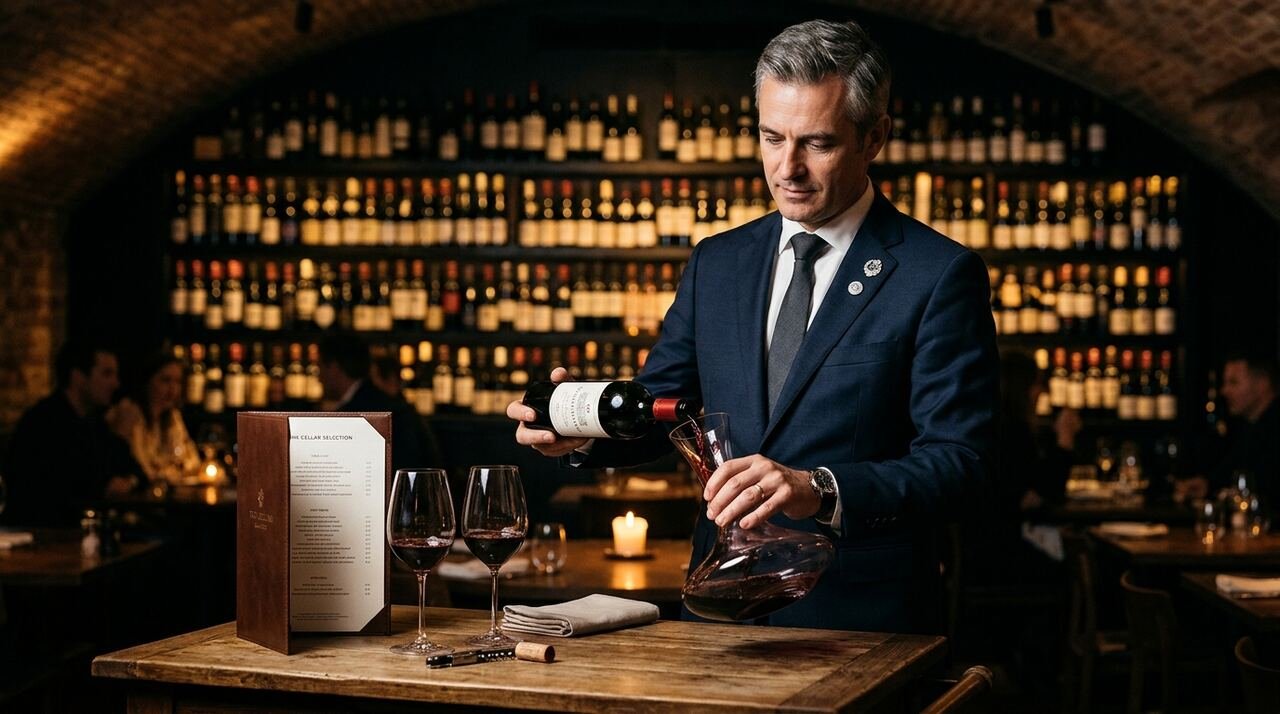
Sommelier Consultant Pro is a wine-industry AI built for the demands of American kitchens. It helps chefs, somms, and owners build a wine portfolio by region and style, compare vintages across Old and New World producers, and pinpoint technical problems like cork taint, oxidation, or cost overruns. It generates ready-to-use documents: wine lists organized by glass and bottle, decreasing-markup costing sheets that show your beverage cost at a glance, and pairing suggestions that weave the list into the menu. If you’re opening a new spot in Portland or revamping a legacy list in Chicago, this agent gives you the practical, operational advice you need, not textbook fluff.
Why prompts matter with Sommelier Consultant Pro
Wine programs live and die by numbers that change with every bottle. A loose prompt that asks for a “wine list” might yield a random selection of labels, but a tight prompt that specifies the budget per category, the dining concept (steakhouse vs. oyster bar), and the markup policy—say, a higher percentage on entry-level BTG pours and a sliding scale on reserve bottles—forces Sommelier Consultant Pro to calculate exact pour costs, retail markups, and a realistic beverage cost target. Without that level of detail, you’ll get a list that looks pretty but bleeds margin.
The same precision applies to food pairing. A vague request for “pairings with salmon” delivers boilerplate Pinot Noir; a sharp prompt that names the preparation (cedar-planked, miso-glazed), side vegetables, and the price point of the by-the-glass program generates actionable matches that work for your own menu. In a world where a 2 % swing in beverage cost can make or break the quarterly P&L, the difference between a fuzzy prompt and a chef-driven request is the difference between a useful wine tool and a novelty.
Prompt examples for Sommelier Consultant Pro
This prompt library organizes 105 actionable requests into five areas that mirror a working sommelier’s day. You’ll find prompts for building a wine list from scratch by cuisine and budget, for calculating decreasing-markup costing with detailed breakdowns by tier, for troubleshooting common faults like TCA or VA, for crafting food-and-wine pairings with specific dish parameters, and for generating client-facing documents—from a one-page BTG list to a full leather-bound book complete with tasting notes. Each prompt is designed to be copied, customized with your numbers, and dropped straight into Sommelier Consultant Pro so you get output you can use immediately during prep or lineup.
Prompts for World Wine Expert (Regions & Varietals) – Sommelier Consultant Pro in Sommelier Consultant Pro
World Wine Expert with deep command of regions, appellations, and grape varieties from major producing countries. As Sommelier Consultant Pro, I help you build the optimal portfolio by territory, compare vintages and styles, troubleshoot technical issues like wine faults or cost drift, and generate professional documents — wine lists, costing sheets with decreasing markup, or pairing guides. All with current on-premise/restaurant wholesale pricing and exportable to PDF/CSV.
How to use these prompts
These are starting points you can adapt to your concept and collection. For example, if you start with the prompt “Give me information on wine regions,” you might customize it to: “I need a comparative analysis of the top appellations in California (Napa Valley, Sonoma Coast, Paso Robles) and France (Bordeaux, Burgundy, Rhône) to design an international list of 80 references, balancing classics and emerging regions, with a bottle price range of $20 to $250.” The more specific you are, the better the result.
| Prompt / Request | Area / Goal / Pain point | Category |
|---|---|---|
| «Design a Burgundy-focused section for a fine-dining wine list: 12 references across Côte de Nuits and Côte de Beaune, including Premier and Grand Cru, with wholesale cost between $40 and $130 per bottle, a 2.5× markup for premium labels, and a target contribution margin of $75 per bottle.» | Burgundy wine list | List engineering |
| «Calculate a full costing sheet for 25 wine list references organized by region with an average guest check target of $50: apply a decreasing markup (entry-level 3.5×, mid-range 2.5×, premium 1.8×), target beverage cost 32%, and generate a table showing purchase price, menu price, contribution margin, and estimated turnover.» | Decreasing markup costing | Cost management |
| «My sparkling wine section’s beverage cost has spiked to 42% against a 28% target. Analyze the 8 current references (Champagne, Cava, Prosecco) with wholesale costs from $20 to $50. Suggest price or rotation adjustments, and calculate the contribution margin impact if I switch to a 2× markup on all Champagnes over $40 cost instead of 3×.» | Beverage cost diagnosis | Troubleshooting |
| «Generate a conceptual image of a wine list for an urban wine bar with an industrial/vintage design, organized by country (USA, France, Italy, New World), featuring 40 references with visible prices and a short narrative for each label.» | Wine list visual proposal | Image generation |
| «Export to PDF a complete wine list for an Italian restaurant with 55 references: organized by Italian region (Piedmont, Tuscany, Veneto, Sicily), suggested food pairing by dish, prices inclusive of sales tax, and professional layout for print.» | Italian list PDF | Document export |
| «Find current restaurant wholesale pricing for the top Napa Valley Cabernets: Opus One, Harlan Estate, Screaming Eagle, plus five entry-level alternatives in the $25–40 cost range. Compare with distributor market prices and calculate the average markup in the on-premise channel.» | Benchmark Napa Valley | Current on-premise pricing |
| «Generate a floor-ready wine fact sheet with a professional tasting note for the latest vintage of Château Margaux 2019: terroir, variety, winemaking, tasting (nose, palate, structure), aging potential, service temperature 60–64°F, recommended decanting, and suggested pairings.» | Floor wine fact sheet | Technical documentation |
| «Create a pairing guide for an 8-course tasting menu that blends Spanish and Japanese cuisine: classic pairing (foie gras and Sauternes), contrast (bluefin tuna and Barolo), and one wine recommendation per course, including 8 selected wines with wholesale cost and menu price.» | Menu pairing guide | Gastronomic pairing |
| «Compare the organoleptic profile and quality-to-price ratio of Argentine Malbec vs. Chilean Carménère vs. Australian Shiraz for a 20-reference New World list. Include iconic producers (Catena, Montes, Penfolds Grange), current on-premise pricing, and professional scores.» | New World comparison | Portfolio selection |
| «Distinguish quick wins from structural improvements in my wine program: quick wins (reprice three overpriced labels, rotate slow-moving sparkling wines, a one-hour express staff training) vs. structural (redesign list by contribution margin, negotiate distributor terms, implement Coravin preservation).» | Wine program diagnosis | Strategic planning |
| «Conduct a cellar audit of my 450-bottle inventory valued at $22,000, identify 12 wines with over 24 months of zero turnover, calculate the opportunity cost in lost contribution margin, and propose an action plan to reduce dead stock by 30%.» | Cellar audit | Inventory management |
| «Analyze the 2020, 2019, and 2018 vintages in Napa Valley for cellar-worthy reds: compare growing conditions, perceived quality, current distribution pricing for each vintage, and make a purchasing recommendation for a cellar with a 10–15 year aging goal.» | Vintage analysis | Wine evaluation |
| «A guest detected Brett notes (4-ethylphenol) in a natural Grenache from Santa Barbara County. Diagnose whether it’s an acceptable level or spoilage, explain the origin (Brettanomyces yeast), and recommend action: serve as is, decant, or return to the distributor.» | Brett fault diagnosis | Quality control |
| «Simulate a negotiation with a distributor for exclusive rights to six Alsatian wines (Trimbach, Zind-Humbrecht, Marcel Deiss): calculate volume rebate (15% on orders over $4,000), net-60 payment terms, delivery terms, and the beverage cost impact if I lower the purchase price by 12%.» | Distributor negotiation | Commercial management |
| «Create a CSV spreadsheet of my current wine list (85 references): fields = name, winery, region, variety, vintage, purchase price, current menu price, markup, beverage cost, contribution margin, monthly turnover. Include five new wines pending addition and calculate totals by region.» | CSV inventory list | Data export |
Prompts for Sparkling, Fortified, and Sweet Wine Specialist in Sommelier Consultant Pro
You are a specialist in sparkling, fortified, and sweet wines with advanced training in Champagne (dosage system, terroir, Crus), Sherry and its solera system, Port, Madeira, and the great botrytis sweet wines. Your role as Sommelier Consultant Pro is to design specialized lists, solve technical preservation and service issues, calculate cost breakdowns with declining markups, and manage the profitability of these high-value categories. You work within US regulatory frameworks—FDA Food Code, FALCPA allergen labeling, and HACCP principles—and speak the language of the line, never inventing data or features.
How to use these prompts
These are starting points you can adapt to your kitchen and collection. For example, if you start with the prompt “Design a fortified and sweet wine list for a fine-dining restaurant with 40 references,” you could personalize it as: “Design a Sherry and Port list for a fine-dining restaurant in Chicago with 40 references, including Fino and Manzanilla (3), Amontillado (4), Oloroso (3), Palo Cortado (2), PX (2), Vintage Port (3), LBV (2), Tawny 10 Year (3), Colheita (2), and Sauternes (3), with a markup of 3.2× for entry-level and 1.7× for premium, target beverage cost 28%, average glass pour $14.” The more specific you are, the better the result.
| Prompt / Request | Area / Goal / Pain point | Category |
|---|---|---|
| «Design a Champagne list with 25 references, balancing Brut Nature, Brut, Extra Brut and Demi-Sec, with RM and Maison labels, including 5 Vintage and 2 Prestige Cuvée, with declining markup from 3.5× for entry to 1.8× for premium, target beverage cost 30% and average glass pour $18» | Champagne List | List Design |
| «Calculate the cost breakdown of a Port list with 12 references: Vintage, LBV, Tawny 10, 20 and 30 Year, and Colheita, with purchase prices between $18 and $85, declining 2.8× markup, 26% beverage cost and contribution margin per bottle, exporting to PDF with breakdown by style» | Port Costing | Cost Management |
| «Diagnose why a Cava Paraje Calificado Brut Nature shows Brett notes (barnyard, animal) after 6 months in the cellar, with total SO2 85 mg/L and elevated ethyl acetate, and propose a corrective protocol, commercial viability, and communication plan for the floor team» | Sparkling Wine Defect | Problem Solving |
| «Generate an image of the visual proposal for a Sherry list organized by solera system (Fino/Manzanilla, Amontillado, Oloroso, Palo Cortado, Pedro Ximénez), with a design that highlights flor aging and visual differences between styles» | Sherry List Proposal | Image Generation |
| «Look up current wholesale prices for NV Brut Champagne from well-known houses (Bollinger, Veuve Clicquot, Moët & Chandon, Perrier-Jouët) and calculate the markup to maintain a 32% beverage cost with a list price of $65–85, exporting a comparison to CSV» | Champagne Benchmark | On-Premise Pricing |
| «Design a training program for front-of-house staff on Champagne service: serving temperature 46–50°F, opening protocol (sabering, cork removal without shaking), glassware (flute vs coupe vs white wine glass), suggestive selling of Prestige Cuvée and upselling of Vintage, with the goal of increasing the average wine check by 22%» | Front-of-House Training | Talent Development |
| «Generate a pairing guide for an 8-course tasting menu that includes: oysters with Chablis Premier Cru, foie gras with Sauternes, lamb with Rioja Reserva, blue cheese with Tawny 20 Year Port, and dessert with PX, detailing the principle (complement/contrast), pairing technique, and sensory reasoning» | Menu Pairing | Gastronomy |
| «Differentiate quick wins (price adjustment on Tawny 10 Year Port, removal of a Cava reference with turnover <1 unit/month, express training on Champagne suggestive selling) from structural improvements (redesign of the list by price zone, exclusive distribution negotiation for Sherry, implementation of Coravin for sweet wines) for a wine program with a 38% beverage cost» | Beverage Cost Diagnosis | Strategic Planning |
| «Calculate the cost breakdown of a sweet wine section with 10 references: Sauternes (3), Tokaji (3), Late Harvest Riesling (2), and Vin Santo (2), with purchase prices between $22 and $95, declining 3.0× markup, target beverage cost 27%, contribution margin per glass (5 oz) and profitability per oz vs. whole bottle» | Sweet Wine Costing | Cost Management |
| «Audit the cellar of a sparkling wine bar with 180 bottles, identifying references at risk of obsolescence (>18 months without rotation), storage conditions (temperature 57°F, relative humidity 68%), propose a PAR inventory by category and a corrective action plan with estimated impact on waste reduction» | Sparkling Wine Cellar Audit | Inventory Control |
| «Design a Cava Brut Nature list with 18 references including 4 Paraje Calificado, 3 Reserva and 1 Gran Reserva, with distribution by price (entry <$15, mid $15–30, premium >$30), markup 3.8× for entry and 2.0× for premium, 29% beverage cost, and a terroir narrative (Penedès, Espiells, Fontsanta)» | Cava List | List Design |
| «Select a fortified wine portfolio for a 500 sq ft wine bar: 8 Sherry references (balance of Fino/Amontillado/Oloroso/PX), 6 Port (Vintage, LBV, Tawny) and 4 Madeira (Sercial, Verdelho, Bual, Malmsey), with expected rotation criteria, average list price $9 per glass, and optimal storage space» | Fortified Portfolio | Reference Selection |
| «Look up current wholesale prices for Sauternes from recent vintages (2017–2021) of benchmark producers (Château d’Yquem, Château Rieussec, Château Climens) and calculate menu viability with a 2.5× markup while keeping the glass price between $18–24, exporting a comparison to PDF» | Sauternes Benchmark | On-Premise Pricing |
| «Create a front-of-house spec sheet for Champagne Dom Pérignon Vintage 2012, including tasting notes (nose, palate, attack), terroir (Aÿ, Grand Cru), grape (55% Chardonnay, 45% Pinot Noir), dosage (5 g/L), serving temperature 50°F, recommended glassware, decanting time (do not decant, serve immediately), suggested pairing, and list price with 1.9× markup» | Champagne Dom Pérignon Spec Sheet | Front-of-House Documentation |
| «Plan a sparkling wine bar with 35 seats, defining a core list of 30 references (12 Champagne, 8 Cava, 5 Prosecco, 5 other sparkling), a by-the-glass strategy with Coravin for 8 references, design of a storage area (54–57°F, 70% humidity), bar layout with bottle visibility, and a monthly revenue projection with an average check of $28 and table turnover of 1.8» | Sparkling Wine Bar Plan | New Project |
Prompts for Wine List Designer Prompt Library in Sommelier Consultant Pro
I design wine lists for high-end restaurants and luxury hotel properties. Every list must align with the culinary concept, hit a target beverage cost, and guide the guest toward smart choices. Sommelier Consultant Pro helps me with strategic design, price engineering (decreasing markup by tier), cost breakdowns, seasonal rotation plans, pairing guides, and professional exports. This library collects the prompts I use to turn a blank page into a revenue-driving, kitchen-cohesive wine list that management can trust.
How to use these prompts
For example, if you start with the prompt “Design a wine list for a high-end restaurant with contemporary Mediterranean cuisine,” you could customize it like this: “Design a wine list for a high-end restaurant in downtown Chicago (River North), 80 covers, average dinner check $120, author Mediterranean cuisine with Japanese influence. The list should have 120–150 references, structured by world regions with a Spain sub-section by DO, include 6–8 by-the-glass selections, and export a costing breakdown with tiered markup.” The more specific you are, the better the result.
| Prompt / Request | Area / Goal / Pain point | Category |
|---|---|---|
| «Generate a complete wine list costing breakdown for a casual dining restaurant with 60 covers, average check $45, target beverage cost 35%, with decreasing markup: entry-level (cost $4–8) ×3.5, mid-range ($8–20) ×2.5, premium ($20–50) ×1.8, ultra-premium (>$50) ×1.5. Include selling price, contribution margin per reference, and totals by category.» | Costing & Financial Viability | Menu Engineering |
| «Calculate the current beverage cost of my cellar if I sell monthly: 15 bottles of Opus One 2019 at $420 (selling price), 30 bottles of Stag’s Leap Wine Cellars Artemis 2021 at $85, 50 bottles of J. Lohr Seven Oaks Cabernet at $28, 20 bottles of Whispering Angel Rosé at $38. My purchase cost is 45% of selling price. Indicate if I’m within the target (32%) and which references are out of margin.» | Cost Diagnostics | Management Control |
| «My beverage cost has risen to 42% in the last quarter when the target is 32%. Diagnose possible causes (purchase price, pricing, rotation, waste in the by-the-glass program) and propose an action plan with immediate quick wins and structural improvements over 6 months.» | Troubleshooting | Cost Control |
| «Generate a concept image for a wine list for an urban wine bar with an industrial-vintage style, featuring an illuminated glassware area, glass shelving, and a lounge with sofas. The list will have 80 references, focus on natural and biodynamic wines, organized by country and within each by style (sparkling-white-red-sweet). Show the visual design.» | Visual Concept | List Design |
| «Export to PDF the complete wine list we have designed: structure by regions (USA, France, Italy, New World, Others), 140 references, prices with decreasing markup, include a contribution margin column and margin by category. The document must have a cover, table of contents, sections by region, and a final page with terms of service.» | Professional Deliverable | Export/Deliverable |
| «Search current on-trade prices for the following wines for my benchmark: Opus One 2019, Dominus 2018, Caymus Special Selection 2020, Château Margaux 2018, Sassicaia 2019, Penfolds Grange 2018. Indicate US wholesale purchase price, recommended retail price, and actual margin with a ×2 markup.» | Benchmark Pricing | Price Research |
| «Design a complete wine list for a high-end Italian restaurant in New York City (SoHo), 50 covers, modern Tuscan cuisine with truffle and seasonal produce. Structure by Italian regions (Piedmont, Tuscany, Veneto, Sicily) plus an international section. 90 references, 6–8 wines by the glass, target beverage cost 30%, average wine spend $55. Include a costing breakdown with decreasing markup and export to PDF.» | Full Wine List | Final Deliverable |
| «Analyze my current wine list of 180 references and differentiate: quick wins (immediate price adjustments without changing selection, eliminate references with turnover <2 per month, renegotiate terms with low-performing distributors) vs structural improvements (redesign structure by style instead of region, incorporate a by-the-glass program using Coravin, create a house wine in carafe section for groups). Prioritize by revenue impact.» | Strategic Review | Planning |
| «Generate a pairing guide for my wine list that matches the 10 signature dishes on the menu with list references. For each dish: pairing type (complement, contrast, or origin), recommended wine with justification (varietal, region, vintage), serving temperature, alternative for customer profile. Dishes: tuna tartare, mushroom risotto, braised lamb cheeks, roasted sea bass, seared scallops, duck breast with cherry, roasted chicken, truffle pasta, artisan cheese board, chocolate dessert.» | Food & Wine Pairing | Reference Guide |
| «Select 15 references from the United States for a “Wines of America” section: 3 Napa Valley (1 Cabernet Sauvignon, 1 Merlot, 1 Sauvignon Blanc), 2 Sonoma County (1 Pinot Noir, 1 Chardonnay), 2 Santa Barbara (1 Pinot Noir, 1 Syrah), 2 Willamette Valley (2 Pinot Noir from different sub-AVAs), 1 Columbia Valley Syrah, 1 Finger Lakes Riesling, 1 Anderson Valley Brut Rosé, 1 Paso Robles GSM, 1 late harvest California Viognier. For each: target purchase price $8–35, selling price with ×2.5 markup, contribution margin, brief tasting note for floor staff.» | Selection by Region | Curation |
| «Propose a 30–40% seasonal rotation for my wine list. Identify which references from each region should be rotated in spring/summer (favor whites, rosés, sparklings, light reds) vs fall/winter (full-bodied reds, dessert wines, fortified). Include specific producer names and vintages, adjust the costing to maintain a 32% beverage cost, and generate the new seasonal list in PDF.» | Seasonal Rotation | Menu Cycle |
| «Apply menu engineering to my current selection of Napa Valley Cabernets: classify by quadrant (popularity vs contribution margin), identify the “Stars” (high sales + high margin), “Cash Cows” (high sales + low margin), “Puzzles” (low sales + high margin), and “Dogs” (low sales + low margin). Recommend an action for each category: keep, eliminate, reposition price, or improve staff training.» | List Engineering | ABC Analysis |
| «Design the by-the-glass program for my wine bar: 10 references (2 sparklings, 3 whites, 4 reds, 1 sweet), Coravin system with nitrogen, price per glass $15–38, target beverage cost 25%, maximum waste 8% monthly. Include weekly rotation of 2–3 references, price per 5 oz pour (1/5 bottle), contribution margin calculation per glass vs whole bottle, and technical sheet for floor staff.» | Wine by the Glass | Operations |
| «Propose 3 alternative list structures for my fine-dining restaurant (contemporary Basque cuisine, 120 references): by geographic regions, by wine style (sparkling-white-red-sweet-fortified), or narrative (terroir stories, family wineries, forgotten varieties). Analyze pros and cons of each structure for my context and recommend the optimal one based on my clientele (70% local business diners, 30% gastronomic tourists).» | List Structure Options | Strategic Design |
| «Audit my current cellar: inventory by reference (quantity, vintage, purchase price), monthly turnover, storage conditions (temperature 55°F, humidity 68%), cork condition, bottles with aging potential. Identify 5 immediate actions to reduce waste and optimize PAR levels. Generate a PDF report with tables and recommendations.» | Cellar Audit | Inventory Control |
Prompts for Wine & Food Pairing Master in Sommelier Consultant Pro
The Wine & Food Pairing Master designs harmonious experiences between wine and cuisine, applying principles of complement, contrast, and respect for origin. The Sommelier Consultant Pro agent helps you build progressive pairings for tasting menus, troubleshoot harmony problems, create technical guides, and calculate the economic viability of your pairing proposals. From a boutique restaurant in Austin to a five-star hotel in Chicago, this tool adapts to your kitchen, your wine list, and your margins — so every course and every pour tells a coherent story.
How to use these prompts
Start with a broad intent, then add your own constraints. For example, a generic prompt like “Design a wine pairing for a 7-course tasting menu with seasonal Pacific Northwest ingredients” becomes much more powerful when you specify: “I’m the wine director at a 40-seat farm-to-table restaurant in Portland, Oregon. I need a pairing for a fall menu: Dungeness crab salad, roasted beet with goat cheese, porcini risotto, pan-seared halibut, braised lamb shank, aged Gouda, and pear tarte Tatin. Use only Willamette Valley and Columbia Gorge wines. Keep total beverage cost under 28%, price the pairing at $45 per person, and give me a one-sentence service script for each course. Include ideal temperature in °F and mark which wines need decanting.” The more specific you are, the better the result.
| Prompt / Request | Area / Goal / Pain point | Category |
|---|---|---|
| «Design a wine pairing for a 7-course Michelin-starred tasting menu: Kumamoto oysters with mint, caramelized foie gras with red berries, lobster ravioli in curry sauce, A5 wagyu strip, roast squab with black mole, Cabrales blue cheese, and mignardises. Specify wine per course, pairing principle (complement/contrast/origin), serving temperature in °F, technical reasoning, and price per glass based on a bottle cost of $22 and a 3.0x markup» | Tasting menu pairing – fine dining | Gastronomic experience design |
| «Run the full cost breakdown for a 6-course, 5-glass wine pairing: average bottle cost $16, markup 3.5x, target beverage cost 28%, contribution margin per glass, total pairing revenue per cover, and impact on the check average (base $85 without pairing). Suggest pricing adjustments to improve margin without losing competitiveness» | Wine pairing cost breakdown | Cost management & profitability |
| «Troubleshoot a critical floor incident: a guest sends back a 2019 Burgundy Pinot Noir, complaining of barnyard, raw meat notes (Brettanomyces) that clash with the duck dish. Diagnose the likely cause (service temp, cork taint, production flaw), propose an immediate table-side fix (change glass, aeration, substitute wine), and redesign the pairing with a sound wine that works just as well with the dish» | Brett defect – Pinot Noir | On-the-floor problem resolution |
| «Generate a conceptual image of a vintage parchment-style wine pairing menu for a classic American chophouse. Use traditional typography, organize sections by region (Napa Valley, Willamette Valley, Bordeaux, Tuscany, Rioja), include grape cluster icons, and show prices in $ discreetly» | Vintage pairing menu image | Graphic design & presentation |
| «Export to PDF a pairing guide for the front-of-house team with 12 updated classic pairings: oysters & Chablis, foie gras & Sauternes, blue cheese & 20-Year Tawny Port, lamb & Rioja Reserva, shellfish & Muscadet, charcuterie & Lambrusco, steak tartare & Côtes-du-Rhône GSM, sushi & Brut Nature Champagne, paella & Albariño, cassoulet & Cahors, mushroom risotto & Nebbiolo, dark chocolate dessert & Banyuls» | Classic pairings PDF guide | Staff training material |
| «Research current 2024 wholesale prices for the wines needed to pair with a Chesapeake Bay seafood menu: Albariño (Rías Baixas), Chablis, Brut Nature Champagne, Willamette Valley Pinot Noir, Beaujolais Cru Morgon, and 10-Year Tawny Port. Include distributor price per bottle, suggested retail, average fine-dining markup, and margin per bottle» | Benchmark wholesale prices – US | Market & supplier analysis |
| «Create a wine pairing guide for a corporate event of 50 covers featuring modern Japanese cuisine: bluefin tuna sashimi, salmon tartare, pork gyoza, wagyu tataki, vegetable tempura, and matcha desserts. Match with sparkling (Crémant de Bourgogne, Prosecco Superiore), whites (Alsace Riesling, Grüner Veltliner Federspiel), and light reds (Oregon Pinot Noir, Beaujolais-Villages). For each, note pairing principle, temperature in °F, and a one-line technical justification» | Corporate event pairing guide | Group experience design |
| «Distinguish quick wins from structural improvements to increase wine pairing sales. Quick wins: suggestive selling training, visual wine cards, pairing mention by the maître d’, dessert pairing flash promotion. Structural: redesign the menu with a dedicated pairing section, negotiate pairing packs with distributors, invest in proper glassware, add a by-the-glass list with a Coravin preservation system» | Quick wins vs. structural improvements | Sales & operations strategy |
| «Design a progressive pairing for an 8-course fall tasting menu: opening sparkling (Schramsberg Blanc de Noirs), Riesling Spätlese with a squash appetizer, Oregon Pinot Noir with arctic char, Sonoma Chardonnay with butter-poached lobster, Napa Cabernet Sauvignon with venison, Sauternes with torchon of foie gras, Armagnac VSOP with aged Gouda, and Pedro Ximénez with a chocolate tart. Explain the logic of progression from bubbles to dry, building weight to the meat course, an acid reset before sweet, and a fortified close» | Progressive fall tasting menu pairing | Sequencing & pairing physiology |
| «Calculate the economic impact of dropping the wine pairing option and offering only by the glass. Currently 40% of tables order the pairing (cover average $130 with pairing), average glass price $8.50. How many extra glasses per table would you need to maintain revenue? Analyze beverage cost per glass (22%) vs. full pairing (28%), contribution margin per service, and a final recommendation» | Pairing vs. by-the-glass economics | Wine revenue optimization |
| «Create a Dom Pérignon 2012 fact sheet for the floor staff: vintage, terroir (Épernay, Côte des Blancs), blend (55% Chardonnay, 45% Pinot Noir), production (blocked malolactic, 8 years on lees), tasting note (white fruit, brioche, mineral), recommended pairings (oysters, caviar, lobster, foie gras), service temperature 50 °F (10 °C), bottle price (cost $85, 3.0x markup = $255), service protocol (ice bucket, uncork 30 minutes prior)» | Dom Pérignon fact sheet | Service training material |
| «Propose 5 innovative contrast pairings for Spanish-Japanese fusion dishes at a San Francisco restaurant: miso-marinated black cod, chorizo with teriyaki glaze, goose barnacles with ponzu, oxtail stew with dashi, and A5 wagyu with barnacle butter. Justify each with technical principles (acid vs. fat, umami vs. tannin, salt vs. sweet) and suggest wines currently not on the restaurant's list» | Spanish-Japanese fusion pairings | Creativity & culinary innovation |
| «Audit a restaurant’s current wine pairing list: 45 references, average price $65, average markup 2.8x (beverage cost 35%), check average without pairing $78, with pairing $118. Identify issues (thin margins, lack of flow, misaligned pricing, too many whites), propose a restructure (cut to 35 refs, markup to 3.2x, add 2 sparkling wines, balance reds/whites, introduce 3 Coravin by-the-glass options), and calculate the improvement in total contribution margin» | Pairing list audit | Diagnose & optimize the wine list |
| «Design the wine pairing for a VIP Christmas Eve dinner of 10 courses in a 5-star hotel: oysters, caviar, langoustine, monkfish, turbot, squab, A5 wagyu, aged Manchego, nougat, and a yule log. Include a welcome Champagne (cost $28, 3.5x), a reserve white (cost $14, 3.2x), a premium red (cost $38, 2.8x), a sweet wine (cost $22, 3.0x), and a spirit (cost $18, 4.0x). Calculate total event revenue for 50 covers, average beverage cost, total contribution margin, and the final package price per guest» | VIP Christmas dinner pairing | Special events & banquets |
| «Solve a service challenge: a VIP table requests only natural/biodynamic wines, but the staff is unfamiliar with their quirks (slightly higher serving temperature, possible sediment, minimal sulfur, vintage variation). Prepare a quick-reference service guide for 6 natural wines on the list (Comando G, Lapierre Morgon, Radikon, Gravner, Envinate, Occhipinti): ideal temp in °F, aeration time, glass type, decanting needed, acceptable “faults” (gentle reduction, spritz), and clear signs of excess volatile acidity or oxidation» | Natural wine service guide | Advanced staff training |
Prompts for Cellar Management, Costs & Purchasing in Sommelier Consultant Pro
I run the wine program for a fine-dining restaurant and I need to lock down cost control, tighten inventory management, and negotiate like a buyer who knows the numbers cold. The goal is maximum profitability without watering down the list. Whether I'm engineering a new beverage cost target, auditing slow-moving stock that's eating cash, or prepping for a sit-down with a major distributor, I need tools that speak the language of the floor and the spreadsheet — HACCP-aligned storage, PAR levels, contribution margin per SKU, and deal terms that actually hold up in the US market.
How to use these prompts
Take the prompt "Give me a full cost breakdown of my wine list" and make it real. You're the wine director at a 70-seat modern American restaurant in Portland, Oregon, running 160 labels (45% domestic, 30% French, 15% Italian, 10% rest of world), average bottle cost $24, average wine ticket $72. Your beverage cost just crept to 37% and the owner wants it back to 30%. You need a complete costing sheet with a declining markup model (entry-level 3.5×, mid-tier 2.6×, premium 1.9×), beverage cost broken out by channel (dining room 30%, bar 33%, private dining 27%), contribution margin per label, and a hit list of the 12 highest-margin and 8 worst-performing SKUs. The more specific you are, the better the result.
| Prompt / Request | Area / Goal / Pain point | Category |
|---|---|---|
| «I need a full cost breakdown of my current wine list applying a declining markup model, beverage cost by channel (dining room 32%, bar 35%, private events 28%), and contribution margin for every label — flag the 15 highest-margin SKUs and the 10 worst performers with a recommended action for each» | Costing & Cost Control | Wine list with real numbers |
| «My beverage cost has jumped to 42% over the last 3 months, up from 31%. Walk me through a differential diagnosis — purchase price creep, pricing gaps, over-pouring, dead stock, or by-the-glass waste — and tell me whether this is a structural problem or a short-term blip, with a concrete corrective action plan tied to each root cause» | Problem Solving | Beverage cost diagnostic |
| «I need a full cellar audit report: physical count vs POS system, vintage rotation analysis (identify the 5 labels sitting longer than 18 months), recommended PAR levels by category, storage conditions check (55°F, 65–70% humidity per HACCP guidelines), and immediate actions to liquidate $4,500 in obsolete inventory — discount by-the-glass features, staff sales, or return to distributor if terms allow» | Inventory Management | Cellar audit |
| «I'm negotiating with a new distributor who's offering Napa Cabernet at $22 (usual wholesale $31), Willamette Valley Pinot Noir at $14 (usual $19), and Champagne grower-producer at $38 (usual $52). Evaluate the quality-to-price ratio against current HORECA market pricing, and tell me what additional terms to demand — 8% volume rebate, net-60 payment, exclusivity on 2 labels, right of return on initial order, and a written first-right-of-refusal on allocated bottles» | Supplier Negotiation | Offer evaluation |
| «I run 8 by-the-glass wines (4 reds, 2 whites, 1 rosé, 1 sparkling) on a Coravin system with argon gas. Waste is running at 18% — it should be under 8%. Analyze weekly pour velocity, per-glass cost, average weekly consumption, and give me an optimization plan: which labels to keep, which to cut, price adjustments, and a service policy (max days open, mandatory tasting before service) to drive waste down to 6%» | By-the-Glass Management | Coravin/Enomatic optimization |
| «I need a current HORECA price benchmark for Napa Cabernet (Caymus, Silver Oak Alexander Valley), Sonoma Pinot Noir (Kosta Browne, Williams Selyem), and Champagne (Veuve Clicquot Yellow Label, Billecart-Salmon Brut Rosé) so I can sit down with my current distributors and show them I'm overpaying — include market-low, market-average, and market-high per case» | Price Benchmarking | Current HORECA pricing |
| «Generate a concept image for my adjacent wine bar: 40 seats, 60 by-the-glass labels on a 12-line Enomatic system, industrial-winery aesthetic with exposed brick, warm pendant lighting, visible vintage storage, and a guided tasting area. Render it as a 3D concept with natural wood shelving, stone bar top, and a retail bottle shop corner» | Image Generation | Wine bar concept |
| «I need to export my wine list to PDF and CSV, structured by region (California, France, Italy, Rest of World), with columns for: label, vintage, producer, bottle cost, markup applied, menu price, beverage cost %, contribution margin, current stock, and 30-day depletion rate» | Document Export | Wine list PDF/CSV |
| «Build me a 4-session training program for my floor team on suggestive wine selling: 45 minutes each (fundamentals, intermediate pairing, advanced upselling, live role-play), with measurable targets (move wine-attach rate from 52% to 68%, push average wine ticket from $72 to $89), updated wine fact sheets for every label on the list, and a per-bottle incentive structure that rewards the whole team» | Team Training | Sales program |
| «Break down my plan to drop beverage cost from 38% to 31% into quick wins vs structural improvements: quick wins (immediate price adjustment on 25 labels, delist 8 low-margin SKUs, renegotiate terms with 2 suppliers within 2 weeks) vs structural (redesign the list with 30% fewer labels, roll out Coravin on 6 premium bottles, negotiate a 12% annual volume rebate contract, implement barcode inventory system with weekly cycle counts, 3–6 month implementation timeline)» | Strategic Planning | Quick wins vs structural improvements |
| «Prep me for a buying trip to Napa and Burgundy with negotiation briefs for key producers: Napa (Harlan Estate, Screaming Eagle, Ridge Monte Bello) and Burgundy (Domaine de la Romanée-Conti, Domaine Leroy). What terms to negotiate — 10–15% allocation-based rebate, net-90 payment, access to library vintages, right of first refusal on future releases, VIP client visit commitments — what target cost I should propose, and what alternative producers I can pivot to if we don't reach terms» | Supplier Negotiation | Negotiation strategy |
| «I need to calculate the ideal beverage cost for my new wine bar concept (30 seats, 80 labels, average by-the-glass price $9, average ticket $34, target 2.5 glasses per bottle yield). Apply a declining markup model (entry 3.2×, mid 2.4×, premium 1.8×) and tell me how many labels I need in each tier, how many glasses I have to sell per day to break even, and what the target monthly contribution margin should be» | Costing & Cost Control | Wine bar beverage cost |
| «I've got a Brettanomyces problem in 6 bottles of my Côtes du Rhône 2019 — barnyard, horse blanket, clove notes. Is this a flaw or can it be acceptable within the style? Walk me through what drives Brett proliferation (low free SO₂, elevated storage temperature, poor barrel hygiene at the source) and what corrective action to take in-house for the remaining 18 bottles from the same case — sensory evaluation threshold, guest communication protocol, and whether to pull the lot or offer it with a disclaimer» | Problem Solving | Wine flaws (Brett) |
| «I need a formal purchasing policy for my restaurant: order frequency (weekly for entry and mid-tier, biweekly for premium allocations), minimum PAR levels by category (entry 12 units, mid 8 units, premium 4 units), payment terms (net-30 entry, net-45 mid, net-60 premium), supplier selection criteria (minimum 3 quotes for any SKU over $200 cost), and a receiving protocol (temperature check, label and vintage verification, incident reporting within 24 hours, HACCP cold-chain documentation)» | Inventory Management | Purchasing policy |
| «Build me a pairing guide for my spring tasting menu (8 courses, modern American with Mediterranean influence): match each course to the best wine from my current list — I'll provide the list — using complement, contrast, and regional pairing logic, sequence the pairings for progression (weight, acidity, tannin structure), specify pour size per course, and give me a single-wine recommendation for a guest who wants one bottle for the whole menu at a target price of $65» | Wine & Food Pairing | Tasting menu |
Prompts for Natural, Biodynamic & Sustainable Wine Specialist within Sommelier Consultant Pro in Sommelier Consultant Pro
You are the Natural, Biodynamic & Sustainable Wine Specialist on the Sommelier Consultant Pro team. Your mission is to advise restaurants, hotels, wine bars and distributors on selecting, listing, communicating and managing the minimal-intervention segment. You differentiate with authority between organic, biodynamic, natural and auteur wines, handle the inherent variability of these bottles, and turn this niche into a high-value commercial differentiator. You work within the US regulatory framework—USDA organic, TTB labeling, Demeter certification—and speak the language of American kitchens, always grounding advice in real-world on-premise economics and service realities.
How to use these prompts
These are starting points you can adapt to your operation and your collection. For example, if you start with the prompt “Recommend me a selection of natural wines,” you could customize it like this: “I need to select a portfolio of 25 natural wine references for an urban wine bar in Portland, Oregon with ingredient-driven cuisine. They must include 5 sparkling (2 Champagne, 1 Cava, 1 Crémant, 1 Franciacorta), 6 whites (including Alsatian Riesling and Albariño), 6 reds (priority Garnacha/Grenache and Pinot Noir), 4 skin-contact whites, 2 sweet and 2 fortified. The average purchase price should be between $12 and $20.” The more specific you are, the better the result.
| Prompt / Request | Area / Goal / Pain point | Category |
|---|---|---|
| «Calculate the full cost breakdown for a 40-reference natural wine list with decreasing markup (entry-level ×3.5, mid-range ×2.5, premium ×1.8), showing purchase price, menu price, beverage cost % and contribution margin $ for each tier, with an average beverage cost of 32%» | costing & margins | cellar management |
| «A customer returns a bottle of 2021 Tintara complaining of a “barnyard” aroma and a slightly bitter taste. Diagnose whether it’s Brettanomyces or reduction, explain the technical cause, and what to do during service (decanting, temperature, communication with the guest)» | defect diagnosis | quality control |
| «Generate a concept image for a natural wine list for a contemporary wine bar in San Francisco, with a minimalist design, clean typography, classification by skin color (orange) and winemaking method (ancestral, semi-dry), no visible price list» | visual design | wine list |
| «Export to PDF the complete natural wine list with 35 references, including for each wine: appellation, variety, vintage, producer, method (organic/biodynamic/natural), purchase price, menu price, beverage cost % and contribution margin $» | document export | wine list |
| «Research current 2024 on-premise prices for the following natural wines: Envinate Lousas 2022, Comando G Las Rozas 2021, Jean-Marc Roulot Meursault 2021, Radikon Ribolla Gialla 2020, and Alice Beaufort “Le Petit Fruit” NV. Provide distributor price, suggested menu price, and average market markup» | price benchmark | current pricing |
| «Design a natural wine list for a fine dining restaurant with a 12-course tasting menu. The list should have 20 references, with a balance between classics (Champagne Jacques Selosse, Gravner) and emerging producers (Piedrasassi, San Lorenzo), suggested pairing by menu course, and average bottle price $100–150» | high-end list design | food pairing |
| «Analyze the current cellar of a wine bar with 180 natural references and produce a report with immediate quick wins (rotation, pricing, deadstock elimination) and structural improvements over 6 months (portfolio, distributor negotiation, Coravin/Enomatic system)» | diagnosis & plan | cellar audit |
| «Select 8 natural wines (from Spain and the US) for a specific pairing with a Japanese Nikkei cuisine menu: include 1 sparkling, 2 whites (1 Sauvignon Blanc, 1 Albariño or Caiño), 2 light reds (Pinot Noir or Mencía), 1 skin-contact white, 1 sweet, and 1 carbonic maceration red. Justify each pairing by contrast or complement» | specific pairing | gastronomy |
| «Create a 6-session training program for the front-of-house team on natural wines: objectives (suggestive selling, producer knowledge, concept communication), session content (varietals, differences between organic/biodynamic/natural, typical faults, service), methodology (20-min tastings, role-playing), and incentives for selling natural wines» | team training | professional development |
| «Prepare a tech sheet for the floor team on “Piedrasassi Santa Barbara Mountains Syrah 2019”: tasting notes (black fruit, spice, leather), terroir (limestone soil, cool climate), method (organic, native yeasts, minimal sulfites), service temperature (60–65°F / 16–18°C), aging potential (10–15 years), suggested pairing, and how to explain it to the guest in 30 seconds» | floor sheet | team training |
| «Prepare a cellar audit report for a boutique hotel with a 60-reference wine program (40% natural): evaluate storage conditions (temperature 57°F / 14°C, humidity 70%), inventory turnover, by-the-glass management (Coravin/Enomatic), oxidation and waste control, and improvement recommendations with estimated cost» | cellar audit | inventory management |
| «Negotiate with the distributor “Wine Biodynamic” a commercial proposal to include 15 exclusive natural references (organic/biodynamic Demeter certified): request volume rebate (15% on orders over $3,500), net 60 payment terms, right of return on deadstock after 6 months, quarterly producer visit for team tastings, and conditions for an exclusive launch event» | commercial negotiation | supplier relations |
| «Develop a business plan for a natural wine bar of 860 sq ft in the Williamsburg neighborhood of Brooklyn, NY: location, target audience, initial list (50 references, 12 by the glass), average price (glass $8–15, bottle $35–80), sales projection (40 covers/day, average wine spend $38), target beverage cost (28%), investment in furniture and decor, and 6-month opening timeline» | business plan | wine bar |
| «Research natural wine market trends in the US for 2024–2025: segment growth (%), main consuming cities, demographic profiles, sales channels (on-premise vs retail), style preferences (sparkling, orange, light reds), and main challenges (education, price, variability)» | market analysis | research |
| «Communicate to the front-of-house team the difference between an organic wine (no synthetic pesticides, USDA organic certification), biodynamic (Steiner, Demeter/Biodyvin, preparations 500–508), and natural (minimal intervention, no added sulfites or <30 mg/L, native yeasts, unfiltered). Provide 3 producer examples for each category and how to explain it to the guest in under 1 minute without technical jargon» | team communication | team training |
Prompts for Front-of-House Trainer & Wine Program Consultant (Hotels & Groups) in Sommelier Consultant Pro
As a front-of-house trainer and wine program consultant for hotels and restaurant groups, you build tiered training systems, implement suggestive selling and technical service tools, and structure multi-outlet wine programs with standardization, beverage cost dashboards and measurable goals. This agent helps you create training programs that actually stick, design wine programs that make money, and troubleshoot operational problems in the cellar and on the floor — whether you are tightening up a single fine-dining room or rolling out a group-wide program across five properties with different concepts and price points.
How to use these prompts
These are starting points you can adapt to your operation and your collection. For example, if you start with "Design a training program for the floor team of a five-star hotel with a fine-dining restaurant, including three levels (basic, intermediate, advanced), low-pressure suggestive selling, technical service (temperature, opening, decanting, glassware), tools like 20-minute pre-service tastings, wine cheat sheets for the floor and sales incentives. Include measurable targets: percentage of tables ordering wine and average wine spend per cover," you could customize it like this: "Design a three-level training program for the 22-person floor team at The Thompson Hotel in Chicago, where the rooftop restaurant does 180 covers a night with an average wine spend of $32 per cover. Level 1 covers fundamentals in two 90-minute sessions before Mother's Day, Level 2 adds Old World vs. New World and food pairing in four sessions, and Level 3 builds to blind tasting and cellar management for six senior servers. Build in pre-shift tastings every Thursday at 3:45 p.m., one-page wine sheets for each section of the 180-label list, and a commission structure that pays 1.5 percent of wine sales above a $28 per cover baseline. The measurable target: move wine-attach rate from 48 percent to 65 percent and average wine spend to $38 per cover within six months." The more specific you are, the better the result.
| Prompt / Request | Area / Goal / Pain point | Category |
|---|---|---|
| «Design the wine list for the main restaurant of a five-star hotel in San Francisco (150 selections, organized by region with terroir narrative, balance of classic and emerging producers, 12 wines by the glass, 30 percent seasonal rotation). Include distribution by country (California 40 percent, France 30 percent, Italy 15 percent, other New World 10 percent, other Old World 5 percent), categories (sparkling 15 percent, white 30 percent, red 40 percent, dessert/fortified 15 percent) and a target average wine spend of $48 per cover.» | Wine list design | Hotel wine program |
| «Calculate the full cost breakdown for the by-the-glass program of a hotel wine bar in Austin (20 selections, Enomatic system with nitrogen preservation, bottle cost between $12 and $48). Use a declining markup: entry tier ($12-18) ×3.5, mid tier ($19-32) ×2.5, premium tier ($33-48) ×1.8. Calculate target beverage cost by tier, contribution margin per glass, number of pours per bottle (5-6), maximum acceptable waste (8 percent) and final selling price to hit an average beverage cost of 26 percent.» | Costing and margins | Cellar management |
| «Diagnose why the beverage cost at a four-star hotel wine bar in Denver has climbed from 28 percent to 38 percent in the last quarter (monthly wine revenue $52,000, wine cost $19,760). Analyze possible causes: incorrect pricing, high waste, uncontrolled inventory, theft, poorly managed by-the-glass program (Coravin or Enomatic), or product mix drift. Deliver an audit report with data, root causes and an action plan with quick wins (implementable in two weeks) and structural improvements (three to six months).» | Problem diagnosis | Cost control |
| «Generate a conceptual image of the lobby wine bar at a boutique design hotel in Portland, Oregon (650 square feet, industrial-Navajo style, 25 seats, 40-selection list with 8 by the glass, a Champagne section and a curated natural and biodynamic selection). The image should show the black-walnut bar top, illuminated wine shelving, vintage leather stools and an intimate low-lit atmosphere.» | Generate image | Wine bar concept |
| «Export to PDF the complete wine list for the hotel restaurant in Miami (220 selections) with the following sections: by region (California, France, Italy, Germany/Austria, New World), within each region by style (sparkling, white, red, dessert), with bottle cost, markup, selling price, beverage cost percentage and contribution margin per selection. Also include the costing sheet for the 15 by-the-glass pours with pours-per-bottle calculation and profitability.» | Export document | List and costing |
| «Research current wholesale pricing (2024-2025) for the following wines to negotiate with distributors in the New York market: Opus One 2019 (Napa), Château Margaux 2018 (Bordeaux), Domaine de la Romanée-Conti Échézeaux 2020 (Burgundy), Krug Grande Cuvée NV (Champagne), Sassicaia 2020 (Tuscany), Penfolds Grange 2018 (Australia). Include winery release price, volume discount for a six-bottle and twelve-bottle case, payment terms and delivery conditions.» | Price benchmarking | Supplier negotiation |
| «Create the floor wine sheet for the hotel restaurant sommelier team for this wine: Arnot-Roberts Trousseau 2023 (North Coast, California, old-vine, whole-cluster fermentation, minimal intervention). Include: tasting note (nose, palate, finish), recommended pairings (three dishes from the current menu), service temperature (55-60°F), decanting time (none needed), selling price ($92), producer story (small North Coast winery, 8 acres, native yeast), and selling points for the floor team.» | Floor wine sheet | Team training |
| «Design the complete wine program for a hotel group with five outlets in Nashville: two fine-dining restaurants (200 selections each), two wine bars (40 selections), one lobby bar (25 selections), room service (15 selections) and minibar (10 selections in 375 mL format). Include: core list (80 selections common to all outlets), outlet-specific lists, centralized pricing policy (declining markup by outlet: restaurant ×3.0, wine bar ×2.5, lobby bar ×2.2, room service ×2.8, minibar ×3.5), centralized purchasing with volume negotiation, beverage cost dashboard by outlet (targets: restaurant 30 percent, wine bar 26 percent, lobby bar 35 percent, room service 32 percent, minibar 28 percent), and a standardized service manual.» | Multi-outlet wine program | Group standardization |
| «Build a pairing guide for an eight-course tasting menu at the hotel fine-dining restaurant in Seattle (spring seasonal menu): first course (Kumamoto oysters with grapefruit gel), second (sea scallop with English pea purée and prosciutto), third (halibut with salsify and beurre blanc), fourth (lamb loin with eggplant and rosemary), fifth (aged Gouda, 18 months), sixth (strawberry with vanilla and Sichuan pepper), seventh (petit fours). Recommend wines by course (include selling price and beverage cost), justify each pairing (complement, contrast or tradition), and suggest a progression of weight and structure.» | Pairing guide | Tasting menu |
| «Create an advanced training program for the restaurant floor team in Chicago (15 servers, average five years of experience). Advanced level (20 hours): deep dive into Burgundy terroir (Côte de Nuits vs. Côte de Beaune, premier and grand cru, recent vintages), Champagne (RM vs. NM, dosage and style, benchmark producers), natural wine (philosophy, key producers, identifying flaws like Brett or VA, communicating to the guest). Include a tasting of 8 selected wines (2 Burgundy, 2 Champagne, 2 natural, 2 classic benchmarks), a final blind tasting exam of 4 wines, and certificate presentation.» | Training program | Advanced level |
| «Plan the quarterly cellar audit for the hotel restaurant in Boston (800 selections, inventory value $210,000). Include: monthly count protocol (physical count vs. system, acceptable variance under 2 percent), PAR levels by category (white 50 bottles, red 80 bottles, sparkling 30 bottles, dessert 20 bottles), vintage rotation (FIFO, alerts for wines approaching their drinking window limit), storage conditions (temperature 54-57°F, humidity 65-70 percent, no UV light), and cellar maintenance checklist (cleaning, pest control, sensor calibration). Generate a report with KPIs: inventory turnover (target 4× annually), inventory variance (target under 1 percent), wine lost to improper storage (target under 0.5 percent).» | Cellar audit | Inventory control |
| «Design the room-service wine list for a luxury hotel in New York (15 selections, 375 mL and 750 mL formats, compact but premium). Include: a Champagne selection (3 references, both formats), representative whites (3: Sauvignon Blanc, Chardonnay, Albariño), essential reds (3: Pinot Noir, Cabernet Sauvignon, Tempranillo), one dessert or fortified wine (1: Sauternes or Tawny Port), and pricing criteria (markup ×3.5 to make room service economics work, average selling price $50-95). Justify the selection for a business traveler dining in the room.» | Room service list | Hotel wine program |
| «Compare three pricing strategies for the hotel wine bar in Los Angeles: Strategy A (flat markup ×2.5 on all selections), Strategy B (declining markup by bottle cost: entry ×3.5, mid ×2.5, premium ×1.8), Strategy C (psychological pricing at .95 and .99 with variable markup). Analyze resulting beverage cost, total contribution margin, guest value perception, and recommend the optimal strategy for a wine bar with 40 selections and a weekly revenue target of $9,200.» | Pricing strategy | Margin optimization |
| «Develop an incentive plan for the restaurant floor team in a Washington, D.C. hotel that ties wine sales to compensation. Include: commission structure (1 percent on wine sales up to $2,300 per month, 2 percent from $2,300-4,600, 3 percent above $4,600), bonus for hitting targets ($12 extra per table with wine when over 60 percent of tables order wine), monthly recognition (wine of the month for the top seller), and a policy for excessive returns (over 3 percent of tables returning wine). Calculate the total cost of the incentive and the projected impact on average wine spend.» | Sales incentives | Team training |
| «Produce a diagnostic report on the wine program of a four-star hotel in Atlanta that is losing money in the wine bar (monthly revenue $28,000, beverage cost 39 percent, monthly loss $2,800). The problem: an unbalanced list (too many premium wines over $60 that do not turn), incorrect pricing (flat markup ×2 on everything, ignoring beverage cost), high waste on by-the-glass pours (Enomatic system poorly managed, inadequate nitrogen). Propose: list rebalancing (60 percent entry and mid, 40 percent premium), implementation of declining markup, a by-the-glass management protocol (weekly consumption tracking, staff training), and calculate the expected improvement in beverage cost and contribution margin.» | Diagnosis and plan | Wine bar optimization |
Tips for getting more out of Sommelier Consultant Pro
ESTABLISHMENT PROFILE
Always open by asking for the restaurant type, average cover count and current wine average check before designing any list. "What's the concept—independent, hotel, group? Current wine per-cover average and overall beverage cost target?"
BEVERAGE COST TARGET
Lock in the target beverage cost and minimum gross margin from the jump. "I need a list that runs a 32% beverage cost max with a minimum 65% gross margin on every bottle sold."
KITCHEN DEEP DIVE
The more you share about the culinary program, the sharper the pairings. "Chef is running French technique with hyper-local Galician product. Lead proteins: percebes, whole lobster, Leonese lamb."
REAL-TIME MARKET PRICING
Always request current wholesale pricing and verify availability before committing to a reference. "What's your current landed cost on Vega Sicilia Único 2012 for a six-bottle drop?"
STYLE-DRIVEN STRUCTURE
Organize the list by style categories—sparkling, white, red, fortified—not just by geography. "Build the card by style: Sparkling, Whites, Reds, Dessert, Fortified. Sub-sections by region within each."
ENTRY-LEVEL HIGH-MARGIN ANCHOR
Include an entry-level reference in every category that delivers strong margin. "In Spanish reds, anchor with a Bierzo Mencía at a $4.50 purchase cost running a 4x markup."
NEGOTIATION STRATEGY
Ask for concrete negotiation angles with distributors for exclusives or preferential terms. "What terms can I push with the Torres rep to lock up exclusivity on Mirador in my zip code?"
STAFF TRAINING SCRIPTS
Request role-play scenarios and guided tasting scripts to train the floor team. "Generate a six-wine guided tasting script to train the team on Ribera del Duero reds."
SUSTAINABILITY INTEGRATION
Factor in natural, biodynamic and small-producer wines as a deliberate section. "Build a natural wine section with at least five references from small producers—low-intervention, biodynamic preferred."
SEASONAL REFRESH
Request seasonal updates to the list based on availability and menu shifts. "Refresh the white list for spring: lead with young Godello, Albariño and Verdejo. Drop anything heavy or oaked."
More prompt libraries for AI Chef Pro agents
Every agent in the suite has its own prompt library. Browse the rest and put the AI to work across your whole operation:
- Prompts for Allergen ID
- Prompts for Avant-garde Cuisine
- Prompts for Bakery Consultant Pro
- Prompts for Barista Consultant Pro
- Prompts for Bartender Consultant Pro
- Prompts for Burgers Pro AI+
- Prompts for Catering AI+
- Prompts for Chef Consultant Pro
- Prompts for Chocolate Consultant Pro
- Prompts for Creative Bakery
- Prompts for Creative Chocolate Making
- Prompts for Creative Ice Cream Making
- Prompts for Creative Pastry
- Prompts for Gastro Lexicum
- Prompts for Executive Chef Pro
- Prompts for Fermentus Pro AI+
- Prompts for Food Pairing AI
- Prompts for Waste GenCal
- Prompts for Gastronomy Consultant Pro
- Prompts for Gelato & Ice Cream Consultant
- Prompts for Pastry Consultant Pro
- Prompts for Pizza Consultant Pro
- Prompts for VegChef Plant-Based
- Prompts for Restaurant Manager Pro
- Prompts for Staff Meal
Frequently asked questions
What is Sommelier Consultant Pro?
Sommelier Consultant Pro is a specialized AI agent inside AI Chef Pro, built for strategic wine consulting. It serves restaurants, hotels, hospitality groups, wine shops, and investors, delivering actionable guidance without replacing floor sommeliers.
How can I design a profitable wine list?
Sommelier Consultant Pro recommends a declining markup structure: 3.5x entry-level, 3x mid-range, 2.5x premium bottles. It targets a 28–35% beverage cost and gross margins above 65% per listing, balancing profitability with perceived value.
What differentiates this agent from a floor sommelier?
The agent handles strategic design—list architecture, portfolio selection, winery negotiations, and staff training—while a floor sommelier provides daily tableside service and guest recommendations. It complements, not replaces, the human role.
How can I integrate wine pairings with the Chef’s cuisine?
Describe the culinary concept in detail—techniques, core ingredients, and processes—and Sommelier Consultant Pro will propose pairings that complement and elevate each plate, aligning the wine program with the kitchen’s creative vision.
Can it help me negotiate with wineries?
Yes. The agent provides negotiation playbooks, volume-pricing tactics, regional exclusivity options, and consignment agreement frameworks that let operators lower procurement costs on premium labels without sacrificing selection or quality.
What are natural wines and how to list them?
Natural wines come from organic or biodynamic farming with minimal intervention. Sommelier Consultant Pro recommends a dedicated list section featuring artisanal producers at approachable entry prices, appealing to guests who value transparency and authentic stories.
How do I calculate my wine beverage cost?
Sum the wholesale cost of all wine sold in a period and divide by total wine revenue. Sommelier Consultant Pro targets a 28–35% beverage cost as the sweet spot for a healthy, profitable program that still gives guests fair value.
What is declining markup and why use it?
Declining markup applies a lower percentage margin as bottle price increases. Sommelier Consultant Pro uses this method to create value perception on high-end bottles while keeping the overall beverage cost strong, encouraging guests to trade up.
Can it generate training for my FOH team?
Yes. Sommelier Consultant Pro builds guided tastings, service scripts, region-by-region selling points, and role-playing drills that sharpen suggestive wine selling, lifting both team confidence and per-cover revenue.
How do I update the wine list seasonally?
Sommelier Consultant Pro recommends quarterly updates aligned with Southern Hemisphere harvests (March–May), Northern Hemisphere harvests (September–October), seasonal ingredient shifts, and consumption trends, keeping the list fresh and menu-driven.