Prompt Library for Gastro Lexicum: Techniques, Ingredients & Science
Prompt library for Gastro Lexicum, AI Chef Pro’s culinary science lexicon. Definitions of techniques, additives, ingredients, and the science behind them.

For chefs, sous chefs, and kitchen managers, precise terminology is the difference between a consistent dish and a costly mistake. Gastro Lexicum, the culinary science lexicon agent inside AI Chef Pro, gives you instant access to accurate definitions of techniques, additives, ingredients, and the science that underpins them. Whether you’re writing a HACCP-ready specification for a fermented hot sauce, verifying the Maillard reaction parameters for a new menu item, or training a new cook on the difference between braising and stewing, a well‑crafted prompt transforms Gastro Lexicum from a dictionary into a trusted kitchen reference that speaks the language of a working professional.
Why prompts matter with Gastro Lexicum
Unlike a general‑purpose chatbot, Gastro Lexicum is tuned specifically for culinary science. But even a specialized agent needs a sharp prompt to deliver actionable kitchen intelligence. Asking “what is xanthan gum?” might get you a one‑line definition. Asking “Explain xanthan gum’s role as a stabilizer in a gluten‑free, high‑acid salad dressing, including its interaction with oil and water phases and any FDA labeling considerations for a commercial kitchen” yields a technical breakdown you can drop directly into a production sheet. The difference is the prompt’s specificity—it signals that you need science, not just a dictionary entry.
When you’re building a HACCP plan, training a team on emulsification, or sourcing a replacement for sodium benzoate under a clean‑label mandate, the same principle applies. Layering your prompt with the real‑world context—temperature range, pH, fat content, intended shelf life, and the regulatory framework you’re working within—turns Gastro Lexicum into a consultant that thinks like a chef who’s also a food scientist. The result is output you can trust to stand up in a health inspection or a R&D meeting, because you’ve forced the agent to connect the technique to the chemistry and the compliance requirement.
Prompt examples for Gastro Lexicum
The prompt library below organizes 105 battle‑tested prompts into five practical areas: Culinary Techniques & Processes, Additives & Functional Ingredients, Ingredient Science & Composition, Food Safety & Regulatory References, and Training & Documentation. Each prompt is designed to be copied, tweaked, and dropped into Gastro Lexicum to get the kind of answer that cuts through the noise—whether you’re in a Chicago fine‑dining kitchen, a commissary in Austin, or a test kitchen in London. Use them to build your own library of technical sheets, training cards, and production guides that your team can rely on every shift.
Prompts for Culinary Technique Consultant in Gastro Lexicum
As a Culinary Technique Consultant, I use Gastro Lexicum to resolve terminology queries with the precision of Larousse Gastronomique, verify the underlying scientific processes, and obtain detailed technical fact sheets that I deliver with confidence to my professional restaurant clients. Whether you need a precise definition, a comparison of cooking methods, or a data sheet on hydrocolloids, I provide reliable, HACCP-informed information tailored to US kitchens, from fine dining in New York City to high‑volume gastropubs in Austin.
How to use these prompts
These are starting points you can adapt to your own kitchen and recipe collection. For example, if you start with the prompt “What is spherification?”, you could customize it like this: “Define basic and reverse spherification, explaining the chemical reaction of sodium alginate with calcium, the temperature and time parameters needed to achieve perfect spheres in a 12‑seat chef’s counter in Portland, Oregon, and the common mistakes that compromise texture and stability.” The more specific you are, the better the result.
| Prompt / Request | Area / Goal / Pain point | Category |
|---|---|---|
| «EXPLAIN WHAT CONFIT IS AND THE EXACT TECHNICAL PARAMETERS (TEMPERATURE IN °F, TIME, TYPE OF FAT) FOR CONFITING DUCK BREASTS (MAGRET DE CANARD) IN A PROFESSIONAL KITCHEN» | SLOW COOKING TECHNIQUE | TECHNICAL DEFINITION WITH PARAMETERS |
| «DIFFERENTIATE BETWEEN SOUS-VIDE AND TRADITIONAL VACUUM COOKING, HIGHLIGHTING THE ADVANTAGES AND DRAWBACKS OF EACH METHOD FOR A TASTING MENU RESTAURANT, INCLUDING FOOD SAFETY CONSIDERATIONS UNDER HACCP» | TECHNIQUE COMPARISON | TECHNICAL DIFFERENTIATION |
| «GENERATE AN ILLUSTRATIVE IMAGE OF THE CONSOMMÉ CLARIFICATION PROCESS, SHOWING THE ROLE OF EGG WHITES AS A CLARIFYING AGENT AND THE FORMATION OF THE RAFT» | PROCESS VISUALIZATION | ILLUSTRATIVE IMAGE |
| «EXPORT TO PDF THE COMPLETE AGAR-AGAR FACT SHEET: DEFINITION, ORIGIN, OBTAINING, PRESENTATION, ADDITIONAL INFORMATION, INDUSTRIAL AND RESTAURANT USE, MAXIMUM TOLERABLE DOSAGE, BASIC DOSAGE IN PROFESSIONAL KITCHENS, AND USAGE MODE WITH GRAM WEIGHTS PER KILOGRAM» | ADDITIVE DATA SHEET | PDF EXPORT |
| «DEFINE ESCABECHE AS A PRESERVATION AND COOKING TECHNIQUE, INCLUDING THE BALANCE OF THE MARINADE, THE HOME-STYLE PASTEURIZATION PROCESS, AND ITS APPLICATION IN MODERN AMERICAN RESTAURANT COOKING» | PRESERVATION TECHNIQUE | HISTORICAL AND MODERN DEFINITION |
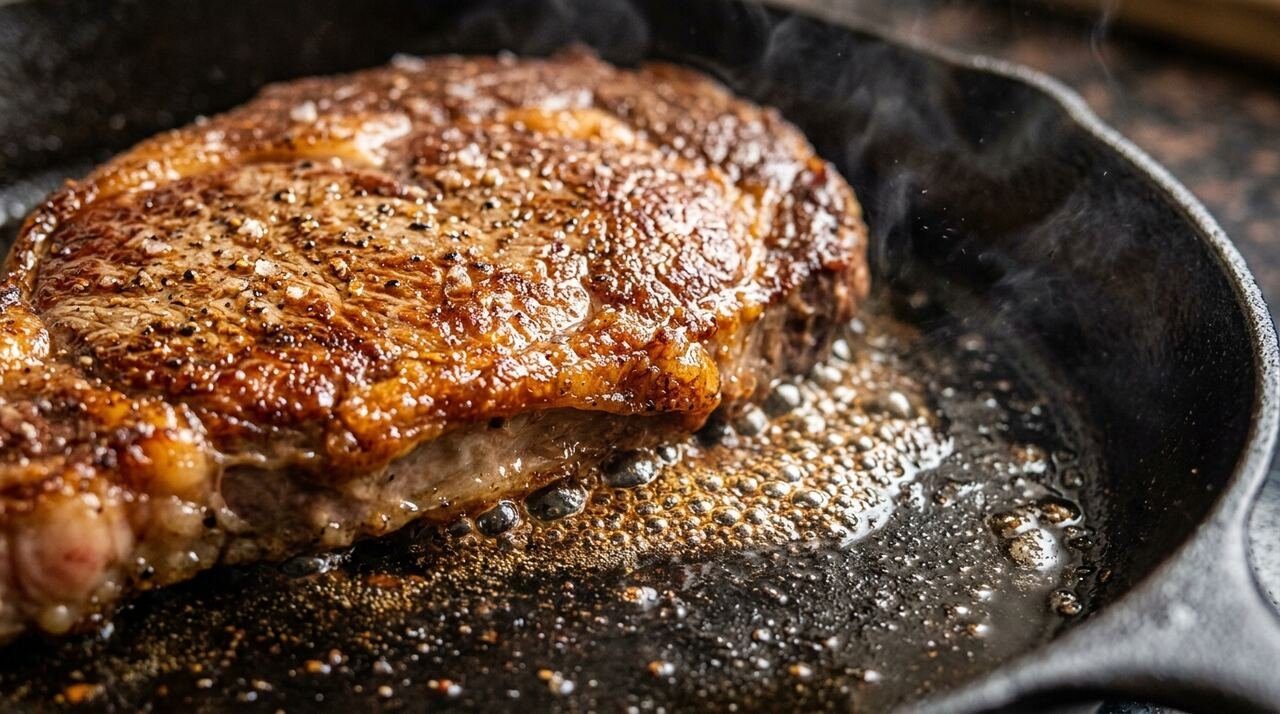
| «EXPLAIN THE MAILLARD REACTION IN THE CONTEXT OF BROWNING MEATS AND CRUST FORMATION ON ROASTED ITEMS, INCLUDING OPTIMAL TEMPERATURE (IN °F), AND FACTORS THAT ACCELERATE OR RETARD IT» | SCIENTIFIC CONCEPT | CULINARY CHEMISTRY |
| «WHAT IS GLAZING IN PROFESSIONAL COOKING AND WHAT TYPES EXIST (HONEY GLAZE, REDUCTION GLAZE, CLARIFIED BUTTER GLAZE), WITH APPLICATION EXAMPLES ON SPECIFIC PROTEINS LIKE SALMON, DUCK BREAST, AND PORK LOIN» | FINISHING TECHNIQUE | DEFINITION WITH EXAMPLES |
| «DESCRIBE THE STARCH GELATINIZATION PROCESS, DIFFERENTIATING BETWEEN QUICK AND SLOW STARCHES, AND ITS APPLICATION IN CREATING GLUTEN-FREE BINDING SAUCES FOR A RESTAURANT» | CULINARY SCIENCE | PHYSICO-CHEMICAL PROCESS |
| «COMPARE THE PAPILLOTE TECHNIQUE VS. STEAMING, INDICATING WHEN TO PREFER EACH METHOD BASED ON DESIRED TEXTURE AND FLAVOR OUTCOMES IN A PROFESSIONAL KITCHEN» | TECHNIQUE COMPARISON | TECHNICAL DIFFERENTIATION |
| «PROFESSIONAL USE EXAMPLE: HOW TO INCORPORATE SPHERIFICATION INTO A TASTING MENU, WITH PREPARATION IDEAS AND PLATING SUGGESTIONS FOR A FINE DINING RESTAURANT IN CHICAGO» | PROFESSIONAL APPLICATION | RESTAURANT USE |
| «DEFINE MISE EN PLACE IN THE CONTEXT OF PROFESSIONAL FRENCH KITCHENS, ITS OPERATIONAL IMPORTANCE, AND ORGANIZATIONAL STANDARDS FOR KITCHEN BRIGADES, WITH REFERENCE TO MODERN US BRIGADE SYSTEMS» | CLASSIC TERMINOLOGY | OPERATIONAL DEFINITION |
| «EXPLAIN SUGAR INVERSION IN ICE CREAM PRODUCTION, ITS TECHNICAL FUNCTION, WHICH AGENTS ARE USED (INVERTASE, CREAM OF TARTAR), AND SAFE CONCENTRATIONS FOR PROFESSIONAL KITCHEN USE UNDER FDA GUIDELINES» | KITCHEN SCIENCE | BIOCHEMICAL PROCESS |
| «WHAT IS THE TECHNICAL DIFFERENCE BETWEEN FLAMBÉING AND CARAMELIZING, WHEN TO APPLY EACH TECHNIQUE, AND WHAT EQUIPMENT AND SAFETY PROTOCOLS A RESTAURANT NEEDS FOR SAFE FLAMBÉING ACCORDING TO NFPA FIRE CODES» | FINISHING TECHNIQUES | PRACTICAL DIFFERENTIATION |
| «DESCRIBE THE PROCESSES OF DRY CURING AND BRINE CURING (WET SALTING), INCLUDING TIMES, SALT RATIOS, AND THE MOST SUITABLE TYPES OF FISH AND MEATS FOR EACH METHOD IN A PROFESSIONAL KITCHEN, WITH HACCP CONSIDERATIONS FOR SAFETY» | PRESERVATION TECHNIQUE | DETAILED PROCESS |
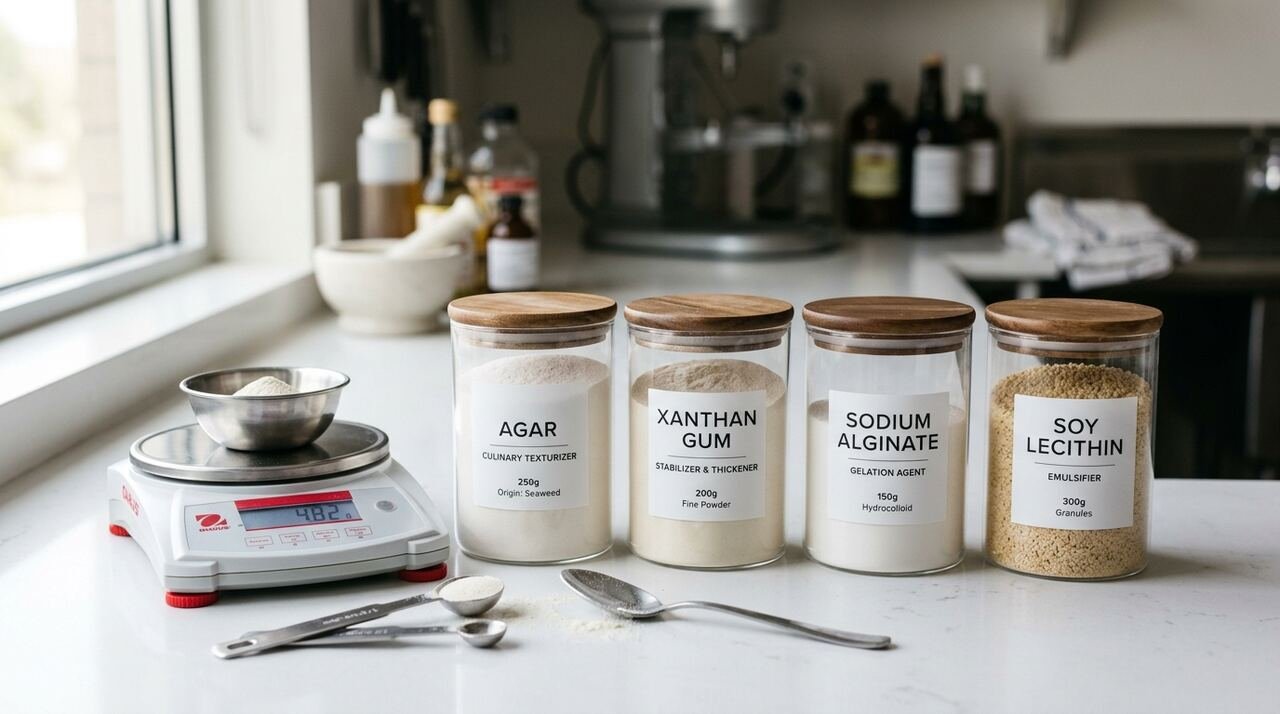
| «GENERATE A CSV WITH FACT SHEETS FOR THE KEY HYDROCOLLOIDS USED IN MODERNIST CUISINE (AGAR-AGAR, XANTHAN GUM, LECITHIN, SODIUM ALGINATE), INCLUDING FUNCTIONS, TYPICAL DOSAGE RANGES IN GRAMS PER LITER, AND COMPATIBILITY BETWEEN THEM» | TECHNICAL DATA SHEETS | CSV EXPORT |
Prompts for Food Additives and Hydrocolloids Expert in Gastro Lexicum
Gastro Lexicum is the go-to reference for chefs, R&D specialists, and kitchen managers working with food additives and hydrocolloids. It delivers complete technical spec sheets with precise, practical dosages, rigorous scientific explanations of gelling, thickening, and texturizing mechanisms, and direct application examples that bridge the gap between lab science and the demands of a high-volume professional kitchen or industrial production line. Whether you're developing a new menu item or troubleshooting a texture, Gastro Lexicum provides the clarity you need to execute with confidence.
How to use these prompts
Start with a short prompt like “Explain what agar is,” then customize it for your business. For example: “I need the full spec sheet for agar-agar as a plant-based gelling agent, including its marine origin, industrial extraction, FDA status (GRAS), practical dosage for thermo-reversible gels in a pastry kitchen (0.5–2% by weight), and application examples for a plated dessert at my Chicago fine-dining spot—targeting a 4 oz portion with a firm but quivering gel, using a local agar powder. I’m replacing gelatin for a vegan menu.” The more specific you are, the better the result.
| Prompt / Request | Area / Goal / Pain point | Category |
|---|---|---|
| «Give me the full spec sheet for agar-agar (E406) including what it is, origin, extraction, maximum usage limit under FDA (GRAS), practical dosage range for professional kitchens (0.5–2% by weight), and usage instructions with gram weights per pound of liquid.» | Agar-agar spec sheet | Gelling additives |
| «Compare agar-agar and xanthan gum (E415): differences in gelling mechanism, heat stability, resulting texture, and applications in professional kitchens.» | Hydrocolloid comparison | Texturizing techniques |
| «Generate an illustrative image of the sodium alginate gelation process in the presence of calcium, showing the formation of the three-dimensional gel network.» | Gelation process visualization | Scientific illustration |
| «Export to PDF the full spec sheet for soy lecithin (E322) with all sections: what it is, origin, extraction, commercial forms, additional information, industrial and gastronomic uses, and dosage with practical examples.» | Export additive spec sheet PDF | Technical documentation |
| «Professional example of sodium citrate (E331) in molecular gastronomy: cold emulsions, basic spherification, pH control in mousses, and calcium-transfer techniques.» | Restaurant use example | Culinary application |
| «Explain the scientific concept of ionic gelation: the mechanism by which negatively charged hydrocolloids (alginate, pectin) react with divalent cations (Ca²⁺) to form thermo-irreversible gels.» | Scientific concept gelation | Food science |
| «Full spec sheet for xanthan gum (E415): bacterial origin (Xanthomonas campestris), fermentation process, maximum usage level per FDA (GRAS), practical usage range in professional kitchens (0.1–1%), rheological properties, and compatibility with other hydrocolloids.» | Xanthan gum spec sheet | Thickening additives |
| «Difference between HM (high methoxyl) and LM (low methoxyl) pectin: sugar and calcium requirements, optimal pH range, type of gel formed, and specific applications in confectionery and pastry.» | Pectin type comparison | Texturizing |
| «Application of calcium alginate (E404) in spherification: forming spheres with liquid cores, using calcium chloride as the cross-linking agent, reaction times, and resulting textures based on concentration.» | Alginate spherification | Molecular gastronomy techniques |
| «Export to CSV a list of the main hydrocolloids used in gastronomy (agar, xanthan gum, gellan, alginate, pectin, carrageenans) including their E number, primary function, maximum dosage, and gelling temperature.» | Export hydrocolloid CSV | Ingredient database |
| «Practical example of soy lecithin (E322) in a restaurant setting: forming stable foams in emulsified sauces, techniques for incorporating into reduced-fat mayonnaise, and solubilizing lipophilic extracts in flavored waters.» | Lecithin sauces emulsions | Professional application |
| «Concept of starch gelatinization: water absorption, granule rupture, gel formation, and retrogradation; difference between modified and native starches in terms of heat resistance and stability.» | Gelatinization concept | Starch science |
| «Full spec sheet for calcium citrate (E333): calcium source and acidulant, synthetic or limestone-derived, maximum dosage in food (Quantum satis), culinary use to achieve crisp textures in vegetables (calcium blanching), and combining with sodium citrate to buffer pH.» | Calcium citrate spec sheet | Acidifying additives |
| «Compare kappa, iota, and lambda carrageenan: marine origin (red seaweed), gel type (brittle, elastic, non-gelling), reactivity with dairy proteins, and specific applications in dairy products and processed meats.» | Carrageenan comparison | Alternative hydrocolloids |
| «Explain the use of food additive numbering systems in the food industry: what E numbers mean, how they are classified (E100–E1999), the difference between natural and synthetic additives, and compare the EU mandatory labeling under Regulation (EC) No 1333/2008 with the US FDA system of GRAS notifications and food additive approvals.» | E number concept | Additive regulations |
Prompts for Ingredient & Raw Material Specialist in Gastro Lexicum
The Ingredient & Raw Material Specialist defines with scientific precision the origin, procurement, and functional properties of every element on the plate. Gastro Lexicum delivers definitions at the depth of a professional culinary encyclopedia, breaking down chemical composition, professional selection criteria, and practical application in a working kitchen. Whether your team needs to understand why starch gelatinization affects sauce texture or how to identify true Ceylon cinnamon, this agent gives you the science and trade knowledge required for menu development, purchasing specifications, and staff training in a US commercial kitchen.
How to use these prompts
Use these prompts as starting points, then layer in your own operation’s specifics. For example, a bare prompt like “Tell me about vanilla” becomes: “Provide a detailed breakdown of Madagascar Bourbon vanilla (Vanilla planifolia) for a dessert program in a 200-seat Dallas restaurant: cultivation, curing methods, vanillin content by grade (A vs. B), current wholesale pricing per pound, organoleptic notes, recommended storage at altitude, common commercial adulterations, and professional dosage per quart of crème anglaise.” The more specific you are, the better the result.
| Prompt / Request | Area / Goal / Pain point | Category |
|---|---|---|
| «Define saffron (Crocus sativus), its geographic origin, and the commercial grading categories like coupe and sargol» | Spice Origin & Classification | Ingredient Definition |
| «Explain the Maillard reaction and why understanding it matters when choosing bread flour for a long, slow fermentation» | Culinary Science Applied to Raw Materials | Scientific Concept |
| «Compare ghee and traditional French clarified butter in terms of smoke point, water content, and behavior in high-heat sautéing» | Comparison of Fat-Based Raw Materials | Term Differentiation |
| «Generate an image illustrating the formation of the gluten network during mixing, showing glutenin and gliadin strands at 40x magnification» | Visualization of Structural Processes | Illustrative Image |
| «Export a PDF data sheet for cumin (Cuminum cyminum) that includes common trade synonyms, etymology, traditional uses, and dosage in ounces per 5 lb of meat» | Technical Documentation of Spices | Export to PDF/CSV |
| «Give an example of how a two-Michelin-star restaurant in Chicago uses shiro miso in a contemporary tasting menu, detailing a specific dish and umami balance» | Application in High-End Restaurants | Professional Use |
| «Define the aging process for Manchego curado, outlining the enzymatic, proteolytic, and lipolytic phases and the key microorganisms active over 12 months» | Dairy Aging Processes | Definition with Process |
| «Explain sodium alginate: its extraction from brown algae, the difference between direct and reverse spherification, and its role in professional modernist kitchens» | Origin and Application of Hydrocolloids | Technical Ingredient |
| «Describe the differences between unrefined flake sea salt and Himalayan pink salt, focusing on mineral content, dissolution rate, and best applications for finishing vs. brining in a professional kitchen» | Comparison of Professional Salts | Term Differentiation |
| «State the smoke point of refined avocado oil and explain, based on its fatty acid profile, why it outperforms extra-virgin olive oil for deep-frying at 375°F» | Physical Properties of Fats | Scientific Concept |
| «Define oscietra caviar, including its Caspian Sea origin, the malossol salting method (under 5% salt), and the standard service protocol in an upscale US dining room» | High-End Seafood Products | Premium Ingredient Definition |
| «Explain how the ratio of glutenin to gliadin determines dough tenacity and extensibility, and why high-gluten flour works better for bagels than for biscuits» | Chemical Composition of Flours | Applied Science |
| «Compare acorn-finished Iberian pork belly (secreto ibérico) to standard US commodity bacon in terms of fatty acid composition, melting point, and optimal cooking methods» | Comparison of Meat Raw Materials | Term Differentiation |
| «Describe a mise en place system for clarified butter in a high-volume New York steakhouse: portioned in 2-ounce ramekins per steak, held at 130°F for basting during service» | Clarification Process in Professional Cooking | Professional Use |
| «Define classic menu terminology: what the USDA grades and terms “veal” vs. “beef” indicate about the animal’s age, muscle color, and appropriate cooking techniques in a professional kitchen» | Classical Service Terminology | Terminological Definition |
Prompts for Culinary Science Explainer in Gastro Lexicum in Gastro Lexicum
The culinary science communicator defines kitchen phenomena with scientific precision, from the Maillard reaction in a searing station to the smoke points of frying oils on the line. Gastro Lexicum delivers rigorous definitions backed by the depth of Larousse Gastronomique, real-world examples from professional foodservice, and the ability to generate visual aids for your explanations—helping you train staff, troubleshoot a recipe, or simply geek out on what’s really happening under the heat lamp.
How to use these prompts
These are starting points you can adapt to your operation and your recipe collection. For instance, starting from the prompt “Explain starch gelatinization,” you might ask: “As the saucier at a busy Italian spot in Chicago, I need to know precisely how starch gelatinization behaves when thickening a veal demi-glace using cornstarch versus potato starch: what temperature does each begin to thicken, how does acidity from the reduced wine affect the gel, and what are the visual cues that I’ve blown past peak viscosity? Give me a line-ready breakdown.” The more specific you are, the better the result.
| Prompt / Request | Area / Goal / Pain point | Category |
|---|---|---|
| «Define starch gelatinization, the factors that affect it, and its importance in making sauces and creams in a professional kitchen.» | scientific explanation of a culinary technique | starch gelatinization and thickeners |
| «Explain the difference between the Maillard reaction and enzymatic browning: the conditions under which each occurs, and how to tell them apart visually on a line.» | comparison of chemical processes | Maillard reaction vs enzymatic browning |
| «Generate an illustrative image of the starch gelatinization process at the molecular level.» | process illustration | scientific visualization |
| «Export to PDF the complete fact sheet for the Maillard reaction, including all chemical details and culinary applications.» | technical sheet export | scientific documentation |
| «What is an emulsion in scientific terms, what types exist (oil-in-water and water-in-oil), and which emulsifiers are commonly used in a professional US kitchen?» | definition of an emulsion | emulsions and emulsifiers |
| «Explain osmosis in the context of cooking: how it affects food preservation and techniques like brining, salting, and confit.» | applied scientific concept | osmosis in gastronomy |
| «Describe the smoke points of oils: typical temperatures in Fahrenheit for common kitchen oils, and what happens chemically and sensorially when an oil hits its smoke point.» | smoke points of oils | chemistry of oils and fats |
| «What is protein coagulation, and how does it occur in eggs (white and yolk), milk, and cheese during cooking?» | protein coagulation | protein science |
| «Explain hydrocolloids and list the main ones used in professional kitchens (agar, xanthan gum, gellan, carrageenans), noting their gelling or thickening properties.» | hydrocolloids in cooking | gelling and thickening agents |
| «How does pH affect the texture and color of cooked foods? Provide practical examples from jam making, mayonnaise stability, and fruit preparation.» | pH and acidity in cooking | chemistry of pH |
| «Professional application: how can a line cook control the Maillard reaction to get a perfect crust on a steak tartare or a roast beef without overcooking the interior?» | professional example | professional application |
| «Distinguish between gelation and gelatinization: what happens in each process, which ingredients are involved, and the final textures they produce.» | term comparison | gelation vs gelatinization |
| «Explain sugar inversion in caramel making: what it means, the temperature range it requires, and how it affects the final texture and sweetness of the caramel.» | sugar inversion | caramel chemistry |
| «Define synthetic and natural antioxidants permitted by the FDA for food use, with examples of common applications and general guidance on maximum usage levels.» | antioxidant additives | food additives |
| «What is surface tension in an emulsion, and how do emulsifiers reduce it? Provide a scientific explanation using mayonnaise and vinaigrette as examples.» | surface tension in emulsions | emulsion science |
Prompts for Culinary Terminology Lexicographer in Gastro Lexicum
The culinary lexicographer demands definitions with encyclopedic depth and the exactitude of a professional reference kitchen. Gastro Lexicum lets you query classic cooking and service terminology, compare related terms, generate illustrative images, and export fact sheets for your recipe books, training manuals, and HACCP documentation—all in natural American English, with nods to US regulations (FDA Food Code, FALCPA, HACCP), units, and commercial kitchen reality.
How to use these prompts
If you start with a short prompt like "What is mise en place?", you can refine it into a hyper-specific query tailored to your actual operation. For example, a working chef might ask: "Define mise en place in a high-volume Chicago steakhouse kitchen, including its origin, the exact components (knives at the ready, prepped mise inserts for a 12-burner saute station, grated horseradish in thirds), its role in the brigade system for a Friday night service of 350 covers, and how the layout of a refrigerated rail supports it." The more specific you are, the better the result.
| Prompt / Request | Area / Goal / Pain point | Category |
|---|---|---|
| «Define the term haute cuisine and its historical evolution from the 19th century to today» | classic terminology | encyclopedic definition |
| «Differentiate between white stock and brown stock, specifying ingredients, preparation process, and culinary uses» | term comparison | culinary technique |
| «Example of how the term à la carte is used on a Michelin-starred restaurant menu and its difference from a tasting menu» | professional usage | menu terminology |
| «Explain the Maillard reaction in relation to crust formation on meat cuts before cooking» | scientific concept | culinary chemistry |
| «Generate an illustrative image of the French julienne cut applied to carrots» | illustrative image | culinary cut |
| «Export to PDF the complete fact sheet for the term consommé, including its preparation, variations, and presentation» | export fact sheet | documentation |
| «Define the chateaubriand cut specifying origin, portion, preparation technique, and presentation» | classic cut | detailed definition |
| «What does room service mean in a luxury hotel and what service protocol does it entail?» | service term | hospitality |
| «Describe demi-glace stock, its reduction, and applications in restaurant sauces» | culinary stock | professional technique |
| «Explain the five classic mother sauces of Auguste Escoffier's system» | mother sauce | classic terminology |
| «Define the kitchen brigade structure according to Auguste Escoffier's system and the current positions in a hotel kitchen» | kitchen brigade | organization |
| «Differentiate between the terms amuse-bouche and petit fours in the service of a gastronomic menu» | term comparison | menu terminology |
| «Define the term entremets in its classic French meaning and its current use in gastronomy» | classic definition | historical terminology |
| «Explain the technique of reduction by halves (demi-glace) from a physicochemical standpoint» | scientific concept | culinary physics |
| «Generate a schematic image of the mise en place layout at a grill station» | illustrative image | kitchen organization |
Prompts for Process and Preservation Advisor in Gastro Lexicum
As a process and preservation advisor, you need rigorous technical definitions of food transformation and preservation methods. Gastro Lexicum delivers the scientific depth of Larousse Gastronomique: it explains the physicochemical mechanisms behind each process, their industrial and culinary applications, and the optimal execution conditions to ensure food safety under FDA Food Code and HACCP guidelines, while preserving product quality. From pasteurization to high-pressure processing, every entry is grounded in current U.S. regulatory standards and practical kitchen realities.
How to use these prompts
These are starting points you can adapt to your operation and your collection. For instance, if you start with the prompt "define pasteurization," you could personalize it as: "Explain pasteurization from a physicochemical standpoint for a cold-pressed juice bar in Austin, TX, specifying the exact temperature (161°F) and hold time (15 seconds) for HTST pasteurization, the mechanism of pathogen destruction (targeting E. coli O157:H7 and Salmonella), and the impact on vitamin C retention and fresh flavor profile, citing the FDA Juice HACCP regulation." The more specific you are, the better the result.
| Prompt / Request | Area / Goal / Pain point | Category |
|---|---|---|
| «What is pasteurization and what are the existing types (HTST and UHT)? Explain the scientific basis of each method» | technical definition of pasteurization | preservation processes |
| «Compare commercial sterilization with pasteurization: differences in temperature, time, shelf life, and changes in the product» | term comparison | preservation processes |
| «Explain the curing process in meats: chemical mechanisms of salting, texture formation, and flavor development characteristic of American country ham» | technical definition of curing | transformation processes |
| «Describe cold and hot smoking: temperatures in °F, types of wood used, smoke components, and preservative effect» | technical definition of smoking | preservation processes |
| «How does osmotic dehydration work? Indicate solution concentration, temperature, time, and applications in fruits and vegetables» | dehydration process | transformation processes |
| «Explain freeze-drying: process, differences from conventional dehydration, structural changes, and reconstitution» | technical definition of freeze-drying | preservation processes |
| «Define fermentation as a preservation process: types of microorganisms, metabolism, and end products in foods» | scientific concept of fermentation | biological processes |
| «Generate an illustrative image of the sous-vide preservation process and its phases of sealing, cooking, and chilling» | illustrative image | preservation processes |
| «Export to PDF the complete technical data sheet for potassium nitrate (curing salt): what it is, origin, production, maximum permitted dosage under FDA regulations, typical usage in pounds per meat product, and usage instructions with ounce measurements» | preservative additive sheet | food additives |
| «What are the synthetic preservatives approved by the FDA? List the main ones with their common names and function» | definition of preservatives | food additives |
| «Explain the mechanism of action of antioxidants (BHA, BHT, ascorbate) in preventing lipid rancidity» | scientific concept of antioxidants | food chemistry |
| «Professional use example: what preservation process would you use to prepare a menu item featuring torchon of foie gras, and what is the resulting shelf life under refrigeration?» | professional use in restaurants | gastronomic application |
| «Compare wet curing (brining) with dry curing in the meat industry: advantages, disadvantages, and sensory results» | technique comparison | transformation processes |
| «What is high-pressure processing (HPP) as a preservation method? Indicate pressures in psi, time, and effects on microorganisms and nutrients» | technical definition of HPP | innovative preservation processes |
| «Explain the phenomenon of ice crystallization in frozen foods: crystal formation, cell damage, and strategies to minimize it» | scientific concept of freezing | food physics |
Prompts for Culinary Training & Learning Guide with Gastro Lexicum in Gastro Lexicum
The Culinary Training & Learning Guide is a specialized role designed to support students and early-career culinary professionals. It uses Gastro Lexicum as a reference tool to explain complex concepts with scientific rigor, resolve terminological doubts that emerge during training, and build structured study paths through the professional kitchen lexicon. Whether breaking down millenary techniques or cutting-edge processes, the agent delivers the depth and precision of a working reference—grounded in FDA Food Code and HACCP best practices, with nods to FSA, FSANZ, and FSSAI where regulatory comparisons matter.
How to use these prompts
You start with a prompt like “Define soufflé with its etymology, execution step by step, common mistakes, and sweet and savory examples,” then refine it to match your kitchen’s reality: “Explain soufflé from concept to plate: word origin, technique including proper egg-white folding, three frequent pitfalls that cause it to fall, and three classic recipes (one savory, two sweet) scaled for a 40-seat restaurant in Austin, Texas.” The more specific you are, the better the result.
| Prompt / Request | Area / Goal / Pain point | Category |
|---|---|---|
| «What is the Maillard reaction and what factors promote or hinder it in professional cooking?» | Foundational Scientific Concept | Culinary Chemistry |
| «Generate an illustrative image that shows the process of starch gelatinization under a microscope.» | Process Visualization | Illustrative Image |
| «Export as PDF a complete definition of the term ‘emulsion,’ including types, common emulsifiers, and practical examples from kitchen work.» | Training Resources | PDF/CSV Export |
| «Difference between ‘blanching’ and ‘scalding’ in cooking: definitions, temperatures, and practical applications for each technique.» | Term Comparison | Culinary Techniques |
| «Professional usage example: How does a fine-dining kitchen in San Francisco apply reduction techniques, and what mistakes should be avoided? Contrast with a similar approach in a London Michelin-starred restaurant.» | Professional Context | Hospitality & Restaurant Operations |
| «Explain the scientific process of egg protein coagulation and how it affects culinary preparations.» | Scientific Concept | Kitchen Science |
| «Full fact sheet for the additive carboxymethylcellulose (CMC, E466): what it is, origin, production, commercial forms, maximum permitted usage per FDA (and comparable limits from UK FSA and FSANZ), basic dosage in professional cooking by weight per pound, and method of incorporation with ounce-per-pound examples.» | Food Additive | FACT SHEET |
| «Definition of ‘mise en place’: concept, importance in professional kitchen organization, and examples of how it is implemented in brigade systems.» | Classic Terminology | Kitchen Organization |
| «What are the regional names for white sauce (béchamel) across English-speaking countries—including the US, UK, Australia, India, and Canada—and how do their preparations differ?» | Regional Equivalencies | Regional Nomenclature |
| «Explain the difference between glaze and mirror glaze in pastry: technique, ingredients, and visual result.» | Terminology Question | Professional Pastry |
| «Describe the scientific process of confit: chemical reactions during slow cooking in fat and their effect on food texture.» | Technical Process | Culinary Science |
| «Volume-to-weight equivalences in professional cooking: conversion tables for grams, milliliters to US customary units (fluid ounces, cups, pounds) and UK imperial measures, with accuracy notes.» | Practical Resources | Culinary Math |
| «Complete definition of the hydrocolloid agar-agar: origin, gelling properties, applications in molecular gastronomy, and correct dosage in grams per liter and teaspoon equivalents.» | Functional Ingredient | Natural Additives |
| «Recommended learning pathway to master molecular cuisine vocabulary: the order in which key technical terms should be introduced to a student for progressive understanding.» | Learning Roadmap | Progressive Learning |
| «Full fact sheet for the preservative sorbic acid (E200): what it is, source, production process, commercial forms, maximum permitted dosage per FDA (and corresponding limits from UK FSA and FSANZ if different), typical use level in preservation by weight per pound of food, and usage instructions with ounce-per-pound examples.» | Food Additive | FACT SHEET |
Tips for getting more out of Gastro Lexicum
Classic Definition
When you need the exact culinary-science definition of a term, ask Gastro Lexicum for it directly. For example, "Define 'emulsion' according to food science terminology" will return a precise academic explanation without chef-lore or oversimplification.
Request Additive ID Number
In US kitchens, additives are identified by their FDA or INS number, not E numbers. Ask Gastro Lexicum: "What's the INS number for carrageenan and how does it function in dairy-free sauces?" to get a clear, code-compliant explanation you can trust.
Etymology Inquiry
Understanding where a term comes from often solidifies its meaning. Ask Gastro Lexicum: "What's the etymology of 'caramelization' and how did the process get its name?" It'll give you the French or Latin roots and tie them to kitchen practice.
Ask for Dosages
When working with ingredients that have functional or regulatory limits, don't guess—ask Gastro Lexicum: "What's the maximum typical usage of monosodium glutamate per gallon of soup in a professional kitchen?" The answer will be grounded in FDA Food Code guidance and sensory science.
Compare Terms
Kitchen technique distinctions matter for execution. Ask Gastro Lexicum: "What's the difference between roasting and baking in a convection oven?" It will break down temperature, airflow, and moisture management, so your team sets the correct program every time for consistent results.
Specify Context
Gastro Lexicum tailors its advice when you state the setting. Instead of a generic question, say: "Explain how to use citric acid to prevent browning in prepped produce for a high-volume commissary kitchen." This gets you concentration, soak time, and shelf life specifics, not home-kitchen tips.
Request Practical Examples
When exploring hydrocolloids, avoid vague questions. Instead, ask: "Which hydrocolloid would you use to gel a low-pH fruit purée for a plated dessert at low temperature, and why?" Gastro Lexicum will give you a direct match like pectin or agar with justification.
Common Mistakes
Save a batch by anticipating common pitfalls. Ask Gastro Lexicum: "What are the most frequent errors when using agar-agar to set a dessert in a busy pastry station?" You'll learn about hydration, bloom, and boiling requirements that novices often miss, and how to fix them quickly.
Specify Output Format
If you need a structured reference, tell Gastro Lexicum. "Present a comparison table of common hydrocolloids used in modernist cooking, showing gel temperature, clarity, and shear reversibility." You'll get a ready-to-print guide to post on the station instead of paragraphs.
Cite Regulations
For HACCP or food-safety queries, always ask Gastro Lexicum to cite its source. Example: "What does the FDA Food Code say about sodium nitrite usage in house-cured bacon, and what are the maximum allowable levels?" You'll get chapter-and-verse, not opinion.
More prompt libraries for AI Chef Pro agents
Every agent in the suite has its own prompt library. Browse the rest and put the AI to work across your whole operation:
- Prompts for Allergen ID
- Prompts for Avant-garde Cuisine
- Prompts for Bakery Consultant Pro
- Prompts for Barista Consultant Pro
- Prompts for Bartender Consultant Pro
- Prompts for Burgers Pro AI+
- Prompts for Catering AI+
- Prompts for Chef Consultant Pro
- Prompts for Chocolate Consultant Pro
- Prompts for Creative Bakery
- Prompts for Creative Chocolate Making
- Prompts for Creative Ice Cream Making
- Prompts for Creative Pastry
- Prompts for Executive Chef Pro
- Prompts for Fermentus Pro AI+
- Prompts for Food Pairing AI
- Prompts for Waste GenCal
- Prompts for Gastronomy Consultant Pro
- Prompts for Gelato & Ice Cream Consultant
- Prompts for Pastry Consultant Pro
- Prompts for Pizza Consultant Pro
- Prompts for VegChef Plant-Based
- Prompts for Restaurant Manager Pro
- Prompts for Sommelier Consultant Pro
- Prompts for Staff Meal
Frequently asked questions
What is Gastro Lexicum?
Gastro Lexicum is AI Chef Pro's dedicated agent for the scientific-culinary lexicon. It delivers precise definitions of technical terms, techniques, ingredients, and food additives with the rigor of a professional gastronomic dictionary, helping chefs communicate and execute with accuracy.
How can I obtain information on a specific food additive?
Request the additive by its common name and ask for its E number, maximum authorized dosage, usage instructions, and precautions. Clearly indicate whether you need information for industrial-scale production or restaurant kitchen use, so Gastro Lexicum tailors the technical detail.
Does Gastro Lexicum provide up-to-date food legislation information?
Yes, it offers current information on additives, labeling, and food safety regulations. The agent draws from general regulatory knowledge, but does not replace official legal advice. Always cross-check with local, updated legislation to confirm compliance, especially in the US under FDA, USDA, or state-level rules.
Can I request definitions of classic culinary techniques?
Absolutely. Gastro Lexicum covers classic terminology from traditional cuisine—think mother sauces, knife cuts, and brigade roles—as well as modern terms from molecular gastronomy and contemporary culinary science. It provides a comprehensive technical vocabulary that supports clear communication and precise execution in any professional kitchen.
How do I get practical usage examples for an ingredient?
To get practical usage examples, structure your prompt to ask for examples that include specific weights, temperatures, and step-by-step procedures for a concrete dish or application. The more precise the request, the more immediately useful the response from Gastro Lexicum.
Does the tool distinguish between industrial and culinary use?
Yes, by specifying whether your query concerns industrial batch production or scratch cooking in a professional kitchen, Gastro Lexicum delivers differentiated guidance. It adjusts details on scaling, shelf-life considerations, and regulatory limits to match the intended use environment, ensuring the information is directly applicable to your operation.
Can I compare two terms or concepts using Gastro Lexicum?
Yes. Formulate a prompt that explicitly asks for the differences and similarities between the two terms, and Gastro Lexicum will produce a structured, side-by-side comparison. This is particularly useful for contrasting techniques like braising vs. stewing or ingredients like baking powder vs. baking soda.
What level of detail can I expect in the responses?
The level of detail is driven by how you frame the question. Gastro Lexicum can output a concise definition or a complete technical data sheet including dosages, step-by-step procedures, and contextual examples. Make it clear in the prompt whether you want a quick lookup or a deep dive.
Does Gastro Lexicum include allergen information?
Yes, Gastro Lexicum includes allergen profiles for many ingredients and additives. It flags the FDA's nine major allergens (or those defined by FSA, FSANZ, FSSAI), but this information is for reference only. Always verify against actual product labels and the most current local allergen declaration rules.
How can I export the information I obtain?
You can export any definition or collection of definitions directly to PDF or CSV from within Gastro Lexicum. This feature makes it simple to compile kitchen reference sheets, assemble training manuals, or build a personalized culinary glossary for your team.