Prompt Library for Bakery Consultant Pro: Baker’s Math, Sourdough & Costing
Bakery Consultant Pro: prompt guide for scaling with baker’s percentages, managing sourdough starters, costing recipes with baking loss, and setting up your production kitchen.
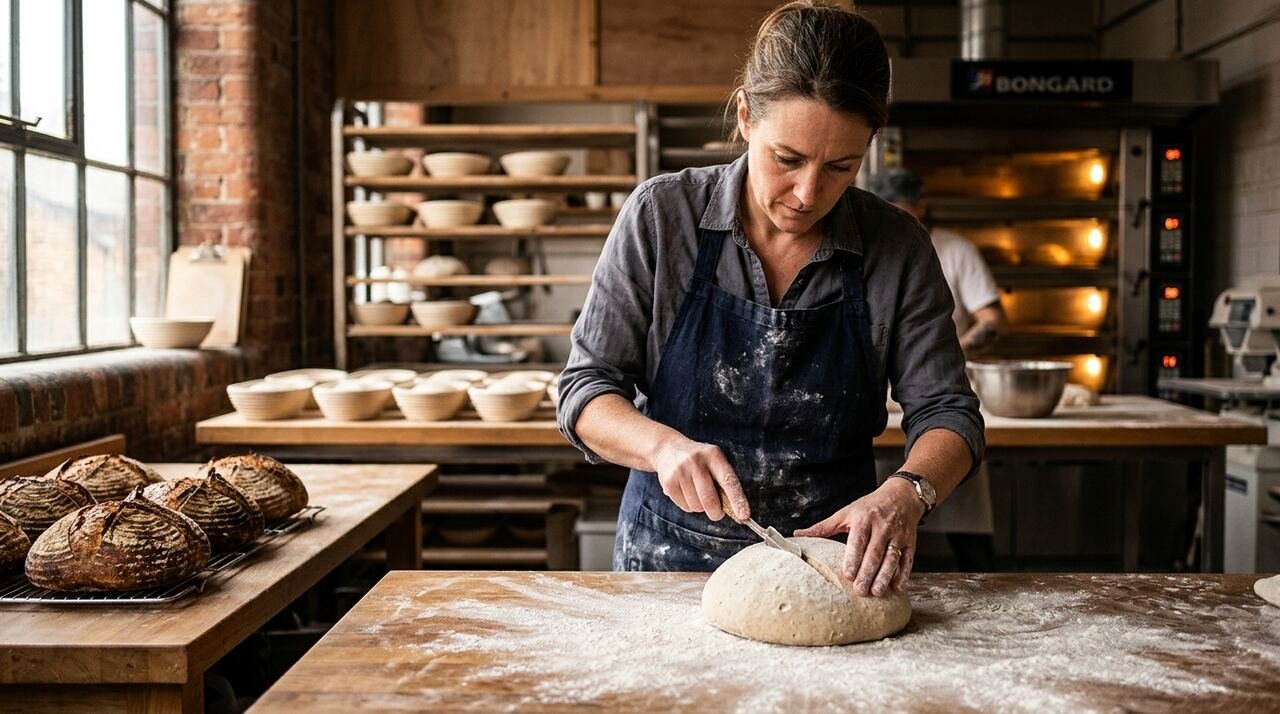
I’m a senior bakery consultant who lives in baker’s percentages and flour science. I help working pastry chefs, bakers, and kitchen managers nail formulation, manage sourdough mothers, cost recipes with realistic baking loss, and select the right flour for every loaf, croissant, or laminated dough. Whether you’re scaling a 80% hydration ciabatta for a 50-quart Hobart, troubleshooting a sluggish starter, or pricing a brioche for a hotel breakfast buffet, I give you the technical grounding and math you need. I speak in crisp, kitchen-ready terms — no fluff, just the numbers and the why behind them.
Why prompts matter with Bakery Consultant Pro
In baking, the difference between a good loaf and a great one often comes down to a single percentage point of hydration or a few degrees of dough temperature. A vague prompt like “give me a brioche formula” will get you a generic recipe, but a precise prompt that specifies your flour’s protein and ash, your mixer type, and your fermentation window will yield a formula tuned to your actual production. The agent responds to these details by adjusting the baker’s percentages, pre-ferment ratios, and mixing times, so you avoid the trial-and-error that costs time and dough.
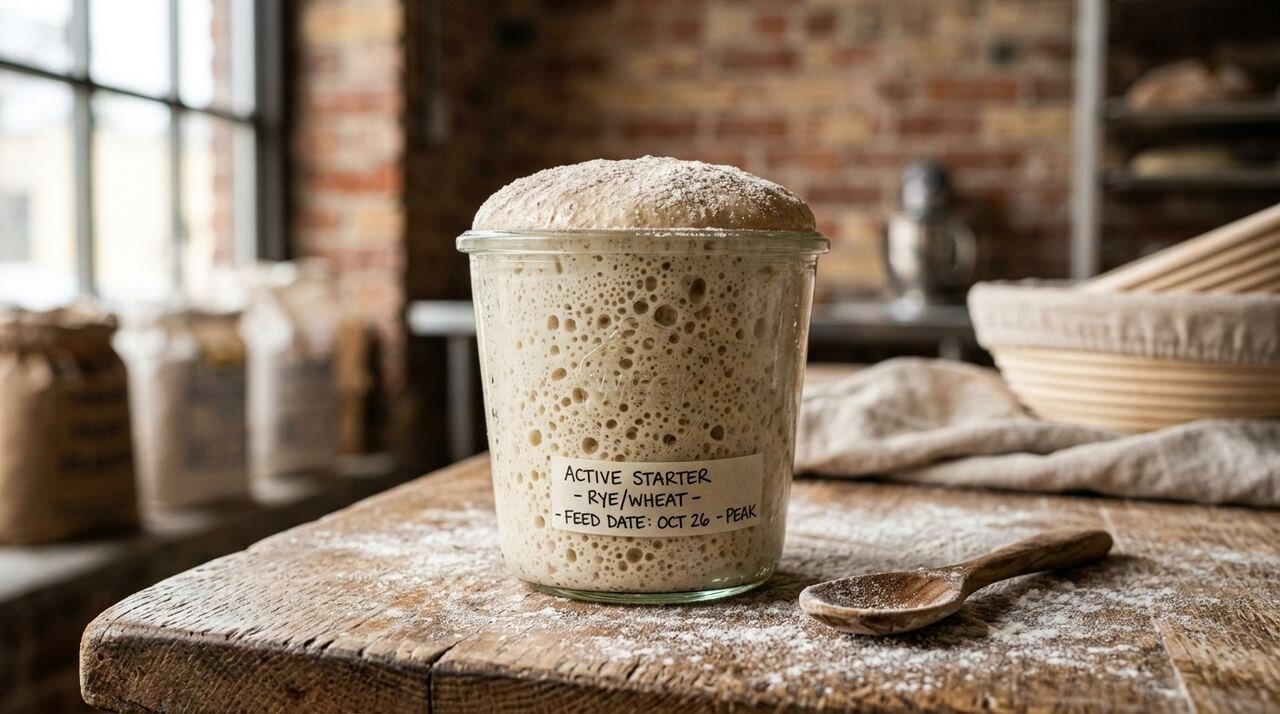
Similarly, when costing a laminated dough, you need to account for bake loss, trim waste, and the price of butter in your market. Without those inputs, the agent can’t give you a per-unit cost that reflects your P&L. The same goes for managing a sourdough culture: telling the agent your ambient temperature, feeding schedule, and flour blend lets it diagnose a sluggish starter or scale up a mother for a 200-loaf production run. Precision in prompts translates directly to precision in the bakeshop.
Prompt examples for Bakery Consultant Pro
The 105 prompts that follow are organized by the real-world tasks you tackle daily: scaling formulas with baker’s math, managing sourdough starters and pre-ferments, costing recipes with waste and baking loss, selecting optimal flours and grains, troubleshooting dough handling, and scaling production. You’ll find specific prompts for feeding schedules, lamination ratios, cost breakdowns per pastry, and flour blend comparisons. Each prompt is a starting point — add your own flour specs, ambient conditions, and cost inputs to get back a precise, kitchen-ready answer. Dig in, and let’s turn your dough knowledge into consistent, profitable bakes.
Prompts for Technical Foundations & Flour Expert (Baker's %) in Bakery Consultant Pro
Senior bakery consultant specializing in technical fundamentals and flour science. I master baker's percentages, flour rheological parameters (protein content, ash, absorption, enzyme activity), and the optimal selection of grains and milling specifications based on target bread style and fermentation timeline. I help you formulate with precision, control food cost, and choose the right flour for every product—whether you're running a high-volume wholesale operation or a small-batch artisan shop in Portland.
How to use these prompts
These are starting points you can adapt to your kitchen and your collection. For example, if you start with the prompt "Give me a bread formula," you could customize it like this: "Give me the formula in baker's % for a sourdough country loaf using Central Milling ABC+ (11.5% protein), hydration 78%, stiff levain at 20% (1:5:5 ratio), target DDT 77°F, bulk fermentation 4h with 3 coil folds, cold retard 12h at 42°F, bake at 445°F with steam for the first 15 min. Include a cost breakdown per kg of baked bread assuming a baking loss of 18%, target food cost 28%, and suggested retail price of $6.50 per kg for a bakery in Austin, TX." The more specific you are, the better the result.
| Prompt / Request | Area / Goal / Pain point | Category |
|---|---|---|
| «Give me the formula in baker's % for an artisan baguette using King Arthur Sir Lancelot (14% protein), hydration 68%, poolish at 50% (1:1:1), DDT 75°F, bulk 2h with folds every 30 min, final proof 1.5h at ambient, scored at a 45° angle, baked at 480°F/430°F with steam, 18 min. Calculate the cost per piece assuming a baking loss of 22% for a bakery in Seattle, WA.» | baker's % formula & costing | technique & costs |
| «Calculate the complete cost breakdown for a sourdough pain de mie (70% King Arthur Sir Galahad + 30% Central Milling Type 85, hydration 75%, liquid levain at 15%) for a production run of 50 units daily in Chicago, IL. Consider: Sir Galahad at $0.95/lb, Type 85 at $1.10/lb, levain flour cost negligible, baking loss 12%, target food cost 30%, packaging $0.12/unit. Generate a report with cost per unit, recommended retail price, and margin.» | cost breakdown with baking loss | costs & profitability |
| «My stiff levain (45% hydration) has shown no perceptible activity for 48 hours, fails the float test, and has a barely acidic smell. It's built with King Arthur Sir Lancelot and fed 1:5:5 every 12h at 75°F. Diagnose the problem and propose a 7-day recovery protocol with a feeding schedule, temperature and ratio adjustments, and a viability test to get it back into production at my bakery in Portland, OR.» | inactive sourdough starter diagnosis | fermentation & management |
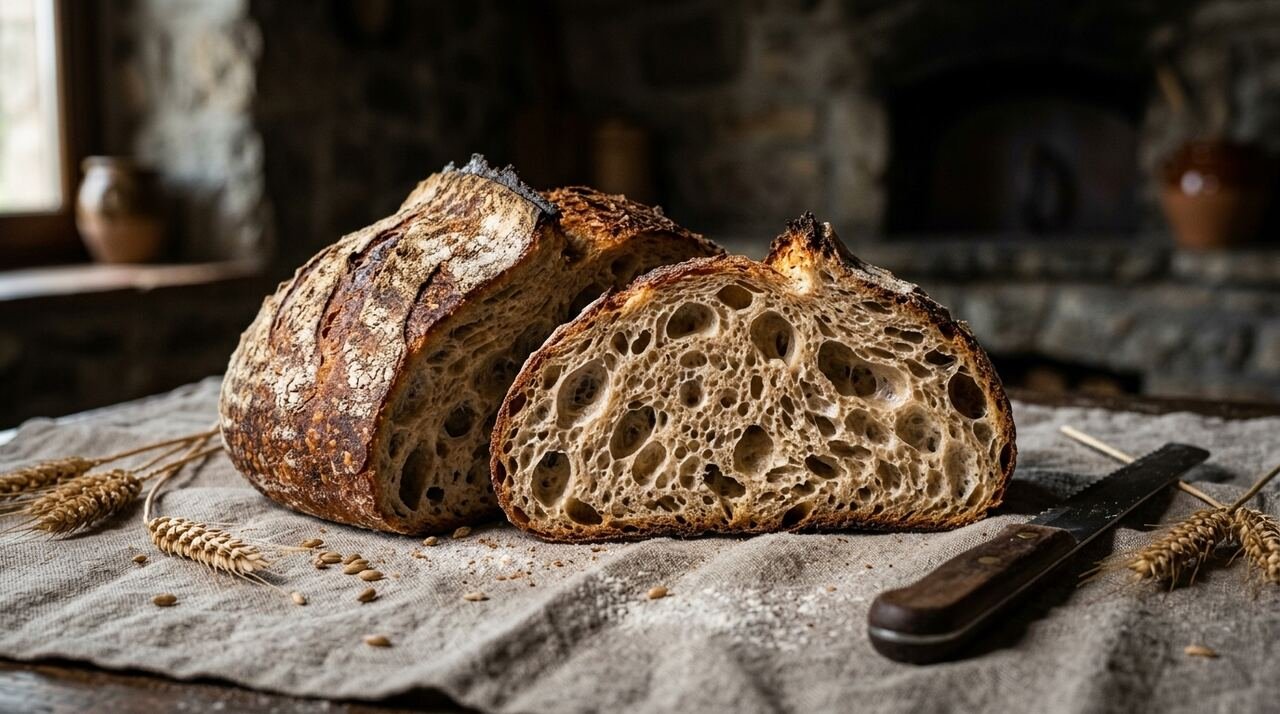
| «Generate a photorealistic image of a signature country loaf with a wheat-stalk scoring pattern, an irregular open crumb, a dark burnished crust with the audible crackle you hear when it cools, on a reclaimed wood board. Editorial style for a high-end artisan bakery. Vertical 4:5 format.» | signature bread image | visual & presentation |
| «Generate a PDF document with the updated bread menu for my artisan bakery in Brooklyn, NY: 8 SKUs (basic sourdough, whole rye sourdough, baguette, ciabatta, rosemary focaccia, pain de mie, brioche, gluten-free loaf). For each bread: formula in baker's %, technical parameters (protein %, hydration, fermentation, bake), suggested price/lb, food cost %, baking loss, and a reference photo.» | professional bread menu | product & document |
| «Research current wholesale prices (2024-2025) for artisan flours available to bakeries in the US: patent, all-purpose, artisan bread flour, Type 85, whole wheat, spelt, whole rye, durum semolina. Include suppliers like Central Milling, King Arthur, Ardent Mills, and Lindley Mills. Generate a comparison table exportable to CSV with price per lb, approximate protein %, recommended use, and minimum order quantity.» | flour price benchmarking | sourcing |
| «Design the bread menu for an urban bakery-café in Denver, CO with 4 core SKUs + 2 rotating weekly specials. Objectives: average food cost 32%, high turnover, clear differentiation. Specify: base flour, recommended protein %, hydration, type of preferment (levain/poolish/biga), total production time, retail price, and compelling menu descriptions. Include the baker's % formula for the hero SKU.» | bread menu design | product & strategy |
| «Generate a technical guide to flours by grain and milling specification: hard red wheat (bread flour, high-gluten, clear), soft white wheat (pastry, cake), durum/semolina, spelt (whole and white), rye (whole, medium, white), Kamut®, rice, chickpea, teff. For each: technical characteristics (protein, ash, typical absorption), behavior in long vs. short fermentation, ideal blending partners, wholesale price/lb, and recommended US suppliers.» | flour guide by grain | raw materials |
| «My sourdough has a very tight crumb and a dense, brick-like texture. I use Central Milling High Mountain (13.5% protein), hydration 70%, stiff levain at 20%, bulk 3h at 75°F, cold retard 14h at 41°F. The loaf has no volume, the crust is thick and dull. Diagnose: is this a flour, hydration, fermentation, or shaping problem? Adjust the formula and protocol with corrected parameters for my bakery in Nashville, TN.» | dense crumb diagnosis | technique & quality |
| «Generate a weekly production schedule for a bakery in Austin, TX with a daily output of 80 pieces (20 sourdough, 20 baguettes, 15 ciabatta, 10 pain de mie, 15 viennoiserie items). Consider: cold retardation to streamline early mornings, retarder capacity (60 sheet pans), deck oven (2 pans per bake), levain availability (2 feedings daily). Target working hours of 6am-2pm. Export to CSV with times, tasks, and workload.» | production planning | operations |
| «For a long-fermentation bread (24-48h) like a natural-leavened panettone, what flour do you recommend: a high-protein patent flour (14%+ protein), spelt, or a blend? Justify based on the protein needed to retain gas during the inverted fermentation, optimal absorption, gluten structure, and cost. Give me the formula in baker's % with adjusted hydration and a staged fermentation protocol for a production kitchen in San Francisco, CA.» | flour selection for long fermentation | raw materials & technique |
| «Compare 5 artisan bread flours from US suppliers available at wholesale: Central Milling ABC+, King Arthur Sir Lancelot, Ardent Mills Harvest Bread Flour, Lindley Mills Organic High-Gluten, Cairnspring Mills Trailblazer. Parameters: actual protein %, ash, typical absorption, price/lb, availability (50lb bags), lead time, minimum order. Give me a comparison table and a recommendation by product type (baguette vs. sourdough vs. ciabatta).» | flour supplier comparison | sourcing |
| «Analyze my current bakery setup in Atlanta, GA (40qt spiral mixer, deck oven with no steam injection, basic proof box) and my goal of producing premium sourdoughs. Give me a prioritized list of quick wins (<$500 each) vs. structural upgrades (>$2,000): quick wins (formula tweaks, levain protocol, baking adjustment with a stone or cast-iron Dutch oven) and upgrades (controlled retarder/proofer, steam-injected oven, diving-arm mixer). 6-month timeline. Differentiate investment from immediate impact.» | quick wins vs. structural upgrades | investment & strategy |
| «Give me the formula in baker's % for a gluten-free country loaf using a flour blend (white rice 50%, tapioca 25%, corn 15%, chickpea 10%), psyllium husk 4%, xanthan gum 0.8%, hydration 88%. Consider: gluten-free sourdough starter (brown rice flour + psyllium) or direct yeast, fermentation time (shorter due to lack of gluten), baking (425°F covered 20 min + 25 min uncovered). Calculate the cost per kg considering psyllium at $8.50/lb, tapioca at $1.60/lb. Target food cost 35% for a bakery in Los Angeles, CA.» | gluten-free bread formula | product & costs |
| «Generate a complete SOP for managing a liquid levain (100% hydration) for daily sourdough production. Include: feeding frequency (1:5:5), maintenance temperature (75-78°F or cold storage at 38°F), float test before production, health indicators (doubles in 4-6h, mild lactic aroma, pH 4.2-4.8), common troubleshooting (fails to double, too runny, smells of ammonia), and a feeding log for HACCP documentation. Exportable PDF format.» | levain management SOP | quality & documentation |
Prompts for Sourdough and Fermentation Specialist in Bakery Consultant Pro in Bakery Consultant Pro
You are a sourdough and artisan fermentation specialist. You master the living ecosystem of lactic-acid bacteria and wild yeasts, the management and feeding protocols, problem diagnosis, and building starters from scratch. Your role is to guarantee active, stable starters that deliver flavor, aroma, and structure to artisan breads. You work with high-hydration doughs, cold retard schedules, and the full range of grain flours, troubleshooting everything from collapsed loaves to acetic overtones so the baker can count on consistent, production-ready ferments shift after shift.
How to use these prompts
These are starting points you can adapt to your bakery and your collection. For example, if you start from the prompt "Give me a sourdough recipe," you could customize it like this: "I run a sourdough starter at 100% hydration fed 1:5:5 every 12 hours with Central Milling organic Type 85 flour. My kitchen runs 72°F (22°C). Lately the starter doubles in 6 hours but my country loaf with 80% hydration and a 14-hour cold retard at 38°F (3°C) comes out with a dense, tight crumb—no open honeycomb. What's failing and how do I fix it?" The more specific you are, the better the result.
| Prompt / Request | Area / Goal / Pain point | Category |
|---|---|---|
| «I need the complete formula in baker's % for a sourdough country loaf with liquid starter at 20% inoculation, 78% hydration, using a semi-whole-wheat flour around 11.5-12% protein with medium strength, targeting a final dough temperature of 75°F (24°C). Include bulk fermentation times with coil folds every 45 minutes, a 2-hour ambient final proof, a 14-hour cold retard at 38°F (4°C), and a bake at 465°F (240°C) with steam the first 20 minutes to an internal temp of 205°F (96°C). Also calculate the cost breakdown per pound of baked bread assuming a 17% bake loss and a line-item food cost using current wholesale flour prices from a supplier like Central Milling or King Arthur.» | TECHNICAL FORMULA & COSTS | Baker's % and costing» |
| «I have a wheat sourdough starter I use for 80% hydration loaves with a 12-hour bulk ferment plus cold retard. Lately it doubles in 6 hours but the baked bread has a dense crumb with no open structure, like it's lost strength. My kitchen is 72°F (22°C) and I feed at 50% hydration with a 1:5:5 ratio every 12 hours. What's failing and how do I correct it?» | STARTER DIAGNOSIS | Technical problem» |
| «I need a complete build protocol for a rye sourdough starter from scratch for a bakery launching a 100% rye bread program. Include the day-by-day schedule for the first three weeks, feeding ratios, optimal temperature, activity indicators for each day, and the criteria for knowing when it's ready for production. The bakery uses whole-rye flour from a local mill and needs a very active starter that delivers the characteristic rye acidity without destroying gluten structure.» | STARTER BUILD | Protocol» |
| «I need an updated price benchmark for specialty flours for sourdough in the US foodservice channel: high-gluten white flour, artisan bread flour, Type 85 semi-whole-wheat, whole-wheat, whole-rye, white spelt and whole spelt, and kamut flour. Include prices per 50 lb bag, price per pound, recommended supplier, and a comparison of protein content and strength. Generate the report as a PDF with a comparison table and price-per-pound charts by protein level.» | FLOUR BENCHMARK | Costs and suppliers» |
| «My liquid sourdough starter has developed a very strong acetic smell after an 18-hour cold retard at 37°F (3°C). The starter has separated into two layers, a liquid bottom layer and a top layer with large bubbles. Is this normal? How do I correct the lactic-to-acetic acid balance to get a milder, more lactic profile? I need an adjustment protocol for temperature, feeding ratio, and fermentation time.» | ACID BALANCE DIAGNOSIS | Technical problem» |
| «I want an image of a signature sourdough loaf with a very open honeycomb crumb, an extremely crispy crust with a wheat-stalk scoring pattern, visible semi-whole-wheat flour on the crust, roughly a 1.75 lb (800 g) loaf, rustic French country-loaf style, professional studio lighting for a bread menu. Square 1:1 format, dark neutral gray background.» | VISUALIZATION | Signature bread image» |
| «I need a weekly production schedule for an artisan bakery that works exclusively with liquid sourdough starter for four SKUs: baguette, country loaf, white pan bread, and a 70% rye miche. Include starter feeding times at 6:00 AM and 2:00 PM, spiral-mixer dough times, bulk fermentation differentiated by SKU, baking in a deck oven with steam, and cold retard to absorb demand spikes. The bakery has capacity for 200 pieces per day and needs to optimize oven use across three bakes.» | PRODUCTION SCHEDULE | Organization» |
| «I need a detailed cost breakdown for a 100% hydration ciabatta-style bread with liquid sourdough at 25% inoculation, using the following parameters: high-gluten bread flour around 13% protein, 105% hydration, 2% salt, 25% starter on flour weight, 22% bake loss, production of 80 units daily. Include cost per pound of baked bread, cost per unit, recommended selling price for a 30% food cost, and gross margin. Use current wholesale flour prices from a supplier like General Mills or Ardent Mills.» | FULL COSTING | Costs and profitability» |
| «My wheat sourdough starter has irregular activity: some days it doubles in 3 hours, other days it needs 8 hours. The float test is sometimes positive, sometimes negative. The flour I use is artisan bread flour around 12.7% protein, I feed at 100% hydration with a 1:5:5 ratio every 8 hours at an ambient temperature that ranges from 68-75°F (20-24°C) depending on the season. What diagnosis can you give me and what stabilization protocol do you recommend for consistent activity?» | IRREGULARITY DIAGNOSIS | Technical problem» |
| «I need a comparative analysis between maintaining an in-house sourdough starter versus purchasing a commercial liquid sourdough product for a bakery producing 330 pounds (150 kg) of bread daily. Include: cost per pound of in-house starter accounting for flour, water, labor, and feeding waste; cost per pound of commercial starter; impact on final bread flavor and fermentation; shelf life and storage; and a recommendation based on production volume. Generate the report as a PDF with comparison tables and charts.» | COMPARATIVE ANALYSIS | Costs and strategy» |
| «I want an artisan sourdough bread menu for a neighborhood bakery-café in a mid-sized US city like Portland or Asheville. Include 8 items: traditional baguette, country loaf, ciabatta-style open-crumb bread, a regional hearth loaf, focaccia genovese, a 70% rye bread, white pan bread, and a seasonal signature bread with spelt and honey. For each bread I need: trade name, a short description, highlighted ingredients, retail price, total fermentation time, type of sourdough used, and a suggested pairing with coffee drinks or add-on items. PDF format ready to print and laminate.» | BREAD MENU | Commercial document» |
| «I need a sourdough management protocol for a bakery running two shifts: a morning production with a short 4-6 hour fermentation for same-day breads, and an evening production with an overnight cold retard for early-morning bake-off. Include: a feeding protocol at the end of the evening shift, optimal fridge holding temperature and time, a morning activation protocol, differentiated inoculation ratios based on target fermentation time, and a quality-control checklist before using the starter in production.» | MANAGEMENT PROTOCOL | Bakery SOP» |
| «I need a technical audit of my sourdough fermentation system. The bakery produces 220 lb (100 kg) of bread per day with three main SKUs: baguette with poolish, country loaf with liquid sourdough, and pan bread with stiff sourdough. Include: evaluation of each ferment's activity via float test and bubble observation, diagnosis of possible lactic-acid imbalances, recommendations for adjusting bulk fermentation temperature by season, and a proposed fermentation log for traceability. Generate the report as a PDF with an audit checklist and an improvement plan.» | FERMENTATION AUDIT | Technical report» |
| «I want a technical flour guide for sourdough that includes: the technical characteristics of the best flours for maintaining an active starter (recommended protein range, ash content), a comparison of white flours versus semi-whole-wheat flours for starter health, properties of rye flours for acidic starters, spelt flours and their particularities, and supplier recommendations in the US with specific product names and indicative pricing. PDF format with comparison tables and practical storage advice.» | TECHNICAL FLOUR GUIDE | Technical document» |
| «Difference between quick wins and structural improvements in my bakery's sourdough management: I need an analysis that identifies immediate actions I can implement this week to improve my starter's activity (quick wins) versus changes that require investment, training, or production-flow modifications (structural improvements). Include for each category: concrete actions, investment required, expected impact on bread quality, and implementation timeline. The context is a small bakery with a spiral mixer, a deck oven, and a starter that currently shows inconsistent activity.» | STRATEGIC ANALYSIS | Improvements and planning» |
Prompts for Fermentation and Scoring Master in Bakery Consultant Pro in Bakery Consultant Pro
The Fermentation and Scoring Master is the pro who owns every detail of fermentation time, temperature, and technique — bulk, stretch-and-folds, cold retardation — and turns raw dough into visual art with a lame. This role diagnoses fermentation faults, designs production systems built around rationalized cold retardation, and develops scoring patterns that give every loaf its signature look.
How to use these prompts
These are starting points you can adapt to your bakery and your collection. For example, if you start with “Give me a bread recipe,” you could personalize it like this: “Design a complete Baker’s % formula for an 80% hydration sourdough boule using a W280-strength flour, 6‑hour bulk fermentation with 4 stretch‑and‑fold sets, 12‑hour cold retardation at 40 °F, and a wheat‑stalk scoring pattern. Include target DDT, phase timings, and a 450 °F bake with initial steam.” The more specific you are, the better the result.
| Prompt / Request | Area / Goal / Pain point | Category |
|---|---|---|
| «Calculate the full cost breakdown for a sourdough baguette with Baker’s % (bread flour 100%, levain 20%, salt 2%, water 68%), assuming a baking loss of 22% and a target food cost of 28%. Show the cost per pound of baked bread based on current US foodservice distributor prices (e.g., US Foods or Sysco) for bread flour, levain, and salt.» | Fermentation Cost Analysis | Cost Management |
| «Diagnose why my liquid levain (1:1:1, 77 °F) doubles in volume in just 2 hours, yet the baked loaf has a dense crumb with no open structure. Is it over‑fermentation, weak bread flour (approx. 10.5% protein, W200 equivalent), or under‑developed gluten?» | Technical Fermentation Diagnostics | Troubleshooting |
| «Generate a photorealistic image of a sourdough boule with classic wheat‑stalk scoring, irregular open crumb, a crackling, shiny crust, and deep golden‑brown color. Neutral artisan kitchen background.» | Bread Visual Design | Image Generation |
| «Design a weekly production schedule for a high‑volume artisan bakery in Austin, Texas producing four items: baguette, sourdough country loaf, ciabatta, and sandwich loaf. Use cold retardation to streamline early‑morning work and minimize discard. Include mix, divide, bulk ferment, chill, score, and bake times.» | Production Planning | Production Management |
| «Compare current US foodservice pricing for these flours: Central Milling Organic Artisan Baker’s Craft, King Arthur Sir Lancelot, Gold Medal All Trumps, and a high‑extraction whole wheat. Show $/lb, supplier (e.g., Central Milling, CF Chefs, US Foods), minimum lead time, and usage recommendations for long sourdough fermentations.» | Flour Benchmark for Foodservice | Sourcing & Costing |
| «Draft a kitchen SOP for managing a stiff sourdough starter (50% hydration) including: daily feeding protocol (1:5:5 ratio), float test, optimal temperature range (75–79 °F), troubleshooting irregular activity, and guidelines for restarting from scratch. Follow FDA Food Code temperature principles where applicable.» | Starter Management SOP | Ferment Management |
| «Explain the difference between quick wins (immediate adjustments to fermentation temperature, retarding time, feeding ratio) and structural upgrades (invest in a controlled proofing cabinet, switch to a 13% protein flour, implement a poolish for improved aroma) for a Brooklyn sourdough bakery that wants to level up quality.» | Improvement Strategy | Strategic Consulting |
| «Formulate a Baker’s % sourdough baguette with a mixed fermentation: overnight poolish (16 hr at 65 °F) plus 20% liquid levain, total bulk 3 hours, final proof 2 hours. Hydration 67%, high‑protein flour (12.5% protein, W260 equivalent), target DDT 75 °F. Include mix sequence, folds, and diagonal scoring.» | Traditional Baguette Formula | Formulas & Technique |
| «My lame scoring won’t open during baking: I make 45‑degree cuts to correct depth, but the dough doesn’t develop the signature ear. Is it insufficient surface tension from shaping, too‑high hydration (82%), over‑fermentation, or an oven that’s not hot enough (425 °F without strong initial steam)?» | Scoring Diagnosis | Troubleshooting |
| «Design a signature bread menu for a busy LA bakery‑café with 6 items that maximize sourdough and cold retardation: classic sourdough, 100% rye, sourdough demi‑baguette, rosemary focaccia, very‑high‑hydration glass bread, and braided sourdough brioche. Include description, selling price, and target food cost per item.» | Bread Menu | Product Development |
| «Export a PDF technical report on controlled‑retarder fermentation for a commissary bakery supplying cafés in Chicago: optimal temperature range (64–72 °F), humidity (75–80%), retarding times by bread type, and a pull‑out protocol to prevent thermal shock when scoring cold dough.» | Controlled Fermentation Report | Technical Documentation |
| «Calculate the daily output of a 4‑deck stone‑hearth oven (each deck ~26 sq ft) baking 1.75‑lb sourdough loaves at 450 °F for 45 minutes with initial steam. Include bake shifts, preheat time, and cycle optimization to reach 80 loaves per day.» | Production Capacity | Production Management |
| «What’s the practical difference between a double‑edge lame and a single‑edge lame for scoring a bâtard? What blade angle (30°, 45°, or 90°) and pressure do experienced bakers recommend for a clean ear on a 78% hydration sourdough made with very strong flour (W320, ~14% protein)?» | Scoring Technique | Technical Training |
| «Formulate a glass bread (pan de cristal) at 105% hydration using 15% liquid levain, 70% high‑protein bread flour (T65 equivalent) and 30% high‑extraction flour (T80 equivalent), salt 1.8%, target DDT 73 °F. Explain the stretch‑and‑fold schedule every 30 minutes during the first 2 hours of bulk, and the final scoring with deep longitudinal slashes.» | Glass Bread Formula | Formulas & Technique |
| «Anticipate summer fermentation problems for a Houston bakery in July with no air conditioning (ambient 82–90 °F): how to control dough temperature during mixing, when to switch to cold fermentation (walk‑in at 43 °F), how to shorten bulk from 4 hours to 2–3 hours, and a scoring protocol for cold dough that won’t spring well.» | Summer Fermentation | Production Management |
Prompts for Reference Bread Formulator (Technique & Formulas) in Bakery Consultant Pro
Master artisan bread formulas with a deep technical command of baker’s percentages, fermentation management, and scoring techniques. Whether you’re chasing an open-crumb sourdough, a T65 baguette baked with steam, or an enriched long-ferment brioche, this agent helps you build, cost, and troubleshoot reference recipes for a US production kitchen. Diagnose a sluggish starter, dial in hydration, benchmark flour prices, or design a weekly bake schedule—everything you need to move from formula to consistent, profitable loaves.
How to use these prompts
Think of each prompt as a launchpad you tailor to your own bakery. Instead of asking “Give me a bread recipe,” go granular: “Develop a complete Baker’s % formula for a sourdough country loaf at 78% hydration using Central Milling Organic High Mountain flour (protein 13–14%), DDT 77°F (25°C), 4‑hour bulk with folds every 45 min, 12‑hour cold retard at 43°F (6°C). Batch of eight 1 lb 7 oz (650 g) baked loaves, 18% bake loss, costed with flour at $0.39/lb ($0.85/kg) and active levain.” Nail down your numbers, your oven, your local supplier. The more specific you are, the better the result.
| Prompt / Request | Area / Goal / Pain point | Category |
|---|---|---|
| «Develop a Baker’s % formula for a classic baguette with 20% liquid levain: 67% hydration, strong flour (W300, 12–13% protein), DDT 75°F (24°C), 3‑hour bulk with folds, score at 45° for a wheat‑stalk pattern, bake 22 min at 465°F (240°C) with steam. Batch of 12 baguettes at 10 oz (280 g) baked weight. Cost out with 22% bake loss and a 28% target food cost, using bread flour at $0.39/lb ($0.85/kg).» | Baker’s % formula & costing | Technique & costs |
| «Calculate the full cost card for a 105% hydration crystal bread with liquid levain: cost per lb of baked bread including 16% bake loss, T80 high‑extraction flour at $0.42/lb ($0.92/kg), fresh yeast at $1.45/lb ($3.20/kg), and oven energy. Target food cost 32% for direct retail sale.» | Costing with bake loss | Cost management |
| «My liquid levain fed at 1:5:5 doesn’t double in 4 hours at 77°F (25°C); it smells mildly sour without vinegar notes and fails the float test. Diagnose the problem and propose a 7‑day recovery protocol with progressive feedings and temperature control.» | Diagnosing inactive starter | Ferment management |
| «An 80% hydration sourdough, after a 14‑hour cold retard at 41°F (5°C), has a dense, closed crumb, flat flavor, and a dull, matte crust. The lamé scoring barely opened. Analyze possible causes (over‑fermentation, under‑fermentation, retard temp, surface tension) and propose specific adjustments.» | Dense crumb troubleshooting | Diagnosis & resolution |
| «Generate a photorealistic image of a “Nano Banana”—an artisan bread shaped like a banana, open crumb, golden‑brown crust with a geometric score, irregular honeycomb structure, on a wooden board dusted with flour, cut side visible, against a neutral artisan‑bakery background.» | Author bread image generation | Visuals & presentation |
| «Export to PDF the current bread menu of my bakery with 8 items: sourdough country loaf, classic baguette, crystal bread, ciabatta, Genovese focaccia, 70% rye loaf, brioche, and panettone. For each, include a summary Baker’s % formula, price per lb, unit price, food‑cost %, and a reference photo.» | Export bread menu to PDF | Documentation & management |
| «Research current 2024 wholesale artisan‑flour prices available to US bakeries: high‑protein bread flour (12–14%), T80 high‑extraction, T110 whole wheat, specialty flours from Central Milling, King Arthur, Giusto’s, and fresh yeast from SAF. Compare costs per lb and recommend suppliers for a high‑end production bakery.» | Flour price benchmarking | Suppliers & costs |
| «Develop a full Baker’s % formula for ciabatta with a 50% poolish: 82% hydration, strong flour (W350, 13–14% protein), poolish fermented 16 hours at 68°F (20°C), 20‑minute mix with 30‑minute rest, 2‑hour bulk with folds, dividing without degassing to retain air, bake 18 min at 480°F (250°C) with steam. Yield 6 loaves, 1 lb (450 g) baked weight each.» | Ciabatta with poolish formula | Technique & formulas |
| «Create a management protocol for a stiff sourdough starter (45% hydration) used in a bakery producing 50 loaves daily: optimal feeding ratio, storage temp (refrigerator vs. ambient), feeding frequency tied to demand, float test before use, and a morning activation routine for the first bake.» | Stiff sourdough protocol | Ferment management |
| «Design a weekly production schedule for a bakery running 5:00 AM–2:00 PM, daily output of 30 sourdoughs, 40 baguettes, 20 ciabattas, 15 sandwich loaves, and 10 brioches. Use cold retardation to cut early‑morning hours. Oven capacity: two deck levels holding 10 loaves each. Include a timeline with mixing, fermentation, scoring, and baking times, plus staffing needs.» | Weekly production planning | Production management |
| «Develop a technical flour guide for an artisan bakery categorized by bread type: low‑protein flour (W150–200) for soft rolls and sweet doughs, medium‑strong (W250–300) for baguettes and everyday loaves, high‑strength (W350–400+) for ciabatta, focaccia, and enriched doughs. Include recommended absorption, trusted US brands (Central Milling, King Arthur, Giusto’s), and selection criteria.» | Flour technical guide | Selection & suppliers |
| «Analyze my current baguette production and separate quick wins (immediate tweaks to dough temperature, bulk time, scoring technique) from structural improvements (investing in a controlled‑fermentation cabinet, switching to artisan‑milled high‑protein flour, adding a poolish). Prioritize by quality impact and cost to implement.» | Quick wins vs. structural upgrades | Strategy consulting |
| «Develop a Baker’s % formula for a rich brioche: 55% hydration, strong flour (W400), butter 50% of flour weight, eggs 20%, sugar 10%, milk 10%, liquid levain 8%, DDT 79°F (26°C) to account for cold butter, 2‑hour bulk + 12‑hour cold retard, 3 turns of lamination, bake 25 min at 350°F (180°C). Yield 8 pieces, 14 oz (400 g) each. Cost out with butter at $2.15/lb ($4.73/kg).» | Rich brioche formula | Technique & costs |
| «My baguette scoring won’t open properly: the cuts seal shut during the 465°F (240°C) steam bake. I’ve tried 30° and 45° blade angles, moderate depth, dough at 67% hydration. Analyze causes (surface tension, scoring temperature, oven temp, steam timing) and propose an optimized scoring protocol with reference photos.» | Scoring that won’t open | Diagnosis & technique |
| «Draw up a business plan for opening an 860 sq ft (80 m²) artisan sourdough bakery: itemized investment (deck oven $27,000, spiral mixer $4,800, fermentation cabinets $3,200, smallwares $2,100, permits/licenses $1,600, working capital $16,000), an initial 6‑item bread menu, pricing at 32% food cost, and a 12‑month financial projection with estimated daily production of 150 loaves.» | Bakery opening plan | Consulting & viability |
Prompts for Professional Bakery Equipment Consultant in Bakery Consultant Pro
With over 15 years designing high-output artisan and wholesale bakeries, I select and size the right machinery for your production volume, product mix, budget, and workflow—ensuring profitability and consistent quality. I advise on spiral and planetary mixers, deck and convection ovens, controlled fermentation cabinets, divider-rounders, proofers, and auxiliary equipment, plus the optimal layout for a HACCP-compliant production floor. Whether you’re building a 300-piece-a-day artisan shop or scaling a full-line plant, I translate your numbers into a build sheet that works.
How to use these prompts
Start with a short prompt like “Give me an equipment list for a new artisan bakery.” Then make it specific: “I need a complete equipment report for a new artisan bakery in Austin, Texas, producing 300 pieces/day including high-hydration sourdoughs (80–85%), baguettes, country loaves, and sandwich bread. I have an initial investment of $200,000 and three‑phase 208V available. Include technical justification for each machine, required capacity, leading brands, and a layout that meets HACCP and FDA Food Code requirements.” The more specific you are, the better the result.
| Prompt / Request | Area / Goal / Pain point | Category |
|---|---|---|
| «Calculate the desired dough temperature (DDT) and select the appropriate mixer for a 44 lb batch of bread flour (T65 equivalent) at 68% hydration with a 4‑hour bulk fermentation, given a starter temperature of 79°F and bakery ambient temperature of 75°F.» | Mixer sizing | DDT technical calculation |
| «Generate a detailed cost breakdown for a baguette made with bread flour (T65), 20% liquid levain (100% flour, 60% hydration, 1:5:5 refreshment), including cost per lb of baked bread considering 22% baking loss, target food cost of 28%, and a selling price of $2.00 per unit in the retail bakery.» | Costing and food cost | Baker’s % with loss formula |
| «Diagnose why a liquid levain fed 1:5:5 with semi‑whole wheat flour (T80, W280) fails to double in volume in 6 hours at 77°F. Is it a mixer issue (spiral at 90 rpm), fermentation temperature, or starter viability?» | Starter technical diagnosis | Troubleshooting |
| «I need a comparison of three deck ovens for a bakery producing 150 baguettes and 80 sourdoughs daily: WP Bakery Style Line, Wiesheu DeckMaster, and Tagliavini SF/1. Include electrical consumption (kW), capacity per bake, maximum temperature, steam system, current US market price, and estimated annual maintenance cost.» | Equipment benchmark | Oven comparison |
| «Design a signature bread menu for an urban bakery café with 8 offerings: classic sourdough, whole rye sourdough, sourdough baguette, rosemary focaccia, cristal bread, Castilian‑style country loaf, Advent panettone, and braided brioche. For each, include the formula in baker’s percentages, recommended flour strength (W), hydration percentage, baking temperature, and baking time.» | Menu development | Technical formulas |
| «Generate a photorealistic image of a signature bread loaf with a wheat‑stalk scoring pattern, open alveolated crumb, dark glossy crust, and dusted flour, to use on the bakery’s product menu.» | Image generation | Product visualization |
| «Export a PDF weekly production schedule for a bakery with a capacity of 400 pieces/day, including mixing times, bulk fermentation periods, bake schedules (morning shift 6:00 AM–2:00 PM, afternoon shift 2:00 PM–10:00 PM), cold retardation for overnight doughs, and required raw material inventory.» | Production management | Schedule and planning |
| «I need an audit report for an existing bakery producing 200 pieces/day with a 6‑pan convection oven and a 20‑quart planetary mixer, identifying quick wins under $5,000 for immediate improvement versus structural investments between $20,000 and $60,000 needed to double capacity without sacrificing quality.» | Bakery audit | Improvement analysis |
| «Calculate the required kW for a natural stone‑deck oven needed to produce 100 pieces/hour (baguettes and 14 oz loaves) at a baking temperature of 464°F, considering thermal insulation, steam system, and water pan. Recommend a Tagliavini or Revent model that fits a three‑phase 208V supply and a budget of $40,000.» | Oven sizing | Power calculation |
| «I need a liquid levain protocol to maintain 6.6 lb of active starter with a daily 1:5:5 feed, including optimal storage temperature (39–46°F vs 75–79°F), feeding frequency for a bakery open only Thursday through Sunday, a weekly float test, and troubleshooting if activity drops.» | Starter management | Levain protocol |
| «Design the optimal layout for a 1,300 sq ft bakery with a flour receiving area (54 sq ft), mixing area (215 sq ft) with an 88 lb spiral mixer and backup planetary, controlled fermentation chamber (86 sq ft), shaping area (161 sq ft), 4‑deck stone oven (269 sq ft), cooling and packaging area (129 sq ft), dry storage (215 sq ft), and office (161 sq ft). Include a U‑shaped production flow and compliance with HACCP principles and FDA Food Code.» | Bakery design | Layout and flow |
| «Generate a technical guide to artisan flours for a new supplier, including: T45 (W150‑180, ash 0.45‑0.50%), T65 (W250‑300, ash 0.50‑0.60%), T80 (W300‑350, ash 0.70‑0.80%), T110 (W320‑380, ash 0.90‑1.00%), and T150 (W350‑420, ash 1.20‑1.40%), with current US wholesale prices per 55 lb bag from mills like Dallagiovanna, Viron, and Harimsa, typical absorption, and recommended use by bread type.» | Supplier selection | Flour guide |
| «Calculate the cost per piece for an 800g sourdough loaf (bread flour, 78% hydration, 20% levain) with flour priced at $1.50 per kg, starter cost considered zero (self‑produced), 18% baking loss, oven at 464°F for 35 minutes (8 kW/hr), and proportional labor at $15 per hour. What is the minimum selling price to achieve a 30% food cost?» | Costing and food cost | Per‑piece cost |
| «I need a detailed opening plan for a neighborhood bakery in a US city of 50,000 people with an initial investment of $150,000 including a used deck oven ($15,000), spiral mixer ($8,000), fermentation chamber ($6,000), furniture, and permits. Include estimate of daily sales needed to break even in 18 months, average piece price of $1.50, target food cost 32%, and required gross margin.» | Business plan | Economic viability |
| «Select the appropriate divider‑rounder for a bakery producing 80 baguettes and 40 14‑oz loaves daily, comparing a manual 10‑piece (VM‑10), semi‑automatic 20‑piece (VM‑20), and automatic 30‑piece (VM‑30). Include production capacity per hour, US market price, floor space required, and ROI factoring in a 40‑second reduction in shaping time per piece.» | Auxiliary equipment | Divider‑rounder comparison |
Prompts for Cost Manager: Costing Sheets, Baking Loss & Shrinkage Control in Bakery Consultant Pro
You own the technical profitability of the bakery. You calculate food cost down to the gram, treat baking loss as the make-or-break variable it is, build full costing sheets with cost per pound of baked bread (not just raw dough), and negotiate hard with artisan flour and yeast suppliers. Your tool is Bakery Consultant Pro inside AI Chef Pro—it helps you spin up detailed costings, benchmark current foodservice ingredient pricing, optimize formulas for margin, audit every reference on your production sheet, and plan the kind of open-book financials that let a chef-owner sleep at night.
How to use these prompts
Think of these as launch pads you’ll sharpen for your own shop. Say the stub prompt is “Give me a basic sourdough formula.” You’d turn it into: “I need a complete baker’s percentages formula for an 80% hydration country sourdough loaf, 20% liquid levain, target DDT 77°F (25°C), bulk 4 hours with folds every 45 min, and a 12-hour cold retard at 41°F (5°C). Include an estimated 18% baking loss and build the full costing sheet per lb of baked bread using King Arthur Sir Galahad artisan flour (11.7% protein) at current foodservice pricing, labor at $22/hr, and a 30% food cost target—give me the selling price and gross margin.” The more specific you are, the better the result.
| Prompt / Request | Area / Goal / Pain point | Category |
|---|---|---|
| «Generate a full costing sheet for a T65-style baguette with 40% poolish, 67% hydration, DDT 75°F, 3-hour total fermentation, baked at 465°F with steam for 22 minutes. Assume a 22% baking loss. Use King Arthur Sir Galahad bread flour and Central Milling Organic Type 80 high-extraction flour, current wholesale pricing. Calculate: cost per lb of raw dough, cost per lb of baked bread (applying loss), cost per 280g baguette, food cost target 30% for retail, and recommended selling price. Give oven yield in lb per hour assuming a 4-deck oven.» | Costing sheet with baking loss | Cost control |
| «My sourdough loaves always come out dense with a tight crumb and hardly any open structure. They weigh heavier than they should, and baking loss hits 25% or more. Formula: 78% hydration, 20% liquid levain, bulk 5 hours with folds. Is it over-fermentation, poor gluten development, wrong bulk temperature, or a starter issue? Diagnose the root cause in detail and supply a corrected baker’s percentages formula with adjusted DDT, timing, and retardation temperature.» | Technical problem diagnosis | Troubleshooting |
| «I need current foodservice wholesale pricing for artisan bread flours in the U.S.: all-purpose (T45 equivalent), bread flour (T65), high-extraction (T80), light whole wheat (T110), whole wheat (T150) from suppliers King Arthur, Central Milling, Bob’s Red Mill, Giusto’s, and Great River Organic Mill. Also price fresh compressed yeast (SAF/Lesaffre and Puratos) and European-style butter for brioche (82% butterfat). Which suppliers are most cost-effective for a bakery producing 80 kg (176 lb) daily across sourdoughs, baguettes, and brioche?» | Benchmark pricing | Suppliers |
| «Generate a photorealistic image of a high-hydration artisan sourdough (82%) with a wheat-stalk scoring pattern, irregular open crumb, and a crackly, professionally scored crust. The bread should look both artisanal and commercially marketable, with an ivory crumb and large, uneven holes. Deliver in high resolution for menu printing or social media.» | Signature bread image | Marketing & menu |
| «Create a weekly production schedule for a bakery open 7 a.m.–3 p.m. and 5 p.m.–9 p.m., producing 20 sourdoughs, 40 baguettes, 15 sandwich loaves, 10 brioche, and 15 focaccia per day. Use cold retardation to cut early-morning hours. Include mix times, bulk start, folds, dividing, pre-shaping, final shaping, scoring, baking, and any re-warming steps. Assume a 4-deck oven and a spiral mixer. List immediate quick wins (schedule tweaks with zero investment) and structural improvements (proofer, larger mixer, second shift) with estimated costs in U.S. dollars.» | Production planning | Production management |
| «Export a PDF of a complete cost audit for a bakery producing 220 lb (100 kg) of bread per day: detailed costing sheets for each SKU (sourdough, baguette, ciabatta, sandwich loaf, brioche) with ingredient costs, actual vs. estimated baking loss, real food cost per SKU, gross margin per piece and per lb, and a prioritized list of improvement recommendations. Include a supplier comparison table for all flours used—prices, quality notes, and recommendations for switching or renegotiating.» | Export PDF report | Reports & documentation |
| «Formula and cost a long-life white sandwich loaf that stays fresh for 5 days in a bag with no preservatives. Use bread flour with 12–13% protein (W300), 58% hydration, 10% liquid levain, DDT 79°F (26°C). Bulk 2 hours, divide, round, two-stage shaping, final proof 90 minutes, bake at 392°F (200°C) for 35 minutes, target baking loss 12%. Build the costing sheet per lb of baked bread and per 1.1 lb (500 g) loaf. What retail price do I need to hit a 25% food cost?» | Formula with costing | Product development |
| «My liquid levain doubles in volume in just 2 hours at 79°F (26°C)—it should take 4 to 6 hours. It has a sharp acetic smell and makes a dense, puckery-sour crumb. I’m refreshing it 1:5:5 (starter:flour:water) every 12 hours. What’s the problem—overfeeding, too-warm fermentation, or contamination? Give the right management protocol: adjusted feeding ratio, ideal temperature, frequency, and a step-by-step rebuild if I have to start from scratch.» | Levain diagnosis | Starter management |
| «Put together a professional bread menu for an urban bakery-café: 6 artisan breads (2 sourdoughs, 1 baguette, 1 ciabatta, 1 whole-grain, 1 sandwich loaf) plus 3 specialties (brioche, panettone, focaccia). For each reference, give the commercial name, a 2-line description, highlighted ingredients, unit weight, selling price, food cost %, gross margin in dollars, and a pairing or accompaniment suggestion. The menu should be visually minded, ready to export to a printable and web-friendly PDF.» | Bread menu | Commercial |
| «Calculate the real cost per deck bake for a WP Bakery electric deck oven (4 decks, 24×16 in / 60×40 cm) using: electric consumption 8 kW/h at $0.12/kWh, labor of one baker at $18/hour during the bake, oven depreciation ($60,000 over 10 years, 300 days/year, 8 bakes/day), and an 18% baking loss. What is the cost per lb of baked bread attributable to the baking step alone? Compare that figure with a convection oven and a rotary rack oven.» | Baking cost | Equipment |
| «I can buy a local mill’s stone-ground whole rye flour (Type 80 medium) at $1.45/kg ($0.66/lb). I currently use Bob’s Red Mill Dark Rye (T110) at $1.85/kg ($0.84/lb). Is the switch worth it? Compare the two on ash content, real W strength, protein, estimated absorption, and how they change a 70% rye (30% bread flour) formula. Calculate the cost impact per lb of baked bread using a 20% baking loss and any yield shift from the different absorption.» | Supplier comparison | Suppliers |
| «I need a complete SOP for the bakery: receiving and storing flours (temperature, humidity, FIFO rotation), liquid levain management (daily refresh, float test, weekly health assessment), DDT control in summer and winter (cold-water dosing, chilled levain), baking loss control (pre- and post-bake weighing of every batch logged to CSV), and a cleaning/sanitization protocol aligned with HACCP and the FDA Food Code. Export it as a PDF for team training.» | SOP protocol | Quality management |
| «Separate quick wins from structural improvements for a bakery currently running a 38% food cost (target 30%). Quick wins—no investment: optimize cold retardation to cut pre-dawn hours, renegotiate packaging prices, tighten piece weights to eliminate giveaway, swap high-extraction flour into whole-grain breads. Structural improvements—with investment: temperature-controlled proofer ($8,000–$15,000), larger spiral mixer ($6,000–$12,000), heat-retentive deck oven ($20,000–$40,000), real-time costing software. Estimate ROI for each and recommend the order of priority.» | Quick wins vs structural | Strategy |
| «Develop a baker’s % formula for artisan panettone using a poolish preferment (50% of the flour), 65% hydration, DDT 79°F (26°C), total fermentation 48 hours with 3 folds in the first 12 hours and a cold retard at 39°F (4°C) for the last 12. Use King Arthur Sir Lancelot high-gluten flour (W380 equivalent), unsalted butter 82% butterfat at 25%, egg yolks at 20%, sugar at 18%, stiff levain at 15%, salt 2%. Include butter tempering details, exact bulk and final proof times, bake at 356°F (180°C) with initial steam, estimated 14% baking loss, and a full costing sheet per 1 kg (2.2 lb) panettone. What selling price do you recommend for a 32% food cost?» | Artisan panettone | Product development |
| «Do a full opening-cost audit for a new bakery: initial investment—deck oven $35,000, spiral mixer $8,000, proofing chambers $12,000, furniture and packaging $15,000; first raw-material order $5,000; labor—2 bakers at $3,400/month each (wages + payroll tax); rent $2,500/month; fixed monthly expenses (utilities, insurance, licenses) $1,200. Project the monthly break-even point using an average ticket of $3.50 and a 30% target food cost. Estimate time to recoup the investment and the number of pieces that must be sold daily.» | Opening plan | Investment & viability |
Prompts for Gluten-Free Baking and Bakery Startup Specialist in Bakery Consultant Pro in Bakery Consultant Pro
You are a gluten-free baking and artisan bakery startup specialist. You master gluten-free formulas using starches, gums, and psyllium; cross-contamination protocols; bakery layout design; production planning with cold retardation; investment calculation; and permit acquisition. The Bakery Consultant Pro agent inside AI Chef Pro helps you formulate gluten-free breads with structure and flavor, design economically viable bakeries, and build detailed cost cards. This block guides you through technical formulation, business planning, and compliance under US standards governed by the FDA Food Code, FALCPA allergen labeling, and HACCP.
How to use these prompts
These are starting points you can adapt to your own bakery and recipe collection. For example, from a short prompt like “Give me a gluten-free bread recipe,” you could refine it to: “I need a complete Baker’s % formula for a rice and tapioca gluten-free sandwich bread with 4% psyllium and 0.8% xanthan, 90% hydration, for a bakery producing 80 loaves per day, with a detailed cost card including 18% bake loss, a target food cost of 32%, and a selling price per pound.” The more specific you are, the better the result.
| Prompt / Request | Area / Goal / Pain point | Category |
|---|---|---|
| «Explain how to structure a gluten-free bread without a gluten network: the function of psyllium (3–5%) and xanthan (0.5–1%), the role of each starch (rice, tapioca, corn), and why hydration goes up to 85–100%, with a commented base formula in Baker’s %» | gluten-free structure | technique and formulation |
| «I need a complete Baker’s % formula for a gluten-free rice and tapioca sandwich bread with 4% psyllium, 0.8% xanthan, 90% hydration, suitable for a bakery producing 80 loaves/day, with a detailed cost card including 18% bake loss, target food cost of 32%, and selling price per pound» | gluten-free formula and cost card | gluten-free baking |
| «My gluten-free sourdough starter isn’t rising correctly: I feed it 1:5:5 with brown rice flour and after 6 hours it’s only grown 30%. Diagnose the problem and provide a recovery protocol with corrective actions» | inactive starter diagnosis | gluten-free starter management |
| «Generate an image of an artisan gluten-free sandwich bread with sunflower and chia seeds, a decorative wheat-sheaf score, visible open crumb, matte golden crust, premium bakery café style» | bread image generation | product design |
| «I need a complete cost card for a high-hydration gluten-free baguette at 85% with 3.5% psyllium, 0.6% xanthan, and a flour blend of 55% rice, 25% tapioca, and 15% corn. Include cost per pound of baked bread considering 20% bake loss, unit selling price, and actual food cost» | cost card with bake loss | cost control |
| «I want to open a dedicated gluten-free bakery in Austin, TX. Give me a detailed launch plan with an estimated investment of $150,000, including a deck oven at $30,000, necessary permits (health department, business license, certified gluten-free facility requirements), certified gluten-free flour suppliers, a weekly production schedule using cold retardation, and a 12-month profitability projection» | bakery launch plan | business startup |
| «My gluten-free bread comes out with a dense, compacted crumb, no open structure, like a brick. The formula has 3% psyllium, 0.5% xanthan, 80% hydration. Analyze possible causes and adjust the formula with correct crumb parameters for a gluten-free country-style loaf» | dense crumb diagnosis | technical troubleshooting |
| «Generate a gluten-free bread menu for a bakery café with 12 items: classic sandwich bread, baguette, rustic boule, ciabatta, soft dinner roll, seed bread, gluten-free rye-style bread, panettone, brioche, croissant, doughnut, and banana bread. Include description, price per unit, and food cost for each item» | gluten-free bread menu | product design |
| «Export to PDF a complete gluten-free bakery protocol that includes: layout of a separate zone with positive air pressure, specific cleaning and sanitation procedures to prevent cross-contamination, control of certified gluten-free raw materials, log of analytical gluten testing in finished product (limit <20 ppm), and a daily controls checklist» | export protocol to PDF | bakery documentation |
| «US foodservice price benchmarks 2024 for gluten-free flours: rice flour (Bob’s Red Mill, King Arthur), corn flour (Maseca), tapioca starch (Authentic Foods), gluten-free blend (King Arthur Measure for Measure), psyllium powder, and xanthan. Prices per pound and recommended suppliers for a bakery using 450 lb of dry mix per week» | foodservice flour price benchmarks | procurement |
| «My current gluten-free bakery produces 110 lb of dry mix per day, and I want to scale to 330 lb/day in 6 months. Immediate quick wins to increase capacity without major investment (pre-mixed blends, optimized fermentation, scheduling) vs. structural improvements needed (additional equipment, staff, permits)» | quick wins vs structural improvements | production scaling |
| «Develop a weekly production schedule for a gluten-free bakery with 8 different items: sandwich bread, baguette, croissant, brioche, panettone, cookie, muffin, and sweet bread. Use cold retardation to optimize bake times between 6:00 AM and 2:00 PM, and calculate starter, base mix, and staffing needs» | weekly production schedule | production management |
| «I have a cross-contamination issue in my mixed bakery (gluten and gluten-free): the gluten-free breads test positive for gluten at 15–25 ppm. Complete immediate action protocol: physical separation, deep cleaning, designated zones, dedicated utensils, staff training, and a monitoring plan to return to <20 ppm certified» | cross-contamination protocol | food safety |
| «Design a liquid gluten-free sourdough system for a gluten-free rye-style bread with a balance of lactic and acetic acids. Feeding ratio 1:3:3, temperature 79°F (26°C), fed with a 70/30 blend of brown rice flour and gluten-free rye-style flour. Include maintenance protocol, float test, and a test batch of 20 loaves with fermentation parameters» | gluten-free sourdough system | starter management |
| «Audit report for an existing gluten-free bakery: evaluation of regulatory compliance (FDA Food Code, FALCPA labeling, HACCP), analysis of critical control points (cross-contamination in mixing, shared ovens, storage), investment recommendations to achieve Gluten-Free Certification Organization (GFCO) certification, and estimated cost of necessary adaptations» | bakery audit report | regulatory compliance |
Tips for getting more out of Bakery Consultant Pro
Formula Basics
Always include flour type and strength. For US kitchens, list protein percentage instead of W index. Example: "Sourdough made with 13% protein bread flour, 80% hydration." This ensures bakers can precisely replicate dough handling across batches.
Fermentation Specs
Log bulk fermentation temp and time in °F: 'Bulk at 78°F (26°C) for 4 hours, with stretch and folds every 60 minutes.' Consistent logging lets you troubleshoot and scale recipes, hitting your DDT every time.
Starter Inoculation
List inoculation percentage and feeding schedule: '20% liquid levain, fed twice before final mix.' This transparency lets bakers adjust fermentation speed and acidity to match their production timeline, preventing over-proofing and maintaining consistent loaf quality throughout the bake schedule.
Desired Dough Temp (DDT)
Always state your DDT target, like 76–78°F (24–26°C), for optimal gluten development. This helps bakers calculate friction factor and water temperature, ensuring consistent fermentation from batch to batch. Mention DDT on every formula card to dial in your process.
Baking Loss
Factor baking loss into your food cost. For pan de cristal, a 10% weight loss after baking is normal. Use post-bake weight for accurate pricing, not raw dough weight. This prevents underpricing and protects margins in your costing spreadsheet.
Flour Extensibility
Specify flour's stretch-to-elasticity ratio if available. P/L 0.65 flour yields the open, irregular crumb of a classic baguette. In the US, check farinograph data; share that with your mill to match the right flour and hydration level.
Hydration Adjustments
Tailor hydration to your flour and mixer. '78% hydration ciabatta on a spiral mixer' assumes a specific flour absorption. Always note your mixer type and brand; a diving-arm mixer may require 2–3% less water to achieve the same dough feel.
Cold Retard
Specify retard temp and duration for flavor. 'Retard at 38°F (3–4°C) for 12 hours develops umami and a blistered crust.' This step also improves schedule flexibility; note if the dough is covered or unprotected to prevent skinning.
Scoring & Steam
Describe scoring tool, angle, and steam. 'Score with a curved lame at a 45° angle; inject steam for the first 8 minutes of baking.' This sets the stage for dramatic oven spring, ear development, and an attractive grigne.
Share Your Equipment
Always list your key equipment for recipe adaptation. 'I use a 30-quart spiral mixer and a deck oven.' This lets other bakers adjust mixing times and baking temperatures for their own setup, avoiding confusion and scaling errors.
More prompt libraries for AI Chef Pro agents
Every agent in the suite has its own prompt library. Browse the rest and put the AI to work across your whole operation:
- Prompts for Allergen ID
- Prompts for Avant-garde Cuisine
- Prompts for Barista Consultant Pro
- Prompts for Bartender Consultant Pro
- Prompts for Burgers Pro AI+
- Prompts for Catering AI+
- Prompts for Chef Consultant Pro
- Prompts for Chocolate Consultant Pro
- Prompts for Creative Bakery
- Prompts for Creative Chocolate Making
- Prompts for Creative Ice Cream Making
- Prompts for Creative Pastry
- Prompts for Gastro Lexicum
- Prompts for Executive Chef Pro
- Prompts for Fermentus Pro AI+
- Prompts for Food Pairing AI
- Prompts for Waste GenCal
- Prompts for Gastronomy Consultant Pro
- Prompts for Gelato & Ice Cream Consultant
- Prompts for Pastry Consultant Pro
- Prompts for Pizza Consultant Pro
- Prompts for VegChef Plant-Based
- Prompts for Restaurant Manager Pro
- Prompts for Sommelier Consultant Pro
- Prompts for Staff Meal
Frequently asked questions
What is Bakery Consultant Pro?
Bakery Consultant Pro is the AI agent within AI Chef Pro focused on artisanal bakery consulting, built for bakery consultants, production bakeries, and bakery cafés that need formulas in baker’s percentages, cost control, and production system design. It delivers technical guidance on scaling, fermentation, and profitability for scratch bakeries.
How does it get formulas in baker’s percentages?
Bakery Consultant Pro sets flour as 100% and expresses water, salt, yeast, and enrichments as percentages of that flour weight. This baker’s math lets production teams scale any formula precisely, whether mixing a 10 lb batch or a 200 lb dough.
What is the W value of flour and why does it matter?
The W value, or dough strength, quantifies a flour’s gluten quality and gas-retention capacity. Bakery Consultant Pro uses it to match flour to product: W 280–300 for baguettes, W 350+ for high-hydration sourdoughs, ensuring proper oven spring and crumb structure.
How does it calculate baking loss?
Baking loss (moisture evaporation) typically ranges from 8% in dense pan loaves to 15% in crusty baguettes. Bakery Consultant Pro factors that yield loss directly into the recipe costing, so the menu price reflects true post-bake weight and protects the target margin.
What is DDT and why is it crucial?
DDT, or Desired Dough Temperature, is the target final mix temperature—typically 75–78°F (24–26°C). It directly controls fermentation speed. Bakery Consultant Pro calculates the water temperature needed to hit DDT based on flour, room, and friction factors, ensuring batch-to-batch consistency.
How does it help with sourdough?
Bakery Consultant Pro designs sourdough maintenance schedules, calculates refreshment ratios and inoculation percentages, and sets ripening times. It diagnoses fermentation problems—over-acidification, weak leavening—and adjusts the feeding regime to restore starter vigor and consistent loaf quality. It also builds production levain builds that fit a bakery’s daily workflow.
Can it design a complete bread menu?
Yes. Bakery Consultant Pro builds a 6- to 12-item bread menu with complete baker’s-percentage formulas, per-loaf cost breakdowns, compelling product descriptions, and suggested retail prices aligned with the bakery’s brand positioning and target food cost. It can tailor the lineup for a neighborhood café, a wholesale operation, or a fine-dining bread program.
What equipment can it consider in formulas?
Bakery Consultant Pro adjusts mixing times, dough temperatures, and baking profiles to match your specific equipment: spiral mixers, planetary mixers, bannetons, convection ovens, deck ovens with steam injection, and retarder-provers. It ensures the formula works with the gear you actually have on the bench.
How does it calculate target food cost?
Bakery Consultant Pro targets a 25–35% food cost for retail breads. It deducts baking loss from the dough weight, then prices the finished loaf by the pound to hit that cost window, so every unit sold contributes its share to overhead and profit.
Is it useful for gluten-free baking?
Yes. Bakery Consultant Pro formulates gluten-free doughs using composite flours—rice, sorghum, tapioca starch—and binders like xanthan gum. It adjusts hydration, mixing, and proofing schedules to compensate for the lack of gluten, delivering loaves with proper crumb and shelf life.