Prompt Library for Avant-garde Cuisine: Creative Recipe Development
Master AI-driven ideation with Avant-garde Cuisine. Craft prompts that push boundaries, refine techniques, and generate menu-ready dishes for fine dining and modern American kitchens.
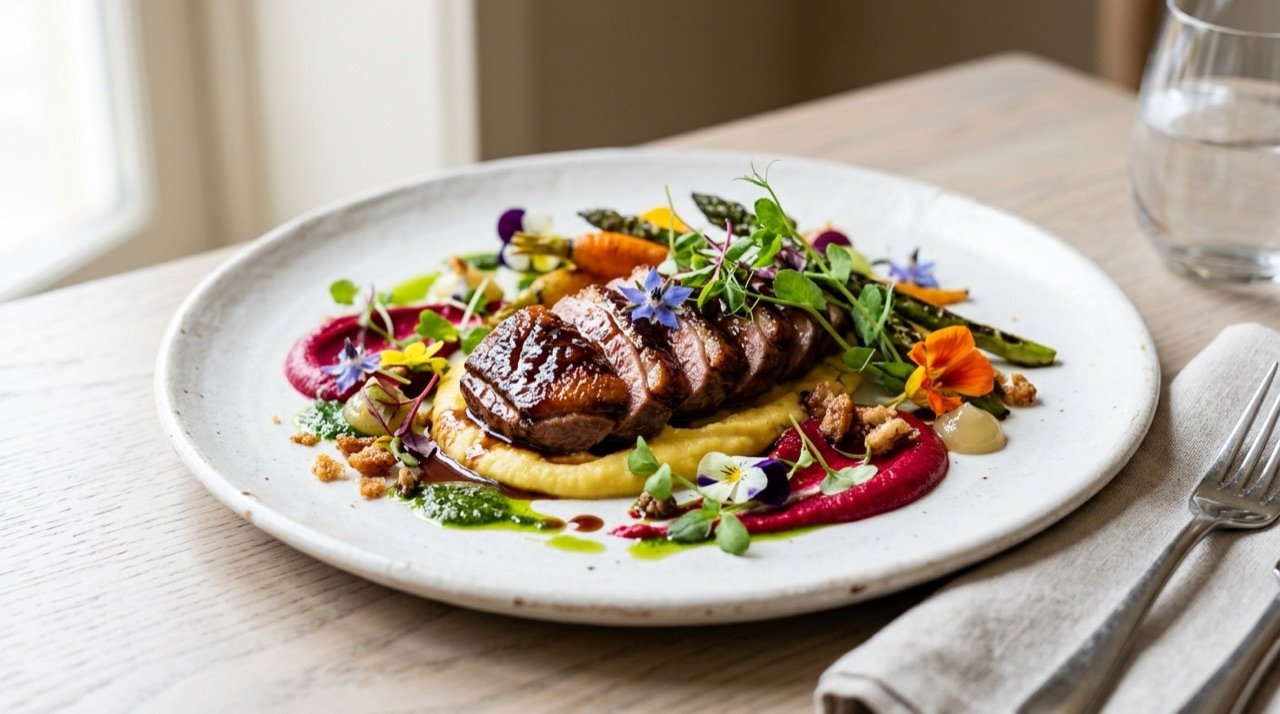
Avant-garde Cuisine is the AI Chef Pro agent purpose-built for chefs who live at the edge of the plate. It turns a rough concept—a single ingredient, a technique, a mood—into fully realized, technically sound recipes that belong on a tasting menu. You supply the creative spark; the agent fills in the how, drawing on a deep understanding of modernist methods, unconventional pairings, and plating logic. Whether you’re an executive chef mapping out a seasonal progression, a sous chef tasked with a new amuse-bouche, or a culinary director building a multi-course concept, Avant-garde Cuisine accelerates the leap from “what if” to “here’s the mise.” It handles the heavy lifting of ratio, texture, and timing so you can focus on the vision.
Why prompts matter with Avant-garde Cuisine
A vague prompt like “something with beets” yields a forgettable beet salad. A precise prompt that names a technique, a contrasting texture, and a flavor bridge—say, “a smoked beet tartare with horseradish snow, black garlic tuile, and dill oil”—steers the AI toward a dish with tension, structure, and a clear point of view. In avant-garde work, the difference between a gimmick and a breakthrough is often the specificity of the brief. When you encode your culinary intent—acid-driven, aerated, frozen-reverse-spherified—the agent doesn’t guess; it executes within the guardrails you set, pulling from a library of proven ratios and modernist principles.
That precision also keeps the output kitchen-ready. You can layer in real-world constraints: a 12-minute pickup window, a nut-free station, a $4.50 food cost target, or a requirement that every component hold on the pass. The agent then filters its suggestions through those parameters, so you get a recipe that doesn’t just look brilliant on paper but can actually be plated during Friday service. In US kitchens governed by the FDA Food Code and HACCP plans, you can even prompt for critical control points—like a sous vide bath that hits 130°F (54°C) pasteurization—embedding food safety into the creative process from the first draft.
Prompt examples for Avant-garde Cuisine
The 105 prompts below are grouped by the real-world challenges that drive a professional kitchen: flavor pairing and aroma architecture, modernist technique, menu flow and progression, plating and visual grammar, dietary and allergen adaptation, and cost-conscious innovation. Each one is written to be dropped directly into Avant-garde Cuisine, with blanks you fill in for your ingredient, technique, or covers. They’ll help you nail a new dish for a wine dinner, redesign a vegetarian tasting menu, or troubleshoot that one component that’s never quite landed.
Prompts for Executive Chef in Creative Kitchen AI in Avant-garde Cuisine
As an Executive Chef, your role is to drive the culinary vision of your restaurant, push the boundaries of menu creation, and own the quality of every plate that leaves the pass. The Creative Kitchen AI tool is your sous chef for R&D—a powerful asset to fuel your creativity, streamline recipe development, and keep you ahead of the curve. It helps you move from a blank page to a fully realized dish, exploring novel techniques and compelling narratives without slowing down your operation.
How to use these prompts
Take a prompt like "Crea una receta innovadora de postre" and make it actionable for your kitchen: “Develop a plated dessert for a 70-seat New American restaurant in Austin, TX, using liquid nitrogen to create a tableside-frozen key lime pie mousse with a brown-butter graham cracker crumble, food cost capped at $3.80 per portion, with a prep spec that holds for a Friday-night 150-cover service.” Ground every request in your real concept, city, covers, and financial targets. The more specific you are, the better the result.
| Prompt / Request | Area / Goal / Pain point | Category |
|---|---|---|
| «Create an innovative dessert recipe that combines molecular gastronomy techniques with traditional American ingredients.» | Dessert Innovation | Technique Fusion |
| «Develop a main course recipe fusing Japanese and Mediterranean cuisines, including a narrative that bridges both culinary cultures.» | Cultural Fusion | Concept Development |
| «Design a 7-course tasting menu based on the 7 deadly sins, with a coherent narrative thread linking all courses.» | Thematic Menu | Culinary Storytelling |
| «Create a vegetarian recipe that mimics the texture and flavor of a prime cut of beef, using only whole-food, plant-based ingredients.» | Vegetarian Innovation | Texture Mimicry |
| «Develop an edible cocktail recipe presented as a plated dish, meant to be eaten with a fork and spoon.» | Innovative Presentation | Culinary Mixology |
| «Create a recipe using fermentation techniques to transform a humble American pantry staple into an extraordinary ingredient.» | Preservation Techniques | Ingredient Transformation |
| «Design a dish that changes color or form when a liquid element is poured tableside, including the story behind the transformation.» | Interactive Presentation | Diner Experience |
| «Develop a recipe that utilizes all parts of a whole chicken—trim, bones, and skin—applying a root-to-stem, zero-waste kitchen philosophy.» | Sustainability | Total Utilization |
| «Create a recipe inspired by a famous American painting, including the story that connects the plated dish to the artwork.» | Artistic Inspiration | Visual Narrative |
| «Design a dish that incorporates 3D food printing technology and fuses it with classical French cooking methods.» | Culinary Technology | Technical Innovation |
| «Develop a recipe that translates high-end chef-driven tasting-menu ingredients into a gourmet fast-casual format for a lunch counter.» | Gourmet Democratization | Style Fusion |
| «Create a dessert that plays with sensory perception by pairing unexpected savory, sweet, and bitter flavors with contrasting hot and cold textures.» | Sensory Experience | Dessert Innovation |
| «Design a complete menu—from amuse-bouche to petit fours—inspired by the Sonoran Desert ecosystem.» | Conceptual Menu | Ecological Narrative |
| «Develop a recipe using unconventional aging or curing techniques, like koji-curing or hay-aging, to transform a protein.» | Maturation Techniques | Ingredient Transformation |
| «Create a dish inspired by a pivotal event in US history, incorporating period-accurate ingredients and techniques within a modern fine-dining context.» | Historical Gastronomy | Temporal Narrative |
Prompts for Executive Chef: Creative Cuisine in Avant-garde Cuisine
As an Executive Chef, your role is pivotal in translating culinary vision into daily reality and overseeing every aspect of the kitchen. Avant-garde Cuisine AI is a valuable ally for driving innovation in dish development, streamlining kitchen operations, and solving the practical challenges you face on the line. It helps you implement creative ideas efficiently, optimize workflows, and maintain consistency under pressure. From reimagining classics to reducing waste, this agent supports your leadership in a demanding commercial environment where every minute and dollar counts.
How to use these prompts
Take a prompt like “Develop an innovative version of a classic dish that’s more efficient to prepare in a busy kitchen” and tailor it to your operation. For example, a chef at a 150-seat restaurant in Chicago might ask: “Reinvent chicken pot pie as a handheld empanada with a frozen butter-laminated dough that bakes in 12 minutes, using pre-cooked filling from a steam kettle, to serve 200 covers on a Friday night with only two cooks on the line, keeping food cost under $3.50 per portion.” The more specific you are, the better the result.
| Prompt / Request | Area / Goal / Pain point | Category |
|---|---|---|
| «Develop an innovative version of a classic dish that is more efficient to prepare in a busy kitchen.» | Process Optimization | Classic Reinterpretation |
| «Create a recipe that uses seasonal ingredients creatively to cut costs without sacrificing quality.» | Cost Management | Seasonal Cooking |
| «Design a dish that can be mostly prepped ahead but finished quickly during service.» | Service Efficiency | Advanced Preparation |
| «Develop an innovative technique to improve the texture of a difficult-to-work-with ingredient.» | Technique Improvement | Preparation Innovation |
| «Create a vegetarian recipe that can be easily adapted to meet multiple dietary restrictions.» | Menu Flexibility | Dietary Adaptability |
| «Design a dish that creatively and deliciously uses leftovers from other menu items.» | Waste Reduction | Sustainable Cooking |
| «Develop a versatile sauce that can be used across multiple menu dishes.» | Ingredient Optimization | Kitchen Versatility |
| «Create a recipe that uses an uncommon cooking technique to enhance flavor and efficiency.» | Technique Innovation | Flavor Optimization |
| «Design a tasting menu that can be executed by a small kitchen team.» | Staff Efficiency | Menu Planning |
| «Develop a strategy to incorporate fermentation techniques into daily kitchen operations.» | New Technique Implementation | Practical Fermentation |
| «Create a recipe that transforms a cheap ingredient into a premium-looking and -tasting dish.» | Resource Maximization | Ingredient Elevation |
| «Design a mise en place system that improves service efficiency for complex dishes.» | Kitchen Organization | Workflow Optimization |
| «Develop a series of creative side dishes that can be made in bulk and used across multiple plates.» | Side Dish Versatility | Prep Efficiency |
| «Create a recipe that uses molecular gastronomy techniques in a practical, cost-effective way for a commercial kitchen.» | Molecular Gastronomy Implementation | Accessible Innovation |
| «Design a dish that can be easily customized by the guest without compromising kitchen efficiency.» | Dish Customization | Service Flexibility |
Prompts for Executive Pastry Chef in Creative Kitchens in Avant-garde Cuisine
As an Executive Pastry Chef, your role blends artistic creativity with technical precision in the dessert and bakery world. AI Chef Pro can be a powerful tool to spark new creations, refine techniques, and manage your pastry department efficiently. Whether you're developing a new plated dessert for a tasting menu, scaling production for a high-volume brunch service, or training your team on advanced sugar work, the right prompt can cut your R&D time in half and help you think past your go-to repertoire.
How to use these prompts
Take a prompt like "Develop a no-waste pastry method" and make it yours: "I run the pastry program at a 140-seat New American restaurant in Austin, Texas. Our average Friday night does 220 covers. I need a system to turn day-old brioche, croissant trim and fruit peel into two high-margin plated desserts, costed under $2.85 per portion, that my line cooks can plate in under 90 seconds. Give me the recipes, the prep schedule and the plating specs." The more specific you are, the better the result.
| Prompt / Request | Area / Goal / Pain point | Category |
|---|---|---|
| «Create a plated dessert that fuses classical French pastry technique with a stark, modernist presentation.» | Style fusion | Presentation innovation |
| «Develop a gluten-free cake recipe that matches the crumb, moisture and flavor of a classic devil’s food cake, using only FALCPA-compliant ingredients.» | Dietary adaptation | Inclusive pastry |
| «Design a dessert that incorporates savory ingredients — think miso, black garlic or blue cheese — in a way that reads as dessert, not a gimmick.» | Flavor balance | Gustatory experimentation |
| «Create a line of miniature plated desserts that can be produced efficiently for a 300-cover Saturday service without sacrificing visual impact.» | Scaled production | Operational efficiency |
| «Develop a technique for pulled-sugar showpieces or garnishes that hold up through a four-hour service in a humid Southern kitchen, without melting or clouding.» | Technical innovation | Advanced decoration |
| «Design an interactive dessert where the guest finishes a component tableside — a pour-over, a torched element, or an assembled bite.» | Guest experience | Interactive desserts |
| «Create a small-batch ice cream or sorbet recipe using a flavor profile drawn from the Rio Grande Valley, the Pacific Northwest, or the Lowcountry.» | Flavor innovation | Artisanal frozen desserts |
| «Develop a practical system to cut pastry waste by 30% — repurposing trim, peels and day-old product into sellable menu items, with a costed breakdown.» | Sustainability | Resource management |
| «Design a dessert that shifts color or texture as the guest eats it — through temperature change, pH reaction, or layered construction.» | Sensory innovation | Dining experience |
| «Create a line of vegan plated desserts that deliver the mouthfeel of a classic crème brûlée, panna cotta or pot de crème without dairy, eggs or gelatin.» | Vegan pastry | Dairy alternatives |
| «Develop a method for integrating 3D-printed chocolate or sugar elements into a production pastry kitchen — covering equipment, tempering and assembly workflow.» | Technology in pastry | Advanced decoration |
| «Design a dessert menu for a four-course tasting built entirely around the Surrealist movement — name the dishes, describe the plates, and give me the flavor matrix.» | Menu conceptualization | Artistic inspiration |
| «Create an artisan bread formula using a 24-hour cold ferment to maximize flavor, crust and digestibility for a high-volume farm-to-table restaurant.» | Artisan bread | Fermentation techniques |
| «Develop a dessert that borrows techniques from molecular mixology — foams, gel spheres, fat-washing — to highlight a specific spirit or cocktail.» | Cross-discipline fusion | Alcohol-integrated desserts |
| «Design a 12-week training curriculum for my pastry team that layers classical French fundamentals with modern techniques like fluid gels, aerated emulsions and low-temperature baking.» | Staff development | Advanced training |
Prompts for Sous Chef in Creative Cuisine in Avant-garde Cuisine
As Sous Chef, your role is critical in translating the Executive Chef's creative vision into daily reality and keeping the kitchen running tight. Creative Cuisine can be a powerful ally when you need to innovate on the plate, streamline back-of-house efficiency and coach your crew on new techniques. The prompts below give you a practical starting point to drive menu development, staff training and operational improvement without losing sight of margins or consistency.
How to use these prompts
Take the prompt "Develop a plan to introduce a new culinary technique in the kitchen" and turn it into: "Build a 2‑week training schedule to roll out sous‑vide for proteins on a 12‑burner line at a 120‑seat Chicago restaurant with a $34 prix‑fixe; include HACCP logs, station‑by‑station tasting benchmarks and a 15‑minute daily briefing for the team." The more specific you are, the better the result.
| Prompt / Request | Area / Goal / Pain point | Category |
|---|---|---|
| «Develop a plan to introduce a new culinary technique in the kitchen.» | Technical innovation | Training & development |
| «Create a station‑rotation system that maximizes learning and throughput while keeping the line tight.» | Staff management | Operational optimization |
| «Design a trial program for new dishes that involves the entire kitchen crew, from prep to plating.» | Menu development | Creative collaboration |
| «Develop a strategy to cut food waste without sacrificing plate quality or speed of service.» | Sustainability | Resource management |
| «Create a prep and execution plan for a high‑end tasting‑menu event that optimizes space, labor and cook times.» | Event planning | Culinary logistics |
| «Design a communication system that eliminates friction between the kitchen and FOH during service.» | Inter‑department communication | Operational efficiency |
| «Develop a seasonal menu block using locally available produce and protein, with costed recipes.» | Seasonal menu | Local cooking |
| «Create a mentorship program to build creative thinking and technical skill in junior cooks.» | Talent development | Creative training |
| «Design a quality‑control system that ensures consistent plating, flavor and temperature at every service.» | Quality control | Standardization |
| «Develop a cost‑effective strategy to introduce modernist techniques into an à‑la‑carte menu.» | Culinary innovation | Cost management |
| «Create a plan to optimize mise en place flow so the line runs faster and cleaner during peak service.» | Advance prep | Workflow optimization |
| «Design a cross‑training program so every cook can own at least two stations competently.» | Staff versatility | Skill development |
| «Develop a strategy to incorporate fermentation into multiple dishes, with shelf‑life and food‑safety guardrails.» | Flavor innovation | Advanced techniques |
| «Create a system for documenting, testing and sharing new ideas and techniques across the whole kitchen team.» | Knowledge management | Collaborative innovation |
| «Design a plan to adapt the current menu for the FDA top‑9 allergens and common dietary restrictions without sacrificing flavor or appearance.» | Menu adaptability | Culinary inclusivity |
Prompts for Station Chef in a Creative Kitchen in Avant-garde Cuisine
As a station chef, you own a specific section of the line—sauté, grill, garde manger, pastry—and you’re responsible for every plate that leaves it. Avant-garde Cuisine helps you push boundaries within your specialty, streamline your mise en place, and raise the bar on consistency and creativity. Whether you’re rethinking a classic, dialing in a new technique, or training a commis, this agent gives you practical, station-level ideas that respect the realities of a busy US kitchen. It’s about working smarter, not harder, and turning your station into the engine of the kitchen’s innovation.
How to use these prompts
Say you’re the sauté chef at a 120-seat New American restaurant in Austin, Texas, and you want to improve the texture of your pan sauces without relying on heavy cream. Instead of just asking “Develop a new technique to improve sauce texture at your station,” you’d ask: “I’m a sauté station chef at a 120-seat restaurant in Austin, TX. Develop a technique to achieve a velvety, stable emulsion for a red wine pan sauce without using cream or butter, using only ingredients already on my station, and ensure it holds for up to 15 minutes on the pass without breaking.” The more specific you are, the better the result.
| Prompt / Request | Area / Goal / Pain point | Category |
|---|---|---|
| «Develop a new technique to improve the texture of sauces at your station.» | Technique Innovation | Quality Improvement |
| «Create an innovative twist on a classic dish from your station that surprises guests.» | Classic Reinvention | Culinary Creativity |
| «Design a more efficient mise en place system for your station during peak hours.» | Process Optimization | Operational Efficiency |
| «Develop a series of creative garnishes that complement the main dishes from your station.» | Garnish Innovation | Flavor Harmony |
| «Create a practical method to incorporate molecular gastronomy techniques into your station’s dishes.» | New Technique Integration | Culinary Modernization |
| «Design a standout vegetarian dish that can be prepared efficiently at your station.» | Menu Diversification | Vegetarian Options |
| «Develop a strategy to reduce food waste at your station without sacrificing quality.» | Sustainability | Resource Management |
| «Create a rapid training program for new team members on your station.» | Staff Training | Learning Efficiency |
| «Design a method to consistently improve the plating presentation of dishes from your station.» | Culinary Aesthetics | Visual Standardization |
| «Develop a technique to intensify flavors in your station’s dishes using natural ingredients.» | Flavor Enhancement | Natural Cooking |
| «Create a system to quickly adapt your station’s dishes to common dietary restrictions.» | Menu Flexibility | Dietary Adaptability |
| «Design a fusion dish that combines elements of your station with another international cuisine.» | Fusion Innovation | Cross-Cultural Creativity |
| «Develop a strategy to incorporate more seasonal ingredients into your station’s dishes.» | Seasonal Cooking | Freshness & Sustainability |
| «Create a method to improve protein cooking consistency at your station.» | Quality Control | Technical Perfection |
| «Design a daily specials rotation system for your station that maximizes creativity and efficiency.» | Menu Variety | Constant Innovation |
Prompts for Line Cook in Creative Cuisine in Avant-garde Cuisine
As a line cook, you are responsible for the direct preparation of dishes and the execution of recipes. Avant-garde Cuisine can be a valuable tool to help you sharpen your technique, better understand flavor pairings, and contribute creative ideas to your team. Use it to explore new approaches, refine your efficiency, and push the boundaries of your station within the framework your chef and kitchen culture provide.
How to use these prompts
These prompts are starting points. To get the most useful answer, provide specifics like your restaurant's style, city, target food cost, equipment, and any constraints. Instead of a generic prompt, you might say, “Develop a new vegetable-cutting technique for a high-volume Austin barbecue joint that improves presentation and speed for $0.80/lb jackfruit, using only a small prep table and a robocoupe.” The more specific you are, the better the result.
| Prompt / Request | Area / Goal / Pain point | Category |
|---|---|---|
| «Develop a new vegetable-cutting technique that improves both presentation and efficiency.» | Technical skills | Efficiency and presentation |
| «Create a creative variation of a classic sauce using unconventional ingredients.» | Sauce innovation | Culinary creativity |
| «Design a method to improve the texture of purées without adding excess fat.» | Cooking techniques | Health and flavor |
| «Develop a strategy to keep herbs fresh longer in the kitchen.» | Ingredient preservation | Fresh product management |
| «Create a versatile marinade that works across different proteins.» | Preparation versatility | Recipe optimization |
| «Design a method to incorporate smoky flavors into vegetarian dishes.» | Flavor techniques | Vegetarian innovation |
| «Develop a technique for fast but visually striking plating.» | Plating presentation | Aesthetic efficiency |
| «Create a personal organization system for your workstation that maximizes efficiency.» | Workstation organization | Kitchen productivity |
| «Design a series of creative garnishes using low-cost ingredients.» | Budget creativity | Resource optimization |
| «Develop a technique for cooking fish that retains moisture and texture.» | Cooking techniques | Protein perfection |
| «Create a method to incorporate fermentation techniques into your daily kitchen routine.» | Advanced techniques | Flavor innovation |
| «Design a process for creating edible garnishes that also serve as plate decoration.» | Creative presentation | Aesthetic functionality |
| «Develop a strategy to reduce food waste at your station.» | Sustainability | Resource efficiency |
| «Create a technique for quickly and effectively infusing flavors into oils and vinegars.» | Flavor enhancement | Infusion techniques |
| «Design a method to quickly adapt recipes to different dietary restrictions.» | Culinary flexibility | Recipe adaptability |
Prompts for Prep Cook in Creative Kitchens in Avant-garde Cuisine
As a prep cook or kitchen assistant early in your culinary career, you are the backbone of the line—handling the foundational tasks of ingredient preparation and supporting the experienced chefs. Avant-garde Cuisine can help you better understand flavor combinations, sharpen your core skills, and contribute more effectively during service. It guides you through knife techniques, efficient mise en place, stock-making, and food safety practices, turning everyday prep into a path for growth. With clear, actionable advice, you’ll build the precision and speed that a professional kitchen demands.
How to use these prompts
Take a short prompt like “Learn a new knife cut” and make it real: “I’m a prep cook at a busy farm-to-table restaurant in Austin, Texas. I need to cut 50 pounds of heirloom carrots into uniform 2-inch batons for tonight’s roasted carrot dish, limiting trim waste to under 4 ounces per 10 pounds. Walk me through the exact knife technique, grip, and workstation setup to hit this spec within my 3-hour prep shift.” Add your own context—volume, time pressure, ingredient quirks. The more specific you are, the better the result.
| Prompt / Request | Area / Goal / Pain point | Category |
|---|---|---|
| «Learn a new cutting technique to improve your speed and consistency when prepping vegetables.» | Basic Skills | Knife Techniques |
| «Develop a method to organize your workstation efficiently during prep.» | Workstation Organization | Kitchen Efficiency |
| «Learn to identify and select fresh, high-quality ingredients for different preparations.» | Ingredient Knowledge | Product Selection |
| «Create a personal guide to measurement equivalents for common ingredients.» | Measurement Precision | Culinary Fundamentals |
| «Develop a technique to peel and prepare various fruits and vegetables quickly and with minimal waste.» | Prep Efficiency | Basic Tasks |
| «Learn to make and use different types of basic stocks and broths.» | Fundamental Techniques | Culinary Bases |
| «Create a system for labeling and storing prepped ingredients following FDA Food Code date-marking and FIFO principles.» | Kitchen Organization | Food Safety |
| «Develop a routine to maintain a clean and organized work area throughout service.» | Kitchen Hygiene | Best Practices |
| «Learn to use and maintain basic kitchen tools and equipment properly.» | Equipment Handling | Technical Skills |
| «Create a checklist for efficient mise en place preparation.» | Mise en Place | Task Organization |
| «Develop a technique for blanching and shocking vegetables to preserve color and texture.» | Cooking Techniques | Food Preservation |
| «Learn to prepare and store fresh herbs correctly to maximize flavor and shelf life.» | Ingredient Handling | Freshness and Flavor |
| «Create a method to communicate clearly with line cooks during a busy service.» | Kitchen Communication | Teamwork |
| «Develop a strategy to juggle multiple prep tasks at once without sacrificing quality.» | Time Management | Multitasking |
| «Learn to identify and report food safety hazards in the kitchen, such as temperature abuse or cross-contamination.» | Food Safety & Hygiene | Professional Responsibility |
Tips for getting more out of Avant-garde Cuisine
Specify Your Inspiration
Give Avant-garde Cuisine a theme, emotion, or concept to unlock more original dishes. Instead of “braised short rib,” say “Create a braise that captures the bittersweet ache of a last summer night on the boardwalk.” A tight creative brief beats a generic protein call every time.
Detail the Cultural Context
Tell the agent which culinary tradition you’re mining or mashing up. A line like “Fuse the smoke science of Kansas City barbecue with the bright, herbal punch of a Vietnamese bánh mì” forces the AI to navigate real flavor collisions rather than spitting out fusion clichés.
Request Specific Techniques
Name the exact modern or classical techniques you want on the plate. Ask for “a frozen parfait aerated with nitrous oxide and finished tableside with liquid nitrogen” or “a seafood dish using koji aging and gentle sous-vide precision.” Technique-first prompts yield line-ready specs.
Ask for a Backstory
A narrative makes the dish sell. Request “a Gulf Coast bouillabaisse and a one-paragraph legend about a lighthouse keeper who invented it during a hurricane.” Avant-garde Cuisine will weave the tale into the recipe, giving your servers a script and the dish a soul.
Define Creative Constraints
Limits fuel invention. Challenge the agent with “compose a seven-course tasting menu where every component is black, white, or grey, no dyes, no charcoal gimmicks.” A strict boundary—single color, zero waste from one protein, only U.S. ingredients—produces plates that guests remember.
Describe the Sensory Profile
Don’t just list flavors; program the mouthfeel. Say “I want a dessert that lands cold, crackling, then warm and custard-soft in one spoonful—play with frozen powders, hot fluid gels, and brittle tuiles.” Sensory cues direct the AI toward precise textures and temperature swings.
Specify Dietary Needs
Ask for adaptations that actually work on the pick-up. “Rework a classic French buttercream into a fully vegan, kosher, nut-free version that still pipes clean and holds under a heat lamp” forces the agent to consider starch science, fat ratios, and service realities—not just ingredient swaps.
Ask for the ‘Why’
Demand the science. Have Avant-garde Cuisine “explain the collagen-to-gelatin conversion in a 72-hour short rib cook and how hold time at 140°F (60°C) affects texture without drying.” When you understand the mechanism, you can tweak the method for your own equipment and volume.
Name the Event
Context shapes every decision. “Design a family-style platter for a Brooklyn-based rehearsal dinner: shareable, photo-worthy, and safe at room temp for 90 minutes on a August rooftop” bakes in practical constraints. The agent will factor in flow, garnishing speed, and guest interaction.
Combine Tips for Maximum Creativity
The best results come from stacking specificity. Tell Avant-garde Cuisine “Create an appetizer inspired by the neon haze of Miami Vice, using aerated coconut foam and a sour mango fluid gel, plated on custom ceramic tiles, and explain the hydrocolloid choices—all vegan and gluten-free.” More constraints, more innovation.
More prompt libraries for AI Chef Pro agents
Every agent in the suite has its own prompt library. Browse the rest and put the AI to work across your whole operation:
- Prompts for Allergen ID
- Prompts for Bakery Consultant Pro
- Prompts for Barista Consultant Pro
- Prompts for Bartender Consultant Pro
- Prompts for Burgers Pro AI+
- Prompts for Catering AI+
- Prompts for Chef Consultant Pro
- Prompts for Chocolate Consultant Pro
- Prompts for Creative Bakery
- Prompts for Creative Chocolate Making
- Prompts for Creative Ice Cream Making
- Prompts for Creative Pastry
- Prompts for Gastro Lexicum
- Prompts for Executive Chef Pro
- Prompts for Fermentus Pro AI+
- Prompts for Food Pairing AI
- Prompts for Waste GenCal
- Prompts for Gastronomy Consultant Pro
- Prompts for Gelato & Ice Cream Consultant
- Prompts for Pastry Consultant Pro
- Prompts for Pizza Consultant Pro
- Prompts for VegChef Plant-Based
- Prompts for Restaurant Manager Pro
- Prompts for Sommelier Consultant Pro
- Prompts for Staff Meal
Frequently asked questions
What is Avant-garde Cuisine?
Avant-garde Cuisine is an AI agent within AI Chef Pro that helps chefs and cooks develop innovative recipes, craft dish backstories, and explore new culinary techniques. It leverages advanced algorithms and an extensive gastronomic database to generate creative, detailed ideas tailored to professional kitchens.
How can I start using these prompts with Avant-garde Cuisine?
To begin, simply select a prompt that fits your current need and use it as a starting point when interacting with Avant-garde Cuisine. You can copy and paste the prompt directly into the interface or use it as inspiration to formulate your own question or request.
Do these prompts only work with Avant-garde Cuisine, or can I use them with other AI assistants?
While these prompts are optimized for Avant-garde Cuisine, many can be useful with other culinary-focused AI assistants. However, for the best results, it's recommended to use them with Avant-garde Cuisine, as it is specifically trained in culinary creativity and recipe development.
How often are these prompts updated?
The prompt library is regularly refreshed to mirror current culinary trends, seasonal ingredients, and the shifting demands of professional kitchens. Chefs should revisit the library often to discover new prompts designed to spark innovation and keep menus dynamic.
Can I suggest new prompts to add to the library?
Absolutely. User feedback is highly valued. To suggest new prompts, contact the team via the feedback form on the support page. The development team reviews all submissions and regularly incorporates popular ideas to keep the library relevant and useful.
How can I adapt these prompts to my cooking style or culinary specialty?
These prompts are designed as starting points. Chefs are encouraged to modify them by adding specifics like frequently used ingredients, preferred cooking techniques, or any unique characteristics of their culinary style. This tailoring ensures the AI's output aligns with the kitchen's identity.
Is there a limit to how many prompts I can use with Avant-garde Cuisine?
There is no limit on the number of prompts. Chefs are encouraged to explore different prompts and combine them as needed to obtain comprehensive and relevant information for their specific situation. Unlimited use supports continuous experimentation and menu development.
Can Avant-garde Cuisine generate complete recipes based on these prompts?
Yes, Avant-garde Cuisine can generate full recipes, including ingredient lists, step-by-step instructions, and even dish backstories. However, it's always important for chefs to review and adjust recipes based on their professional experience and the specific needs of their kitchen.
How can I ensure the recipes generated by Avant-garde Cuisine are safe and edible?
While Avant-garde Cuisine is grounded in sound culinary principles, chefs must apply their professional judgment and food safety knowledge. Always consider allergens, dietary restrictions, and safe preparation techniques. The tool provides inspiration, but the kitchen team is responsible for verifying safety and compliance with FDA Food Code standards.
Can I use Avant-garde Cuisine to develop menus for special diets (vegan, gluten-free, etc.)?
Yes, Avant-garde Cuisine can develop recipes and menus tailored to special diets. Specify the dietary restrictions in the prompt—such as vegan, gluten-free, or allergen-free—to receive more relevant and appropriate suggestions. The AI then filters its database to propose compliant, creative dishes.
Can Avant-garde Cuisine help me create wine or beverage pairings for my dishes?
Yes, Avant-garde Cuisine can provide pairing suggestions for dishes. To get relevant recommendations, explicitly mention that you're seeking pairing advice in the prompt. The AI will then draw on its gastronomic database to suggest complementary wines, cocktails, or non-alcoholic beverages.