Prompt Library for Food Pairing AI: Drive Menu Innovation
Discover AI-powered ingredient pairings that spark creativity, cut waste, and keep your menu ahead of trends. 120 prompts built for professional kitchens.
As an executive chef, sous chef, or kitchen manager, you carry the weight of menu development, flavor balance, and cost control every single shift. Food Pairing AI inside AI Chef Pro acts like a relentless creative partner: it analyzes flavor compounds, culinary science, and global trend data to suggest combinations you might never consider on your own. Whether you’re battling tomato fatigue in late August, trying to make a plant-based special feel indulgent, or hunting a low-food-cost garnish that still reads premium, the right prompt turns a generic AI into a precision tool that speaks your language—yield percentages, plate composition, and the reality of a Friday night pickup window.
Why prompts matter with Food Pairing AI
Vague prompts like “give me a chicken dish” produce cafeteria-level ideas because the AI fills the gaps with the most predictable answer. In a professional kitchen, you need constraints: a protein cost ceiling of $3.25 per portion, a 12-minute pickup time, or a directive to use up yesterday’s grilled artichoke trim. When you feed Food Pairing AI that level of detail, it doesn’t just list ingredients—it builds plates around your actual mise en place, your labor reality, and your guest’s expectations. The difference is between an idea that dies on a prep list and one that hits the pass tomorrow.
Specificity also lets you stress-test concepts against multiple criteria at once. A well-crafted prompt can ask for pairings that are nut-free and gluten-free while still hitting a 28% food cost and holding up under a heat lamp for eight minutes. That’s not just inspiration; it’s a working blueprint. The AI can’t taste, but it can cross-reference thousands of successful pairings, flavor affinities, and textural contrasts—and when you give it the guardrails of a real kitchen, the output feels like a conversation with a sous chef who’s staged everywhere.
Prompt examples for Food Pairing AI
Below you’ll find 120 prompts organized by the challenges that land on your clipboard every day: seasonal menu pivots, dietary restriction workarounds, waste reduction, cross-utilization of prep, cost-driven replating, and flavor-first innovation. Each one is written the way a chef talks—direct, with target food cost, pickup time, or specific trim in mind—so you can copy, tweak, and run them during menu planning, prep meetings, or that 2 a.m. flash of inspiration when the day’s finally over.
Prompts for Executive Chef: Food Pairing for Culinary Leadership in Food Pairing AI
As an Executive Chef, you’re the driving force behind your kitchen’s culinary vision, menu innovation, and overall quality. Food Pairing AI acts as a creative partner, helping you uncover science-backed flavor pairings that surprise and delight. Whether you’re designing a tasting menu, reducing waste, or training your brigade, this agent can generate unexpected combinations, suggest ingredient swaps, and validate your ideas. Use the prompts below to kickstart your R&D, then refine them with your restaurant’s concept, seasonal availability, and cost parameters.
How to use these prompts
These prompts are starting points. For precise, actionable results, add your restaurant’s specifics: location, seat count, season, target plate cost, and any dietary or sourcing constraints. For example, instead of “What pairs with black cod?” try: “I’m the chef de cuisine at a 70-seat Pacific Northwest fine-dining spot in Portland, OR. For a March tasting menu, I need three unexpected ingredients that complement MSC-certified black cod, using local spring produce and keeping the plate cost under $6.75.” The more specific you are, the better the result.
| Prompt / Request | Area / Goal / Pain point | Category |
|---|---|---|
| «What are some uncommon ingredients that pair exceptionally well with American caviar to create a unique fine-dining experience?» | Luxury ingredient innovation | Exclusive menu development |
| «I need ideas for pairing the umami of Iberico ham with unexpected yet complementary flavors.» | Complex flavor pairing | Tapas innovation |
| «What are the best herbs and spices to enhance grilled lobster without overpowering it?» | Seafood enhancement | Aromatic profiling |
| «I want to create an innovative dark chocolate dessert. What savory ingredients could complement it in a surprising way?» | Sweet-savory contrast | Dessert innovation |
| «Suggest ingredients that can balance and complement the intensity of blue cheese in a main course.» | Bold flavor balance | Main dish development |
| «What exotic fruits could pair innovatively with foie gras for a high-end appetizer?» | Luxurious flavor fusion | Appetizer creation |
| «I’m looking for unique ways to incorporate white truffles into risotto. What unexpected ingredients could amplify their aroma?» | Premium ingredient maximization | Rice dish innovation |
| «I need ideas for an innovative ceviche. What lesser-known fish and citrus fruits could create a surprising combination?» | Traditional dish reinvention | Latin American fusion cuisine |
| «I want to develop a vegetarian main course centered on eggplant. What food pairing techniques and ingredients can elevate its flavor?» | Vegetarian cuisine innovation | Main dish development |
| «I’m creating a sake pairing menu. What uncommon Western ingredients pair well with different styles of sake?» | Cross-cultural pairing | Beverage menu development |
| «I need to develop an innovative tasting menu that highlights unusual food pairing techniques.» | Menu innovation | Product development |
| «How can I apply food pairing principles to our dessert line to create truly unique flavor combinations?» | Dessert development | Flavor innovation |
| «I need ideas for a signature dish that combines local seasonal ingredients using advanced food pairing techniques.» | Signature dish creation | Author cuisine |
| «What food pairings could help us reduce ingredient waste in our kitchen?» | Sustainability | Resource management |
| «I need to develop a series of kitchen workshops for our junior chefs focused on the scientific principles of food pairing.» | Staff development | Training and education |
| «How can I use food pairing principles to create a themed menu that explores the fusion of Asian and Latin American cuisines?» | Themed menu | Culinary fusion |
| «I need ideas for reinventing classic dishes on our menu using unexpected but scientifically compatible ingredient pairings.» | Classic reinvention | Menu innovation |
| «What food pairing techniques could we apply to our cocktail program to create perfect pairings with our menu?» | Beverage development | Advanced pairing |
| «I need to create a strategic plan for incorporating food pairing principles into our seasonal menu.» | Strategic planning | Menu development |
| «How can I use food pairing to develop a line of gourmet products for retail sale?» | Business diversification | Product development |
Prompts for Head Chef: Ingredient Pairing & Menu Innovation in Food Pairing AI
As the chef calling tickets and tasting every sauce, you don’t have time for wild goose chases. Food Pairing AI, built into AI Chef Pro, acts as your always-on creative partner—uncovering unexpected flavor affinities, tightening R&D, and solving everyday kitchen challenges without the fluff. From rethinking a signature protein to elevating staff meal on a shoestring budget, these prompts are designed to get you actionable ideas fast, rooted in how you actually cook. The goal: help you work smarter, not harder, every time you step on the line.
How to use these prompts
Each prompt below is a launch pad. To get the most out of Food Pairing AI, add the specifics of your actual kitchen. For example, the first prompt could become: “I run a 70-seat seafood spot in Seattle with entrées priced $38–52. Our cedar-planked king salmon is a top seller but feels stale. Suggest 3 unexpected pairings—one incorporating a fermented ingredient, one with a fruit or vegetable not typically seen with salmon, and one that adds crunch—that I could test on this week’s specials. Keep total plate food cost under $7, and give me a one-pan or grill-only prep to avoid adding a station.” The more specific you are, the better the result.
| Prompt / Request | Area / Goal / Pain point | Category |
|---|---|---|
| «I need ideas to elevate our grilled salmon with unexpected flavor combinations.» | Seafood Innovation | Main Dish R&D |
| «What unique herbs or spices could make our pumpkin risotto more interesting?» | Classic Refinement | Flavor Innovation |
| «I want to dial up the umami in our best-selling vegetarian dish—what ingredients should I reach for?» | Vegetarian Dish Enhancement | Flavor Balance |
| «Need a sauce that breaks from the usual demi for our beef tenderloin—use food pairing to suggest something unexpected.» | Sauce Development | Culinary Complements |
| «What offbeat fruits or vegetables would add brightness and freshness to our tuna tartare?» | Appetizer Reinvention | Flavor & Texture Contrast |
| «I’m building a new lamb entrée—give me unconventional spice and herb pairings that leave the mint jelly in the dust.» | Lamb Aromatic Profiles | Main Dish Innovation |
| «Help me rethink our classic tiramisu—what unexpected flavors would still feel right for the dessert?» | Dessert Innovation | Classic Reimagined |
| «Which fermented ingredients—think miso, fish sauce, kimchi brine—would deepen the flavor of our seafood soup?» | Flavor Complexity | Soup & Broth Boost |
| «I want to brighten our duck confit with citrus—what specific citrus elements and pairings would cut the richness without overwhelming?» | Flavor Balance | Meat Dish Innovation |
| «I need a gazpacho that honors its roots but surprises with one or two unexpected ingredients—what would work?» | Cold Dish Reinvention | Culinary Fusion |
| «Develop a side dish that takes our fish entrée to the next level—food pairing driven, seasonal, and easy to prep in volume.» | Side Dish Development | Plate Composition |
| «Our house tomato sauce is solid but flat—how can I tweak it using food pairing to bring more depth and vibrance?» | Sauce Refinement | Flavor Amplification |
| «I need a vegetarian main that uses layered food pairing for a multi-dimensional experience—suggest combinations and techniques.» | Vegetarian Innovation | Menu R&D |
| «What unexpected herbs and spices would bring new life to our mushroom risotto without masking the mushrooms?» | Herb & Spice Application | Aromatic Profiling |
| «I need a lineup of cold starters—each built around an offbeat but harmonious pairing—that will wow on the tasting menu.» | Cold Starter Development | Menu Innovation |
| «I want to nail a sweet-savory dish that doesn’t feel gimmicky—walk me through a pairing that makes sense on the plate.» | Sweet-Savory Balance | Contrast Creation |
| «Our lamb dish needs a makeover—use food pairing to recommend unexpected accompaniments that change the whole vibe.» | Lamb Reinvention | Culinary Innovation |
| «Looking to add fermented elements to our main courses—what pairings bring complexity without dominating?» | Fermented Ingredient Use | Flavor Complexity |
| «Design a 5-course tasting menu, each course showcasing a distinct food pairing principle—from aroma bridging to contrast pairing.» | Tasting Menu | Technique Showcase |
| «How do I apply food pairing thinking to our family meal so it’s interesting but pennies per portion? Give me practical combos with cost caps.» | Staff Meal | Cost Optimization |
Prompts for Sous Chef in Food Pairing AI in Food Pairing AI
As a Sous Chef, you’re the bridge between the Executive Chef’s creative direction and the realities of the kitchen. Food Pairing AI gives you a scientific approach to innovation, helping you reinvent dishes, boost kitchen efficiency, and train your brigade in cutting-edge techniques. Use it to experiment with unexpected flavor combinations, refine sauces, or build a tasting menu that showcases pairings backed by aromatic compound analysis. The more you lean on data, the faster you can turn a good dish into a signature one.
How to use these prompts
Turn a broad idea like “reinvent our star pasta dish” into a specific prompt: “We run a 70-seat Italian spot in Austin, TX. Our best-selling pappardelle with veal ragù costs $24. I need two new pasta dishes under $26 that use unexpected flavor pairings—like cocoa and chili, or miso and brown butter—without alienating our core guests. The dish must be executable by our line cooks in under 8 minutes during Saturday service.” The more specific you are, the better the result.
| Prompt / Request | Area / Goal / Pain point | Category |
|---|---|---|
| «I need ideas to reinvent our signature pasta dish with unexpected flavor combinations.» | Pasta Dish Innovation | Main Course Development |
| «What uncommon ingredients could add a new dimension to our classic Caesar salad?» | Reinventing Classics | Starter Innovation |
| «I'm looking for ways to incorporate umami into our vegetarian risotto. What ingredients do you suggest?» | Flavor Enhancement | Vegetarian Dishes |
| «I need ideas for a sauce that complements our lacquered duck dish, using food pairing principles.» | Sauce Development | Culinary Complements |
| «What unusual herbs or spices could elevate the flavor profile of our white fish ceviche?» | Aromatic Profile | Seafood Innovation |
| «I'm developing a new sous vide lamb dish. What unexpected sides do you suggest based on food pairing?» | Cooking Technique Innovation | Main Dish Development |
| «I need ideas to reinvent our strawberry cheesecake with complementary yet surprising flavors.» | Dessert Innovation | Classic Reinterpretation |
| «What ingredients could add an interesting spicy note to our butternut squash soup?» | Flavor Complexity | Soup Enhancement |
| «I'm looking for ways to incorporate smoky flavors into our vegetarian main dish. What do you suggest?» | Deepening Flavor | Vegetarian Innovation |
| «I need ideas for an innovative dressing that complements our quinoa and roasted vegetable salad.» | Dressing Development | Salad Innovation |
| «I need to develop a series of innovative sauces based on food pairing principles for our main dishes.» | Sauce Development | Culinary Innovation |
| «How can I use food pairing techniques to create sides that perfectly complement our fish dishes?» | Side Creation | Flavor Harmony |
| «I need ideas for a tasting menu that showcases different food pairing techniques in each course.» | Tasting Menu | Advanced Techniques |
| «What food combinations based on pairing science could help us create innovative appetizers for our bar menu?» | Appetizer Development | Bar Innovation |
| «I need to develop a food pairing training program for our junior cooks.» | Staff Training | Skill Development |
| «How can I incorporate food pairing principles into our marinade techniques to improve meat flavor?» | Marinade Techniques | Flavor Enhancement |
| «I need ideas to reinvent our vegetarian dishes using unusual but scientifically compatible food pairings.» | Vegetarian Innovation | Culinary Creativity |
| «What food pairing techniques could we apply to our desserts to create unique flavor combinations?» | Dessert Development | Pastry Innovation |
| «I need to compile a list of ingredient pairings based on food pairing science to inspire our daily specials.» | Daily Specials | Culinary Inspiration |
| «How can I use food pairing principles to improve our sous vide techniques?» | Sous Vide | Advanced Techniques |
Prompts for Station Chef in Food Pairing AI
As a station chef, you own a specific section of the line—sauté, grill, garde manger—and every plate that leaves your hands reflects your craft. Food Pairing AI, part of AI Chef Pro, gives you a science-backed partner to discover unexpected flavor marriages, tighten plate composition, and keep your section humming. It analyzes thousands of ingredient affinities so you can quickly generate ideas that fit your station’s workflow, seasonal specials, and your chef’s menu direction. The result? Dishes that pop, less trial-and-error, and a station that runs like a dream. Use it to move beyond habit and shake up your repertoire without wasting product or time.
How to use these prompts
A short prompt like “Need ideas for our signature fish” gets sharper when you supply context: “I run the sauté station at a 90-seat farm-to-table spot in Portland, Oregon. We want to modernize our pan-seared halibut with spring pea purée. Suggest three unexpected flavor combos that work with halibut, require at least one Pacific Northwest ingredient, keep food cost under $5 per plate, and avoid all tree nuts due to an allergy. Give brief reasoning for each.” The more specific you are, the better the result.
| Prompt / Request | Area / Goal / Pain point | Category |
|---|---|---|
| «Need ideas to improve our signature fish dish with surprising flavor combinations.» | Fish innovation | Main dish development |
| «What uncommon herbs or spices could lift the flavor of our red meat sauces?» | Aromatic profile | Sauce development |
| «Looking for ways to add crunchy textures to our fresh pasta dishes. What ingredients do you suggest?» | Textural contrast | Pasta innovation |
| «Need ideas for an innovative side dish to complement our roast chicken, using food pairing principles.» | Side dish development | Culinary complements |
| «Which seasonal vegetables could bring a fresh, interesting twist to our risottos?» | Seasonal ingredient incorporation | Rice innovation |
| «I’m developing a new vegetarian entrée. What combinations of plant proteins and umami do you suggest?» | Vegetarian dish development | Nutritional balance and flavor |
| «Need ideas to reinvent our crème brûlée with complementary yet surprising flavors.» | Dessert innovation | Reimagining classics |
| «What fermented ingredients could add depth to our soups and purées?» | Flavor complexity | Soup enhancement |
| «Looking for ways to bring citrus flavors into our seafood dishes. What do you suggest?» | Flavor balance | Seafood innovation |
| «Need ideas for an innovative dressing to complement our leafy green and nut salad.» | Dressing development | Salad innovation |
| «Need ideas to improve our pasta dishes using food pairing principles.» | Pasta innovation | Dish development |
| «How can I use food pairing techniques to create new flavor combinations for our grilled meat dishes?» | Grilled meats | Flavor enhancement |
| «Need to develop a series of innovative sauces and dressings based on food pairing for our salad station.» | Salad station | Dressing innovation |
| «What food pairing techniques can I apply to improve our fish dishes and highlight oceanic flavors?» | Fish cookery | Flavor harmonization |
| «Need ideas to create unique side dishes using seasonal vegetables and food pairing principles.» | Side dishes | Vegetable creativity |
| «How can I incorporate food pairing principles into our stocks and broths to improve the base flavor of dishes?» | Stocks and broths | Enhancing base flavors |
| «Need to develop new risotto recipes using unusual but food-pairing-compatible ingredient combinations.» | Risotto innovation | Creative combinations |
| «What food pairing techniques can I apply to create more flavorful and satisfying vegetarian dishes?» | Vegetarian cooking | Customer satisfaction |
| «Need ideas to incorporate molecular gastronomy techniques into our dishes, based on food pairing principles.» | Molecular cuisine | Advanced techniques |
| «How can I use food pairing to create new textures and flavors in our poultry dishes?» | Poultry cookery | Textural innovation |
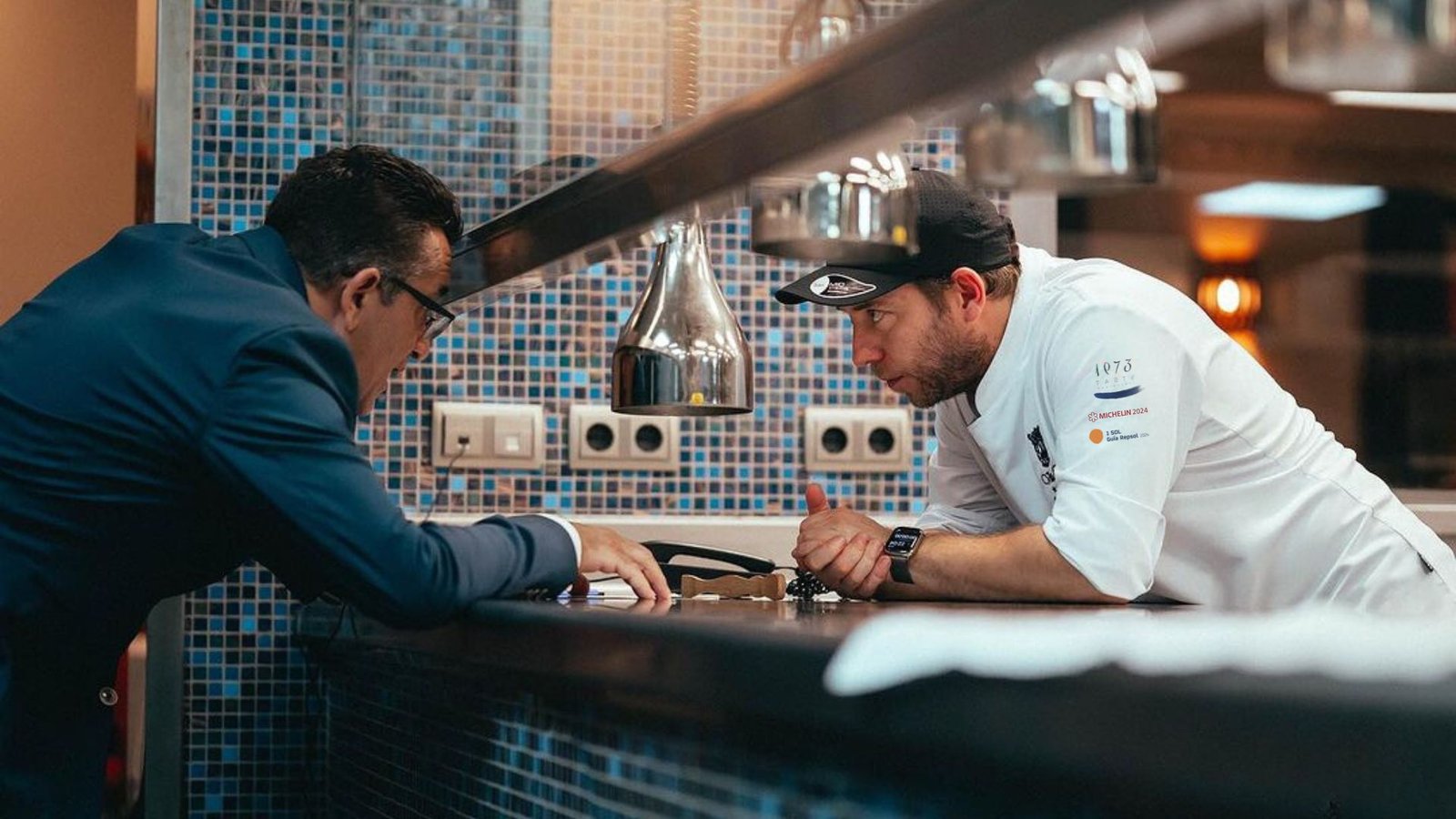
Prompts for Line Cook in Food Pairing AI in Food Pairing AI
As a line cook, you're the one actually firing every dish, working the grill, sauté, fryer or pantry station under pressure. Food Pairing AI helps you move beyond just executing specs — it gives you a deeper understanding of why certain flavors work together, so you can troubleshoot a flat-tasting sauce on the fly, suggest a smart garnish tweak during pre-shift, or bring a genuinely creative special to the chef. It's your silent sous when you need a fresh idea fast.
How to use these prompts
Take a short prompt like "Need ideas to improve our mashed potatoes" and make it work for your actual kitchen. Instead, try: "I work the hot side at a high-volume gastropub in Austin. Our Yukon Gold mashed potatoes are solid but taste one-dimensional — we use butter, cream, salt and white pepper. We need a flavor lift that doesn't add more fat or require ingredients we can't source from our US Foods broadliner. The dish has to hold well on the steam table for up to 90 minutes and pair with a smoked brisket plate. Give me 3 ideas with exact ratios for a 12-quart batch." The more specific you are, the better the result.
| Prompt / Request | Area / Goal / Pain point | Category |
|---|---|---|
| «Need ideas to improve the flavor of our mashed potatoes.» | Side Dish Improvement | Garnish Innovation |
| «What fresh herbs would best complement our grilled airline chicken breast?» | Aromatic Profile | Flavor Enhancement |
| «Looking for ways to add a crunchy element to our Caesar salad. What ingredients do you suggest?» | Textural Contrast | Salad Innovation |
| «Need ideas for an innovative vinaigrette that complements our arugula and pear salad.» | Dressing Development | Salad Pairings |
| «What lesser-known spices could add depth to our beef stew without overpowering it?» | Flavor Complexity | Braise Innovation |
| «I'm working a mushroom risotto on sauté. What unexpected ingredient could boost its umami?» | Umami Amplification | Rice & Grain Innovation |
| «Need ideas to elevate the plating of our oven-roasted salmon entrée.» | Plate Presentation | Culinary Aesthetics |
| «What fruits could add an interesting acidic pop to our red wine jus for strip steak?» | Flavor Balance | Sauce Development |
| «Looking for ways to incorporate smoky notes into our lentil soup without using liquid smoke.» | Flavor Depth | Soup Innovation |
| «Need ideas for a creamy, dairy-free dressing for our coleslaw that holds up on the line.» | Dietary Alternatives | Dressing Innovation |
| «Need ideas to improve my plate presentations using food pairing principles.» | Plate Presentation | Culinary Aesthetics |
| «How can I use food pairing to build more effective, flavorful marinades for proteins?» | Marinade Technique | Flavor Enhancement |
| «Need spice blend suggestions based on food pairing to improve my mother sauces.» | Sauce Development | Flavor Profiles |
| «What knife cuts and prep techniques on vegetables best highlight their flavors according to food pairing?» | Vegetable Prep | Kitchen Technique |
| «Need ideas for innovative side dishes that complement our mains using food pairing principles.» | Side Dish Creation | Plate Harmony |
| «How can I use food pairing to improve the flavor of my soups and purées without adding salt or extra fat?» | Soup Preparation | Health-Conscious Flavor |
| «Need suggestions for pairing fruits and vegetables in creative salads based on food pairing principles.» | Salad Innovation | Fresh Combinations |
| «What cooking techniques can I apply to different ingredients to maximize flavor compatibility according to food pairing?» | Cooking Techniques | Flavor Optimization |
| «Need ideas for cold sauces and vinaigrettes using unusual but compatible food pairing combinations.» | Cold Sauces & Vinaigrettes | Dressing Innovation |
| «How can I use food pairing to create more flavorful stuffings for pasta or meat dishes?» | Stuffing Development | Flavor Complexity |
Prompts for Prep Cook in Food Pairing AI
You’re in the earliest stage of your culinary career, and your work is the backbone of the kitchen. As a prep cook, you break down proteins, wash and cut produce, and set up stations so the line can run. Food Pairing AI helps you go beyond following recipes—it teaches you why certain flavors work together, how to season smarter, and how to build a mise en place that actually supports the dishes your chef is plating. With it, you'll sharpen your instincts, ask better questions, and move from simply executing tasks to truly understanding how ingredients connect.
How to use these prompts
Take a prompt like “What fresh herbs pair best with chicken?” and make it real. Instead, say: “I’m a prep cook at a fast-casual rotisserie chicken joint in Austin, Texas. We roast 80 whole birds a day. I need a dry herb rub for the skin that works with our house brine—buttermilk, garlic, smoked paprika. What dried herbs and spices pair best with the chicken and complement that brine? Give me a ratio for a 2‑cup batch of rub.” That gives Food Pairing AI your operation, volume, and a specific constraint. The more specific you are, the better the result.
| Prompt / Request | Area / Goal / Pain point | Category |
|---|---|---|
| «What fresh herbs pair best with chicken?» | Herb usage | Flavor enhancement |
| «I need ideas to improve the flavor of steamed vegetables.» | Vegetable prep | Basic cooking techniques |
| «What ingredients can I use to give a basic vinaigrette more flavor?» | Dressing prep | Flavor fundamentals |
| «How can I improve the flavor of a simple vegetable stock?» | Stock prep | Culinary foundations |
| «What basic spices should I know for Italian cooking?» | Spice knowledge | Regional cuisine |
| «I need suggestions for combining fruit in an interesting fruit salad.» | Fruit pairing | Basic desserts |
| «What vegetables should I combine to make a flavorful vegetable soup?» | Soup prep | Flavor combinations |
| «How can I improve the flavor of basic white rice?» | Rice prep | Side dish enhancement |
| «What ingredients can I use to make a tomato sauce more interesting?» | Sauce prep | Culinary fundamentals |
| «What herbs or spices can I use to flavor roasted potatoes?» | Vegetable seasoning | Basic cooking techniques |
| «I need to learn about basic flavor combinations in cooking.» | Culinary fundamentals | Basic education |
| «How can I improve my knife skills with vegetable cuts while considering food pairing principles?» | Knife skills | Basic skills |
| «I need to understand how different cooking methods affect ingredient flavors according to food pairing.» | Cooking methods | Technical understanding |
| «What basic herbs and spices should I know, and how do they complement different ingredients?» | Herb and spice usage | Flavor fundamentals |
| «I need to learn how to prepare simple vinaigrettes and dressings using basic food pairing principles.» | Dressing prep | Basic skills |
| «How can I get better at making simple side dishes that complement main courses?» | Side dish creation | Culinary complements |
| «I need to understand basic marinating principles and how different ingredients affect the flavor of meats.» | Marinating techniques | Meat prep |
| «What vegetable combinations work well together and why, based on food pairing principles?» | Vegetable combinations | Ingredient knowledge |
| «I need to learn about the basic tastes—sweet, salty, sour, bitter, umami—and how to balance them on a plate.» | Flavor theory | Culinary fundamentals |
| «How can I contribute ideas for mise en place setup while considering food pairing principles?» | Mise en place | Kitchen organization |
Tips for getting more out of Food Pairing AI
LOCATION MATTERS
Mention your city, state, or region—like “coastal Maine” or “Texas Hill Country”—to receive pairings that reflect local seafood, produce, and regional flavor profiles, making your dish feel authentic to its roots. Food Pairing AI will tailor suggestions based on your locale.
SPECIFY REGIONAL STYLE
Name the regional cooking tradition your kitchen follows—like “Lowcountry,” “Santa Maria BBQ,” or “Alaska Native”—so Food Pairing AI suggests combinations that respect the heritage and ingredient logic of that style. This ensures your pairings align with customer expectations.
REQUEST TRANSLATIONS
If your brigade includes Spanish-speaking cooks, ask Food Pairing AI to deliver its pairing notes in Spanish. This cuts through language barriers on the line, ensuring everyone understands the flavor logic without a chef having to translate on the fly.
SWAP IN LOCAL INGREDIENTS
Request substitutes for items that are out of season or unavailable in your market. For example, swap kale for collard greens in a Southern kitchen, or use Pacific rockfish instead of imported branzino. Food Pairing AI will adjust the pairing accordingly.
STATE YOUR EXPERIENCE LEVEL
Tell Food Pairing AI if you’re a seasoned executive chef or a new prep cook. It will scale its explanations from advanced volatile-compound analysis to straightforward “this goes with that” advice, saving time and matching your needs.
DEFINE YOUR KITCHEN CONTEXT
Describe your operation—fine dining, gastropub, ghost kitchen, or catering—and the occasion, like a wedding or game-day menu. This helps Food Pairing AI suggest pairings that fit your service flow, plate presentation, and guest expectations, so the end result feels coherent.
FLAG DIETARY NEEDS
Always state any FDA Big 9 allergens or dietary restrictions (vegan, keto, halal) in your prompt. Food Pairing AI will filter suggestions to avoid cross-contact risks and keep your menu compliant, whether it’s a nut-free dessert or a gluten-free sauce.
ASK FOR THE SCIENCE
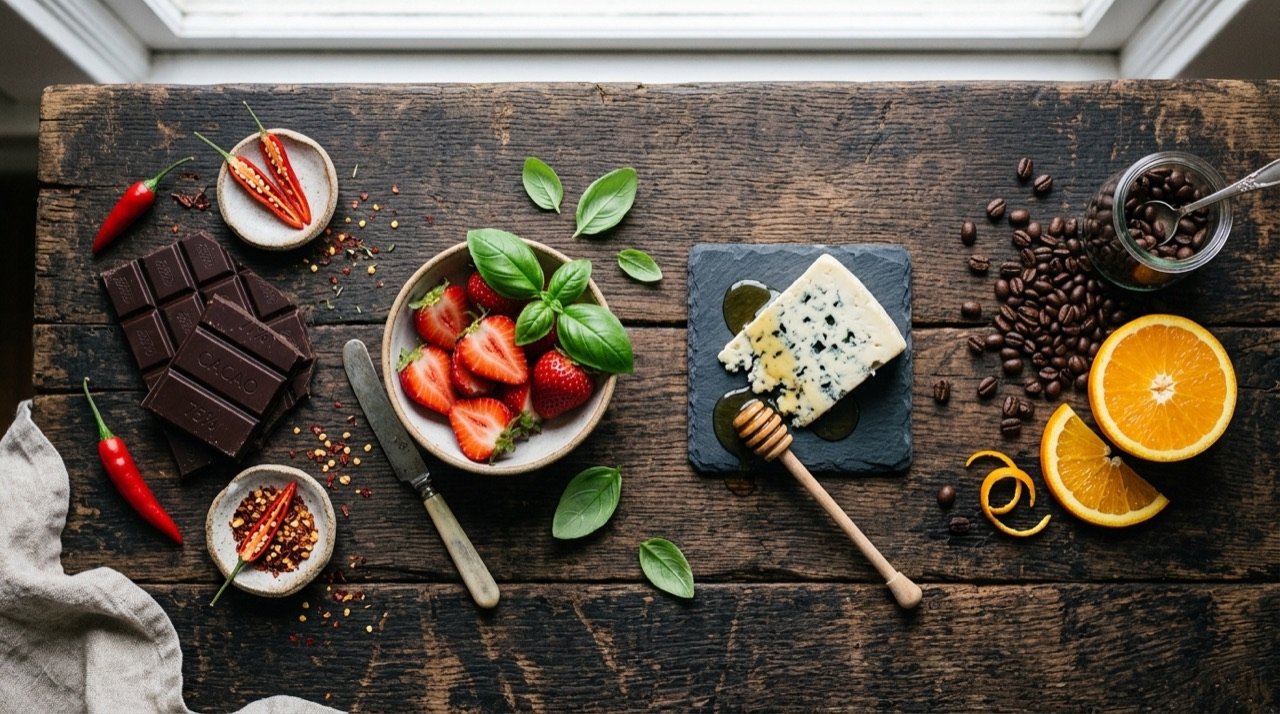
Request the chemical “why” behind a pairing—like how strawberry and basil share methyl cinnamate. This lets you train your team, build a compelling menu story, and give servers precise language to sell the dish to curious diners.
TIE TO TECHNIQUE
Specify your cooking method—sous vide, smoking, fermentation, or high-heat wok cooking—so Food Pairing AI can recommend flavors that survive or are enhanced by that process. For instance, smoked brisket pairs with bold, sweet-spicy notes that stand up to the bark.
GO SEASONAL
Name the season and your sourcing area—like “summer in the Hudson Valley” or “fall in the Pacific Northwest”—to get pairings built around peak produce. This keeps your menu fresh, supports local farms, and often lowers food cost.
More prompt libraries for AI Chef Pro agents
Every agent in the suite has its own prompt library. Browse the rest and put the AI to work across your whole operation:
- Prompts for Allergen ID
- Prompts for Avant-garde Cuisine
- Prompts for Bakery Consultant Pro
- Prompts for Barista Consultant Pro
- Prompts for Bartender Consultant Pro
- Prompts for Burgers Pro AI+
- Prompts for Catering AI+
- Prompts for Chef Consultant Pro
- Prompts for Chocolate Consultant Pro
- Prompts for Creative Bakery
- Prompts for Creative Chocolate Making
- Prompts for Creative Ice Cream Making
- Prompts for Creative Pastry
- Prompts for Gastro Lexicum
- Prompts for Executive Chef Pro
- Prompts for Fermentus Pro AI+
- Prompts for Waste GenCal
- Prompts for Gastronomy Consultant Pro
- Prompts for Gelato & Ice Cream Consultant
- Prompts for Pastry Consultant Pro
- Prompts for Pizza Consultant Pro
- Prompts for VegChef Plant-Based
- Prompts for Restaurant Manager Pro
- Prompts for Sommelier Consultant Pro
- Prompts for Staff Meal
Frequently asked questions
What is Food Pairing AI?
Food Pairing AI is an artificial intelligence tool designed to help chefs and cooks discover new ingredient combinations and preparation techniques based on food pairing principles. It uses advanced algorithms and a flavor database to suggest innovative, scientifically grounded pairings that push beyond tradition without replacing a chef’s creative judgment.
How can I start using these prompts with Food Pairing AI?
To begin, simply choose a prompt that fits a current culinary challenge. The prompt can be copied and pasted directly into the Food Pairing AI interface or used as inspiration to craft a more tailored question about flavor combinations or technique explorations.
Do these prompts work only with Food Pairing AI, or can I use them with other AI assistants?
These prompts are optimized for Food Pairing AI. Other culinary-focused AI assistants may yield useful results, but the strongest, most domain-specific output comes from Food Pairing AI because it is trained explicitly on food pairing science and professional kitchen applications.
How often are these prompts updated?
The prompt library is updated regularly to reflect emerging culinary trends, seasonality shifts, and evolving user needs. Chefs are encouraged to revisit the library to find new prompts that keep creative momentum going, whether working on a tasting menu in Chicago or a pub menu in Manchester.
Can I suggest new prompts to add to the library?
Yes. Feedback from working chefs is essential. Suggestions for new prompts can be submitted through the support page’s feedback form. The development team reviews these to ensure the library stays practical for real kitchens, from fine dining to high-volume casual concepts.
How can I adapt these prompts to my specific kitchen or culinary style?
Prompts are starting points. Chefs should customize them by adding specifics: local or foraged ingredients, preferred techniques like sous vide or wood-fire, station constraints, or a restaurant’s concept. This makes the AI’s output directly actionable for a particular brigade and menu.
Is there a limit to how many prompts I can use with Food Pairing AI?
There is no usage limit. Chefs can explore as many prompts as needed, combining them to tackle different aspects of menu development. The tool is built to handle repeated, heavy use during R&D sessions without throttling creativity.
Can Food Pairing AI generate full recipes based on these prompts?
Food Pairing AI generates ingredient pairing concepts and preparation technique suggestions, not scaled recipes with precise measurements. It is an ideation partner, meant to spark a chef’s own execution—seasoning, balancing, and plating remain firmly in the kitchen’s hands.
How can I ensure the combinations suggested by Food Pairing AI are safe and edible?
While the engine relies on flavor science, it does not replace a kitchen’s food safety protocols. Chefs must apply professional judgment regarding allergens (per FALCPA in the U.S., Natasha’s Law in the UK, or equivalent regulations), cross-contact, and proper cooking temperatures as defined in their HACCP plan.
Can I use Food Pairing AI to develop menus for special diets (vegan, gluten-free, etc.)?
Yes. Specifying dietary restrictions—vegan, gluten-free, FODMAP-conscious, or allergen sets like the top 9—in the prompt helps Food Pairing AI suggest suitable ingredient combinations. Final vetting for hidden allergens and kitchen-specific procedural controls remains the chef’s responsibility.