Prompt Library for Creative Bakery: 105+ Prompts for Formula, Cost & Visuals
105+ professional prompts for AI Chef Pro’s Creative Bakery agent: sourdough, hydration, artisan loaves, laminated doughs, costing, and visual previews.
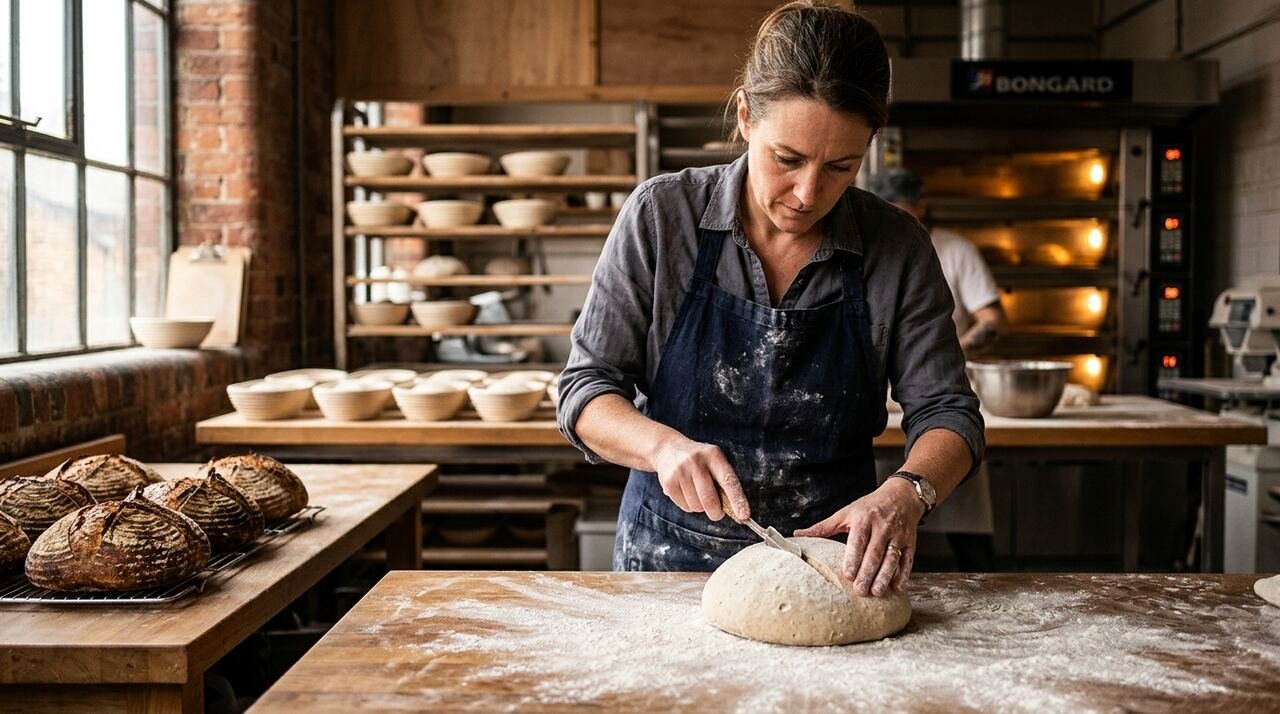
As a head baker, my day is split between unfettered creativity and the unforgiving math of food cost. The Creative Bakery agent is my strategic partner, turning a flash of inspiration into a precise formula, a realistic cost breakdown, and a finished-plate image that shows the result before I even touch flour. It ensures every new loaf, croissant, or brioche isn’t just delicious but also profitable and true to our bakery’s identity—so I can push boundaries without losing money.
Why prompts matter with Creative Bakery
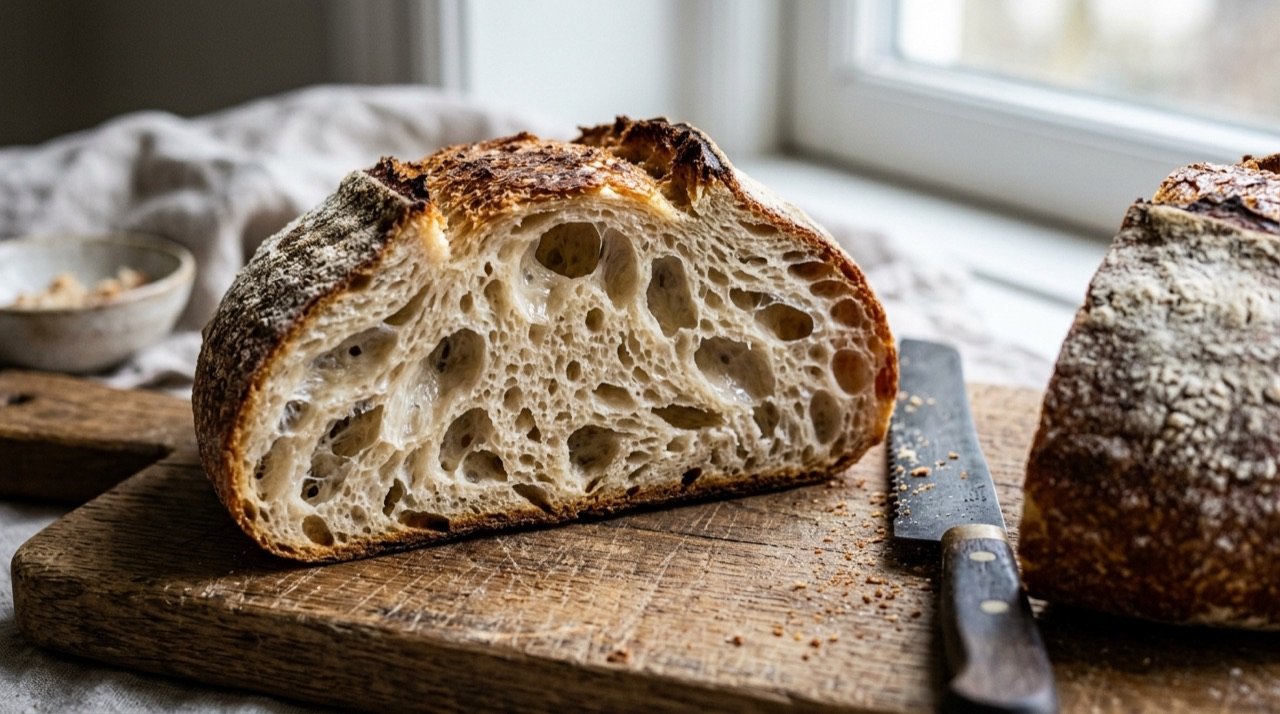
In baking, a prompt that says “give me a sourdough loaf” is useless. A prompt that specifies 80% hydration, 20% whole-grain levain, a 24-hour cold bulk, and a deep mahogany crust with an open, glossy crumb gives the agent the constraints it needs to generate a baker’s formula, a scaled production recipe, and a cost sheet that reflects actual flour, labor, and energy. Without that precision, you get a generic internet recipe that ignores your oven, your flour, and your margin. A precise prompt turns the agent into a silent sous chef who knows your formula book.
The same logic applies to laminated doughs: “a croissant with 82% butter, 3-4-3 fold, 16-hour cold retard” yields a dough schedule that fits your shift, calculates butter cost per unit, and flags potential lamination faults. For a bakery that runs 300 units a day, the difference between a vague prompt and a detailed one is a few hundred dollars in wasted butter and a day’s lost production. This agent doesn’t just spit out recipes; it ties creative ambition to the P&L, so you can afford to experiment.
Prompt examples for Creative Bakery
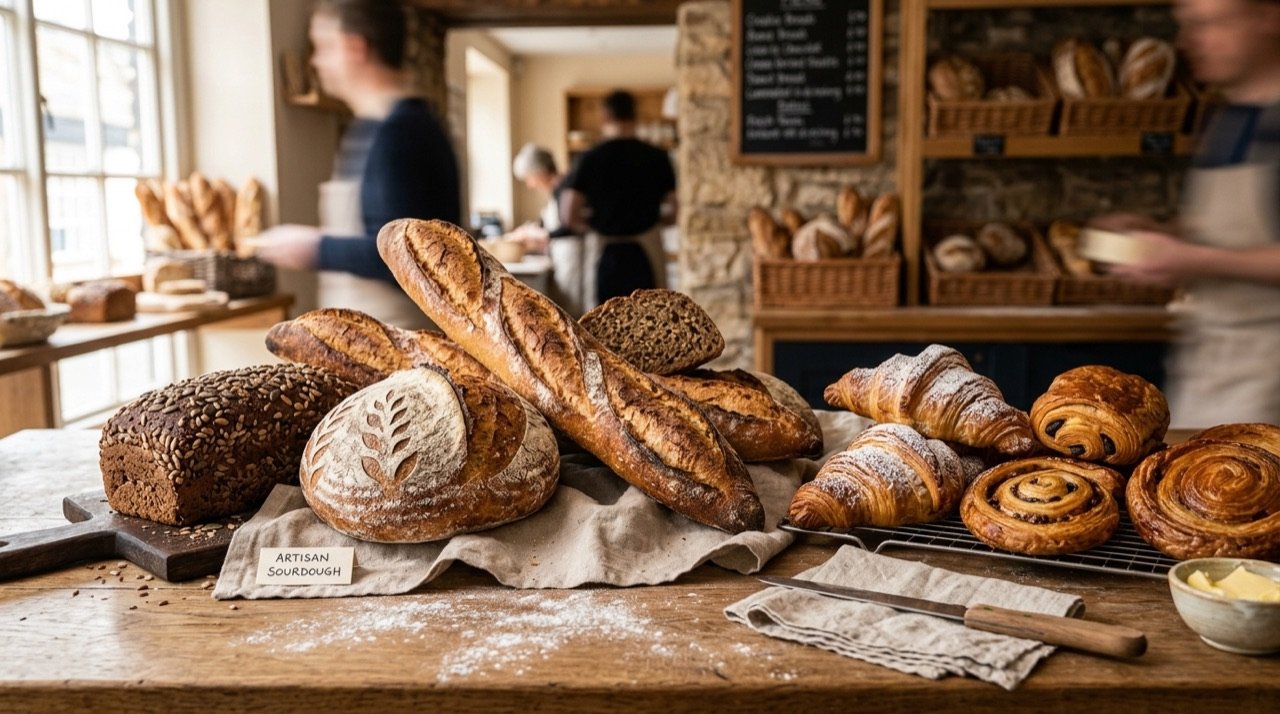
The 105 prompts are grouped by what you actually need on the bench: sourdough and preferments (hydration, levain builds, scoring), laminated doughs (croissant, danish, puff), artisan hearth loaves (country, miche, baguette), enriched doughs (brioche, challah, panettone), specialty breads (gluten-free, sprouted grain, high-protein), and the business side—costing, scaling, and visual previews. Each prompt is written to be dropped into the agent with minor tweaks to match your flour and your ovens, so you spend less time typing and more time baking.
Prompts for Master Baker (Bakery Lead) in Creative Bakery
As a master baker, my day splits between raw creativity and hard numbers. The Creative Bakery agent is the strategic partner that lets me validate a sudden flash of genius with a precise formula, a realistic cost breakdown, and an image that shows the finished loaf before I scale the first flour—so every new bread is not only delicious but profitable and true to our bakery’s identity.
How to use these prompts
These prompts are starting points you can adapt to your bakery and your collection. For example, if you begin with “I want to design a high-hydration sourdough with black sesame and khorasan for our winter signature line, visualizing the final loaf and analyzing its cost structure for a competitive retail price of $5.50,” you could personalize it as: “Design a winter signature loaf: 85% hydration sourdough boule, using 50% high-gluten bread flour and 20% whole khorasan. Add 15% toasted black sesame seeds at autolyse and 8% honey instead of sugar, then cost it out with HORECA prices in Chicago to hit a $5.50 price point while maintaining a 70% margin.” The more specific you are, the better the result.
| Prompt / Request | Area / Goal / Pain point | Category |
|---|---|---|
| «Calculate the detailed cost breakdown for our new laminated brioche loaf, using bread flour (W index ~300, T65 equivalent), 35% European-style butter (82% butterfat), and current HORECA prices in New York. Include trim loss from lamination and baking, then give me the cost per 1‑pound loaf (approx. 450 g) to set a retail price aligned with our 65% target margin.» | Premium Viennoiserie Profitability | Costing & Food Cost |
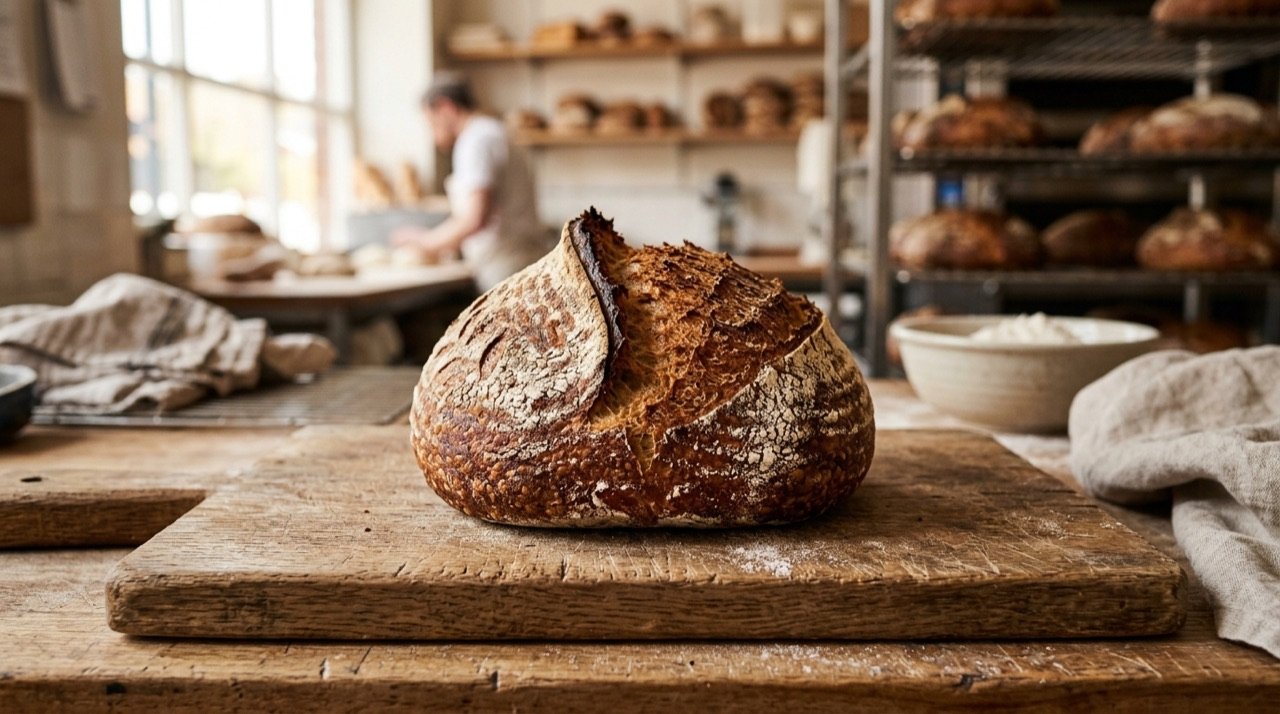
| «Generate an ultra-realistic image of a 90% hydration country loaf, single scoring with a pronounced ear, open wild crumb, and caramelized rustic crust. I need a cover photo for our new bread menu, set against a dim, artisan bakery backdrop.» | High-End Editorial Visualization | Image Generation |
| «Starting from my signature butter croissant recipe, I need a full bakery production file that includes the baker’s percentage formula, costed recipe with waste breakdown, and the exact lamination sequence (3 single folds + 1 double fold). Package all of this and export it as a professional, recipe‑book‑style PDF to share with the team.» | Recipe Standardization & Legacy | Export to PDF/CSV |
| «What are the three most disruptive trends in artisan baking for 2026 that align with a sourdough and long‑fermentation bakery? I need concrete ideas for a new line of “living fermented breads” incorporating cultures like koji or miso, to serve as our cutting‑edge signature.» | Innovation & 2026 Roadmap | 2026 Trends |
| «We’re having a summer issue with our rye boules: the dough becomes incredibly sticky during shaping and the final acidity is too aggressive. Analyze my current process (30% whole rye, 100% hydration sourdough starter, 4‑hour fermentation at 82 °F / 28 °C) and give me an exact solution, adjusting the effective hydration and the starter percentage.» | Acidity Control & Weak Dough Handling | Defect Troubleshooting |
| «Formulate from scratch a high‑value functional bread, gluten‑free with a superior nutritional profile. I want to use buckwheat flour and fermented quinoa with a fermented rice preferment. It must have 90% hydration, a moist and tender crumb, and a crispy crust, challenging the typical texture of gluten‑free bread.» | Signature Gluten-Free Functional Bread | Gluten-Free/Whole-Grain Adaptation |
| «I need to recalculate my 100% whole wheat bread formula using a stiff sourdough starter at 50% hydration. The current total hydration is 82%, but I want to push it to 88% for a more tender crumb. Give me the exact new water percentages, the water temperature to achieve a final dough temperature (FDT) of 73 °F (23 °C) in an ambient room of 79 °F (26 °C), and the mixing and folding sequence to properly develop the gluten in this whole‑grain flour.» | Hydration Adjustment for Sturdy Whole Wheat | Baker’s % & Hydration |
| «Analyze the full profitability of our specialty bread line (spelt, buckwheat, and rye), using 2026 HORECA prices in London (GBP). Compare them in a table: waste %, cost per kg of each raw material, total cost per piece, and suggested retail price to maintain a 75% gross margin, identifying which bread is most profitable per hour of labor in the bakery.» | Comparative Profitability Analysis of Specialty Line | Costing & Food Cost |
| «Define the complete autolyse, fermentation, and baking process for a signature loaf combining 30% nixtamalized corn flour and 70% medium‑strength bread flour (approx. 11.5% protein). I want a complex lactic flavor using a 16‑hour biga, a distinctive “S” scoring pattern, and a bake that yields a thin, crackly crust by day two.» | Multicultural Signature Bread Development | Technique & Creation |
| «I designed a sourdough panettone with 40% butter and egg yolks, but the crumb tears when sliced. Propose an adjustment to the fat percentage, the hydration of the first dough, and the gluten development point in the second mix to achieve a long, vertical crumb structure that shreds properly. Include a baking schedule for a deck oven with precise times and temperatures.» | Structural Defect in High-Enrichment Doughs | Defect Troubleshooting |
| «Propose a base formula for a rustic pan loaf (crystal bread style) at 110% hydration, using 80% very high‑gluten flour (W400 index) and 20% whole spelt. Detail the coil fold mixing technique, handling of the liquid dough during shaping, and baking parameters in a deck oven with heavy steam to maximize crumb openness.» | Extreme Hydration Handling | Technique & Fermentation |
| «We’re planning a limited‑edition bread with a 15% barley koji in the preferment to enhance sweetness and enzymatic activity. Calculate the optimal final dough temperature (°F) to maximize the koji amylase action, propose the preferment hydration, and define a baking profile that doesn’t over‑caramelize the liberated sugars.» | Advanced Fermentation with Koji | Technique & Fermentation |
| «Review my sourdough laminated viennoiserie recipe. I’m using 20% liquid levain and 25% butter in the détrempe, but the oven spring is poor. Give me a lamination protocol with the number of folds and thicknesses, and the bulk fermentation temperature vs. the proofing temperature for the shaped pieces, to ensure perfect puff‑pastry‑like layering without the acidity collapsing the structure.» | Optimizing Oven Spring in Sourdough Laminated Dough | Technique & Lamination |
| «Give me the exact baker’s percentage formula for an artisan stout bread with 20% malted rye, caraway seeds, and a crust glazed with a reduction of the beer and honey. I need the water temperature to achieve an FDT of 72 °F (22 °C) and the baking cycle to get a dark, shiny crust without bitterness.» | Artisan Beer Bread with Glazed Crust | Baker’s % & Baking |
| «I want to replace all the added fat in my sourdough whole wheat sandwich loaf with an emulsion of extra virgin olive oil (Arbequina) and roasted sweet potato purée, without losing crumb tenderness. Calculate the substitution percentage relative to flour weight to maintain total hydration, and adjust the mixing time to manage the extra water from the sweet potato.» | Functional Fat Replacement in Sandwich Loaf | Substitutions & Adaptation |
Prompts for Sourdough & Fermentation Specialist in Creative Bakery
As a sourdough and fermentation specialist, you master the microbiology of the culture and precise control of pH, temperature, and timing. The Creative Bakery agent equips you with formulas in exact baker’s percentages, step-by-step fermentation schedules, defect troubleshooting, and detailed costing sheets that account for ingredient, labor, and waste. Whether you’re scaling a single loaf or planning a production run, your output keeps every bake consistent, safe under HACCP monitoring, and true to the artisanal standards your customers expect.
How to use these prompts
These are starting points you can adapt to your bakery and your menu. For example, if you start with the prompt “Give me a sourdough bread recipe with a long fermentation,” you could personalize it like this: “I need a bâtard using a stiff levain at 50% hydration, high-gluten flour (14% protein), 30% whole spelt, 70% bread flour, 2-hour autolyse, bulk ferment 4 hours at 76°F with folds every 30 minutes, shaped as a bâtard, and cold-proofed at 38°F for 14 hours. Give me baker’s percentages, desired dough temperature (DDT), water temperature, final dough pH, scoring pattern, and a steam-baking schedule.” The more specific you are, the better the result.
| Prompt / Request | Area / Goal / Pain point | Category |
|---|---|---|
| «Develop a signature loaf with a 100%-hydration liquid levain, total dough hydration 85%, 20% khorasan flour, 10% whole rye, 70% bread flour (14% protein). Include autolyse, fold schedule, desired dough temperature 76°F, and a 16-hour cold retard. Give everything in exact baker’s percentages.» | High-hydration with preferment | Advanced bread formula |
| «Cost out a seeded sourdough loaf (sesame, flax, sunflower) for a bakery in Portland, Oregon. Use 2025 wholesale ingredient prices, include waste percentage, total cost, and cost per pound for a 1.5 lb loaf.» | Seeded bread costing | Costing & margins |
| «Cost out a laminated sourdough croissant with 84% butterfat butter for a viennoiserie program in Chicago. Include losses from lamination and baking, cost per unit, and a suggested retail price for counter sales.» | Laminated viennoiserie costing | Costing & margins |
| «Generate an editorial image of a whole rye and buckwheat sourdough bread, dark rustic crust, irregular crumb, cross-shaped scoring, on a wooden board dusted with flour.» | Rustic loaf image | Editorial image |
| «Export to PDF the baker’s-percentage recipe and costing sheet for a spelt and honey bread with poolish, including fermentation times and baking temperature.» | PDF with recipe & costs | Export recipe |
| «What sourdough and long-fermentation trends will shape 2026? Focus on koji, miso-fermented inclusions, and ancient grains like einkorn.» | 2026 fermentation trends | 2026 trends |
| «Develop a functional gluten-free bread with a brown-rice sourdough starter, buckwheat flour, psyllium husk, and tapioca starch. Target 90% hydration, a spongy crumb and crispy crust, with no gums or chemical additives.» | Gluten-free sourdough | Functional gluten-free bread |
| «My sourdough bread after a 48-hour cold fermentation turns out gummy crumb and pale crust. Diagnose likely causes and give me a corrective protocol for the next bake.» | Gummy crumb & pale crust | Defect troubleshooting |
| «Plan a 36-hour fermentation schedule for a stiff-levain batard (45% starter hydration) with 2% salt, 14% protein bread flour, and 10% buckwheat flour. Detail temperatures, folds, DDT, and pH at each stage.» | Long fermentation schedule | Fermentation control |
| «Prepare a 50%-hydration biga with high-gluten Manitoba flour (14% protein) and 0.5% yeast for a ciabatta with 80% total hydration. Give the gluten development, 1-hour autolyse, folds, and intense steam baking.» | Biga for artisan ciabatta | Preferments |
| «Give me the lamination process for a sourdough croissant with 84% butterfat, using 3 single folds and one double fold, rest periods at 4°C (39°F), and final proof at 26°C (79°F) without the butter melting.» | Sourdough croissant lamination | Lamination |
| «Create a formula for a multigrain bread with liquid levain, khorasan, rye, and oat flours, including a scald of flax and sunflower seeds. Include scoring for an ear and steam baking at 465°F (240°C).» | Multigrain bread with scald | Specialty breads |
| «Maintenance and feeding schedule for a 100%-hydration rye sourdough starter for a German-style vollkornbrot with a long fermentation at 72°F (22°C). Give feeding ratios, target pH, and ripeness signs for balanced acidity.» | Rye starter for dark bread | Rye sourdough starter |
| «Design a signature bread with an oat and buckwheat porridge, liquid levain, 110% total hydration, 5-hour bulk ferment at 73°F (23°C), and 18-hour cold retard. I want a moist crumb, open crumb structure, and thin crust.» | High-hydration porridge bread | Signature bread |
| «My liquid levain develops excessive acetic acidity after 12 hours at 82°F (28°C). Analyze the imbalance and propose a feeding plan to restore lactic balance, with exact ratios and temperatures.» | Excess acidity in starter | Acidity control |
Prompts for Artisan Loaf and Signature Bread Baker in Creative Bakery in Creative Bakery
As a baker of artisan loaves and signature breads, I tackle high hydration, open crumb, and that perfect crust every day. Creative Bakery gives me the precision of a master: exact formulas with water temperature and sourdough pH, scoring that defines my style, and cost breakdowns so every loaf turns a profit. With this agent, my bakehouse saves time, gains consistency, and fuels creativity.
How to use these prompts
These are starting points you can adapt to your bakery and collection. For instance, starting from “Give me a recipe for a sourdough boule,” you could customize it to: “Formulate an artisan sourdough boule with 88% total hydration, using 20% whole spelt flour and the rest high-gluten bread flour (equivalent to W300), 100% hydration liquid levain at 20% of total flour weight, 1.5-hour autolyse, hand mix with coil folds every 30 minutes for 2 hours, bulk fermentation 5 hours at 78°F with final dough temp 80°F, tight shaping into a round banneton, cold proof at 39°F for 16 hours, scoring in a square pattern, baked in a Dutch oven with steam.” The more specific you are, the better the result.
| Prompt / Request | Area / Goal / Pain point | Category |
|---|---|---|
| «Calculate the cost card for my whole-rye walnut loaf, factoring in 12% shrink and cost per pound in Atlanta.» | Whole-grain loaf true cost | Costing & COGS |
| «I need the per-piece cost for a signature viennoiserie: a sourdough croissant with European-style butter, 3-4-3 lamination, for New York.» | Artisan croissant profitability | Costing & COGS |
| «Generate an editorial image of my signature bread ‘Late Harvest’: an open-crumb boule with dark crust, dusted with flour, wheat-stalk scoring, on a rustic wood table under overhead light.» | Social-media bread image | Editorial image |
| «Export the recipe and cost card for my spelt-buckwheat raisin bread as a print-ready PDF and a CSV for my cost spreadsheet.» | Bakehouse documentation | PDF/CSV export |
| «What are the 2026 artisan baking trends around alternative fermentations, koji use, and regenerative grain breads?» | 2026 Innovation | 2026 Trends |
| «Convert my buckwheat-teff boule recipe to 100% gluten-free while keeping an open crumb and crispy crust, using psyllium and gums.» | Open-crumb gluten-free bread | Functional adaptation |
| «My high-hydration loaves come out with a gummy crumb and irregular hole structure; help me adjust autolyse, folds, and cold fermentation.» | Fix gummy crumb | Defects & adjustments |
| «Give me an exact baker’s percentage formula for a sourdough boule at 90% total hydration, blending bread flour and high-extraction flour, with toasted flax and sunflower seeds.» | High-hydration formula | Formula & hydration |
| «Explain the extreme-tension shaping technique for an oval banneton and the scoring pattern that maximizes ear opening in a deck oven.» | Signature shaping & scoring | Advanced technique |
| «Plan a 24-hour controlled-temperature bulk fermentation to develop lactic notes in a loaf with 50% stiff sourdough and rye.» | Long lactic fermentation | Controlled fermentation |
| «I want to build a liquid rice-koji sourdough starter for a signature umami loaf; give me the feeding schedule, temperature, and target acidity (pH).» | Koji sourdough | Advanced starter |
| «Optimize my baking curve for a 2.2 lb (1 kg) boule at 85% hydration: initial oven temp, steam time, and venting step for a thin, crackly crust without drying out.» | Precise bake curve | Steam baking |
| «Calculate the true cost of a 48-hour fermented artisan loaf with sourdough and organic flours, factoring in bake-off shrink and labor in Austin.» | 48-hour bread cost | Costing & COGS |
| «Design a high-protein, low-glycemic buckwheat-chia loaf, using sourdough with a touch of commercial yeast as backup, for athletes.» | High-protein functional bread | Signature creation |
| «My stiff sourdough breads have an aggressive acidity that overpowers the wheat flavor. How do I adjust starter hydration, bulk temperature, and fermentation time to mellow it?» | Reduce harsh acidity | Defects & adjustments |
Prompts for Laminated Viennoiserie Baker in Creative Bakery in Creative Bakery
As a top-tier laminated viennoiserie baker, your bench demands rigorous precision—from butter fat percentage and fold count to final dough temperature that prevents butter blowout. Creative Bakery acts as your master laminator, fine-tuning every variable of croissants, brioche, and enriched doughs to deliver an open honeycomb crumb, glassy crust, and a strong bottom line. Whether you run a scratch bakery or a high-volume HACCP kitchen, these prompts help you cost, scale, troubleshoot, and innovate across your laminated lineup.
How to use these prompts
These are starting points you can adapt to your own shop and collection. For instance, if you start with “I want a recipe for sourdough pain au chocolat,” you might customize it to: “Develop a formula for long-ferment sourdough pain au chocolat with 20% stiff levain (50% hydration), 82% total hydration, 40% European-style butter on dough weight, three single folds and one double fold, dough at 75°F, 18-hour cold proof, give me exact DDT and steam baking.” The more specific you are, the better the result.
| Prompt / Request | Area / Goal / Pain point | Category |
|---|---|---|
| «Cost out 40 all-butter croissants at 3 oz (85 g) each, using organic bread flour (W=380), 82% fat cultured butter, and fresh milk; price ingredients in New York City for 2026 and calculate unit cost allowing 12% waste.» | cost sheet organic premium croissant | escandallo y costes |
| «Analyze the profitability of a signature viennoiserie line: sourdough cruffin, cardamom-orange braided brioche, and square almond croissant; give me detailed costs, margins, and a 2026 foodservice pricing study for Chicago.» | profitability signature viennoiserie | escandallo y rentabilidad |
| «Generate an editorial-style image of a halved butter croissant revealing its honeycomb crumb, deep golden crust, dusted with rye flour, on a beechwood board.» | perfect honeycomb croissant image | generación de imagen |
| «Export my sourdough brioche recipe to a professional PDF, including baker’s percentages table, fold diagram, scaling, and fermentation curve, ready to print and share with the team.» | export brioche recipe to PDF | exportación PDF |
| «What emerging high-end viennoiserie trends will dominate 2026? Focus on plant-based laminations, koji and sourdough fermentations, and give me 4 concrete proposals with hydration percentages and alternative fat types.» | 2026 plant-based viennoiserie trends | innovación y tendencias |
| «Adapt my classic wheat croissant to a version with 70% whole spelt flour and 30% bread flour; adjust hydration, butter, and folds to compensate for lower extensibility and prevent tearing.» | whole spelt croissant adaptation | sustitución de harina |
| «My pains au chocolat bake up with a thick crust, dense crumb, butter blowout, and irregular shape. Walk me through my process: 60% hydration, 35% lamination butter, 3-3-3 folds, shaping at 41°F (5°C), baked at 365°F (185°C) without steam; give me precise adjustments.» | dense pain au chocolat defects | resolución de problemas |
| «Give me a baker’s % formula for a high-hydration brioche (85% whole milk, 60% butter, 45% egg yolks, 12% sugar, 25% liquid levain at 100% hydration); target DDT 73°F (23°C), initial fermentation 2 hours at 77°F (25°C) plus 16 hours cold.» | high-hydration brioche formula | % panadero y técnica |
| «Detail the technique for laminating a 2.2 lb (1 kg) croissant dough block with 1.1 lb (500 g) of lamination butter (50%) using a 2-3-4 fold sequence; indicate thickness after each fold in mm, dough and room temperature, and how to spot early cracks.» | intensive lamination technique | manejo de masa |
| «Design a production timeline for 80 slow-fermented croissants: mix to DDT 73°F, 12-hour block at 39°F, 3-phase lamination with 30-minute chills between, shape, final proof at 80°F and 85% humidity; include each step by the hour.» | retarded croissant fermentation schedule | fermentación programada |
| «Create a whole-grain croissant formula with 50% buckwheat flour and 50% white spelt flour, 60% liquid levain, 88% hydration, 42% butter; adjust timings to avoid excessive sourness and achieve an open crumb.» | buckwheat spelt whole-grain croissant | panes especiales |
| «My cruffin dough sticks to the mold and doesn’t rise in the center, baking up partially raw. Review my technique: brioche dough with 55% butter, proofed at 82°F (28°C) with 70% humidity, baked at 340°F (170°C) with convection; I need solutions for release and doneness.» | underbaked sticking cruffin | resolución de problemas |
| «Develop a cost sheet for 100 vegan sourdough butter croissants using quality laminating margarine (80% fat), oat milk, and bread flour; price through 2026 foodservice distributors and calculate cost per pound of finished product.» | costs vegan sourdough croissant | escandallo y costes |
| «Generate an image of an artisan bakery display case with braided brioches, twin-knot croissants, and double-stick pains au chocolat, rustic aesthetic, cement tile backdrop, morning light.» | artisan viennoiserie display image | generación de imagen |
| «Plan the weekly production for a croissant dough with 30% biga preferment and a 24-hour cold bulk at 43°F (6°C); calculate exact quantities of flour, water, butter, and yeast for 22 lb (10 kg) of final dough, and give me steps for optimal flaky texture.» | production planning biga croissant | técnica avanzada |
Prompts for Specialty, Whole-Grain, and Gluten-Free Baker in Creative Bakery
As a baker specializing in ancient and gluten-free flours, you need millimeter precision in hydration and fermentation to build structure and digestibility. Creative Bakery gives you exact baker’s-percentage formulas, defect troubleshooting, and detailed cost breakdowns so you can innovate safely and profitably. Whether you’re working with 100% whole spelt, khorasan, buckwheat, or psyllium-based gluten-free doughs, the library delivers actionable process steps, temperature targets, and visual cues calibrated for a U.S. production kitchen—helping you dial in every loaf without guesswork and meet the HACCP records your operation demands.
How to use these prompts
These prompts are starting points you can adapt to your bakery and your collection. For example, if you start from “I want to make a whole spelt sourdough,” you can personalize it like this: “I need a baker’s percentage formula for a 100% whole spelt sourdough with a stiff levain at 60% hydration, 1 hr 30 min autolyse, target DDT of 73°F, and 15% toasted sunflower seeds. Include the water temperature calculation and a quick cost breakdown for my bakery in Austin, TX.” The more specific you are, the better the result.
| Prompt / Request | Area / Goal / Pain point | Category |
|---|---|---|
| «Calculate the total hydration and baker’s percentages for a whole spelt bread with a 100% hydration poolish and 20% flax seeds, aiming for an open crumb.» | Formula with exact hydration | Specialty baking |
| «Build a full cost breakdown for a line of gluten-free sandwich loaves using brown rice flour, teff, and psyllium, using current HORECA prices in Portland, OR.» | Cost breakdown no. 1 | Costs |
| «Generate an editorial-style image of a khorasan loaf with a rustic crust and wheat-sheaf scoring, on a wooden board.» | Specialty bread image | Visual |
| «Export my signature bread recipe and process with rye and buckwheat sourdough, including preferment percentages and temperature curves, to PDF.» | Export recipe to PDF | Documentation |
| «Identify the 3 most relevant trends in gluten-free and long-fermentation baking for 2026 and how I can apply them in my bakery.» | 2026 gluten-free trends | Innovation |
| «Diagnose why my 100% whole rye bread comes out gummy with a dense crumb despite using 85% hydration and a long ferment.» | Defect: gummy rye crumb | Troubleshooting |
| «Create a formula from scratch for a gluten-free bread with brown rice, quinoa, and chia sourdough, aiming for a spongy crumb and crispy crust, without industrial gums.» | Functional gluten-free bread | Gluten-free/functional |
| «Calculate the per-unit cost and profitability of my spelt and honey bread, including 12% waste and distributor prices in Chicago, IL.» | Specialty sweet bread cost | Costs |
| «Detail the autolyse and fold schedule for a 100% high-extraction whole wheat bread at 90% hydration, to develop strength without intensive kneading.» | Whole grain autolyse & folds | Technique |
| «Propose a fermentation schedule using a young liquid levain (pH 4.2) to improve extensibility and flavor of an 85% hydration khorasan loaf.» | Young liquid levain | Fermentation |
| «Describe the ideal shaping and scoring pattern for a whole-grain sourdough brioche bun, aiming for even oven spring.» | Brioche shaping and scoring | Shaping technique |
| «Give the exact baking temperature and time with steam for a 2 lb (900 g) buckwheat-rye loaf to achieve a thick crust and irregular crumb.» | Steam-baked loaf | Baking |
| «Solve excessive acidity in my cold-fermented spelt bread (18 h): do I reduce the levain percentage, adjust water temperature, or change the levain pH?» | Excessive acidity in spelt | Troubleshooting |
| «Replace xanthan gum in my gluten-free sandwich loaf recipe with natural alternatives like psyllium and ground flax, maintaining softness and shelf life.» | Natural GF substitutes | Gluten-free/substitutes |
| «Develop a signature loaf with a blend of whole wheat, spelt, and rye, using staged hydration, a two-phase fermentation, and a detailed cost breakdown for sale in a gourmet shop.» | Signature multigrain bread | Signature loaf |
Prompts for Production Baker & Scratch Bakery Operations in Creative Bakery
As a production baker, your day demands metronomic consistency, oven and cooler scheduling, and ruthless cost control. The Creative Bakery agent gives you formulas in baker’s percentages to the tenth of a percent, scalable fermentation protocols, and cost cards built from actual foodservice distributor prices—so every batch comes out identical and profitable. All advice aligns with FDA Food Code principles and HACCP logic, but it’s written for the bench, not the inspector.
How to use these prompts
These prompts are starting points you adapt to your own bakery and product line. For example, you might start with “Give me a sourdough loaf recipe” and then tighten it to “Develop a rustic sourdough loaf at 80% hydration, using 100% liquid levain, 15% whole spelt, and 85% high-gluten bread flour (King Arthur Sir Lancelot); include baker’s percentages, bulk and cold fermentation times, and the water temperature needed to hit a final dough temp of 75°F in a 72°F kitchen.” The more specific you are, the better the result.
| Prompt / Request | Area / Goal / Pain point | Category |
|---|---|---|
| «Calculate the cost per loaf of our rye and spelt sourdough using current distributor prices in Chicago, factoring in 12% loss and labor.» | costing rye spelt loaf | Costing & Cost Cards |
| «I need a detailed cost card for a butter croissant made with 84% butterfat butter, 3-4-3 lamination, 2.5 oz (70 g) piece, for our bakery in San Francisco; include a cost breakdown table and export to CSV.» | cost card croissant lamination | Costing & Cost Cards |
| «Generate an editorial image of a cristal bread batard with wheat-stalk scoring, golden crust and irregular crumb, on a rustic wooden board.» | image cristal bread | Editorial Image |
| «Take the buckwheat and quinoa bread recipe you gave me and export it to PDF with baker’s percentages and costing included.» | export buckwheat recipe | PDF Export |
| «What are the cutting-edge bakery trends for 2026 in koji fermentation and long-fermented sourdoughs?» | trends 2026 koji | 2026 Trends |
| «Convert my base wheat bread recipe to a 100% whole-grain loaf with spelt and flax seeds, maintaining 85% hydration and using a stiff levain at 50% hydration.» | adapt whole grain spelt | Whole Grain Adaptation |
| «My sourdough loaf comes out with a pale crust and low volume; I cold ferment at 39°F (4°C) for 16 hours, bake with steam at 480°F (250°C) for the first 10 minutes. What adjustments should I make?» | defect pale crust volume | Troubleshooting Defects |
| «Give me the baker’s percentage formula for a signature bread at 90% hydration, using strong bread flour (W350 equivalent), 20% liquid levain, 2% salt, and 5% extra virgin olive oil, with a final dough temperature of 73°F (23°C).» | formula 90% hydration | Baker’s Percentage Formula |
| «Plan production of 40 sourdough loaves, 1 lb 10 oz (750 g) each, using two deck ovens with four decks each, to be ready by 8:00 a.m., including autolyse, folds, bulk, shaping, cold retard, and staggered baking.» | planning 40 loaves | Production Planning |
| «I want a controlled fermentation schedule for croissants using AOP Charentes-Poitou butter, with dough temperature at each fold, shock-chill blocking, and final proof at 80°F (27°C) with 80% RH.» | protocol fermentation croissant | Laminated Dough Fermentation |
| «Develop a recipe for a bread with whole rye sourdough and white miso, at 78% hydration, to boost umami and shelf life.» | recipe miso rye bread | Signature Bread Creation |
| «Adjust spiral mixing time for a brioche dough with 50% butter and 40% poolish, to avoid overheating and keep final dough temperature at 75°F (24°C), starting with a medium-strong flour (W280 equivalent).» | mixing adjustment brioche poolish | Mixing Technique |
| «I need a table of ideal pH and acidity for a liquid levain (100% hydration) at different culture temperatures, and how it affects flavor profile and crumb structure.» | pH acidity liquid levain | Fermentation Control |
| «Create a long-fermented bread with khorasan flour, pumpkin seeds, and 5% cane syrup, using a 50% biga and a 2-hour autolyse; detail the scoring pattern for optimal oven spring.» | khorasan seed biga bread | Signature Bread |
| «How do I scale my cristal bread recipe from 22 lb of flour to 88 lb while maintaining crumb and crust consistency, adjusting mixing time and water temperature?» | scaling cristal bread | Production Scaling |
Prompts for Bakery Assistant in a Creative Bakery in Creative Bakery
A bakery assistant in the hands-on training phase, focused on mastering every step of the baking process with precision. The Creative Bakery agent becomes your interactive mentor, answering questions on technique, fermentation, and sourdough management with exact time and temperature data, while helping you run food cost calculations so you understand profitability right from the bench. Whether you're troubleshooting a dense crumb, scaling a formula, or pricing a laminated dough for your menu, this agent gives you the numbers and reasoning a working baker needs.
How to use these prompts
These are starting points you can adapt to your bakeshop and your recipe collection. For example, if you start with the prompt "Teach me how to make sourdough bread," you could customize it like this: "I need a wheat boule formula using a 100% hydration liquid levain, scaled for my training bakeshop: bread flour at 12.7% protein, 1-hour autolyse, short mix, 3 coil folds at 30-minute intervals, and a 4-hour bulk ferment at 75°F. Give me baker's percentages, water temperature to hit a DDT of 77°F, the bake schedule for a deck oven with steam, and the cost per loaf if I'm buying organic flour in Portland at $0.88 per pound." The more specific you are, the better the result.
| Prompt / Request | Area / Goal / Pain point | Category |
|---|---|---|
| «Run a full plate cost on a white sourdough boule using organic bread flour at $0.86/lb, accounting for 12% bake loss and energy costs in Chicago. I need the cost per 1 lb 10 oz loaf and the margin if I sell it at $6.50.» | Basic white boule costing | costs |
| «Build a detailed cost card for a butter croissant with a 3-4-3 lamination, using European-style butter at 83% butterfat and high-protein flour, for a bakeshop in Austin. Give me the unit cost and a selling price at a 65% margin.» | Laminated croissant costing | costs |
| «Show me an editorial image of a whole-grain rye boule with sunflower and flax seeds, a rustic crust, and an irregular open crumb, sitting on a wooden board with a dusting of flour.» | Rye boule visual reference | image |
| «Export this spelt sourdough formula with an 80% hydration stiff levain and its cost card to a PDF, including baker's percentages and the fermentation temperature curve.» | Export recipe and costs to PDF | export |
| «What are the artisan bread trends for 2026 that I can start practicing now in my training? Focus on alternative fermentations, koji breads, and fruit-water levains.» | 2026 bakery trends | trends |
| «I need a baker's-percentage formula for a functional gluten-free loaf using buckwheat flour, chia, and psyllium husk, with 110% total hydration and a brown-rice levain. Also give me the water temperature adjustment for a DDT of 79°F.» | Functional gluten-free loaf | functional/substitutes |
| «My whole-wheat boule is coming out with a tight, gummy crumb and almost no openness. I'm using a 13% protein hard red wheat flour, a 30-minute autolyse, spiral mixing, and a 3-hour bulk. What do I need to adjust to get a more open crumb?» | Fixing a tight whole-wheat crumb | defects |
| «Give me the exact baker's-percentage formula for a high-hydration boule at 82% water with a 50% biga preferment, using 11.5% protein T65-style flour, a DDT of 75°F, and three coil folds in a tub. Include the full bake schedule with steam in a deck oven.» | High-hydration biga formula | baker's formula |
| «Walk me through the autolyse process with a medium-strength bread flour: what's the minimum time at 70% hydration, and what water temperature do I need to offset an 72°F ambient temp and hit a DDT of 75°F?» | Autolyse with temperature control | technique |
| «Teach me step by step how to refresh and maintain a 100% hydration liquid levain: what feeding ratio to use and how to tell when it's at peak readiness for mixing into a dough.» | Maintaining a liquid levain | fundamentals |
| «Explain the coil-fold technique for a 75% hydration wheat dough: how many sets, at what intervals, and how to read the gluten development by feel.» | Gluten development with folds | basic technique |
| «Calculate my mixing water temperature based on the bakeshop and flour temperatures to land on a final dough temperature of 75°F.» | Final dough temperature calculation | basic calculation |
| «I want to learn basic shaping for a baguette and a bâtard, step by step, with the visual checkpoints so they're properly tensioned.» | Shaping loaves | basic technique |
| «Create a morning-shift mise en place checklist for the bakeshop: scaling flours, refreshing levains, prepping bannetons, and the order of tasks.» | Bakeshop organization | mise en place |
| «How do I properly store freshly baked bread and retarded doughs overnight? Give me times, temperatures, and best practices for hygiene under the FDA Food Code.» | Storage and food safety | best practices |
Tips for getting more out of Creative Bakery
Define a reference baker style
Name a master like Chad Robertson to shape hydration and fermentation handling. Example: “Formulate this loaf Tartine-style, with 82% hydration and a very open crumb.”
Always specify total hydration
State the water percentage relative to total flour so crumb texture hits your target exactly. Example: “I want a whole wheat pan loaf at 90% hydration with a very tender crumb.”
Include sourdough type and percentage
Define whether the levain is liquid or stiff and its proportion to total flour to dial in acidity and fermentation speed. Example: “Use 30% stiff levain at 50% hydration.”
Request dough temperature curve
Ask for water temperature and final dough temp to match your bakery conditions. Example: “Calculate water temperature for a DDT of 77°F with flour at 68°F and ambient at 72°F.”
Request full baking schedule
Detail initial steam, venting times, and exact temperatures for the crust you want. Example: “Bake with steam first 18 min at 465°F, then 30 min at 390°F with vent open.”
Use city-specific cost breakdown
Get cost per piece and per pound including waste and byproduct recipes. Example: “Cost breakdown for a butter croissant in Chicago with 8% waste.”
Integrate alternative ingredients with notes
When using gluten-free flours or pseudocereals, add a brief note on dough behavior. Example: “Formulate a gluten-free bread with teff flour, which holds little water and dries out easily.”
Request editorial image style
Describe angle, light, and props for a professional product shot. Example: “Top-down shot of the loaf on a dark wood board, serrated knife alongside, crumb exposed.”
Request PDF or CSV export
Choose the format to share with your team or feed into your management software. Example: “Download the formulation and cost breakdown as CSV to import into my ERP.”
Add cost or time constraints
Cap the price per pound or fermentation hours so the recipe fits your production reality. Example: “Same loaf, but only 3 hours bulk fermentation and a cost per pound under $3.00.”
More prompt libraries for AI Chef Pro agents
Every agent in the suite has its own prompt library. Browse the rest and put the AI to work across your whole operation:
- Prompts for Allergen ID
- Prompts for Avant-garde Cuisine
- Prompts for Bakery Consultant Pro
- Prompts for Barista Consultant Pro
- Prompts for Bartender Consultant Pro
- Prompts for Burgers Pro AI+
- Prompts for Catering AI+
- Prompts for Chef Consultant Pro
- Prompts for Chocolate Consultant Pro
- Prompts for Creative Chocolate Making
- Prompts for Creative Ice Cream Making
- Prompts for Creative Pastry
- Prompts for Gastro Lexicum
- Prompts for Executive Chef Pro
- Prompts for Fermentus Pro AI+
- Prompts for Food Pairing AI
- Prompts for Waste GenCal
- Prompts for Gastronomy Consultant Pro
- Prompts for Gelato & Ice Cream Consultant
- Prompts for Pastry Consultant Pro
- Prompts for Pizza Consultant Pro
- Prompts for VegChef Plant-Based
- Prompts for Restaurant Manager Pro
- Prompts for Sommelier Consultant Pro
- Prompts for Staff Meal
Frequently asked questions
What is Creative Bakery?
Creative Bakery is the AI agent within AI Chef Pro specialized in professional and artisanal bread baking. It emulates a master baker’s knowledge, generating technical formulas in baker’s percentages, managing long fermentations, sourdough starters, and foodservice costing. Access it through the app at app.aichef.pro.
Can I ask the agent to calculate water temperature for my bakeshop?
Yes. Provide the ambient temperature, flour temperature, and your desired final dough temperature. Creative Bakery will give the exact water temperature to hit that DDT, factoring in your mixer’s friction heat if you know it, ensuring consistent fermentation from the start.
Does recipe costing include preferments and shrinkage?
Absolutely. The costing module accounts for every ingredient, including levain and preferments, and applies the waste percentage you define. That yields a real cost per piece and per kilo, so your margins stay accurate even with long-fermented or sourdough-based items.
Can I formulate gluten-free breads with the same precision as wheat bread?
Yes, but you must describe the water-absorption behavior of your gluten-free flours in the prompt. Creative Bakery adjusts hydration and recommends hydrocolloids or fibers to build a workable dough, delivering professional-quality bread despite the lack of gluten structure.
Does the agent generate realistic bread images for menus or social media?
Yes. Creative Bakery can produce editorial-style bread images with the plating you describe. Detail the shot type, lighting, and props, and the agent creates a ready-to-use image for your spec sheets, digital menus, or marketing campaigns without a photo shoot.
How do I ask the agent to compare two croissant formulations?
Prompt it with both recipes or their key parameters—butter percentage, yeast type, lamination time—and request a technical comparison. Creative Bakery will analyze differences in flakiness, crumb structure, and cost, then recommend which one better fits your production volume and quality targets.
Can I cap the maximum cost per kilo in a recipe?
Yes. Simply set the price ceiling in your prompt. The agent reformulates the recipe by selecting alternative ingredients or adjusting ratios, keeping the bread’s character intact while respecting that limit. It’s a fast way to meet food-cost targets without starting from scratch.
What information should I include for a very thin, crisp crust?
Specify steam baking until a precise minute, then a lower temperature with the vent open. Also request a slightly higher hydration and an extended cold second proof. Creative Bakery interprets these cues to dial in a crust that shatters delicately while the crumb stays open and moist.
Can I ask the agent to adapt a bread recipe for a proof-box-equipped bakeshop?
Yes. Just supply your proof box’s temperature and humidity. Creative Bakery recalculates fermentation times and sourdough activity so the process becomes perfectly reproducible under your controlled conditions, eliminating guesswork when scaling across different production environments.
What sets Creative Bakery apart from generic AI assistants?
Unlike a generic assistant, Creative Bakery speaks the baker’s language: baker’s percentages, DDT, pH, crumb structure, and cost breakdowns. Trained on master bakers’ methodology and part of a 70+ agent AI Chef Pro ecosystem, it connects bread baking directly to your restaurant or bakeshop’s full management.