Prompt Library for Waste GenCal: Trim Waste, Not Margin
35 ready-to-run prompts for chefs and kitchen managers who want Waste GenCal to calculate yield, cost out trim, and build a waste-reduction plan.
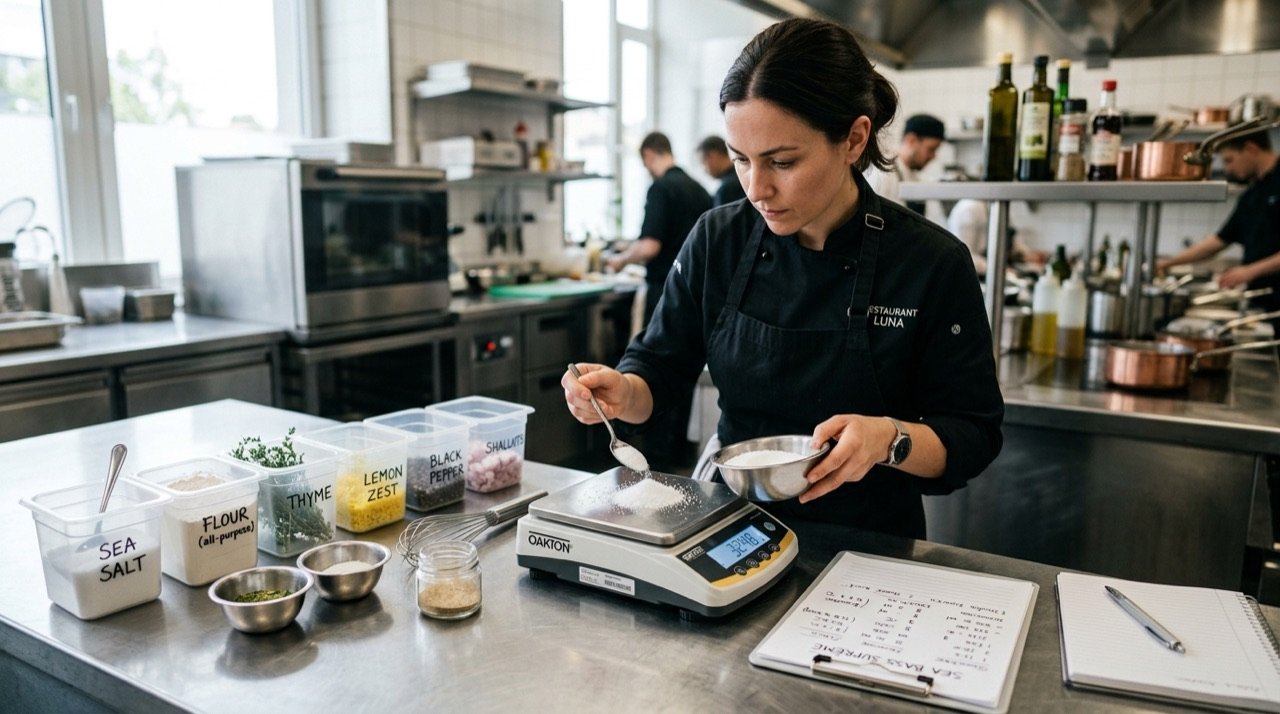
Every carrot peel, fish frame, and over-ordered case of heavy cream chips away at a kitchen’s profit. Waste GenCal is the AI agent inside AI Chef Pro built to help chefs, sous chefs, and kitchen managers turn that lost product into recoverable dollars. It calculates true yield percentages from your prep specs, attaches a hard food cost to every pound of trim, and flags where your waste log is leaking margin. Whether you run a high-volume brunch spot in Atlanta or a tasting-menu kitchen in Chicago, Waste GenCal gives you the numbers you need to rework your prep sheets, negotiate smarter with purveyors, and build cross-utilization plans that your line cooks can actually execute. The goal is not zero waste—it is waste you chose, costed, and accounted for.
Why prompts matter with Waste GenCal
Waste GenCal does not read your mind; it reads your prompt. Feed it a vague line like “How do I cut waste?” and you will get a generic list of composting tips that belongs on a food-blog sidebar. But when you supply a specific trim item, your current invoice price, and the prep method your crew actually uses, the agent returns a dollar figure per service, a yield percentage you can benchmark against industry standards, and a ranked set of cross-utilization ideas that fit your existing menu. Precision in equals precision out, and in this domain precision means a line-item cost you can take to your P&L review.
The difference between a sloppy prompt and a tight one often shows up as a 3–5‑point swing in calculated yield. That swing, multiplied across a week’s worth of salmon fabrication or onion dicing, is real money. By locking down the variables—weight as-purchased, trim weight after prep, current market price, and the destination of the trim—you force Waste GenCal to act like a sous chef who lives in your walk-in, not a chatbot recycling platitudes about nose-to-tail cooking. The examples below are written to remove that guesswork so every output lands with a dollar sign attached.

Prompt examples for Waste GenCal
The 35 prompts that follow are organized by the real-world stations where waste hits hardest: protein fabrication, produce prep, overproduction and buffet management, inventory aging, and menu engineering for cross-utilization. Each prompt is a plug-and-play template—fill in your own weights, costs, and station names, and Waste GenCal will return a yield sheet, a costed-trim report, or a day‑by‑day action plan that speaks in dollars, pounds, and covers.
Prompts for Executive Chef: Waste & Yield Management in Waste GenCal
As an Executive Chef, your role is crucial in optimizing resources and maximizing the profitability of your culinary operation. Waste GenCal can be an invaluable tool for making informed decisions about inventory management, menu planning, and waste reduction. Whether you're analyzing trim yields, tracking high-cost proteins, or designing staff training, this AI agent helps you turn data into action. Use these prompts to uncover hidden costs, streamline production, and build a leaner, more sustainable kitchen.
How to use these prompts
These prompts are starting points you can adapt to your operation's specific needs. For example, if you have the prompt: "I need a comparative waste analysis between different beef cuts to optimize our menu," you could personalize it as: "I need a comparative waste analysis between tenderloin, ribeye, and flank steak at our Chicago steakhouse, considering a weekly volume of 200 lb of each cut and our typical grill and sous vide methods." The more specific you are, the better the result.
| Prompt / Request | Area / Goal / Pain point | Category |
|---|---|---|
| «I need a comparative waste analysis between different beef cuts to optimize our menu.» | Menu Optimization | Cost Analysis |
| «How can I reduce waste on our prepared foods production line by 15% in the next 3 months?» | Waste Reduction | Process Improvement |
| «Generate a waste and yield report for the 20 most-used ingredients in our kitchen last quarter.» | Inventory Control | Data Management |
| «What would be the financial impact of switching our seafood supplier to one offering pre-cut products?» | Supplier Analysis | Financial Decision-Making |
| «I need strategies to use unavoidable trim and waste in creating new dishes.» | Culinary Innovation | Sustainability |
| «How can I adjust our standard recipes to minimize waste without compromising final dish quality?» | Recipe Standardization | Production Optimization |
| «Generate a training plan for our kitchen staff on waste-reduction techniques.» | Staff Training | Human Resources |

Prompts for Executive Chef: Trim & Yield Management in Waste GenCal
As the chef running the pass, you own every ounce of trim, every plate’s consistency, and the bottom line. Waste GenCal gives you the yield data and process benchmarks that turn prep into profit—without sacrificing quality. Whether you’re breaking down a whole tenderloin, comparing fresh vs. IQF produce, or tightening up a seven-course tasting menu, these prompts help you forecast usable product, compare ingredients, and spot waste before it hits the trash can. Use them to sharpen ordering, control food cost, and keep your crew working clean.
How to use these prompts
The prompts below are starting points—customize them to your operation. For example, a generic prompt like “What’s the yield on fresh salmon when filleting?” becomes a precise costing tool if you add your real numbers: “We’re running a 12-course tasting menu in Seattle and need to portion skinless salmon fillets into 6 oz (170 g) cuts. What’s the usable yield after trimming and portioning, and how much whole fish should I order for 80 covers?” The more specific you are, the better the result.
| Prompt / Request | Area / Goal / Pain point | Category |
|---|---|---|
| «What's the usable yield on a whole beef tenderloin after removing the chain, silverskin, and cutting 8 oz (225 g) filet mignons?» | Basic yield data | Meat prep |
| «Compare the trim loss and final plate cost for fresh jumbo asparagus versus IQF asparagus in our spring vegetable sauté.» | Ingredient comparison | Sourcing decisions |
| «I'm breaking down 22 lb (10 kg) of monkfish tails for medallions and a fish soup base. What's the trim loss for each use, and how many portions will I get?» | Production planning | Seafood management |
| «What's the most efficient method to process 110 lb (50 kg) of Roma tomatoes into a smooth marinara, minimizing trim and moisture loss?» | Process optimization | Vegetable prep |
| «Generate a yield and waste report for our 7-course tasting menu in Austin, covering every protein, vegetable, and garnish.» | Menu analysis | Cost control |
| «What steps can I take to reduce trim and waste in our wild mushroom risotto, from cleaning chanterelles to using mushroom stems in stock?» | Recipe refinement | Dish optimization |
| «Calculate the total usable yield from an 11 lb (5 kg) whole duck broken down into confit legs, pan-seared breasts, and ground meat for stuffing.» | Whole-animal utilization | Resource maximization |

Prompts for Sous Chef: Waste Control & Trim Management in Waste GenCal
As a Sous Chef, you run the line, own the prep lists, and directly influence the kitchen's bottom line every shift. Your role is where waste management strategy hits the cutting board—supervising how every carrot is peeled, every strip loin is trimmed, and every mise en place container is filled. Waste GenCal gives you the data to make those split-second calls with confidence, helping you tighten yields, coach your team on knife skills, and give your Executive Chef hard numbers for ordering and menu decisions.
How to use these prompts
These prompts are built for the daily reality of a US Sous Chef. Run them straight or dial them in for your operation. For instance, a generic prompt like "What are the expected trim losses on vegetable prep for mise en place?" becomes far more powerful when you feed it your actual board: "We're prepping mise for a Friday dinner service in Chicago—45 lb of carrots, 30 lb of celery, and 20 lb of leeks for the minestrone. What are the expected trim losses, and how many 6-pint Cambros of brunoise should that yield?" The more specific you are, the better the result.
| Prompt / Request | Area / Goal / Pain point | Category |
|---|---|---|
| «What are the expected trim losses on vegetable prep for this week's mise en place, based on a standard US dinner menu?» | Mise en place planning | Prep efficiency |
| «I need to compare trim and yield between whole chickens and pre-portioned airline breasts to tighten our weekly poultry order for a high-volume brasserie in Austin.» | Order optimization | Inventory management |
| «What's the most efficient way to break down 45 lb of Atlantic cod for our signature entrée to keep trim loss under 15%?» | Processing efficiency | Knife skills and technique |
| «Pull a waste report for our last 5 off-site catering gigs and flag the top three areas where we're bleeding food cost.» | Performance analysis | Continuous improvement |
| «How can I cut trim waste on fruit prep for our plated desserts—think berry coulis and citrus supremes—without sacrificing the plating standard the Chef demands?» | Recipe optimization | Menu development |
| «Calculate the net yield on 25 lb of chuck roll for braised short rib, accounting for denuding fat cap and silverskin.» | Yield calculation | Protein fabrication |
| «What are typical trim percentages on our composed salad station? I need to dial in the produce order for a 300-cover Saturday in Denver.» | Purchase quantity adjustment | Cost control |

Prompts for Chef de Partie: Waste Management at Your Station in Waste GenCal
As a Chef de Partie, you own a specific station—pantry, grill, sauté, or pastry—and every ounce of trim or spoiled prep hits your food cost hard. Mastering waste in your section keeps quality high and the kitchen profitable. Waste GenCal, the AI agent inside AI Chef Pro, helps you nail yield percentages, optimize prep techniques, and write tighter order lists. Use it to turn daily mise en place into a zero-waste exercise without sacrificing the standards your chef expects.
How to use these prompts
Start with a short prompt like “What’s the expected waste when cleaning and portioning today’s fish?” Then make it yours. For a downtown Chicago seafood spot, it could become: “At a Loop oyster bar, what’s the real trim loss when breaking down 11 lb of whole wild striped bass into 6 oz skin-on fillets for tonight’s dinner service? We’re running a $34 entrée and need accurate costing.” The more specific you are, the better the result.
| Prompt / Request | Area / Goal / Pain point | Category |
|---|---|---|
| «What’s the expected trim loss when breaking down and portioning today’s fish?» | Fish butchery | Yield calculation |
| «I need the typical waste percentages when prepping vegetables for the main course garnish.» | Garnish prep | Ingredient optimization |
| «How can I reduce waste when making sauces and reductions?» | Sauce production | Waste reduction |
| «Calculate the net yield from 6 lb of foie gras for our appetizer, factoring in trimming and final portioning.» | Specialty prep | Expensive ingredient maximization |
| «What’s the most efficient way to process 10 lb of shrimp to minimize waste?» | Shellfish processing | Prep efficiency |
| «Compare waste between using fresh spinach and frozen spinach for our pasta dish.» | Ingredient selection | Comparative analysis |
| «How many lamb chops should I order to serve 50 portions, accounting for trim and cooking loss?» | Order planning | Inventory management |
Prompts for Line Cook: Waste & Yield Management in Waste GenCal
As a line cook, your hands are on every ingredient that moves through the pass. The way you trim, peel, slice, and cook directly impacts the kitchen’s food cost and profitability. Minimizing prep waste and cooking loss isn’t just good practice—it’s a core skill that separates a reliable cook from a great one. Waste GenCal helps you sharpen those skills by offering real-time, practical guidance on yield optimization, knife work, and scrap utilization. Whether you’re breaking down a whole fish or juicing citrus for a vinaigrette, small adjustments in technique add up to real savings.
How to use these prompts
These prompts are designed to tackle the daily waste challenges a line cook faces. You can use them as-is or adapt them to your exact station and prep list. For instance, a prompt like “What’s the best technique for peeling and cutting onions to minimize waste?” can become “What’s the best technique for peeling and dicing 10 pounds of onions into ¼-inch dice for a batch of French onion soup at a Chicago bistro, minimizing waste while keeping the cut uniform?” The more specific you are, the better the result.
| Prompt / Request | Area / Goal / Pain point | Category |
|---|---|---|
| «What's the best technique for peeling and dicing onions to minimize trim waste?» | Knife skills | Vegetable prep |
| «How can I reduce trim waste when breaking down a whole salmon into fillets?» | Fish butchery | Yield optimization |
| «What's the expected trim loss when cleaning and portioning a 5-pound beef tenderloin into steaks?» | Meat prep | Yield calculation |
| «What are the best practices for minimizing waste when prepping fruit for a dessert menu?» | Dessert prep | Ingredient optimization |
| «How can I repurpose vegetable peels and trim to cut down on food waste in the kitchen?» | Scrap utilization | Waste reduction |
| «What's the most efficient method for juicing lemons and limes to get the most juice with the least waste?» | Beverage prep | Yield maximization |
| «What cooking method minimizes moisture loss and shrinkage when grilling chicken breasts for a salad?» | Cooking methods | Moisture retention |
Tips for getting more out of Waste GenCal
Specify quantities and units
Give exact weights and measures. Ask Waste GenCal: “What’s the expected trim loss when cleaning and filleting 10 lb of fresh salmon?” Exact numbers get you precise yield percentages, not ballparks.
Detail the prep method
Name the cut or cooking technique. “What’s the waste when cutting 5 lb of carrots into julienne vs. brunoise?” Different knife work yields different trim, so Waste GenCal can give you accurate numbers.
Mention the final dish
Tell Waste GenCal the end use. “How can I minimize waste when prepping 10 lb of potatoes for a smooth puree?” The intended dish changes acceptable trim, so you get relevant advice.
Ask for comparisons
Request side-by-side data. “Compare waste between using fresh spinach and frozen spinach for a cream of spinach soup.” Waste GenCal will break down yield, labor, and cost so you can decide.
Specify the variety
Different varieties trim differently. “What’s the expected waste cleaning 2 lb of shiitake mushrooms vs. 2 lb of white button mushrooms?” Waste GenCal accounts for stem-to-cap ratios and peeling needs.
Include every prep step
List peeling, seeding, trimming, portioning. “Calculate total waste for 20 lb of tomatoes: peel, deseed, and medium dice.” Waste GenCal adds up losses at each stage for a real kitchen yield.
Ask for waste-reduction tips
Get specific advice. “How can I reduce waste when peeling and slicing 40 lb of apples for a pie filling?” Waste GenCal will suggest tool choices, technique tweaks, and trim usage.
Name the equipment
Knife vs. mandoline vs. food processor changes waste. “What’s the waste difference slicing 10 lb of onions with a knife vs. a commercial slicer?” Waste GenCal factors in inconsistent cuts and machine waste.
Request trim usage ideas
Ask how to use scraps. “How can I repurpose 6 lb of chicken breast trim to cut waste?” Waste GenCal will suggest stocks, forcemeats, or staff meal applications to keep trim out of the bin.
Define the service style
À la carte vs. buffet vs. catering affects overproduction and plate waste. “How should I calculate waste for 100 lb of mixed greens for an 8-hour buffet?” Waste GenCal adjusts for holding loss and customer behavior.
Ask about seasonal swings
Produce waste changes with season. “How does asparagus waste vary between peak spring season and off-season imports?” Waste GenCal can flag woody ends, tip damage, and price-yield trade-offs.
Specify storage conditions
How you store an ingredient affects trim loss. Ask Waste GenCal: “What’s the expected yield loss for 20 lb of russet potatoes stored at room temp vs. walk-in cooler for two weeks?” The more context you give, the better the answer—combine several of these tips in one prompt.
More prompt libraries for AI Chef Pro agents
Every agent in the suite has its own prompt library. Browse the rest and put the AI to work across your whole operation:
- Prompts for Allergen ID
- Prompts for Avant-garde Cuisine
- Prompts for Bakery Consultant Pro
- Prompts for Barista Consultant Pro
- Prompts for Bartender Consultant Pro
- Prompts for Burgers Pro AI+
- Prompts for Catering AI+
- Prompts for Chef Consultant Pro
- Prompts for Chocolate Consultant Pro
- Prompts for Creative Bakery
- Prompts for Creative Chocolate Making
- Prompts for Creative Ice Cream Making
- Prompts for Creative Pastry
- Prompts for Gastro Lexicum
- Prompts for Executive Chef Pro
- Prompts for Fermentus Pro AI+
- Prompts for Food Pairing AI
- Prompts for Gastronomy Consultant Pro
- Prompts for Gelato & Ice Cream Consultant
- Prompts for Pastry Consultant Pro
- Prompts for Pizza Consultant Pro
- Prompts for VegChef Plant-Based
- Prompts for Restaurant Manager Pro
- Prompts for Sommelier Consultant Pro
- Prompts for Staff Meal
- Food waste strategies that actually stick
- Inventory management that survives a busy week
Frequently asked questions
What is Waste GenCal?
Waste GenCal is an AI-powered tool designed for kitchen professionals to manage and optimize trim loss and yields. It delivers accurate waste percentages and yield data for a broad range of ingredients, helping chefs, sous chefs, and managers make informed decisions to cut food cost.
How does Waste GenCal work?
Waste GenCal combines a comprehensive ingredient and technique database with AI algorithms to calculate waste and yields. A chef asks about a specific ingredient or process, and the agent responds with industry best-practice data, accounting for trimming, cooking loss, or fabrication methods.
What kind of information can I get from Waste GenCal?
Waste GenCal provides waste percentages for specific ingredients, head-to-head comparisons of prep methods, suggestions to cut trim loss, yield calculations for recipes, and actionable insights into how processing changes impact your food cost. It covers everything from whole fish to bulk produce.
How often is Waste GenCal’s database updated?
Waste GenCal’s knowledge base is updated on a regular schedule to reflect evolving industry practices, seasonal ingredient shifts, and current market data. For the exact update frequency or to verify which dataset version you’re querying, contact the Waste GenCal support team directly.
Can Waste GenCal be customized for my specific kitchen?
Waste GenCal provides general, accurate reference data and does not learn or adapt from your kitchen’s historical performance. However, chefs can tailor their queries with prep details, equipment, and portion specs so the agent’s responses align tightly with your operation’s reality.
How can I get the most out of Waste GenCal?
To maximize Waste GenCal, be specific in your queries: include the raw form, prep method, and desired end state. Compare multiple scenarios, track waste trends over time using the agent’s numbers, and integrate the yield data into your costing sheets and ordering guides.
Can Waste GenCal help me reduce kitchen costs?
Yes. By pinpointing which ingredients and processes generate the most waste, Waste GenCal lets you retool knife skills, adjust specs, or switch methods. Even small improvements in trim yield compound into meaningful long-term savings on your food cost percentage.
Can I use Waste GenCal for menu planning?
Absolutely. Waste GenCal delivers precise yield data so you can calculate exactly how much raw product to order for each menu item, avoiding over-purchasing and last-minute 86s. This makes menu planning more accurate, reduces waste, and strengthens your bottom line.