Prompt Library for Chocolate Consultant Pro: Bean-to-Bar & Confectionery
105 ready-to-copy prompts for Chocolate Consultant Pro: bean-to-bar formulation, roasting profiles, tempering, bonbon production, costed recipes with yield loss, and opening a chocolate shop.
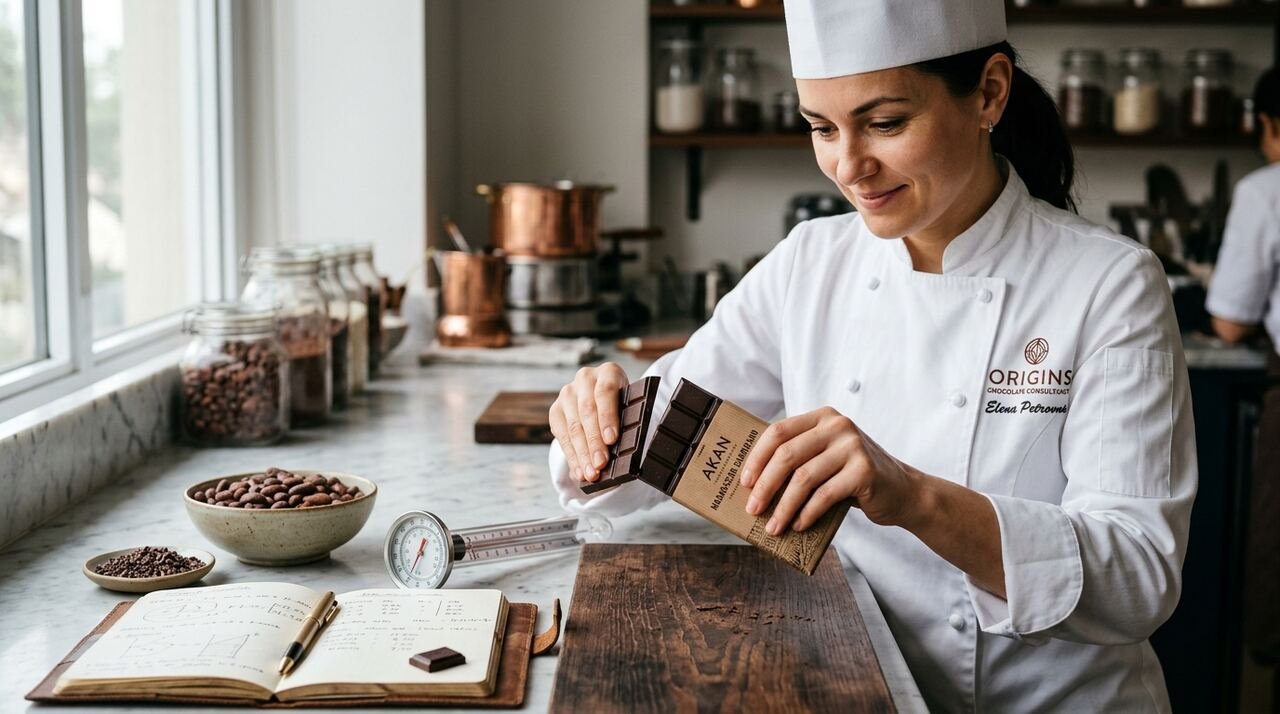
Chocolate Consultant Pro is the AI agent built for bean-to-bar makers, pastry chefs, and artisan chocolatiers. It traces single-origin cacao from the farm co-op to the winnower, designs roast curves by origin and batch size, and formulates bar recipes with exact percentages — cocoa mass, added cocoa butter, and sugar — so your label math holds up. It calculates real yield loss through cracking, winnowing, grinding, and molding, then builds costed batch sheets that reflect what you actually pay per pound. From tempering curves to shell-molded bonbon specs, it delivers export-ready technical sheets you can hand to production staff, a co-packer, or a health inspector. If you make chocolate professionally, this agent speaks your language.
Why prompts matter with Chocolate Consultant Pro
Chocolate is a margin-of-error game. A prompt that says “write a 70% dark chocolate recipe” gives you a home-cook answer — vague ratios, no loss factors, no roast logic. But a prompt that specifies your origin (say, Ucayali, Peru), your equipment (a 5-kilo CocoaTown melanger), your target fluidity, and your desired conche time forces the agent to do real formulation math. It will account for the fact that that Peruvian lot averages 52% fat, so you need less added cocoa butter than an Ivory Coast bean at 48% fat. It will build a roast profile that respects the bean’s size, moisture, and flavor precursors instead of giving you a one-size-fits-all time-and-temp. That precision is what separates a batch that tempers cleanly and snaps from one that blooms on the shelf.
The same rigor applies to costing and compliance. A generic prompt misses yield loss at the winnower, grind loss in the melanger, and trim waste on the guitar cutter — and suddenly your $4.20 bar cost is really $4.90. Our prompts bake in those losses so your food-cost percentage holds when you scale from 10 pounds to 200. For shops navigating FDA labeling, the agent formats ingredient decks in descending order of predominance, flags any of the nine major allergens under FALCPA, and structures nutrition panels so your third-party lab review goes faster. The difference between “help me open a chocolate shop” and a prompt that names your city, square footage, target weekly throughput, and equipment list is the difference between a mood board and a working HACCP-aligned production flow.
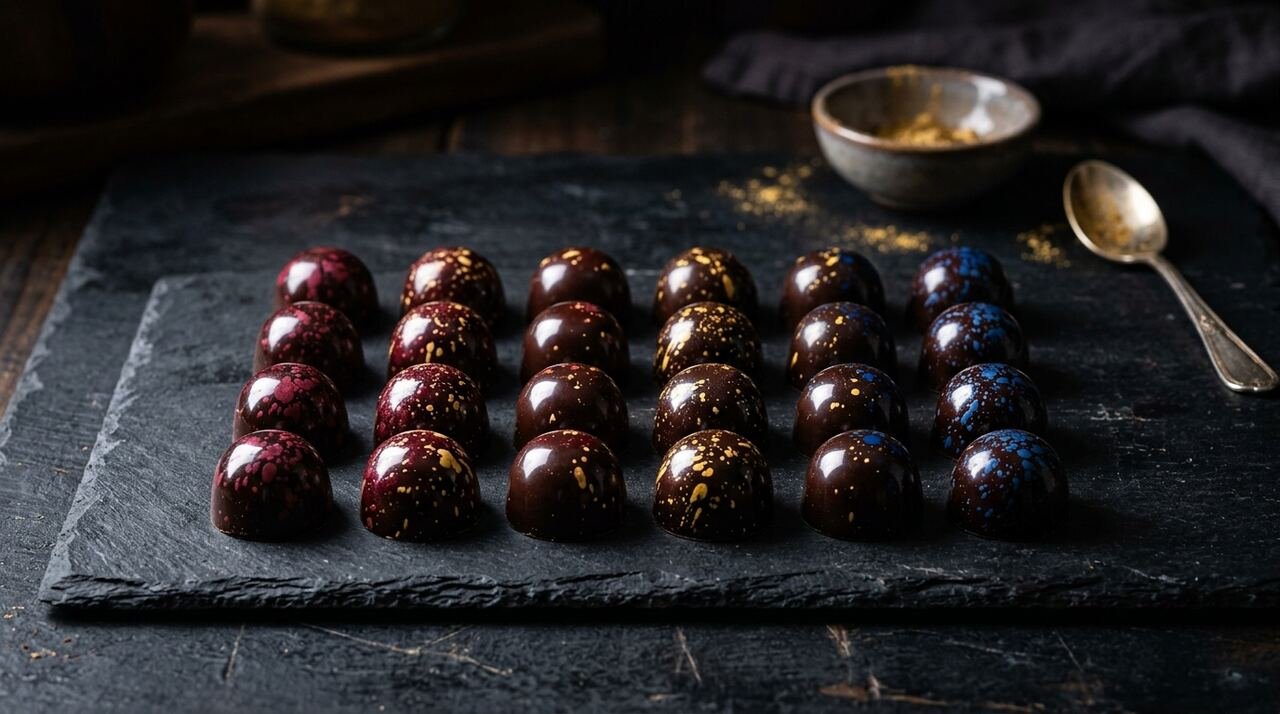
Prompt examples for Chocolate Consultant Pro
The 105 prompts below are grouped by real production workflow — from green-bean evaluation through finished packaging and retail. You’ll find sections on origin selection and roast profiling, bar and inclusion formulation, tempering and molding, bonbon and filled-chocolate production, batch costing with yield loss, packaging and shelf-life specs, and the business side of opening a chocolate shop or scaling a wholesale line. Every prompt is written to drop straight into Chocolate Consultant Pro; just swap the bracketed placeholders for your own bean lot, equipment, and numbers.
Prompts for Bean-to-Bar Specialist: From Bean to Bar with Chocolate Consultant Pro in Chocolate Consultant Pro
Chocolate Consultant Pro is your bean-to-bar specialist inside AI Chef Pro. It analyzes cocoa bean traceability, designs optimal roast profiles for each origin, formulates artisan bars with precise percentages of cocoa, sugar and butter, calculates shrink and cost breakdowns with real ingredient prices, and guides the entire bean-to-bar process with exportable technical specs. Whether you’re a small-batch chocolatier in Portland or scaling up in Austin, it helps you navigate FDA labeling, HACCP documentation, and FALCPA allergen compliance, all while optimizing flavor and margins. All outputs use US dollars, imperial units first (with metric where precision counts), and reference US market conditions.
How to use these prompts
These are starting points you can adapt to your workshop and your product line. For example, if you start with a short prompt like “Give me a dark chocolate bar formula,” you might customize it to: “Give me a 72% dark chocolate bar formula using Trinitario cocoa from Tanzania, roasted in a San Franciscan roaster, ground in a melanger for 24 hours, with organic cane sugar, added cocoa butter (8%) and sunflower lecithin (0.3%). Include costs for a 3 oz bar factoring in 30% total bean-to-bar loss, and calculate margins for a suggested retail of $12 in a Portland, Oregon shop.” The more specific you are, the better the result.
| Prompt / Request | Area / Goal / Pain point | Category |
|---|---|---|
| «Calculate the complete cost breakdown for a 75% dark chocolate bar made with single-origin Nacional cacao from Ecuador, including ingredient costs based on current US market prices for cocoa beans (find updated prices), with shrink losses: roasting 6%, winnowing 18%, grinding and conching 3%, plus packaging cost. Target margin 65% of retail price. Generate a PDF report.» | Bar cost with shrink | Costs and Margins |
| «Design the optimal roast curve for Arriba Nacional cacao from Ecuador, considering pyrazine development, acidity reduction, and preservation of floral notes. Include initial temperature, heating ramps, total time, and bean exit temperature. Goal: winnowing yield 84%, final moisture 6.5%.» | Origin-specific roast curve | Process and Equipment |
| «My 70% dark chocolate bar shows fat bloom after 3 weeks of storage at 64°F. Analyze possible causes (improper tempering, unstable crystallization, temperature fluctuation) and propose a resolution protocol including the correct tempering curve, storage conditions, and formulation adjustment (add cocoa butter extracted via a specific process).» | Fat bloom resolution | Quality Control |
| «Generate a photorealistic image of a luxury bean-to-bar chocolate collection, matte black premium packaging with gold foil, four origins: Venezuela Chuao, Madagascar, Tanzania, and Ecuador. Presented in a wooden box with compartments. Editorial luxury style, high-end product photography.» | Bar collection image | Marketing and Design |
| «Export to CSV the complete technical data sheet for a 60% dark chocolate couverture for professional use: ingredients, cocoa percentage (cocoa mass and butter), sugar percentage, lecithin, water activity (Aw 0.52), shelf life (12 months), storage temperature (60–64°F), relative humidity (<50%), maximum particle size (25 microns), heavy metal tolerances per FDA limits.» | Export technical data sheet | Technical Documentation |
| «Current HORECA price benchmarks for professional dark chocolate couvertures 60–70%: Valrhona, Barry Callebaut, Belcolade, Felchlin, and Amedei. Prices per lb in wholesale format for professional pastry kitchens. Include a comparison with the cost to produce our own bean-to-bar couverture using Peruvian 70% cacao.» | Couverture price benchmark | Costs and Margins |
| «Formulate a milk chocolate couverture (40% cocoa) for enrobing bonbons, using Trinitario cocoa from Ghana, whole milk powder (22%), sugar, cocoa butter (12%), and butteroil (8%). Include optimal tempering temperature (working temp 84–86°F), recommended viscosity for enrobing, and final water activity (Aw 0.48).» | Milk couverture formula | Formulation |
| «Generate a bean-to-bar process audit report for a small facility: fermentation checklist (5–7 days, turning every 48h), drying (target moisture 6–7%), roasting (origin-specific profile), winnowing (yield verification), conching (minimum time by cocoa percentage). PDF exportable with signature fields, formatted to support HACCP documentation.» | Process audit report | Documentation and Compliance |
| «Differentiate quick wins from structural improvements for my bean-to-bar line: quick wins (tempering curve adjustment, conching time optimization, immediate packaging upgrade) vs structural (investment in larger capacity melanger, installation of a climate-controlled room, organic certification, brand development). Include estimated investment and ROI for each improvement.» | Quick wins vs structural improvements | Business and Strategy |
| «Design a holiday (Christmas) chocolate bar collection: 4 references (70% Venezuela, 60% Madagascar with candied orange, 50% milk with toasted hazelnuts, 80% Ecuador bitter). Include origin storytelling, festive packaging, suggested retail price, and cost per unit considering 26% bean-to-bar losses.» | Holiday bar collection | Product Development |
| «Calculate the real cost of opening a micro bean-to-bar factory with capacity 110 lb/week: minimum equipment (Behmor roaster, winnower, Spectra 11 melanger, tabletop tempering machine), electrical work, shop furniture, licenses (including local health department), initial raw materials. Determine break-even point and estimated annual revenue in USD.» | Bean-to-bar investment plan | Business and Strategy |
| «Develop a technical specification for co-manufacturing bean-to-bar chocolate: cocoa bean requirements (certified origin, proper fermentation, max moisture 7%), transformation process (controlled roast profile, winnowing minimum yield 80%, conching 18–24h), cocoa percentage tolerance (±2%), packaging specs (oxygen barrier, UV protection), minimum shelf life 18 months.» | Co-manufacturing specification | Quality and Suppliers |
| «Generate a professional tasting card for a 70% single-origin Madagascar chocolate: sensory profile (red berry notes, honey, slight acidity), cocoa intensity (8/10), astringency (3/10), texture (smooth, clean snap), recommended pairings (10-year tawny port, Japanese whisky, specialty coffee). Printable format for retail shop.» | Chocolate tasting card | Tasting and Experience |
| «Optimize my 85% dark chocolate bar formula: currently 12% sugar but too acidic. Propose sugar reduction while keeping smooth texture, adjust roast curve to develop darker notes, and optimal conching time for this high cocoa percentage. Include cost per 3 oz bar if I reduce sugar by 2%.» | High-percentage bar optimization | Formulation |
| «Calculate the ratio of house-made vs. purchased cocoa butter for my couverture line. I can extract butter using a hydraulic press (yield 35% on cocoa nibs). Compare cost per pound of own butter vs. market price, include investment in extraction equipment and payback period. Also consider texture quality during tempering.» | Own vs purchased cocoa butter cost | Costs and Margins |
Prompts for Artisan Bonbon Production & Signature Collections in Chocolate Consultant Pro
As an artisan chocolatier developing signature bonbon collections, you balance precise ganache formulation, molding and tempering mastery, and the creative vision to design origin-driven, seasonal narratives. Chocolate Consultant Pro helps you run accurate cost cards with real waste factors, troubleshoot fat bloom, develop technical data sheets with aw and shelf life, generate professional product images, and export production documentation. From bean-to-bar startups to luxury hotel pastry teams, this agent turns your expertise into scalable craft while keeping you aligned with FDA Food Code, FALCPA allergen labeling, and HACCP principles.
How to use these prompts
These are starting points you can adapt to your own shop and collection. For instance, if you begin with the prompt «Give me a dark chocolate ganache formula», you might refine it to: «I need a technical formula for a 70% Madagascar origin dark chocolate ganache infused with dried lavender (3% of cream weight), for shell-molded bonbons at my Portland chocolate shop. Include chocolate-to-cream ratio, butter percentage, infusion time, and emulsification temperature. Estimate water activity (aw) and expected shelf life under storage at 60–65°F and 50% RH. The ganache should be fluid enough for depositing into 11 mm polycarbonate cavities at 86–88°F.» The more specific you are, the better the result.
| Prompt / Request | Area / Goal / Pain point | Category |
|---|---|---|
| «Calculate the full cost breakdown for a shell-molded passionfruit ganache bonbon: cost per piece including Valrhona 61% coating at $14.00/lb, passionfruit purée at $4.50/lb, heavy cream 35% butterfat at $2.25/lb, glucose, gelatin, and process waste (shell 4%, filling 2%, decoration 3%, unmolding 1%). Apply a target food cost of 32% on a retail price of $3.00/piece, and compute the gross margin per 24-piece box.» | Costing & Pricing | Formulation & Costing |
| «Generate the complete technical data sheet for the bonbon “Peru Single Origin 70%”: formulation with exact percentages of cocoa mass, sugar, cocoa butter, and optionally milk powder; step-by-step production process; tempering parameters (melting temperature 113–122°F, working temperature 88–90°F); polycarbonate mold specs (depth 7/16 in); target aw below 0.85; shelf life 90 days in hermetic packaging; storage conditions; nutritional info per 100g; allergens and cocoa origin traceability.» | Technical Data Sheet | Quality & Product |
| «My bonbons show extensive white spots on the surface after 3 weeks of storage. Diagnose the cause (fat bloom due to improper cocoa butter crystallization) and provide the resolution protocol: review tempering curve (exact temperatures by chocolate type), correct storage temperature (optimal range 60–65°F, max daily fluctuation 5°F), max relative humidity 50%, and verification of coating quality (free of incompatible vegetable fats). Include prevention method for subsequent batches.» | Fat Bloom Troubleshooting | Defects & Quality |
| «Generate a photorealistic image of a signature Valentine’s Day bonbon collection: 12 molded bonbons in heart shapes in red and pink tones (ruby and dark chocolate shells), airbrushed colored cocoa butter decoration, presented in a premium black carton with acetate insert and gold foil trim. Neutral studio lighting background. The collection is named “Cupid’s Harvest” featuring Ecuador Nacional cacao.» | Collection Visual | Visual Design |
| «Export to PDF the technical document for the “Autumn Harvest” collection for a luxury hotel in Chicago: product spec sheets for each reference (chestnut & rum ganache, specialty coffee truffle, hazelnut praliné & gianduja, caramelized apple bonbon), individual cost cards with per-piece cost and margin, packaging specs (24-piece box, dimensions, materials), supply conditions (weekly delivery, minimum shelf life 14 days), and conservation protocol in a climate-controlled display case (60°F, 45% RH).» | Export PDF | Technical Documentation |
| «Research current wholesale prices for premium professional couvertures (Valrhona, Belcolade, Felchlin, Cluizel) in 11 lb (5 kg) formats for an artisan chocolate shop. Include per-pound prices for the most-used references: dark 60–70%, milk 40%, white, ruby. Compare with prices of premium-origin cocoa beans (Madagascar, Ecuador, Venezuela) in 11–55 lb lots for own bean-to-bar production. Provide supplier recommendations based on monthly production volume (110 lb vs 440 lb).» | Couverture Pricing Benchmark | Purchasing & Suppliers |
| «Design the complete “Winter Solstice” Christmas collection with 16 SKUs: 6 ganaches (orange & cardamom, honey & whiskey, hazelnut & cinnamon, coffee & tonka, chestnut & marsala, matcha & yuzu), 4 truffles (classic, brown butter, black liqueur, vegan), 4 pralinés (hazelnut, almond, pistachio, walnut), 2 seasonal bonbons (bûche de Noël, hazelnut tree). Include origin narrative for each ganache, pricing per 24-piece box (retail target $68–88), seasonal packaging design, and a November launch proposal with limited-edition quantities.» | Complete Christmas Collection | Collection Design |
| «Provide complete technical parameters for professional shell molding: pre-crystallization of chocolate (dark: melt at 113–122°F, cool to 81–82°F on marble, apply 2–3 layers with 2–3 minutes drying between), ganache filling temperature (90–93°F for creamy ganaches, 82–86°F for fluid ganaches), fill percentage (60–70% of cavity), cooling tunnel or chamber time (12–15 minutes at 54–57°F), back-off with pre-crystallized chocolate at 88–90°F, and unmolding with bonbon core temperature 63–66°F.» | Shell Molding Technique | Production & Technique |
| «Develop the formula for a classic extruded truffle with 70% dark chocolate coating: chocolate-to-cream ratio 3:1, butter percentage 12–15% of mass, emulsification at 167°F with 12-hour resting for natural crystallization, specific truffle tempering (surface 88°F, core 82–84°F), optimal chocolate particle size (<25 microns for creamy texture), and finish by cocoa powder toss or flake sea salt decoration. Include variations for brandy truffle and dairy-free vegan version.» | Truffle Formulation | Production & Technique |
| «Formulate a gourmet hazelnut praliné and gianduja: roasted hazelnuts 35%, 70% dark chocolate 50%, sugar 14%, cocoa butter 1%, sea salt 0.2%. Include roasting process (320°F for 12 minutes), melanger grinding 48–72 hours to particle size <30 microns, working temperature for gianduja formation (113–122°F), and final tempering for molding (88–90°F). Provide aw values (<0.70) and shelf life (6 months in hermetic packaging). Variation with almond and pistachio.» | Praliné & Gianduja | Formulation & Costing |
| «Design a dairy-free vegan bonbon collection: 8 SKUs with 70% dark chocolate couverture (no milk or butter), vegan ganaches (coconut cream, almond milk, cocoa butter), dairy-free praliné (hazelnut & chocolate), and fruit bonbons (raspberry, mango, passionfruit). Include technical specs: dairy substitutes with percentages, aw and shelf life (below 0.80 to extend shelf life), necessary certifications (vegan society), and specific packaging with allergen labeling per FALCPA. Retail price per 16-piece box: $52–58.» | Dairy-Free Vegan Collection | Collection Design |
| «Create packaging design for a signature “Terroir Collection” with 5 cocoa origins (Madagascar, Ecuador, Peru, Venezuela, Tanzania): presentation in a rigid board box with hinged lid, micro-flute card insert with cavities tailored to each bonbon shape, label with origin info (% cocoa, region, sensory profile), and QR code for virtual tasting. Specify dimensions (9.5 x 9.5 x 1.6 in), materials (300 gsm recycled board, textured paper), packaging cost per unit ($0.85–1.20), and brand proposal for retail differentiation.» | Packaging Design | Brand & Communication |
| «Develop the technique for ingredient infusion in ganaches: hot infusion method (cream + ingredients at 176°F, steep 30 minutes, strain) vs cold infusion (24–48 hours in cold cream), ratio of ingredient per pound of cream (lavender 0.5 oz, rosemary 0.7 oz, matcha 0.9 oz, cardamom 0.6 oz, specialty coffee 1.4 oz), chocolate incorporation temperature (113–122°F), oxidation prevention (work with tempered chocolate, avoid prolonged air exposure), and examples of sensory profiles for 6 different infusions.» | Infusion Techniques | Production & Technique |
| «Design a professional chocolate tasting & pairing for a 12-bonbon signature collection: tasting structure (visual, aromatic, gustatory, retro-nasal), recommended pairings (PX sweet wine, 20-year tawny port, Japanese whisky, specialty coffee, matcha), tasting order (light to intense, white to dark), tasting notes sheet for each bonbon (cocoa origin, aromatic profile, tasting notes, defects to identify), and service protocol (service temperature 64–68°F, resting time before serving, presentation on marble slab).» | Tasting & Pairing | Customer Experience |
| «Analyze the current situation of my artisan chocolate shop in Austin, TX, and propose an action plan divided into quick wins (immediate high-impact actions with investment under $1,000) and structural improvements (larger investments with a 6–12 month horizon). Quick wins: optimize gift packaging (10% average ticket increase), adjust cost cards for slow-moving items, implement a holiday pre-sale system. Structural improvements: add a bean-to-bar line, upgrade climate-controlled display case ($3,000–5,000 investment), develop a private-label collection for hotels, implement inventory management system. Prioritize by ROI and feasibility.» | Quick Wins vs Structural Improvements | Strategy & Business |
Prompts for Expert in Tempering, Crystallization, and Chocolate Defects in Chocolate Consultant Pro
As an expert in chocolate tempering, crystallization, and defect analysis, I rely on Chocolate Consultant Pro to diagnose bloom and contraction issues, design precise tempering curves for every couverture type, and troubleshoot critical production snags. The agent's image generation, technical spec sheet creation, and costing calculator capabilities enable me to deliver turnkey solutions to my clients—from artisan chocolatiers to high‑volume manufacturers—ensuring compliance with FDA Food Code and HACCP standards.
How to use these prompts
These are starting points you can tailor to your shop. For example, take a basic prompt like “Give me a chocolate recipe.” You can sharpen it: “I need the complete tempering curve for a 70% dark couverture with its own cocoa butter (no lecithin), working at 88-90°F (31-32°C) in Form V, with a defect diagnosis if the temperature dips to 84°F (29°C) in my Austin, TX kitchen.” The more specific you are, the better the result.
| Prompt / Request | Area / Goal / Pain point | Category |
|---|---|---|
| «Calculate the optimal tempering curve for a 70% cocoa dark couverture, 30% sugar, no lecithin, melting point 113-122°F (45-50°C), working temperature 88-90°F (31-32°C) in Form V, and cycle time on a Selmi Plus continuous tempering machine» | tempering curve dark 70% | technical formula and process |
| «Diagnose the cause of fat bloom in 60% dark chocolate bars stored at 64°F (18°C) and 65% relative humidity, and provide a technical solution with an elimination protocol» | fat bloom diagnosis | defect resolution |
| «Generate the tempering curve for 40% cocoa milk couverture, working temperature 84-86°F (29-30°C), including seeding with Form V crystals and maturation time» | tempering curve milk chocolate | technical formula and process |
| «Design the polycarbonate molding protocol for 1.8 oz (50 g) Easter figures, with shell pre-crystallization at 81-82°F (27-28°C), filling temperature of 88-90°F (31-32°C), and full solidification time» | molded Easter figures | process and equipment |
| «Generate a photorealistic image of a single origin dark chocolate bar collection (Venezuela Chuao, Ecuador Nacional, Madagascar) in luxury packaging, for an artisan shop catalog» | single origin bar collection image | visual generation |
| «Export to PDF the full technical sheet for 70% dark bars with aw 0.55, 12-month shelf life, 38% cocoa butter content, particle size <25 microns, and storage specifications» | 70% bar technical sheet | technical documentation |
| «Provide current price benchmarks for premium couvertures (Valrhona, Belcolade, Felchlin) for an 11 lb (5 kg) case, including cocoa percentage and cocoa butter content comparison» | premium couverture benchmarks | costs and suppliers |
| «Calculate the cost breakdown for 2.8 oz (80 g) 70% dark bars with 3% process loss, Madagascar cocoa beans at $6.50/lb, packaging at $0.40/unit, and a target margin of 65% over retail price» | 70% bar costing | cost control |
| «Design a molded bonbon collection for Valentine’s Day with 6 SKUs, including formulations for pre-crystallized shells at 82-84°F (28-29°C), ganaches with aw 0.85-0.90 and a 21-day shelf life, and presentation in a 6-piece box» | Valentine’s bonbon collection | collection design |
| «Differentiate quick wins (tempering machine temp adjustment, packaging upgrade) from structural improvements (investment in a continuous tempering machine, climate-controlled workspace system) for a Seattle chocolate shop with persistent bloom problems» | quick wins vs structural upgrades | strategic consulting |
| «Provide the tempering curve for white chocolate at 28% cocoa, working temperature 80-82°F (27-28°C), melting point 104-113°F (40-45°C), and diagnose sugar bloom risks if humidity exceeds 50%» | white chocolate tempering curve | technical formula and process |
| «Generate a presentation image of 70% dark chocolate truffles with colored cocoa butter decoration (red and gold), for a luxury hotel dessert menu» | decorated truffle image | visual generation |
| «Calculate the per-piece cost for a 0.4 oz (12 g) molded bonbon (shell molding) using Valrhona Guanaja 70%, cream and orange ganache, individually wrapped, including 4% process loss and a 70% margin over retail price» | molded bonbon costing | cost control |
| «Export a CSV list of single origin cocoa bean suppliers with FOB prices, certifications (organic, Rainforest Alliance), minimum order quantities, and lead times for a 1,100 lb (500 kg) purchase» | cocoa bean supplier list | purchasing management |
| «Design the SOP for tempering on a Selmi Top continuous tempering machine for 60% dark couverture, including zone temperatures, belt speed, initial seeding, and in-process quality checks» | continuous tempering SOP | procedures and processes |
Prompts for Chocolate Equipment & Production Line Advisor in Chocolate Consultant Pro
Chocolate Consultant Pro is your strategic partner for outfitting and designing artisan chocolate production lines. From selecting roasters, melangers, and tempering machines to laying out your workshop flow and writing manufacturing SOPs, it helps you size every piece of equipment to your volume, budget, and quality goals — so you optimize your investment and avoid costly implementation mistakes. Whether you're launching a small bean-to-bar operation or scaling an existing bonbon business, you'll get actionable, data-backed recommendations tailored to US regulations and market realities. All guidance aligns with FDA Food Code, FALCPA allergen labeling, and HACCP principles, keeping your operation compliant and efficient.
How to use these prompts
These prompts are starting points you can adapt to your own workshop and product line. For example, a generic prompt like “What equipment do I need to start a bean-to-bar business?” can be turned into: “I need an equipment plan for a small-batch bean-to-bar line (150–200 lbs/month finished product) with a max budget of $55,000. Include selection of roaster, winnower, melanger, conche, and tempering machine, with justification for each choice and a comparison of brands (Behmor, Probat, Santha, CocoaTown, Selmi). The goal is to produce high-end single-origin bars (70–85% cacao) in Portland, OR.” The more specific you are, the better the result.
| Prompt / Request | Area / Goal / Pain point | Category |
|---|---|---|
| «Design the production floor layout for a bean-to-bar chocolate shop with a 650 sq ft workshop, including zones for cocoa receiving, roasting, grinding, conching, tempering, molding, finished product storage (60–65°F, humidity <50%), and shipping. Provide layout dimensions in square feet and essential equipment for a volume of 330 lbs/month.» | Layout & Production Flow Design | Workshop Infrastructure |
| «Calculate the cost per 80 g bar (70% cacao, single origin Ecuador Nacional) including bean-to-bar process losses (roasting 6%, winnowing 18%, grinding 3%), current origin cocoa bean price, plus packaging and labor cost (assuming $25/hr labor and 0.5 hr total labor per bar), with a target margin of 65% on retail price.» | Cost Calculation & Bill of Materials | Bean-to-Bar Manufacturing |
| «I need a detailed cost breakdown for a kirsch ganache truffle with 70% dark chocolate couverture (current foodservice price for Valrhona or Belcolade), including cost per unit, net weight, trimming and packaging loss, and expected gross margin if the retail price per unit is $3.50.» | Bonbon Costing | Costs & Margins |
| «My 70% dark chocolate shows fat bloom after 4 weeks in a display case (60°F, 55% humidity). Analyze possible causes (insufficient tempering, temperature fluctuation, unstable crystallization) and provide a corrective protocol with the correct tempering curve (melt at 113–122°F, work at 88–90°F), cocoa butter seeding method, and storage recommendations.» | Troubleshooting Technical Defects | Fat Bloom & Tempering |
| «Generate a photorealistic image of a Christmas collection of artisan bean-to-bar bars, 3.5 oz (100 g) format, wrapped in kraft paper with a jute string, featuring three varieties: Ecuador Nacional 70%, Madagascar 75%, and Peru Criollo 80%, presented in a premium gift box.» | Image Generation | Presentation & Packaging |
| «Export to PDF a full audit report of my current workshop, including: HACCP compliance checklist, temperature and humidity conditions in critical zones, equipment condition, improvement recommendations, and an action plan with priorities and estimated budget.» | Audit & Compliance | Reports & Documentation |
| «Current (2024) foodservice price benchmarks for high-end chocolate couvertures: Valrhona Guanaja 70%, Belcolade Origin 71% Ecuador, Felchlin Cru Superior 72% Madagascar, Amedei 70% blend, indicating format (pistoles, drops), price per lb, minimum order quantity, and typical delivery time within the US.» | Supplier Benchmarking | Pricing & Suppliers |
| «I need the technical specifications for a co-manufacturing contract with a luxury brand that wants to produce 85% dark chocolate bars with Maldon salt in 1.76 oz (50 g) format, including: exact formula (% cacao, sugar, cocoa butter, salt), process specs (roasting, grinding <25 microns, conching minimum 24 h), packaging requirements (hermetic seal, modified atmosphere), shelf life (12 months at 60–65°F), and quality parameters (aw <0.60, absence of sensory defects).» | Co-Manufacturing | Technical Specifications |
| «Differentiate between quick wins and structural improvements in my current production line: quick wins with investment under $3,500 that I can implement in 30 days (tempering improvement, tool reorganization, waste optimization) vs. structural improvements requiring over $18,000 and a 6–12 month timeline (new continuous tempering machine, climate-controlled room, automatic molding line), with estimated ROI for each.» | Strategic Planning | Investment & ROI |
| «Create a complete SOP for tempering dark chocolate on a Selmi Plus continuous tempering machine, including: temperature parameters (melting 113–122°F, pre-crystallization 93–95°F, working 88–90°F), residence time, crystallization verification (lip test), viscosity control, daily preventive maintenance, and troubleshooting common issues (streaking, lack of gloss, premature bloom).» | Production SOP | Tempering & Crystallization |
| «I need to compare three melanger options for my line: Santha 11, CocoaTown EC-100, and Spectra 11, considering capacity (lbs of nibs), power, grinding time to achieve <25 microns, electricity consumption, purchase price and spare parts, with a recommendation based on my target volume of 175 lbs/month of cocoa liquor.» | Equipment Selection | Grinding & Melangers |
| «Design a molded bonbon collection for Valentine's Day with 6 references: three ganaches (raspberry-lime, salted caramel, toasted hazelnut) and three pralinés (gianduja, almond-honey, pistachio), including formulation for each (chocolate/cream or nut paste ratio, target aw, resting time), shell-molding process (shell pre-crystallization at 84–86°F), colored cocoa butter decoration, and presentation in a 6-piece box with recommended retail price.» | Collection Design | Artisan Bonbons |
| «Calculate the monthly break-even point for a chocolate shop with an integrated workshop, considering: rent $1,500/month, utilities $400, equipment maintenance $300, insurance $200, production labor (2 workshop staff at $2,500/month each), and required sales volume (average price per unit $4.50, variable cost per unit $1.60), indicating how many units I need to sell per month to cover costs and reach profitability.» | Financial Viability | Break-Even Analysis |
| «I need a preventive maintenance plan for the critical equipment in my bean-to-bar workshop: Behmor 1600 Plus roaster, CocoaTown winnower, Santha 11 melanger, Selmi Plus tempering machine, and climate-controlled display case, including frequency of deep cleaning, thermostat calibration, belt and bearing inspection, filter replacement, and annual service by a technician, with a printable checklist and estimated annual cost.» | Equipment Maintenance | SOPs & Preservation |
| «Forecast production capacity and equipment needs to scale from 220 lbs/month to 1,100 lbs/month over 18 months, identifying current bottlenecks (grinder, tempering machine, storage), specifying which equipment to add and when (phase 1: months 1–6, phase 2: months 7–12, phase 3: months 13–18), with incremental investment and impact on cost per pound produced.» | Production Scaling | Growth Planning |
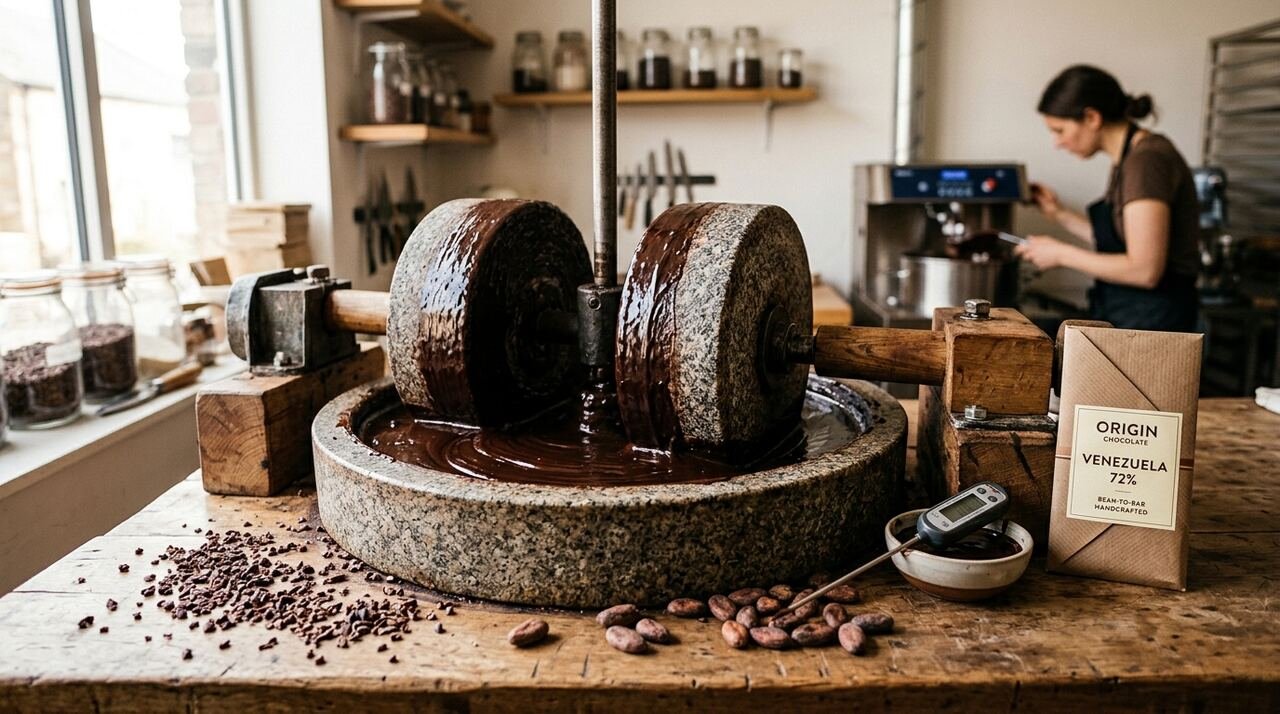
Prompts for Chocolate Shop Consultant — Business Model, Launch Planning & Production Support in Chocolate Consultant Pro
I'm a senior chocolate consultant specializing in shop concepting, business modeling and launch execution. I help you lock down your positioning (artisan bean-to-bar, luxury boutique, café-hybrid), run the real numbers on investment and break-even, design a tight product portfolio, map the seasonality of a smart opening, and produce every technical and financial deliverable your client expects. Whether you're advising an investor, scaling a single-origin chocolate maker or building a private-label program for a restaurant group, you get actionable, kitchen-bred answers built for the US market.
How to use these prompts
Start with a prompt like "I need a roadmap to open a chocolate shop" and then layer in the specifics that make your project concrete. For example: "I'm consulting for a chef who wants to open an artisan bean-to-bar chocolate shop and café in Portland, Oregon (Pearl District, 1,200 sq ft with a visible production area), $180,000 investible. Build me the business concept, the revenue mix (retail 55%, e-commerce 20%, wholesale 15%, classes 10%), a functional layout for a micro-batch bean-to-bar line, and an 18-month break-even projection." The more specific you are, the better the result.
| Prompt / Request | Area / Goal / Pain point | Category |
|---|---|---|
| «Calculate a full cost card for a single-origin Venezuela Porcelana 75% cacao bean-to-bar tablet, 2.6 oz (75 g) bar, retail price $14.50. Include: direct-trade cacao bean cost at $10.25/lb, total process loss for bean-to-bar (roasting 6%, winnowing 18%, grinding and conching 3%), cost of added cocoa butter, cane sugar, Tahitian vanilla, packaging (rigid box with inner sleeve), proportional labor for a 200-bar batch, and a target gross margin of 65% against retail. Identify the monthly unit break-even if fixed costs run $9,200/month.» | Tablet Costing & Profitability | Financial Management |
| «Define the concept, business model and product portfolio for a 1,000 sq ft bean-to-bar chocolate shop in Austin, Texas (East Austin), with a visible production area for 8 tablet origins, 14 bonbon references and a 6-seat tasting counter. Investment available: $125,000. Break out the investment allocation (build-out, production equipment, retail fixtures, opening inventory, launch marketing, working capital) and calculate the monthly break-even at an average ticket of $27 and daily unit sales of 30 in the low season and 72 during the holiday push.» | Concept & Business Model | Launch Planning |
| «I've got a batch of 50 dark-mold 70% tablets showing visible fat bloom (white surface streaking) after three weeks in a display case at 68°F (20°C) with temperature swings of ±7°F (±4°C). Root-cause the crystallization defect, clearly distinguish fat bloom from sugar bloom, and propose a corrective protocol that lays out required storage conditions (temperature, RH, stability), a re-tempering procedure if applicable, and preventive controls for future production.» | Fat Bloom Troubleshooting | Quality Control |
| «Generate a photorealistic image of a 6-bar single-origin bean-to-bar collection, rectangular format 2.8 oz (80 g) bars, minimalist packaging in a matte-black box with gold foil accents. Origins: Ecuador Nacional 72%, Madagascar Trinitario 75%, Peru Chuncho 70%, Tanzania Kilimanjaro 68%, Venezuela Porcelana 78% and an in-house blend 73%. Each bar must show a clean snap texture with conch wave and a bright, properly crystallized surface. Black marble surface background, studio product lighting.» | Tablet Collection Visual | Visual Generation |
| «Develop a complete 8-reference holiday bonbon collection: 2 ganaches (one 66% dark infused with lavender and thyme honey, one 34% milk infused with green cardamom and orange zest), 2 pralinés (Piedmont hazelnut and Bronte pistachio), 2 truffles (Bourbon vanilla and ceremonial Matcha), 1 gianduja (50% hazelnut, 50% pine nut) and 1 shell-molded piece with a passionfruit crémeux filling. For each reference: formula (g chocolate, g cream/milk, infusion percentage, final aw, shell tempering temperature), estimated shelf life, holding conditions, unit retail (target $4.75–$5.50) and price for a 9-piece box.» | Holiday Bonbon Collection | Product Design |
| «Generate a cost-card template as a CSV file for a 66% dark Earl Grey–infused ganache (chocolate/cream ratio 60/40, infusion at 4% of cream weight), 11 lb batch. Fields: ingredient, quantity (oz), unit cost ($/lb), total cost ($), process loss (%), cost adjusted for loss ($), percentage of total ganache weight, cost per lb of finished ganache. Rows: Valrhona Caraïbe 66% couverture, 35% milkfat heavy cream, Earl Grey infusion, 82% milkfat butter, glucose, invert sugar, cocoa butter (2% of total weight for plasticity). Calculate real food cost with 2.5% mixing loss and 1.5% depositing loss.» | Ganache CSV Cost Card | Financial Management |
| «Export a full PDF launch plan for a bean-to-bar chocolate shop to present to your investor. Include: executive summary, market analysis (US craft chocolate landscape, direct and indirect competition in a 2-mile radius), concept and positioning, production and retail layout (950 sq ft), build-out schedule (11 weeks), equipment list with cut sheets and detailed budget, staffing plan and hiring (chocolatier, retail lead, part-time assistant), launch product plan (8 references), commercial plan for the first 6 months, 3-year financial projections with P&L, balance sheet and cash flow, break-even and ROI.» | Full Launch Plan PDF | Launch Planning |
| «Pull current wholesale pricing for premium couverture in bulk formats: Valrhona (Guanaja 70%, Jivara 40%, Ivoire 35%), Barry Callebaut (Callebaut 811, 823, W2), Belcolade (Dark 65%, Milk 38%), Felchlin (Maracaibo 68%, Venezuela 72%), Amedei (Toscano Black 88, Porcelana 70%) and Domori (Puertomar 70%). I need cost per pound in 11–22 lb bags to benchmark against my current Guanaja price of $8.50/lb. Also quote current direct-trade cacao bean pricing for Venezuela Porcelana, Ecuador Nacional and Madagascar Trinitario.» | Couverture Price Benchmarking | Financial Management |
| «Write a full professional specification sheet for a dark couverture for bonbon and shell-molding work, sold in 11 lb bags. Specs: cocoa solids minimum 58%, fat content 38–40%, viscosity at 104°F (40°C) of 35–45 seconds flow through a #4 Ford Cup, maximum particle size 25 microns (D90), aw max 0.40, pH 5.8–6.2, shelf life 18 months from date of manufacture, storage at 62–65°F (16–18°C) and RH below 50%. Include the recommended full tempering curve (melt, work and mold temperatures), a crystallization control protocol, acceptable and rejectable defects, and cacao lot traceability requirements.» | Dark Couverture Spec Sheet | Quality Control |
| «Produce a supplier audit report for cacao bean sourcing with visits to cooperatives in Ecuador (Los Ríos) and Peru (Cusco, Quillabamba area). The report must cover: fermentation facility evaluation (method, duration, number of turns, drainage), drying (method, duration, final moisture by hygrometer), annual production capacity, existing certifications (Organic, Fair Trade, Rainforest Alliance), direct-trade criteria compliance (lot traceability, premium over NY market price, sustainability premium), cacao quality evaluation by tasting with a scoring sheet (aroma, flavor, acidity, astringency, persistence, uniformity), and an approve/reject recommendation with required corrective actions.» | Cacao Supplier Audit | Sustainability & Traceability |
| «Distinguish quick wins from structural improvements for a bean-to-bar chocolate shop with $162,000 annual revenue, 53% gross margin but only 7% EBITDA. Known pain points: real process loss at 29% against a 22% theoretical, low average ticket of $21, operating hours only 10 a.m. to 6 p.m. (missing after-work traffic), no e-commerce channel active, and fresh product with short shelf life (7 days for ganache, 30 days for tablets). For each intervention, classify it, estimate the investment required, the revenue or margin impact, implementation timeline and the tracking KPI.» | Quick Wins vs. Structural Improvements | Strategic Planning |
| «Define the technical requirements and product specifications to engage a co-manufacturer to produce 3,000 units per month of our 2.6 oz (75 g) premium-brand tablet under private label. Specify: target sensory profile (red fruit notes, toasted tertiary notes, no off-flavors), formula (exact percentages of cacao, sugar, cocoa butter, lecithin, vanilla), required process (roasting, minimum 48-hour melanger, minimum 24-hour conching, D90 particle size under 20 microns), crystallization requirements (full tempering curve, minimum 8% contraction), packaging (carton box with selective UV varnish and silver paper inner sleeve), FDA-compliant labeling with FALCPA allergen declaration, delivery conditions (temperature-controlled pallets), and in-process quality controls at source (aw, particle size, sensory panel).» | Co-Manufacturing Specification | Product Development |
| «Design a vertical tasting of 6 cacao origins for a chocolate shop tasting counter seating 12. Origins: Venezuela Porcelana (Criollo), Ecuador Nacional Arriba, Madagascar Trinitario, Peru Chuncho, Tanzania Kilimanjaro and a Ghana Forastero blend. For each reference: origin, variety, cacao percentage, traditional vs. washed process, sensory profile (tasting notes with intensity scale 1–10 for bright fruit, nuttiness, florals, earth, roast, bitterness, astringency), serving temperature 57–61°F (14–16°C), suggested pairing (wine, port, whiskey, specialty coffee or tea), estimated time per phase (5 min), and the optimal progression to balance the sensory arc from most delicate to most intense.» | Vertical Origin Tasting | Tastings & Pairings |
| «Develop the full Easter collection for an artisan chocolate shop with 8 references in 24-cavity polycarbonate molds. Pieces: one 8.8 oz (250 g) dark 70% shell egg with a salted caramel lava ganache filling, one 5.3 oz (150 g) milk 34% shell egg with 50% hazelnut praliné filling, three color-decorated bunny figures (pink, white, yellow) in 70% dark shells (2.8 oz / 80 g each), one solid relief-molded bunny in polycarbonate (3.2 oz / 90 g), one chocolate cookie bar (1.4 oz / 40 g) with get crumble and Maldon salt inclusions, and one Easter "mona" style bar (10.6 oz / 300 g) with candied orange peel and sliced almonds. For each piece: chocolate formula (type, cacao percentage, tempering temperature, filling aw), molding protocol, colored cocoa butter airbrush decoration, packaging (Kraft window box with dimensions), retail price and unit production cost.» | Easter Molding Collection | Product Design |
| «Calculate the detailed investment and equipment plan to build a small bean-to-bar line with a capacity of 110–175 lb of cacao beans per week. Budget available: $54,000. Specify for each piece of equipment: recommended brand and model (roaster such as Behmor 1600 Plus or Probat sample roaster, winnower such as CocoaTown 500 or crankandstein, melanger such as Spectra 11 or CocoaTown 1000, continuous tempering machine such as Selmi Plus or Chocovision, refiner-conche such as Lehmann, vibrating table, thermo-hygrometer, refractometer), capacity, power draw, footprint (sq ft), current estimated cost, service life, service support available in the US, and average process loss per machine. Also include the costs of three-phase electrical installation, exhaust hood and make-up air, production room build-out (epoxy floor, washable walls, a 90 sq ft climate-controlled finishing room) and health department plan review. Calculate the break-even point assuming cacao bean cost ranges from $4.50 to $11.00/lb depending on origin.» | Bean-to-Bar Line Investment | Equipment & Production |
Prompts for Chocolate Costing & Recipe-Costing Specialist in Chocolate Consultant Pro
I'm a chocolate costing specialist for professional kitchens—bean-to-bar and couverture work. I calculate production costs down to the penny, set sustainable margins, and keep every SKU profitable. I build detailed recipe cost cards, analyze yield loss, benchmark suppliers, and generate the commercial documents you actually need: quote sheets, P&L snapshots, and wholesale price lists. Whether you're running a small-batch bean-to-bar operation or a high-volume bonbon kitchen, I give you the numbers that make sense on a Monday morning.
How to use these prompts
Start with something broad like "Cost out a 70% dark chocolate bar" and then get specific: "Build a complete recipe cost card for a single-origin Peru 70% bar, 85 g format, including: landed cost of Peruvian cacao beans at $14.50/kg, total bean-to-bar yield loss (roasting 6%, winnowing 18%, processing 3%), ingredient costs (organic cane sugar, added cocoa butter at 2%), packaging (kraft paper sleeve and gold foil inner wrap at $0.38/unit), direct labor at $0.22/unit, and a 68% target margin to set the suggested retail price for our Chicago farmers' market booth." The more specific you are, the better the result.
| Prompt / Request | Area / Goal / Pain point | Category |
|---|---|---|
| «Build a complete cost card for a 60% dark chocolate lavender ganache bonbon, 12 g piece: couverture cost, heavy cream, butter, glucose, lavender quantity per kg of ganache, target water activity 0.82 and shelf life, unit packaging and 12-piece box, direct labor $0.12 per piece, 32% margin on SRP, and suggested retail for a Brooklyn artisan boutique» | lavender ganache bonbon costing | technical formula with yield loss |
| «My 70% dark chocolate bar is showing fat bloom after three weeks stored at 65°F. Diagnose likely causes (undertempering, unstable crystal formation, temperature fluctuation), calculate the cost of reworking 110 lb of defective product, and propose a technical fix with the correct tempering curve and storage controls to prevent recurrence» | fat bloom troubleshooting | technical defect and cost |
| «Generate a professional product image of a bean-to-bar collection featuring three origins (Peru 72%, Madagascar 70%, Ecuador 65%) in premium recycled kraft boxes, for our website catalog and distributor pitch deck in Portland, Oregon» | origin bar collection image | visual generation |
| «Export to PDF the complete holiday 2024 collection cost card: four bonbon SKUs (dark truffle, hazelnut praliné, mixed berry ganache, gianduja) with unit cost, cost per 12-piece box, suggested retail, gross margin per box, and estimated season total for a 2,000-box production run» | holiday collection cost card PDF | document export |
| «Pull current 2024 foodservice pricing for 70% dark couverture from professional suppliers (Valrhona, Barry Callebaut, Belcolade, Felchlin) in 11 lb formats, plus per-kilo pricing for single-origin cacao beans from Peru and Madagascar, to calculate the cost of producing our own bean-to-bar couverture versus buying finished couverture» | couverture and cacao bean benchmark | current market pricing |
| «Generate a full technical data sheet for the Ecuador Nacional 80% bar: formula with exact cacao-sugar-cocoa butter percentages, tempering curve (melt 113–122°F, working 88–90°F), physical specs (particle size under 25 microns), water activity 0.45, 18-month shelf life, nutrition facts per 100 g, FALCPA allergen declaration, and storage conditions» | 80% Ecuador bar data sheet | technical deliverable |
| «Analyze my current chocolate shop with production kitchen: average monthly revenue $15,000, product mix (60% bonbons, 30% bars, 10% drinking chocolate), actual food cost 38%, gross margin 62%. Compare against artisan sector benchmarks (target food cost 28–35%) and separate immediate quick wins (reduce winnowing waste, right-size portions, renegotiate supplier terms) from structural improvements (expand bar line, develop private label for hotels, launch a monthly subscription box)» | quick wins vs. structural diagnosis | business analysis |
| «Calculate the real cost of launching a small bean-to-bar line with a Spectra 40 melanger and Behmor 1600 roaster: initial equipment investment, monthly production capacity in pounds of finished bars, cost per pound of finished bar (including beans, sugar, cocoa butter, packaging, energy, labor), minimum selling price to hold a 65% margin, and monthly break-even in units» | small bean-to-bar production cost | investment and profitability |
| «Determine the cost card for a classic dark truffle (15 g ball rolled in cocoa powder): couverture cost for shell plus finishing, heavy cream and butter cost for ganache, cocoa powder cost for dusting, unit cost, and SRP at 35% margin for our own retail shop versus wholesale price for restaurants (25% discount off retail SRP)» | classic truffle cost card | multi-channel pricing |
| «Evaluate three Madagascar cacao bean suppliers: FOB and CIF price per kg, percentage of properly fermented beans, estimated winnowing yield, lead time, certifications (organic, Rainforest Alliance), and calculate which offers the best cost-benefit for a 70% bar at a monthly volume of 66 lb of beans» | Madagascar cacao supplier selection | supplier analysis |
| «Design the pricing structure for a premium 24-piece signature bonbon gift box (6 SKUs × 4 pieces): total production cost, premium packaging (rigid box with felt insert and satin ribbon), 68% target margin on SRP, suggested retail price, and wholesale price for five-star hotels factoring a 35% discount with service included» | premium gift box pricing | pricing structure |
| «Calculate the total yield loss and added cost of processing a 220 lb lot of cacao beans arriving at 8.5% moisture (above the 6–7% target): additional drying time required, mold risk with estimated 5–8% further loss, impact on winnowing yield, and cost per lb of resulting nibs versus a lot received at correct moisture» | moisture excess yield loss | quality control costing |
| «Generate a CSV template with cost cards for every current SKU in the boutique: product code, name, unit weight, raw material cost, labor cost, packaging cost, total cost, SRP, unit margin, margin percentage, current stock, and reorder point based on a 4-week rolling average» | cost card CSV export | inventory management |
| «Compare the cost of producing artisan gianduja in-house (70% hazelnuts / 30% chocolate) versus buying it from industrial suppliers: cost per lb, quality differences (actual hazelnut percentage, presence of vegetable oils, sensory profile), and calculate the volume at which in-house production pays off considering melanger investment and production capacity» | artisan vs. industrial gianduja cost | make-or-buy analysis |
| «Develop an annual cost audit report for a chocolate shop that did $225,000 in revenue last year: breakdown by product category (bonbons, bars, drinking chocolate, classes), actual food cost by category, gross margins, identify the five highest-margin and five lowest-margin SKUs, recommendations to cut or reformulate unprofitable items, and a 12-month action plan to move average food cost from 41% to a 32% target» | annual cost audit report | strategic deliverable |
Prompts for Chocolate Sommelier: Tastings, Pairings, and Product Development in Chocolate Consultant Pro
As a professional chocolate consultant, I design sensory experiences, craft precise product formulations, and develop exclusive collections for luxury brands, hotels, and restaurants. This block helps you create guided tasting sessions, pair chocolates with premium beverages, write technical spec sheets with water activity and shelf life data, and build collections that weave in traceability, sustainability, and origin storytelling. Whether you need a full cost breakdown for a bean-to-bar tablet, a co-manufacturing agreement, or a training protocol for your team, these prompts turn your vision into actionable, kitchen-ready output.
How to use these prompts
Start with a concise goal, then pack in the details. For example, a prompt that says “I need a chocolate collection for a five-star hotel in Charleston that uses single-origin cocoa and reflects the destination” becomes “Design a collection of 12 signature bonbons for a five-star hotel in Charleston, South Carolina, using single-origin Dominican Republic cacao. Tie the narrative to colonial spice trade routes: include a Carolina Gold rice-infused ganache, a benne seed praline, and a bourbon caramel. Each piece must have a technical card with a₀ target 0.65–0.72, shelf life at 60 °F, and packaging that uses recycled oyster shell paper. Provide a tasting script for turndown service and cost per amenity under $4.50.” The more specific you are, the better the result.
| Prompt / Request | Area / Goal / Pain point | Category |
|---|---|---|
| «Design a guided tasting experience of 6 single-origin chocolates: Chuao Venezuela 70%, Ecuador Nacional 75%, Madagascar Sambirano 80%, Tanzania Kokoa Kamili 70%, Peru Piura Blanco 65%, and Ghana 60%. For each, include sensory profile (tasting notes, aromatic intensity, astringency on a 1–5 scale), optimal service temperature (60–65 °F), recommended tasting time, and pairings with California Cabernet, Oregon Pinot Noir, or a Kentucky straight bourbon. Export as a ready-to-print PDF for participants.» | origin tasting | sensory experience |
| «Develop a ganache formula for a bitter orange bonbon with 70% Ecuador dark chocolate: chocolate-to-cream ratio 1:1.2, 8% glucose, 12% butter, 5% bitter orange zest, target a₀ 0.68, shelf life 28 days at 60 °F, shelling temperature 95 °F, and emulsification sequence with mixer speeds. Provide a HACCP process flow diagram with critical control points.» | ganache formula | product development |
| «Troubleshoot fat bloom on 40% milk chocolate bars stored at room temperature (72–77 °F) for 4 weeks: the bars show white surface streaks and loss of gloss. Identify exact causes (improper cocoa butter crystallization, storage temperature, couverture composition), detail the technical fix (re-crystallization, correct tempering procedure, storage at 60–65 °F and <50% RH), and outline a preventive protocol for future batches.» | fat bloom | quality control |
| «Generate a photorealistic image of an artisan bonbon collection presented in a walnut wood box for a luxury hotel in Napa Valley, with 12 pieces in organic shapes (round, oval, square), decorated with colored cocoa butter in earth tones and gold, and a card telling the Madagascar single-origin cocoa story. The presentation must feel exclusive and handcrafted.» | collection image | visual marketing |
| «Build a full cost breakdown for an 80 g (2.8 oz) 85% Ecuador Nacional single-origin dark chocolate bar made bean-to-bar: cocoa bean cost $8.50/lb, total process loss 27% (roasting 6%, winnowing 18%, grinding and conching 3%), added organic cane sugar and cocoa butter, premium cardboard box, 1.5 hr labor per batch, target 65% margin on retail. Calculate recommended retail price and cost per break-off piece.» | bar cost model | business model |
| «Benchmark current US wholesale prices for high-end couvertures used in professional kitchens: Valrhona Guanaja 70%, Barry Callebaut Origin Peru 70%, Belcolade Origins Ghana 60%, Felchlin Cru Virunga 68%, Domori Criollo 70%, and Amedei Chuao 70%. Show price per pound in 5.5 lb, 11 lb, and 22 lb formats, availability, lead times, and technical differences (real cocoa percentage, sensory profile, fluidity).» | couverture benchmark | sourcing |
| «Create a complete technical sheet for a dark chocolate truffle infused with matcha tea and dusted with cocoa powder: formula with exact percentages (55% dark couverture, 30% cream, 10% butter, 3% glucose syrup, 2% matcha), product specs (unit weight 0.63 oz, a₀ 0.72, shelf life 35 days refrigerated, 185 kcal/100g), step-by-step process, storage conditions (60 °F, 45–50% RH), primary and secondary packaging, and sensory acceptance criteria for texture, flavor, and appearance. Export as a PDF datasheet.» | technical sheet | documentation |
| «Design a chocolate collection for a fine-dining restaurant in Chicago with three service moments (welcome, pre-dessert, petit four) using single-origin Tanzania cocoa with fruity, roasted notes. For each moment, develop two references with technical descriptions (weight, format, service temperature), wine pairings from the restaurant’s list, and a narrative that differentiates it from the local competition—quick win: ephemeral branded paper sleeves; structural improvement: an exclusive chocolate profile co-manufactured with the chef.» | restaurant collection | product development |
| «Produce a traceability and sustainability report for a lot of organic Madagascar Sambirano cocoa: exact origin (cooperative, region, altitude 2,600–3,900 ft), traditional fermentation (6 days in wooden boxes, turning every 48 hr), sun drying (5–7 days to 7% moisture), certifications (USDA Organic, Rainforest Alliance, Fairtrade), social impact (price floor for farmers, local education project), estimated carbon footprint, and recommendations for communicating these attributes to consumers.» | cocoa traceability | sustainability |
| «Design a 90-minute guided chocolate and whisky pairing featuring four dark chocolates (60%, 70%, 80%, 90%) and four single malts from different regions (Highland, Islay, Speyside, Japanese). For each pairing, list the chocolate’s aromatic notes and the whisky’s profile, points of convergence and divergence on the palate, the optimal tasting sequence, a narrative script for guests, recommended whisky service temperature (60–65 °F), and chocolate portion (0.18 oz).» | whisky pairing | sensory experience |
| «Write technical specifications for a co-manufacturing contract of 45% milk chocolate bars with almond brittle pieces for a gourmet retail brand: manufacturer requirements (minimum capacity 1,100 lb/week, IFS/BRC certification, full lot traceability), product specs (3.5 oz bar, rectangular with score marks, 15% almond, crunch retention ≥60% after 4 weeks), quality parameters (particle size <25 microns, a₀ <0.5, shelf life 18 months), unit pricing at volume scales (1,000/5,000/10,000 units), payment terms, and territorial exclusivity.» | co-manufacturing specs | suppliers |
| «Create a professional chocolate tasting protocol for a retail sales team: sample preparation (temper to 68 °F, 0.35 oz piece), tasting environment (neutral light, 68–72 °F, odor-free), evaluation method (visual, olfactory, tactile, gustatory), a tasting sheet with attribute scales (aromatic intensity, fruit/floral/toasted/spice notes, astringency, persistence, texture 1–5), defects to identify (acidity, mustiness, over-roast, rancidity), and a customer communication guide to match chocolates to taste preferences.» | tasting protocol | team training |
| «Develop a bean-to-bar process tasting for consumers in four stations: 1) taste fermented and dried cocoa beans (bitter, astringent), 2) taste roasted nibs (aroma emergence), 3) taste unsweetened cocoa mass (intensity, complexity), 4) taste the finished 70% chocolate (final profile). For each station, provide the time needed, guiding questions, materials list, and the core message about the value of craftsmanship and origin traceability.» | process tasting | educational experience |
| «Calculate the unit cost and margin for a molded shell bonbon (pre-crystallized 60% couverture shell, hazelnut praline ganache filling, couverture closure) with a gross weight of 0.63 oz: couverture cost $12.70/lb at 95% yield, praline cost (hazelnuts, sugar, cocoa, butter), mold amortization $0.02 per piece over 5,000 cycles, direct labor $0.35, individual wrapper $0.15, and 12-piece gift box $0.80. Target 68% margin on retail. Give the recommended retail per piece and per box.» | bonbon costing | cost control |
| «Design a line of luxury hotel room amenities: a 1.76 oz 75% single-origin dark chocolate bar with custom branding, a 0.7 oz milk chocolate truffle with salted caramel, a 0.53 oz white chocolate bonbon with Madagascar vanilla, and a storytelling card with tasting tips. Specify the packaging format (premium recycled cardboard box, dimensions, sustainable materials), total amenity cost per room (target $3–4), and a monthly origin rotation plan so returning guests experience a new cocoa story each visit.» | hotel amenities | product development |
Tips for getting more out of Chocolate Consultant Pro
Define the cocoa origin
Always specify the region, variety, or desired sensory profile to get a formulation tailored to that specific cocoa. Example: "Formulate a 70% Ghana-origin chocolate bar with a fruity profile for a shop selling mainly to Nordic tourists."
Specify available equipment
List your roaster, melanger, and tempering unit so the prompt can adjust times and temperatures for your bean-to-bar setup. Example: "Using a 15-kilo Probat roaster and a 40-kilo stone melanger, develop the complete process for Madagascar cocoa."
State the sales channel
Wholesale pricing for hotels, restaurants, and catering (HORECA) differs from retail. Clearly indicate the venue. Example: "Cost out a box of six 50‑gram bars for a luxury hotel in Miami."
Request water activity
For ganaches and fillings, always ask for the calculated water activity (aw) and estimated shelf life. Example: "Develop a matcha tea ganache with aw below 0.70 and at least 21 days shelf life in a refrigerated display case."
Ask for bean-to-bar yield loss
Accurate costing demands tracking losses at every step, including moisture and shell removal. Example: "Calculate the cost per 100‑gram bar of 80% Peru‑origin chocolate, accounting for losses in roasting, winnowing, refining, and conching."
Include the sensory profile
Clearly describe tasting notes, intensity, and balance to steer the recipe for a precise match. Example: "Formulate a chocolate with red berry notes, slight acidity, and medium body for a fruit bonbon couverture."
Request ingredient alternatives
Ask for options with different emulsifiers, alternative fats, or sugar substitutes to meet dietary needs. Example: "Provide three lactose-free chocolate formulas using oat milk, almond milk, and coconut milk, all maintaining 45% cocoa content."
Set the delivery format
Request tables, lists, or clear structures to minimize errors when your team puts the recipe into production. Example: "Present the answer in a three-column table: ingredient, percentage, and technical function."
Ask for technical justification
Request explanations of why each decision was made, which helps train your team. Example: "Explain why the tempering temperature for milk chocolate is lower than for dark chocolate and how it affects crystallization."
Review and iterate
Use the first response as a foundation to refine the prompt step by step. Example: "After receiving the initial formula, add the constraint of using only ingredients available in the US and ask for the corresponding adaptation."
More prompt libraries for AI Chef Pro agents
Every agent in the suite has its own prompt library. Browse the rest and put the AI to work across your whole operation:
- Prompts for Allergen ID
- Prompts for Avant-garde Cuisine
- Prompts for Bakery Consultant Pro
- Prompts for Barista Consultant Pro
- Prompts for Bartender Consultant Pro
- Prompts for Burgers Pro AI+
- Prompts for Catering AI+
- Prompts for Chef Consultant Pro
- Prompts for Creative Bakery
- Prompts for Creative Chocolate Making
- Prompts for Creative Ice Cream Making
- Prompts for Creative Pastry
- Prompts for Gastro Lexicum
- Prompts for Executive Chef Pro
- Prompts for Fermentus Pro AI+
- Prompts for Food Pairing AI
- Prompts for Waste GenCal
- Prompts for Gastronomy Consultant Pro
- Prompts for Gelato & Ice Cream Consultant
- Prompts for Pastry Consultant Pro
- Prompts for Pizza Consultant Pro
- Prompts for VegChef Plant-Based
- Prompts for Restaurant Manager Pro
- Prompts for Sommelier Consultant Pro
- Prompts for Staff Meal
Frequently asked questions
What is Chocolate Consultant Pro?
Chocolate Consultant Pro is an AI agent inside AI Chef Pro that delivers in‑depth technical and strategic consultation for the bean‑to‑bar chocolate sector, artisan bonbon production, and premium chocolate businesses, helping chefs refine recipes, optimize production, and scale profitably. It draws on a comprehensive knowledge base of cacao origins, equipment, and food‑safety standards.
Can Chocolate Consultant Pro design a complete production line?
Chocolate Consultant Pro can design an entire bean‑to‑bar or bonbon production line, specifying everything from roasters and winnowers to melangers, tempering machines, and packaging systems, along with recommended brands, throughput capacities, and an efficient floor layout. It tailors recommendations to the kitchen’s volume and budget, helping chefs avoid costly bottlenecks.
How does Chocolate Consultant Pro calculate the cost of a bean‑to‑bar chocolate bar?
It calculates the cost of a bean‑to‑bar chocolate bar by considering the purchase price of origin cacao, process yield losses from roasting, cracking, refining, and conching, plus the cost of any added ingredients (sugar, cocoa butter, inclusions) and packaging. The result is a precise cost of goods sold figure that helps chefs set profitable wholesale and retail prices.
Can Chocolate Consultant Pro help with chocolate tempering?
Yes, it delivers precise tempering curves for dark, milk, and white chocolate, recommends the best method (seeding, tabling, or continuous machine) for the kitchen’s setup, and diagnoses bloom defects—fat bloom vs. sugar bloom—with step‑by‑step fixes. It also explains how to prevent bloom through proper cooling, handling, and storage.
Can Chocolate Consultant Pro develop ganache recipes with extended shelf life?
Yes, it calculates the target water activity (Aw) for shelf‑stable ganache, selects humectants like sorbitol or glycerol that lower Aw without compromising flavor, and formulates recipes that remain creamy and safe for several weeks under refrigeration. It can also advise on pH and preservative‑free strategies to meet clean‑label demands.
Does Chocolate Consultant Pro work with single‑origin chocolate?
Chocolate Consultant Pro has deep knowledge of the sensory profiles of key cacao origins—Ecuador, Ghana, Madagascar, Peru, Venezuela, Tanzania—and can develop roasting profiles and recipes that highlight each origin’s fruity, nutty, or floral notes. It also suggests pairings with wine, spirits, and cheese to amplify those characteristics in bars and bonbons.
Can Chocolate Consultant Pro price products for the HORECA channel?
Yes, it factors in the typical margin expectations of hotels, restaurants, and caterers (often a 3x mark‑up) and works backward from a menu price to ensure the producer’s selling price leaves room for a healthy operator food cost, all while excluding state and local sales tax. It helps chefs quote profitable wholesale rates.
Can Chocolate Consultant Pro create a signature bonbon collection?
Yes, the agent can conceive a full collection of artisan bonbons, giving each piece a marketable name, tasting notes, recommended pairings (wine, spirits, coffee), and technical specs—shell thickness, filling Aw, decoration method—so the collection can be reproduced consistently and scaled up in a commercial kitchen.
Can Chocolate Consultant Pro help choose the right equipment?
Yes, it recommends specific models of roasters, melangers, tempering machines, and enrobers from leading manufacturers like Cocoatown, D. R. Machines, Selmi, or FBM, based on production volume and budget. It also can lay out a small‑batch versus high‑capacity equipment list and advise on used versus new purchases.
Does Chocolate Consultant Pro answer questions about sustainability and traceability?
Yes, it provides guidance on certifications like Fairtrade, Rainforest Alliance, and USDA Organic, explains direct‑trade and cooperative sourcing models, and outlines traceability methods—batch records, blockchain—so chefs can substantiate ethical claims and meet transparency demands from wholesale, retail, and discerning consumers.