Hydrolysis: what it is and what it does in cooking
Hydrolysis is the reaction in which water splits a molecule. How it turns collagen into gelatin, ages beef and cheese, and how it differs from Maillard.
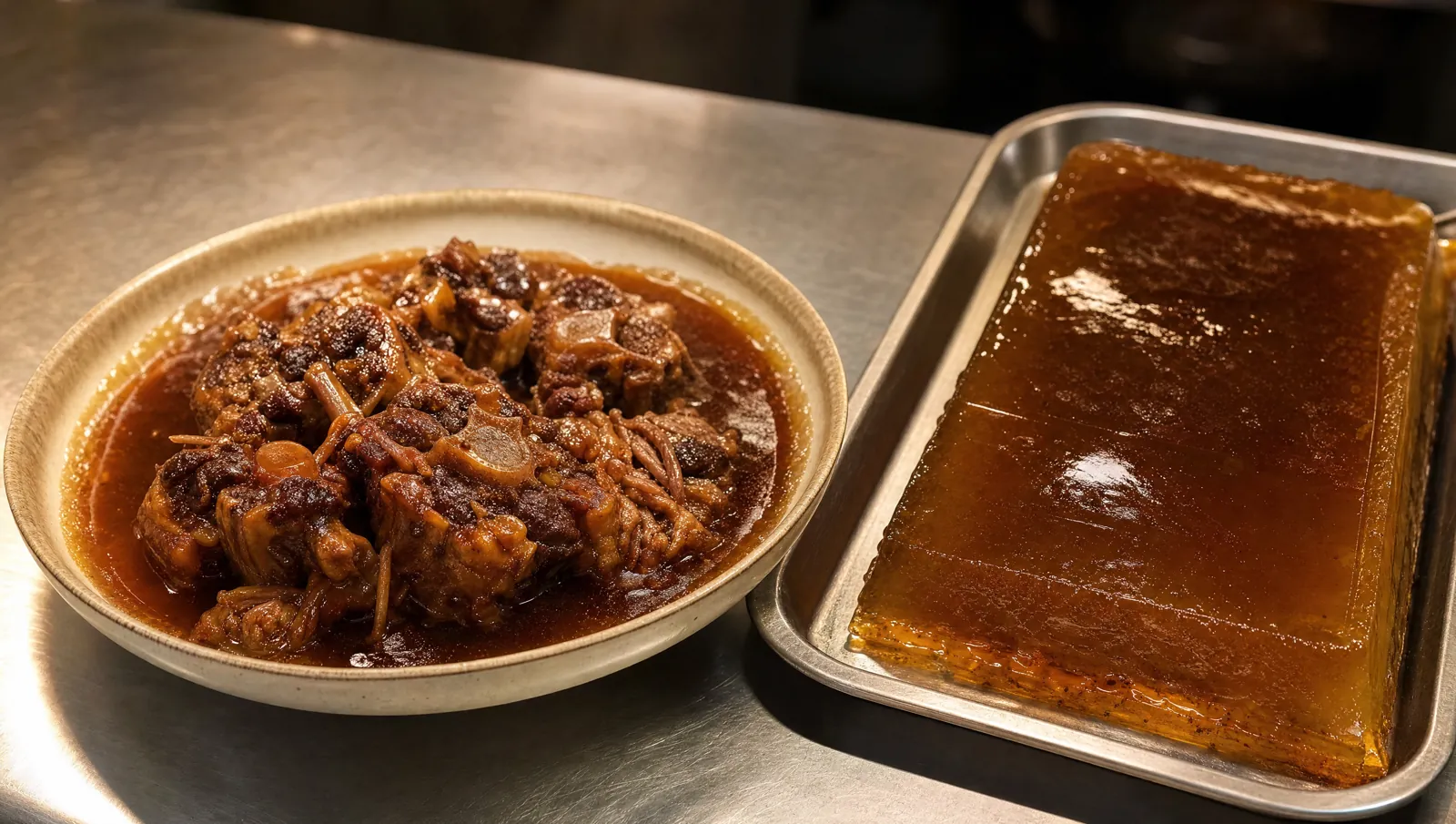
Hydrolysis is the chemical reaction in which water breaks a bond and splits a large molecule into smaller ones. In a kitchen it is what tenderizes a long braise, what turns the collagen in a stock into gelatin, and what builds flavor in an aged cheese or a soy sauce. It is not the Maillard reaction.
What hydrolysis is
The name means a split made with water. The water is used up in the reaction. One fragment of the molecule keeps the hydrogen, the other keeps the OH. A long chain becomes short pieces, and those short pieces usually taste stronger than the chain did.
Not every change in food is hydrolysis. Three things get lumped together, and they are not the same job:
| What happens | What it needs | Where you see it |
|---|---|---|
| Hydrolysis | Water, plus time, an enzyme, an acid, or heat | Collagen turning into gelatin, sucrose turning into invert sugar |
| Denaturation | Heat, acid, or agitation, without splitting the molecule | An egg white setting, milk curdling with acid |
| Maillard reaction | A dry surface and high heat | The crust on a roast or a loaf |
A protein can change shape without breaking apart. A set egg white is still protein. Hydrolysis actually cuts it.
In cooking there are four routes, and they do not ask for the same work:
| Route | What drives it | Where you meet it |
|---|---|---|
| Enzymes on proteins | Proteases in the meat, in rennet, or in a mold | Dry-aged beef, cheese, soy sauce |
| Enzymes on starch | Amylases | Malted barley, a bread dough that rests |
| Enzymes on fat | Lipases | Dry-cured ham, long-aged cheese |
| Acid, or heat plus water | Lemon juice, or a long cook in liquid | Invert sugar, the gelatin in a stock |
Why it matters in a professional kitchen
In a long braise, hot water hydrolyzes collagen, the protein in connective tissue. The change is underway from about 160°F (70°C), but it needs time: hours at a bare simmer, with the meat sitting in liquid. Collagen becomes gelatin, gelatin holds water, and the meat eats tender. The muscle fibers do not melt. A cut with almost no collagen will not turn soft no matter how long you cook it.
That gelatin is also the body of a brown stock and of a demi-glace. Chill the liquid and it sets into a soft jelly. A fish fumet is not cooked this way. Fish bones turn bitter long before they give up much gelatin, so you take the pot off as soon as the liquid tastes clean. If a fish stock has no body, more simmering is the wrong fix.
Reducing a liquid is not hydrolysis. Reduction boils water off and concentrates what is already there. Hydrolysis splits molecules. A stock can do both in sequence: the long cook first, then, once it is strained, the reduction.
In the cold, enzymes work slowly. Dry-aged beef in a restaurant is often held two to four weeks, near 32 to 39°F (0 to 4°C). Proteases already in the muscle release amino acids, and the flavor concentrates as water leaves. Collagen is almost untouched, so an aged short rib still wants a braise.
In cheese, rennet carries an enzyme, chymosin, that cuts one milk protein. That protein had been keeping the rest suspended. Once it is cut, the milk sets into curd. During aging, other enzymes keep splitting proteins, and the cheese gains flavor, sometimes the sharpness of a long affinage. In soy sauce and miso, proteases from koji, the Aspergillus oryzae culture, do similar work on the soybeans.
In pastry, acid hydrolysis of sucrose makes invert sugar: glucose and fructose. It is sweeter than table sugar, it holds water, and it is slow to crystallize. That is what you want in an ice cream, a ganache, or a syrup that must stay clear.
How to control it
Three levers, and they do not do each other’s job.
Temperature decides which hydrolysis is still alive. Above about 140°F (60°C), most kitchen enzymes are done. Aging belongs in the refrigerator. A braise belongs on the stove. Those are two reactions, not one reaction sped up. Parking the beef on a warm counter does not shorten a dry age. It spoils it.
Time and water decide the collagen. No liquid, no gelatin, however hot the oven is. Liquid and no time fails the same way: a short boil will not finish an oxtail. If it is still tough when you probe it, it needs longer, not more salt.
Acid decides sugar and pectin. A squeeze of lemon in a hot syrup inverts part of the sucrose. The same acid, if a jam boils too long, hydrolyzes the pectin and the jam never sets. Past a point, more heat stops helping.
Fresh fruit has a say as well. Raw pineapple, papaya, and kiwi carry proteases (bromelain, papain, actinidin) that keep splitting protein in the cold. They tenderize a piece of meat, and they also stop a gelatin dessert or a mousse from setting. Canned pineapple has been heated. The enzyme is dead, and the gelatin sets.
Brewers use the word maceration for the mash, and that step is hydrolysis: warm water wakes the amylases in the malt, and those enzymes split starch into sugars the yeast can ferment. It is not the cold soak described in maceration, which is how a kitchen draws flavor out of fruit without cooking it.

Mistakes and how to fix them
Calling every browned surface hydrolysis. The crust is Maillard, and Maillard wants the surface dry. A covered, simmering pot will not brown. A sear with no liquid and no time will not turn collagen into gelatin. A proper braise splits the work: liquid for the hydrolysis, a sear at the end for the color.
Simmering a fumet for hours to “get more gelatin.” The bones go bitter, and cream or sugar will not cover it. Make another one, short, and if you need body, look at a meat stock or added gelatin. Do not add minutes to the fish bones.
Setting a gelatin dessert with fresh pineapple. It will not set, and more stirring will not save it. Use canned pineapple, or heat the fresh fruit enough to kill the enzyme and cool it before you fold it in.
Boiling an acidic jam too long. If it is still liquid once it cools, the pectin has already been hydrolyzed. It will not come back. Next batch, stop the boil as soon as it reaches a set.
Thickening a thin stock with starch and calling it gelatin. A roux, or a beurre manié, thickens with starch. The sauce is thicker while it is hot, and it does not set in the refrigerator the way a collagen-rich stock does. If a stock does not gel when it cools, it was short on collagen or short on time.
Where you see it
You see it in oxtail, osso buco, or short ribs that finally give after hours. You see it in a stock that sets in a hotel pan overnight and melts back into a sauce. You see it in a long-aged cheese, in soy sauce, and in the clean sweetness of an inverted syrup.
You also see it when it is missing. A chicken breast will not tenderize by hydrolyzing collagen it barely has. Strawberries tossed with sugar are not hydrolyzing in any way that matters. They are giving up juice by osmosis, which is maceration, not this reaction.
Frequently asked questions
What is the difference between hydrolysis and the Maillard reaction? Hydrolysis needs water, and it splits the molecule. The Maillard reaction happens on a dry, hot surface, between sugars and proteins, and it is what browns food and makes it smell toasted. One plate can do both: the inside of a braise hydrolyzes, and the final sear is Maillard.
Is hydrolysis the same as digestion? No. Digestion does include hydrolysis, because the body’s enzymes use water to split proteins, starch, and fats. Digestion also covers chewing, absorption, and everything that follows. In the kitchen the word means only the chemical split.
Does cooking heat stop hydrolysis? It stops the kind driven by enzymes. Above about 140°F (60°C), most enzymes in meat, fruit, or rennet stop working. Hydrolysis from heat plus water keeps going: that is the one that turns collagen into gelatin over hours of braising.
Why does dry-aged beef taste different? Enzymes already in the meat split proteins and release amino acids and peptides, including the ones that taste savory. The meat also loses water, so the flavor concentrates. Collagen barely changes, so a cut full of connective tissue still needs a long cook.
Is dry-aged beef safe? Yes, when the room holds it near 32 to 39°F (0 to 4°C), with the air and the humidity under control, and the dried crust is trimmed before cooking. Leaving it on the counter to speed things up is not aging.
What is invert sugar? It is sucrose that has been hydrolyzed. With water and an acid, or with the enzyme invertase, table sugar splits into glucose and fructose. That syrup is sweeter, holds moisture, and crystallizes less readily. In the kitchen a little lemon juice in a hot sugar syrup does the job.