What is a fumet? Fish stock, not a bowl of soup
A fumet is fish stock from bones and aromatics, not roasted like a dark stock. Cook it too long and it turns bitter. It is a sauce base, not a soup.
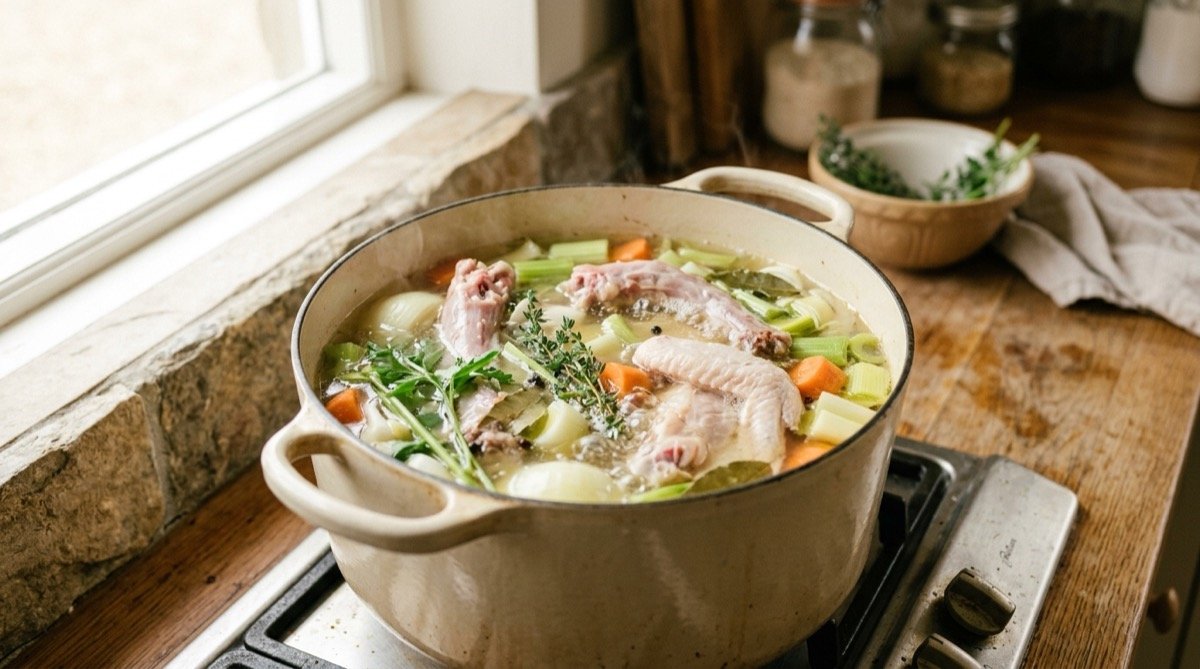
A fumet is a fish stock of bones and aromatics, simmered until it tastes clean and sweet of the fish. You do not roast the bones as you would for a dark stock. Cook it too long and it turns bitter. It is not a soup. You keep it for sauces, and a bitter pot is waste.
What it is, on the line
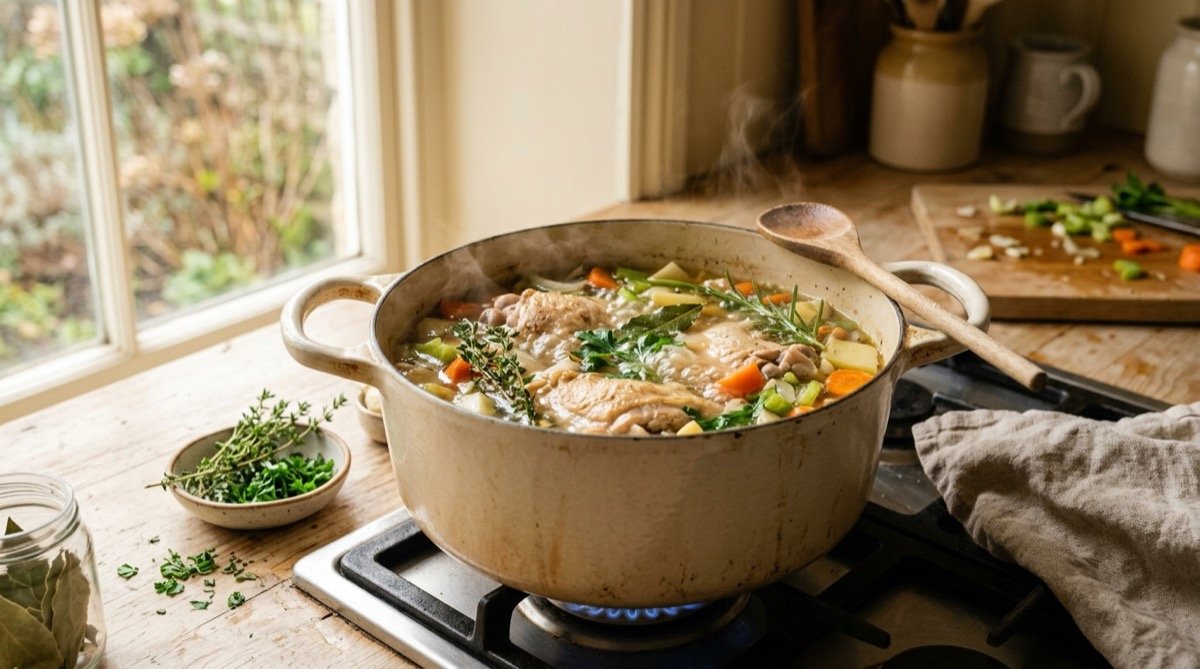
Clean bones, and heads only if they are properly trimmed, go into the pot with aromatics and cold liquid. You bring a fumet up gently and you skim. You do not blast it. The aim is a stock that smells of the fish and of the aromatics, not of mud. This is not a dark fond, and the bones are not roasted first. Roasting belongs to meat stocks that want colour and a deeper roast note. Here the colour stays pale and the flavour stays high and clear. A hard boil knocks the stock cloudy. A quiet simmer is the whole craft of the first stage.
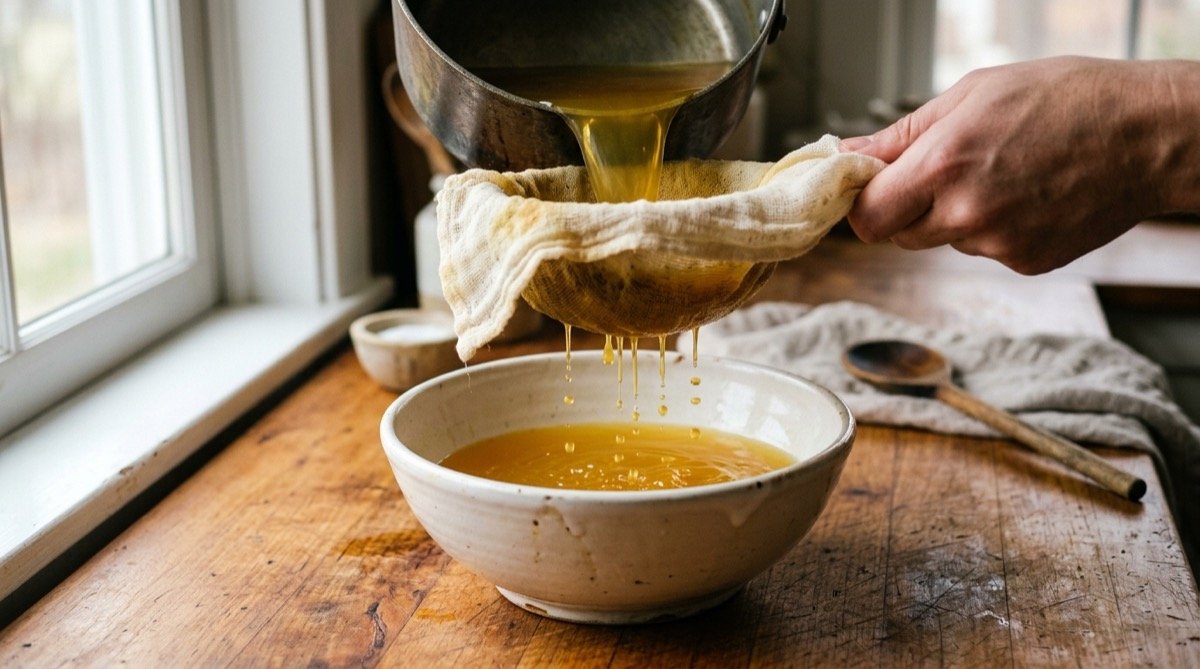
Bitterness is the fault that defines a tired fumet. Push the bones past the point where they have given their best and the stock turns bitter, faster still if gills, blood or a dirty rinse stayed in the pot. You will not roast that bitterness away, and you should not bury it under cream and hope the guest misses it. Taste early and often. When the flavour is sweet and clear, stop. A fumet you keep cooking because the ticket is not ready will punish the sauces later. Strain it, cool it with the same discipline you use for any stock, and say when it was made.
What it is not
| Gesture | What it does | What it does not do |
|---|---|---|
| Bones and aromatics | A clean, pale fish stock | Is not roasted like a dark stock |
| Stop when it tastes sweet | Clear flavour for sauces | Does not improve if you keep cooking |
| Strain and hold with care | A base in mise en place | Is not a soup for the guest |
| Build the sauce on it | The pass inherits the pot | Does not get rescued at the window |
How it behaves on the pass
On the pass, fumet is rarely the liquid you are correcting at the last moment. It became the sauce, the velouté or the reduction while you were still in prep. What the window needs is a stock that was right when it was strained, because you will not take bitterness out between the call and the plate. Taste the sauce as a sauce. If the bitter note is there, the plate changes or it does not go. The head chef would rather a simple finish from a clean fumet than a complicated one from a pot that sat too long.
The margin is the bones you bought or took off the fillet, and the sauces you lose if the pot fails. Fish bones are part of the yield, not a free offcut you can spoil without a cost. A bitter fumet means those bones, the aromatics and the stove gave you nothing you can send. Make the volume the service can actually use, not a huge pot that will sit until it turns. The head chef costs the sauce that comes from the fumet. If you only need enough for the sauces on tonight's board, do not simmer a pot you cannot cool and hold with care.
The guest should never be handed a bowl of fumet and told it is the dish. It is not a soup. In the sauce, they should taste clean fish, a light body, and aromatics that sit behind the main flavour. Bitterness, mud, or a boiled smell means the stock was pushed too far or skimmed too little. A good fumet disappears into the plate as freshness. That is the standard the pass inherits from mise en place. Keep the name for the stock. Use soup words only when you have actually seasoned and finished a soup for a bowl.
How people search for it
People type fumet, fish stock and fish fumet for the same pot: bones and aromatics, not roasted like a dark meat stock, simmered only until it tastes clean. It is a base. A search that treats it as a soup to eat from a bowl has the wrong meal in mind. Cook it too long, or leave gills and blood in the pot, and the sauces on the pass inherit a fault you cannot whisk out. Strain it when it tastes sweet and clear.
Frequently asked questions
What is a fumet?
A fumet is a fish stock made from bones and aromatics. You do not roast the bones the way you would for a dark meat stock. The simmer stays gentle, you skim, and you stop when the liquid tastes clean and sweet of the fish. It is a base for sauces. It is not a soup you send to the table in a bowl.
How is a fish fumet different from a dark stock?
A dark stock wants roasted bones and a deeper colour. A fumet stays pale. The bones and aromatics go in without that roast, and the flavour should stay high and clean rather than brown and toasted. Treat fish bones like meat bones, with a hard roast and a long careless simmer, and you miss the point and often gain a bitter pot.
Why does a fumet turn bitter?
Because the bones were cooked past the moment they had given a clean flavour, or because gills, blood or a poor rinse stayed in the pot. Extra time does not make a fish stock nobler. It makes it bitter, and cream or butter on the pass will not hide that from a guest. Taste while it simmers. Strain when it is sweet and clear.
Can you serve a fumet as the dish?
Not if what you have is the stock. A fumet is mise en place for sauces, a velouté, a reduction. Serving it in a bowl and calling it dinner skips seasoning, finish and the decision to write a soup. The guest should meet it inside a sauce, as clean fish flavour and a light body.