What is beurre manié? Raw butter and flour, not a roux
Beurre manié is soft butter and flour in equal parts by weight, whisked in raw at the end so a thin sauce tightens. It is not cooked first, and it is not a roux.
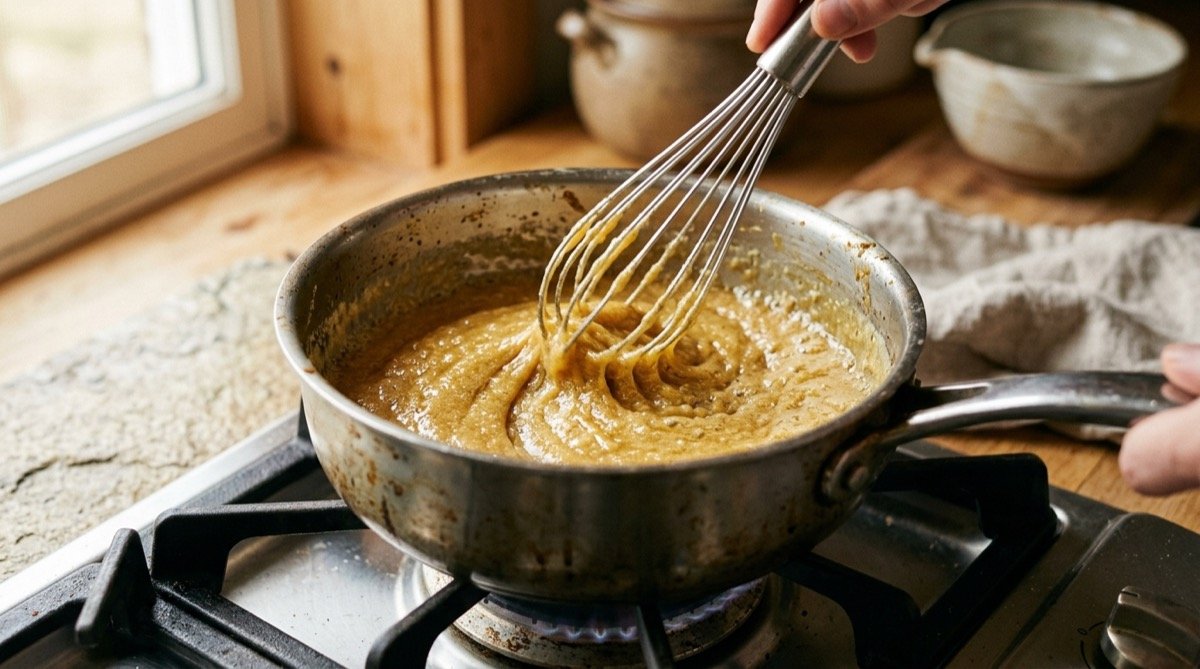
Beurre manié is soft butter worked with flour in equal parts by weight, kept raw and whisked into a sauce at the end. You do not cook it first. It tightens a thin sauce on the pass without the toasted colour of a roux, and the head chef treats it as a late finish, not as a base.
What it is, on the line
On the line, beurre manié is the paste you keep soft beside the stove, not a pot you started in the morning. You work butter that yields to a spoon with flour in equal parts by weight until the paste is even, with no dry pockets and no melted pool. It stays raw. You do not cook it before it meets the sauce. When a pan is thin at the pass, you whisk in small pieces off a hard boil and let the starch swell. The guest gets body in the sauce you already had.
A roux cooks the flour in fat before any liquid arrives, and that cooking is the whole point of it. Beurre manié never takes that step. The flour goes in raw, carried by soft butter, at the end. Fry the paste first and you have left this gesture and started another. The head chef will taste a raw flour note if you drop in a lump and walk away. Whisk it through, let the sauce return to a quiet simmer, and the starch finishes without the toasted colour of a blond or brown roux.
What it is not
| Gesture | What it does | What it does not do |
|---|---|---|
| Knead it raw | Tightens a finished sauce | Does not cook the flour first |
| Equal parts by weight | Soft butter carries the flour | Is not a roux |
| Whisk in at the end | Gives body on the pass | Does not replace a proper reduction |
| Keep the paste soft | Ready in mise en place | Does not sit melted and greasy |
How it behaves on the pass
Service is when this paste earns its place. A reduction that still tastes honest can look a shade thin when the plate is called, and you will not send a guest a sauce that runs to the rim. Beurre manié is the correction you can make between the call and the pass without building a new base. Keep the pan off a rolling boil so the butter stays in the sauce instead of leaking out as grease. Add with a light hand, look again, and only then add another piece. A heavy dump turns the sauce dull and pasty.
Mise en place for beurre manié is humble and easy to miss. The butter has to yield to the flour, so it cannot live in the coldest part of the fridge until the ticket is already in your hand. Soften it before service and keep the paste covered so it does not crust. Flour and butter are ordinary stores, which is why cooks reach for them when a costly reduction looks thin. The margin suffers if the paste hides a stock you should have reduced, because the guest then eats flour instead of the meat you already spent time on.
The guest never needs the French name. They need a sauce that clings to the meat or the vegetable and still tastes of the pot, not of a thickener. Done well, beurre manié disappears into the coat. Done in a rush, it leaves a faint cereal shadow and a surface that looks flat. That is the trade you accept when you choose this finish instead of a longer reduction. Tell the station what you did. The next plate should match, and the head chef should know the sauce was corrected at the pass rather than built that way from the start.
How people search for it
People type beurre manie without the accent and beurre manié with it, and both names point at this raw paste of butter and flour. You will also see kneaded butter, and the muddled label raw roux, which is the mix-up to undo. Search the same idea when a stew looks thin at the pass and someone wants a late thickener that is not a slurry and not a cooked roux. The paste stays raw, in equal parts by weight, and it goes in at the end.
Frequently asked questions
Is beurre manié the same as a roux?
No. A roux is flour cooked in fat before any liquid goes in. Beurre manié stays raw, equal parts butter and flour by weight, and you whisk it in at the end. Cook the paste first and you have started a roux, which is a different gesture with a different flavour. Use the raw paste when the sauce already exists and only the body is short.
Do you cook beurre manié before it goes into the sauce?
You do not. The butter is soft and the flour is raw, worked together and added at the end. Cooking it first would toast the flour and turn the gesture into a roux. Once it is in the sauce, a quiet simmer lets the starch swell. A hard boil is a good way to grease the pan and lose the butter.
When should you reach for beurre manié on the pass?
Reach for it when a sauce is thin at the call and you cannot wait on a longer reduction. It is a finish, not a base you build in the morning. Whisk small pieces into the hot sauce, off a hard boil, and taste.
Why does a head chef watch a raw butter paste so closely?
Because it is an easy way to hide a thin stock. Flour and butter look cheap next to a reduction, so the station reaches for them too fast. The guest then eats a cereal note instead of the pot you meant to serve. The head chef wants the paste used as a correction, named out loud, and kept out of sauces that were supposed to shine from reduction alone.