Maceration: what it is and how it differs from a marinade
Maceration draws flavor out of a solid in sugar or a cold liquid, without cooking it. How it differs from a marinade and an infusion, and how to do it.
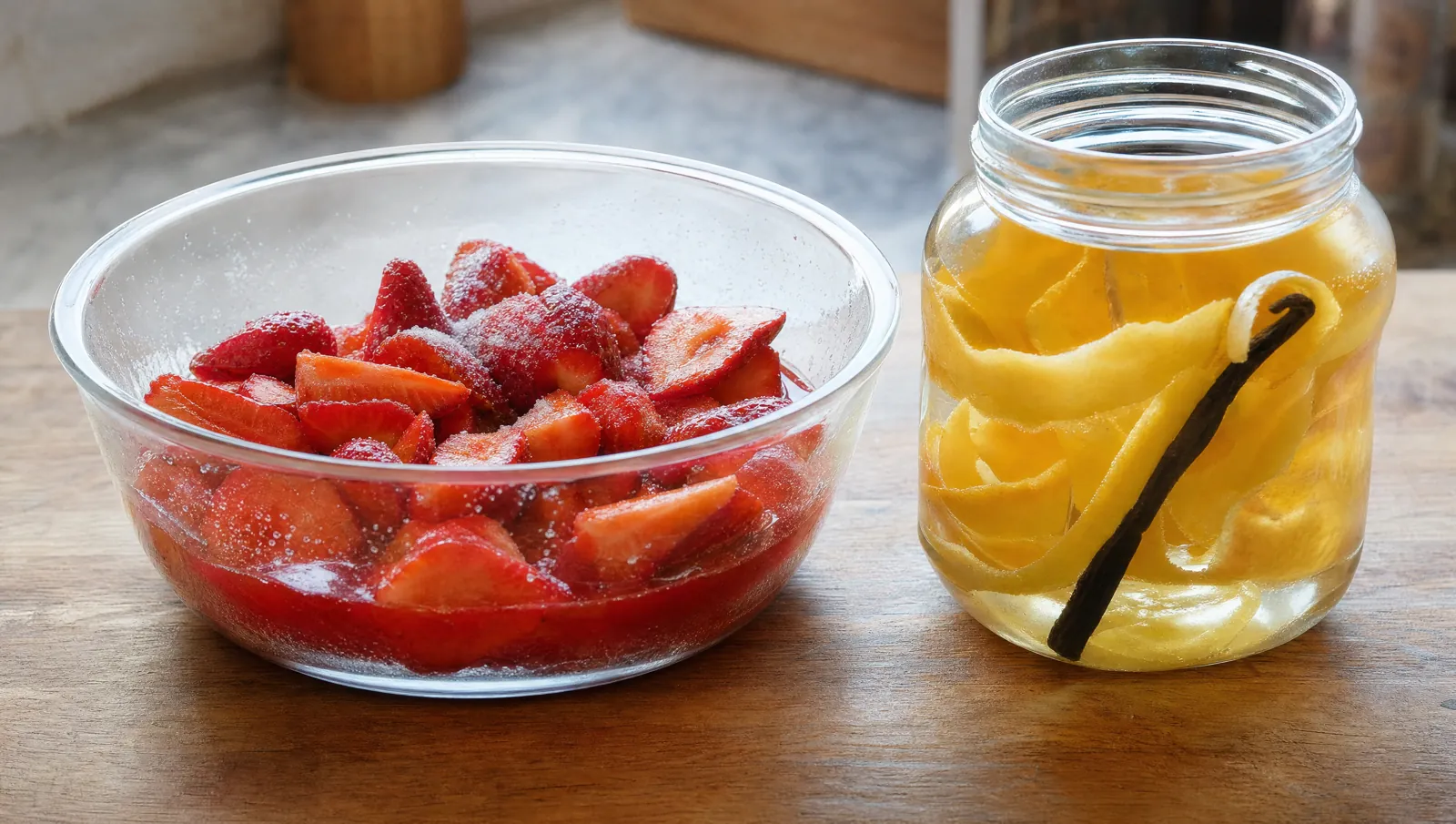
Maceration means leaving a solid in a liquid, or under sugar, long enough for it to give up flavor, without cooking it. Strawberries with sugar, citrus peel in alcohol, and a vanilla bean in a spirit are all macerations. It is not a marinade for meat, and it is not an infusion made with liquid that has just boiled.
What maceration is
A solid holds flavor inside it. Leave it against sugar, or against a liquid that can dissolve that flavor, and give it time, and some of what is soluble moves out. You do not need a flame. Heat, in fact, carries off in the steam the aromas this technique is trying to keep.
With sugar, the mechanism is osmosis. Sugar on the outside is more concentrated than the juice inside, water leaves the fruit, and the fruit’s own sugar, acid, and aroma leave with it. The fruit softens, and a syrup shows up in the bottom of the bowl. Alcohol does something else. Ethanol dissolves compounds that water barely picks up, especially from peels, vanilla, coffee, or dried spices. Vinegar or wine makes a gentler exchange, and the result does not keep as long.
It is not hydrolysis. Hydrolysis is water splitting a molecule. Here the molecules leave the fruit whole and dissolve. Brewers also say maceration for the mash, and that step is hydrolysis: enzymes in the malt split starch into sugars. Same name, different job.
How it differs from a marinade and an infusion
All three leave food in a liquid, which is why recipes cross the words. On a station you separate them by the goal.
| Macerate | Marinate | Infuse | |
|---|---|---|---|
| What you want | The solid to give up flavor, or fruit to soften in its own juice | The liquid to season the piece | Aroma pulled with heat, in minutes |
| Examples | Strawberries and sugar, lemon in alcohol, vanilla in vodka, raisins in rum | Meat or fish in oil, acid, salt, and herbs, before cooking | Tea, mint in a just-boiled syrup, spices in hot oil |
| Usual time | An hour to a few weeks | A few hours, refrigerated | Minutes |
| Heat | No | No | Yes, unless you chose cold on purpose |
An acidic marinade changes the surface of meat: proteins denature, and the piece picks up flavor from the outside. It does not make a syrup. Leaving a steak in wine for twelve hours is not the same task as leaving strawberries in sugar overnight, even when a recipe uses one verb for both.
A cold infusion sits close to maceration. Coffee that sleeps in the refrigerator, or herbs in cold water, extract without cooking. If the liquid was boiling, it is an infusion, and the most volatile aromas have already left in the steam.

How to do it
Fruit and sugar. Cut the fruit. One tenth of its weight in sugar is a usual pastry starting point: enough to coat, not so much that the bowl becomes a bland syrup. Toss it, cover it, and refrigerate it. In an hour there is juice. By morning the fruit still has a shape and the syrup has taken its color. Stir once halfway, so the fruit on top gets wet too. If you want the syrup clean, strain it, or pour it off into another vessel the way a kitchen aboca a liquid, without scraping the pulp through.
Alcohol. Cover the solid completely. Whatever sticks up in the air molds. A spirit around 40% ABV, such as vodka, brandy, or white rum, is the stable medium for vanilla, citrus peel with the white pith cut away, coffee, or dried fruit. Closed jar, cool, out of direct sun. Taste after a few days and keep going if you want it stronger. A vanilla bean in alcohol, if you want a real extract, is measured in weeks, not in an afternoon. At the end, strain it, pour off the clear part, and bottle it.
Oil or vinegar. Vinegar acidifies, and it keeps better. Oil scents a chile or a dried herb well. Fresh garlic or fresh herbs in oil belong in the refrigerator and get used within a few days, for the reason in the mistakes below. This is not a confit. Confit cooks the food submerged in hot fat.
Mistakes and how to fix them
Leaving fruit and sugar on the counter “so it goes faster.” It does go faster, and it also ferments. If it smells like wine or shows bubbles, it is not a dessert syrup. Next time, the refrigerator, and use it the same day or the next.
Macerating in a light wine and treating it like a liqueur. Wine does not have the alcohol to sit for weeks out of the cold. It goes in the refrigerator and gets used within a few days. To keep it, you need a spirit.
Leaving the white pith on the citrus. The colored peel gives aroma. The pith gives bitterness, and the bitterness grows with the days. Trim the peel thin, or pull the solids as soon as the alcohol tastes clean, before it turns bitter.
Not covering. Any fruit, herb, or spice above the liquid molds, and that spoils the jar. Add liquid or remove solid until everything is under.
Fresh garlic or herbs in oil, at room temperature. Oil shuts out air, and garlic can carry spores of Clostridium botulinum. Without acid and without cold, that is a real hazard, not a fuss. Refrigerate it and use it within about four days, or freeze it. Commercial oils of this kind are acidified for that reason. A spirit at about 40% ABV is a different case.
Serving a cloudy liqueur after shaking it. The haze is pulp and pectin. Rest it cold, pour off the clear layer, and filter the rest. Shaking only shares the sediment among every glass.
In pastry and at the cocktail bar
In pastry, macerated strawberries, raspberries, or citrus go on a tart, into a cake, or beside ice cream, and the syrup soaks the cake. Raisins or dried apricots in rum are the same technique with dried fruit, which drinks liquid instead of giving it up. Citrus peels buried in sugar, the bar’s oleo-saccharum, release their essential oil in a few hours, and that liquid perfumes a cocktail without boiling anything.
At the bar, the syrup from a fruit maceration is an ingredient, not a leftover. Taste it, adjust the sweetness if you need to, and use it the same day or keep it cold. Vanilla in vodka is the extract that later goes into a sauce, an ice cream, or a glass. If there is sediment when you bottle it, pour off the clear part. The bottom does not go into the drink.
You do not need a machine. You need a closed container, refrigeration when the liquid is not a strong spirit, and the patience to taste before you call the maceration finished.
Frequently asked questions
What is the difference between macerating and marinating? When you macerate, the solid gives flavor to the liquid or to its own juice: fruit with sugar, citrus peels in alcohol, vanilla in a spirit. When you marinate, the liquid seasons meat or fish before you cook it. Recipes mix the verbs. In a professional kitchen, macerating belongs to pastry and the bar. Marinating belongs to the meat or fish station.
Are macerating and infusing the same? No. Infusing pulls aroma with hot liquid, or liquid that has just boiled, and it is usually a matter of minutes: tea, mint in a hot syrup, a spice in warm oil. Macerating is cold or at room temperature, and it is measured in hours or weeks. A cold infusion, such as cold-brew coffee, is closer to a maceration than to a pot of tea.
How long do you macerate fruit with sugar? An hour already pulls juice. Overnight in the refrigerator is the usual pastry timing: the fruit still holds its shape and the syrup is already flavored. Several days at room temperature ferment it and turn it to mush.
Can you use the liquid from a maceration? Yes. That syrup or that alcohol is half the recipe. It soaks a cake, it goes into a cocktail, or it dresses the same fruit. Taste it before you add more sugar. It already carries the sugar or the alcohol from the maceration.
Why is a macerated liqueur cloudy? Fine particles, and pectin from the fruit. Rest it in the refrigerator, pour off the clear part, and filter the rest through a cloth or a coffee filter without stirring the bottom. Shaking the bottle before you serve it does not clear it.
Is it safe to macerate garlic or herbs in oil? Not on the counter. Oil keeps air out, and Clostridium botulinum can grow if fresh garlic or herbs are not acidified. The usual food-safety guidance is to refrigerate it and use it within about four days, or freeze it. A spirit at about 40% ABV does not raise that problem.