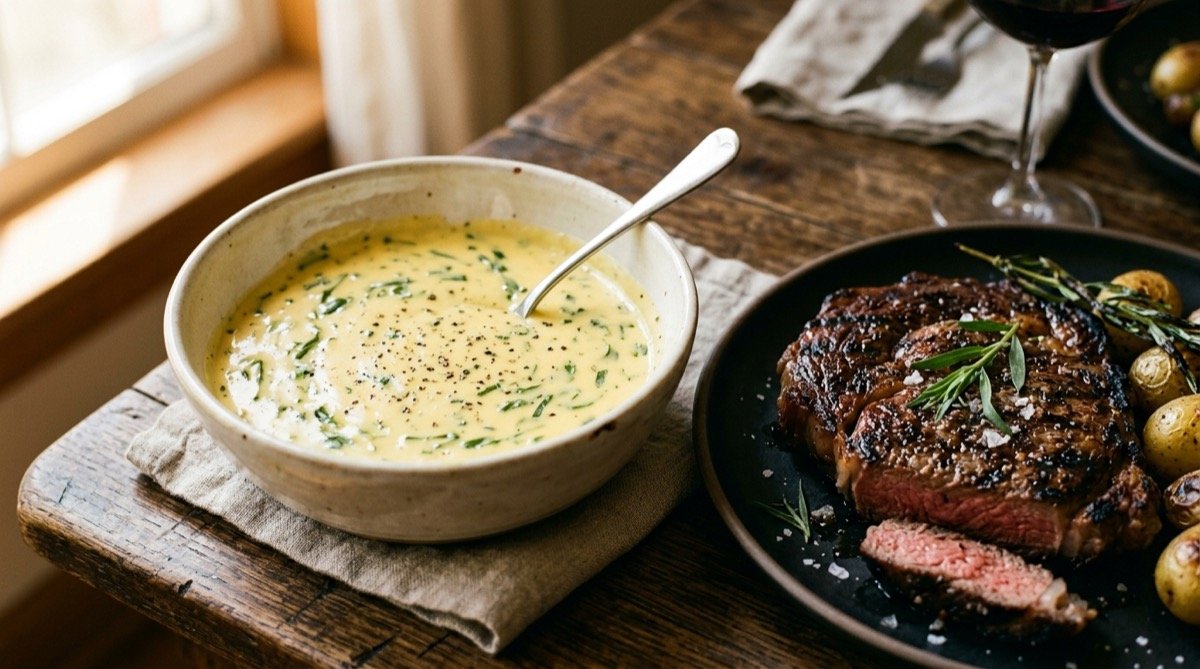
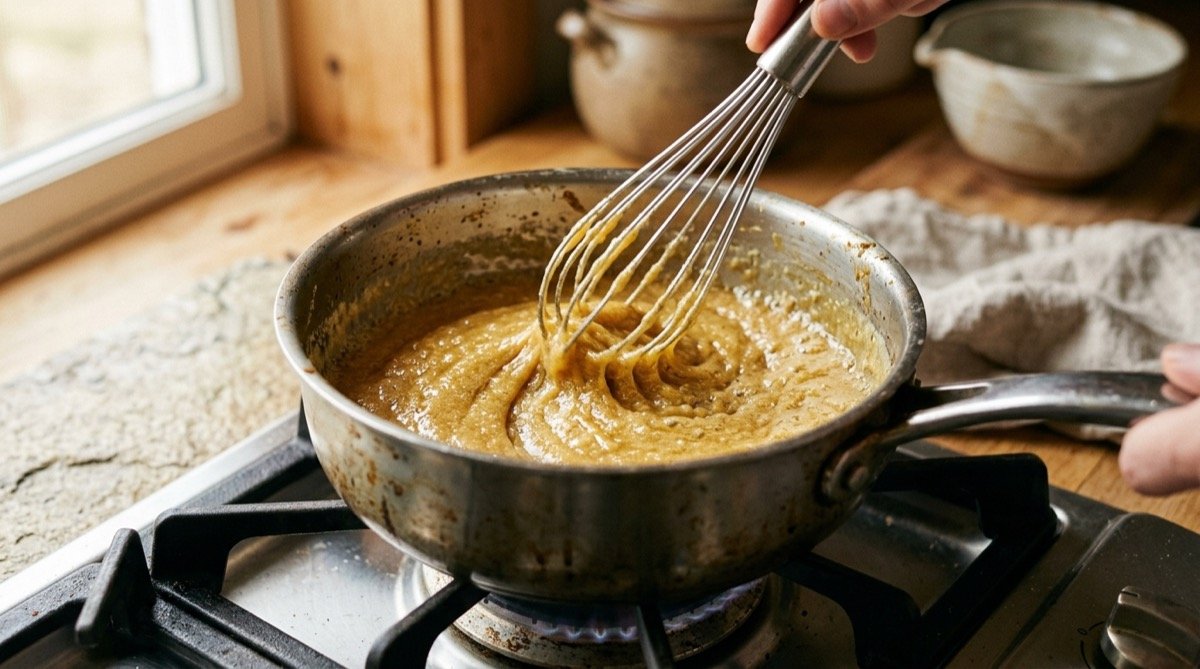
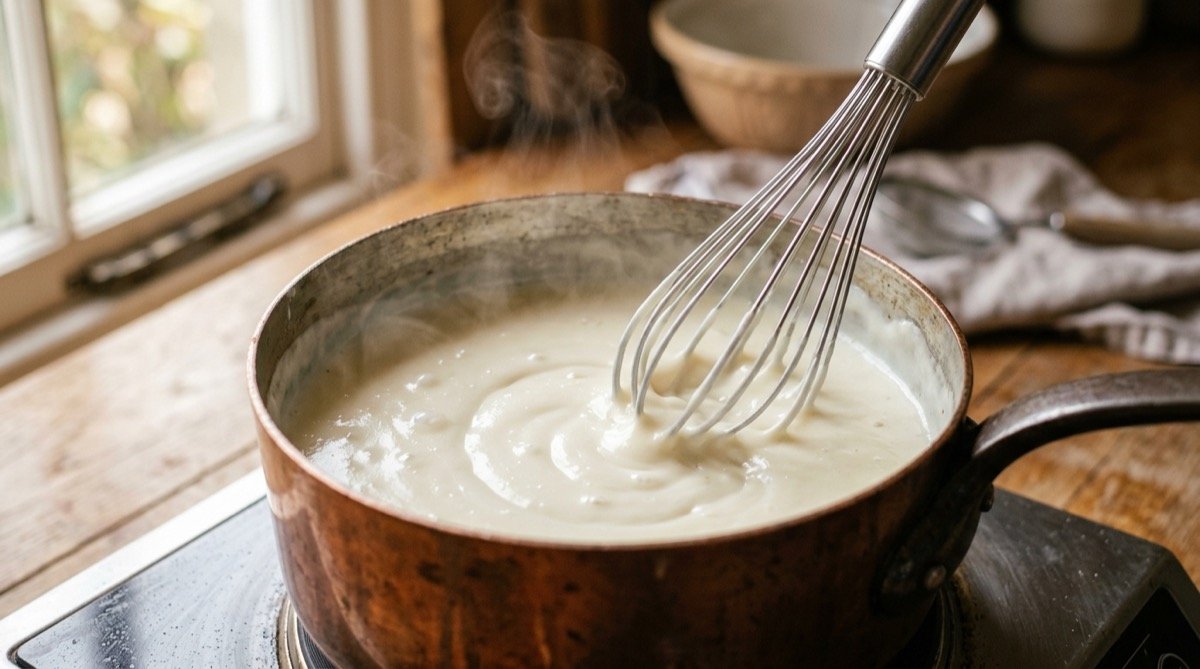
What is demi-glace? Demi glace, demiglace, and the nap
Demi-glace is espagnole and dark stock reduced until the sauce naps. Written as demi glace or demiglace, it is still not the same pot as glace de viande.
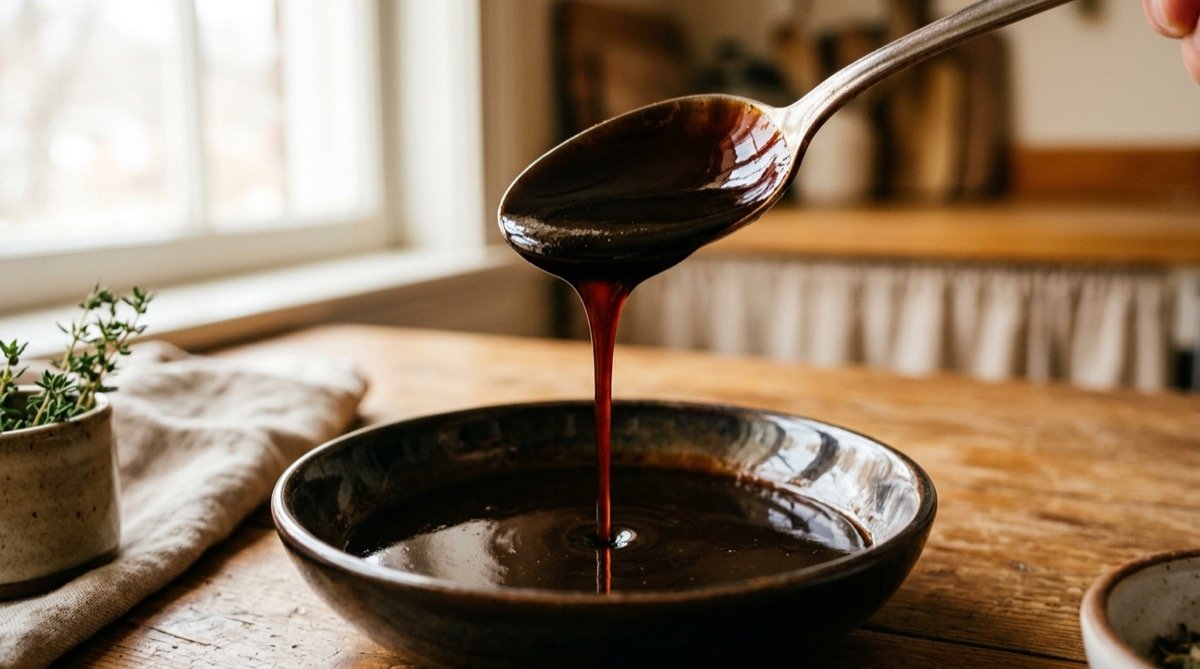
Demi-glace is espagnole and dark stock reduced together until the sauce naps. You will also see demi glace and demiglace. The spelling does not change the pot. It is not glace de viande, which is dark stock pushed until it gels when cold. Demi-glace stops as a coat, with espagnole still in the body.
What it is, on the line
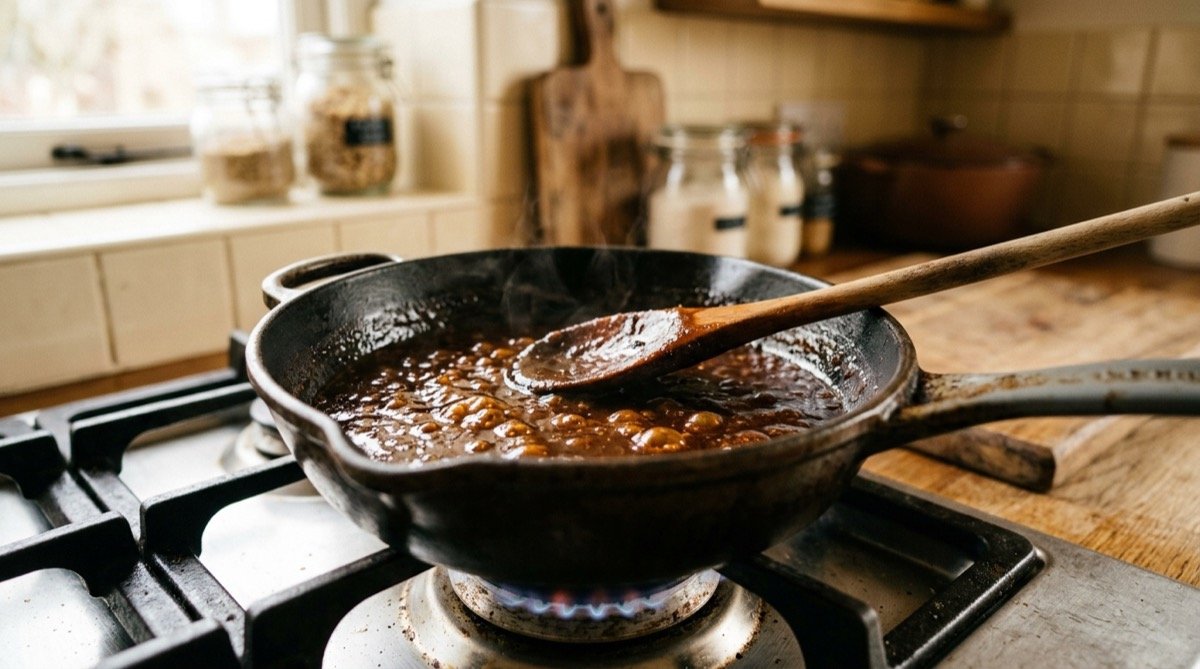
Espagnole brings the brown sauce, roux and long simmer included, and dark stock brings the roasted bones. You put them in one pot and reduce until the spoon says nappé. That coat is the finish line for demi-glace. You are not chasing a gel in the fridge. You are making a sauce that can glaze meat, lengthen a jus, or stand under a compound sauce on the pass. Demi glace and demiglace are the same name with the space or the hyphen written differently, which is how people search and how a ticket sometimes arrives. Cook the sauce in front of you. Do not cook the spelling.
Glace de viande starts narrower and goes further. It is dark stock alone, reduced until it naps and then until it gels when cold. Demi-glace has espagnole in the pot, so the roux is part of how the body forms, along with whatever the stock itself gives. The flavour is deep and brown, and the sauce is built to be used, not only dotted on as a concentrate. If your pot gels like a meat glaze and never was an espagnole, do not rename it demi-glace to make the menu sound grander. The head chef costs the two pots differently because they spend the stove and the stores differently.
What it is not
| Gesture | What it does | What it does not do |
|---|---|---|
| Espagnole plus dark stock | Reduced until the spoon is nappé | Is not stock on its own |
| Stop at the coat | A sauce you can serve and extend | Is not glace de viande |
| Demi-glace, demi glace, demiglace | Three spellings, one pot | Does not change the method |
| Finish it on the plate | The mother sauce meets the meat | Does not start from raw at the window |
How it behaves on the pass
On the pass, demi-glace is a pot that mise en place already finished. You do not reduce espagnole from a raw start between courses. What you do at the window is the last step: the drippings of the meat, a ladle of demi-glace, perhaps a mount of cold butter if the dish wants shine and roundness. The sauce should still taste of the meat in the pan, not only of the mother sauce. Nappé still applies. If the ladle was too heavy and the sauce looks thick and dull, loosen it with a little stock you trust, then taste again.
The margin is why this sauce is either a quiet pride or a quiet leak. Espagnole and dark stock are already expensive in time and product before you reduce them any further. A demi-glace you make and forget in the cold hold is a loss nobody photographs. A demi-glace you pour with a heavy hand on every plate, including dishes that wanted a lighter jus, spends the pot and flattens the menu into one brown note. The head chef watches both habits. Know which dishes take a full coat and which take a spoon to fortify a quicker pan. That is costing, done with a ladle.
The guest reads demi-glace as a dark glossy coat with a long roasted flavour and a body that stays on the meat. They will not care that a search box said demiglace or that the ticket said demi glace. They will care if the sauce is salty, floury or thin. Those faults live in the espagnole, in the stock, or in a sloppy finish, and they are visible at the pass. Taste the mother sauce when you take it from mise en place. If it is wrong, every plate you build on it will be wrong in the same way. Fix the pot, or leave it.
How people search for it
People search demi-glace, demi glace and demiglace for one sauce: espagnole plus dark stock, reduced until it naps. The hyphen, the space and the closed-up spelling are all in use, on menus and in the search box. Do not let that search land on glace de viande or meat glaze. A meat glaze is dark stock taken further, until it gels when cold, with no espagnole required. Demi-glace stops at a coat you can serve and extend. On the pass the pot should already be made.
Frequently asked questions
What is demi-glace?
Espagnole and dark stock, reduced together until the sauce coats the back of a spoon. That nap is the point you are aiming at. You will see the same sauce written as demi glace and as demiglace. The spelling changes nothing in the pot. It is a dark sauce you make before service and use on the pass to glaze, extend or finish.
Is demiglace the same as demi glace and demi-glace?
Yes. They are three ways of writing one name. Menus, tickets and search boxes move the hyphen or drop it. The sauce is still espagnole plus dark stock, reduced until it naps. If the liquid in the pot is only reduced stock and it gels when cold, you are holding glace de viande, whatever the label says.
How is demi-glace different from a meat glaze?
A meat glaze, glace de viande, is dark stock reduced until it naps and then until it sets to a gel when cold. Demi-glace includes espagnole, so a roux is part of the body, and you stop when the sauce coats. One is a concentrate you add with care.
Can you make demi-glace to order on the pass?
Not honestly. The espagnole and the dark stock are mise en place, and the reduction that marries them is too. At the window you finish: meat juices, a ladle of the sauce, maybe a mount of cold butter for shine. If the mother sauce is salty, floury or thin, fix that pot or stop using it. Every plate will inherit the fault. The guest never needs the spelling.