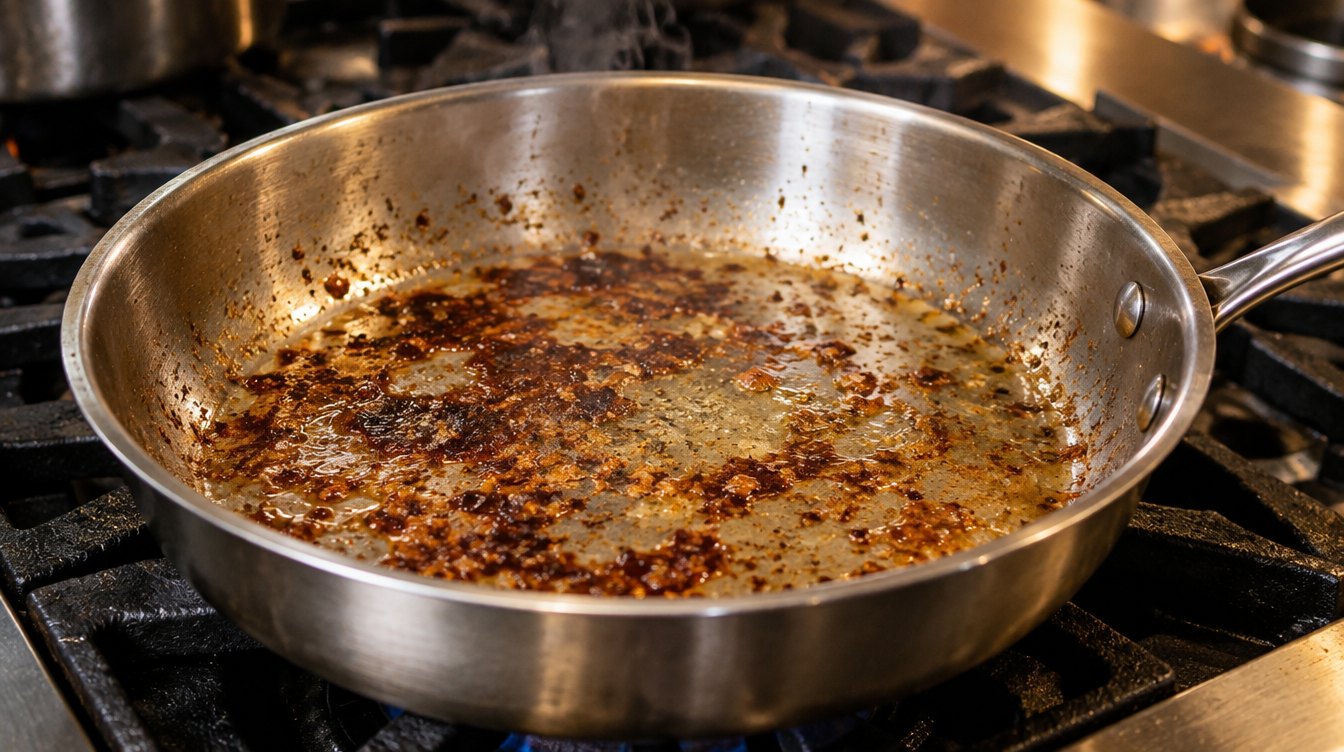
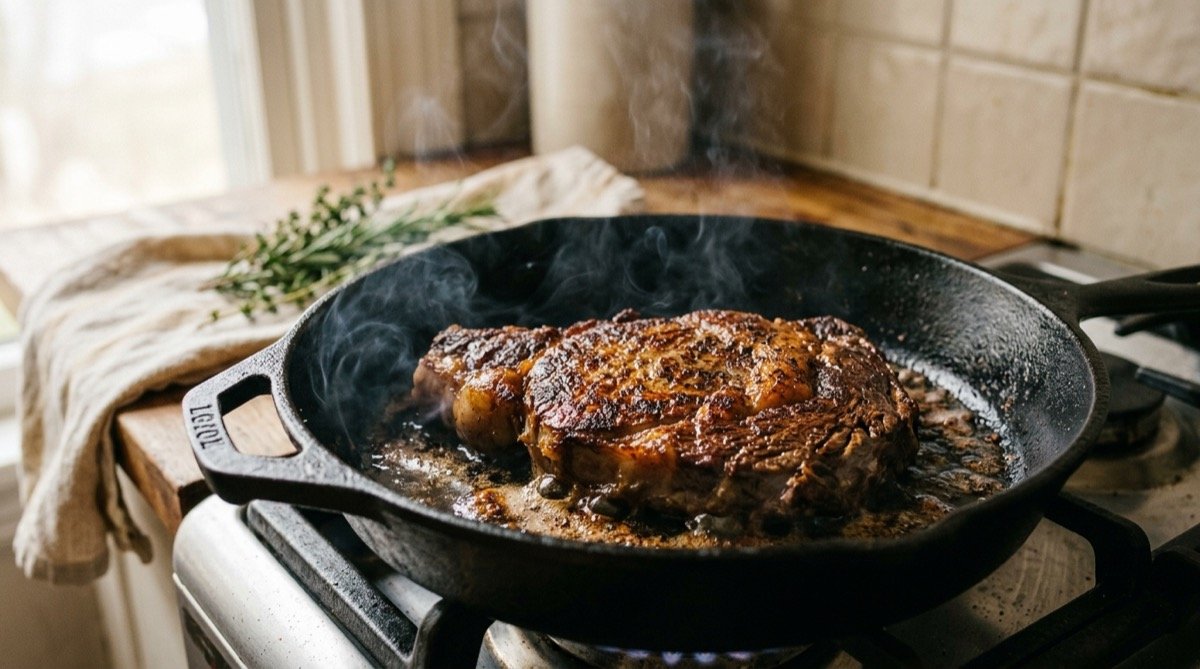
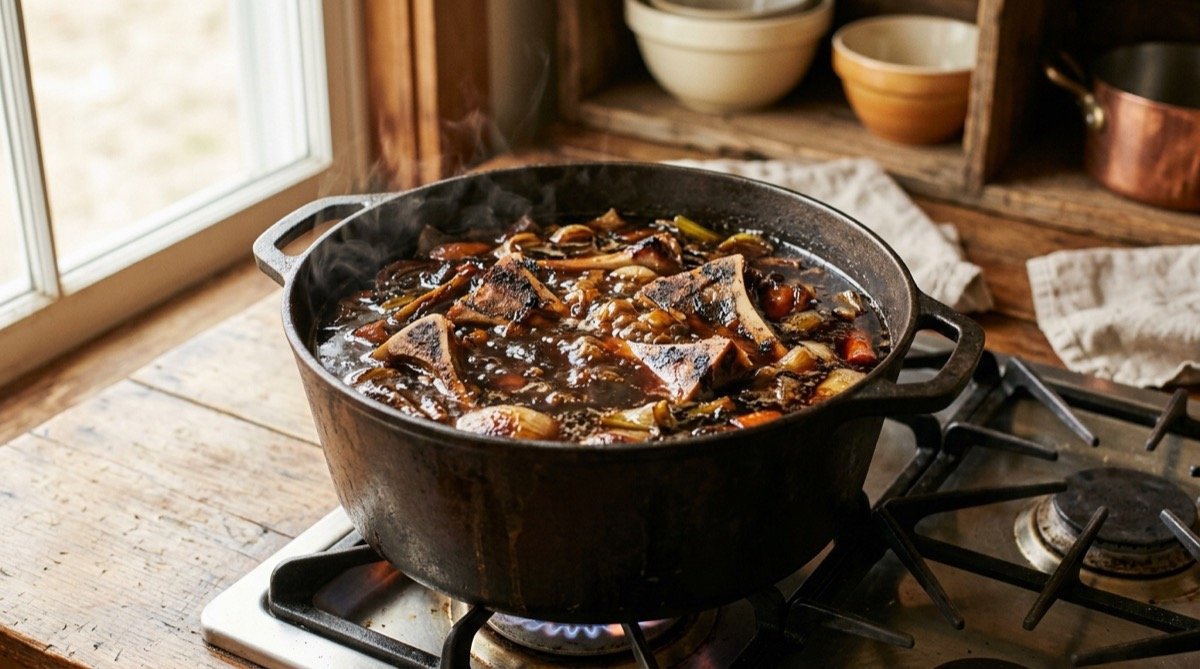
White stock: what it is, and what it is not
White stock is bones simmered pale, never roasted, with raw vegetables and herbs. The quiet base of veloutés and clear soups.
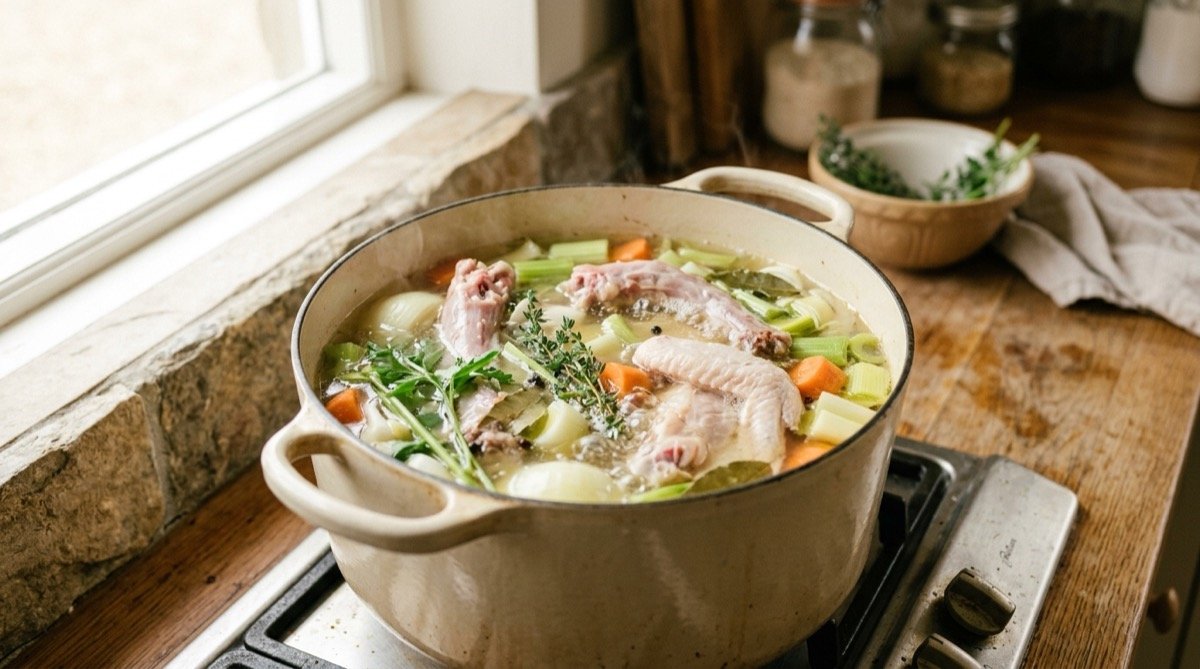
White stock is a meat stock from bones that are never roasted. They start in cold water with raw vegetables and a bouquet garni, and they simmer until the liquid is pale gold. It feeds veloutés and clear soups. It is not brown stock, which roasts the bones, and it is not a fish fumet.
What white stock is
It is a stock, not a soup you ladle into a cup and not a sauce you nap on the plate as it comes from the pot. Knuckle, shank, neck, or poultry carcasses with a little meat left on go in raw. The surface never sees the dry heat of a roast. That is the whole point. A brown stock gets its taste from the Maillard reaction on the bones. White stock refuses that crust so the liquid stays a quiet base.
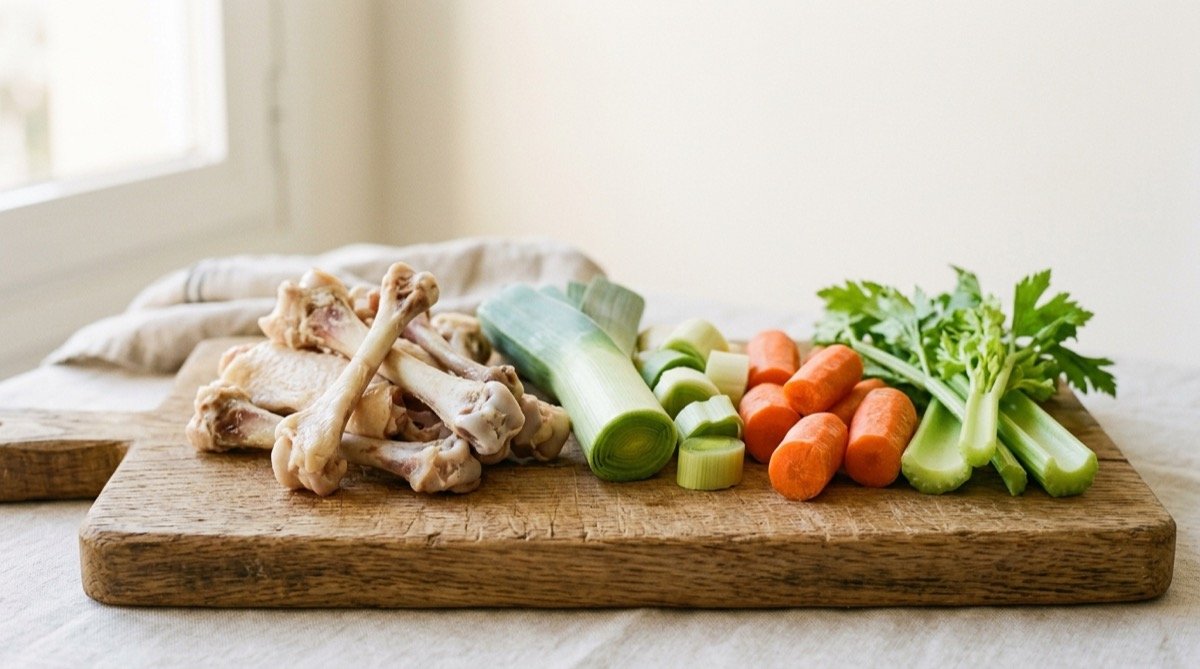
The bones start in cold water, barely covered, with onion, carrot, and leek or celery, all raw, plus a bouquet garni. The simmer is low enough that you see a shiver, not a rolling boil. You skim. You do not salt. A stock that will be reduced, or poured into a sauce you finish later, punishes any salt you add at the start.
People search white stock, white chicken stock, and white veal stock. The Spanish card calls it fondo blanco. The French name on a classical prep list is fond blanc. In an English kitchen the name on the label is white stock.
How it is made
Start clean. Rinse the bones under cold water. If they are bloody or carry loose fat, give them a short blanch: a minute or two in boiling water, then drain and rinse. That blanch is not a roast. It lifts the proteins that would cloud a long simmer. The Spanish fiche treats it as the first step when the bones are not already clean.
Start cold. Bones in the pot, cold water to cover, then a gentle heat. As the water warms, a gray foam rises. Skim it. The first stretch of the simmer is mostly skimming. Skip it and the stock stays dull no matter how long you cook it.
Add the vegetables raw. Onion, carrot, and leek or celery, in large pieces, not a dice and not a sauté. Tomato stays out. A bouquet garni of bay, thyme, and parsley stems, and a few peppercorns if you want them. Garlic is optional and easy to overdo. The vegetables go in once the foam has eased, not at the start of a poultry stock you will cook for hours: overcooked vegetables shed fibers and cloud the pot. The Spanish fiche keeps them to the last stretch of a four-hour poultry stock.
Simmer, skim, strain. A bare simmer. On this card the range from the Spanish fiche is about 3 to 4 hours for poultry and about 5 to 7 hours for veal, until the bones are fragile and the liquid has body. The same fiche puts the heat near 85 to 90 °C. Strain through a fine chinois without pressing the solids. Pressing pulls bitterness and cloudiness. Chill in an ice bath. The next day the fat is a cap you lift, and a good stock gels.
What it is not
| White stock | Brown stock | Fish fumet | |
|---|---|---|---|
| Bones | Blanched or started pale, not roasted | Roasted until deep brown | Fish bones, not roasted |
| Vegetables | Raw | Browned | Aromatics, short cook |
| Tomato | Left out | Usual | Left out |
| Color | Pale gold | Mahogany | Light |
| What it feeds | Veloutés, clear soups, poaching | Brown sauces, braises | Fish sauces |
| Salt | None at the start | None at the start | None at the start |
A fish fumet is the pale stock of fish bones, and it is finished quickly. Give those bones the hours you give veal and the fumet turns tired. Roast them and it turns bitter.
A demi-glace is not this stock. It is a sauce built from brown stock and reduced until it naps. A glace de viande is brown stock reduced further, until it gels hard when cold. White stock can be reduced, but it does not become either of those. The color and the roast are missing on purpose.
Velouté is the mother sauce that starts here: pale stock and a blond roux. There is no English glossary card for velouté yet. The stock is the liquid. The roux is a separate step. Do not pretend the stock already has the body of the sauce.
On the pass
You do not drink white stock from a cup, though a cook will taste it. A ladle is the liquid in a velouté, the base of a cream soup that should taste of the vegetable and not of roast, and the moistening for a risotto when a salty cube would shout over the rice. Poached fish, a chicken breast, or glazed small vegetables take a little of it with butter at the end. The gelatin helps. The flavor stays in the background.
If the spec says velouté, the stock is unsalted and pale, and the liaison is separate. If the spec says espagnole or a pepper sauce, you wanted brown stock. Using white stock there gives you a sauce with no roasted note, and reducing it will not invent the roast you skipped.
Season after you know the final volume. A soup that only needs a little reduction can take salt in the pot at the end. A sauce you will cut by half cannot.
Mistakes
Roasting the bones “just a little.” A light roast is a brown stock that did not finish. If the card says white, the bones stay pale. Color in the pot is a different stock.
A rolling boil. The turbulence clouds the stock and beats the fat back in. If it is boiling hard, the heat is wrong. A shiver, and the skimmer.
Pressing the solids. Let them drain. Squeezing bones and vegetables is how a clean stock turns bitter and gray.
Too many vegetables, too early. They are there to season, not to become the soup. Tired vegetables shed starch and fibers. Add them late on a long poultry stock.
Cooling it on the counter. A stock that sits warm for hours is a growth medium. Ice bath, then the refrigerator. Lift the fat the next day.
Salting it because the spoon tastes thin. It is thin on purpose. Salt arrives in the sauce or the soup, after you know how far it will reduce.
Frequently asked questions
Why are the bones left unroasted for a white stock? The roast is the Maillard reaction, and it is exactly what a white stock leaves out. Dry heat paints a brown crust into the liquid. Skip it and the stock stays pale, so a velouté or a clear soup can carry another flavor. Blanching bloody bones is a rinse, not a roast. The Spanish card calls this fondo blanco. In English kitchens the search is white stock.
What is the difference between white stock and brown stock? White stock starts the bones pale, leaves the vegetables raw, and keeps tomato out. Brown stock roasts the bones until they are deep brown and usually takes tomato. One is for veloutés and clear soups. The other is for brown sauces and braises. A fish fumet is a third thing: fish bones, not roasted, and cooked for much less time.
How long should a white stock simmer? On this card the working range, taken from the Spanish fiche, is a bare simmer: about 3 to 4 hours for poultry bones, and about 5 to 7 hours for veal. The same fiche puts the pot near 85 to 90 °C, a shiver on the surface, not a rolling boil. A hard boil clouds the stock and beats the fat back in.
Do you salt a white stock? No. A stock that will be reduced, or that will go into a sauce you season at the end, punishes any salt you add at the start. Salt the finished sauce or the soup, once you know how far the liquid has cooked down.
Can a bouillon cube stand in for white stock? In a rush, a commercial stock will get you through a service, and the plate will show it. Those products are usually salty, low in gelatin, and built to one flavor. A white stock is not salted, because you may reduce it. If you use a prepared one, season at the end, from the label, not from habit.
Is a fish fumet a white stock? No. A fumet is fish bones and trim, started pale, and it is done in well under an hour. A white stock is meat or poultry bones, and it simmers for hours so the collagen can turn to gelatin. Roasting fish bones the way you roast veal is how a fumet turns bitter. Do not borrow either method for the other.