Glace de viande: meat glaze that naps and then gels
Glace de viande is dark stock reduced until it naps and, once cold, gels. It goes further than demi-glace and costs time and product. No figure required.
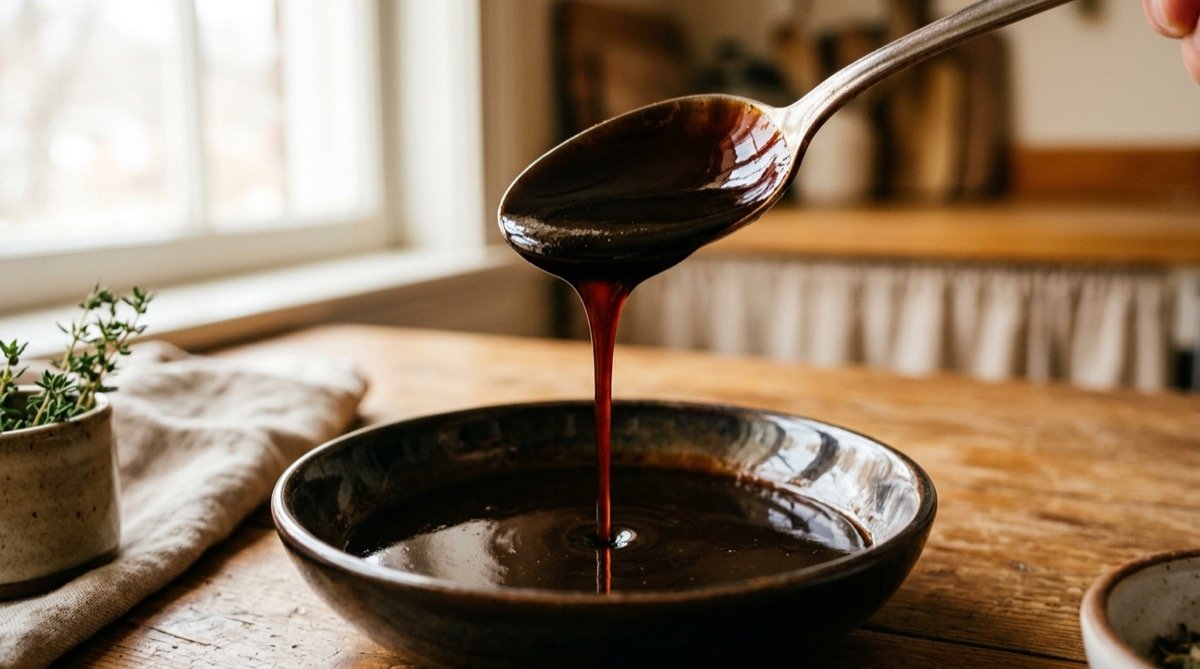
Glace de viande is dark stock reduced until it naps and, once cold, gels. It goes further than demi-glace, which still has espagnole and stops at a coat. The body here comes from the stock itself. It costs time and product, and the head chef watches that cost without a figure.
What it is, on the line
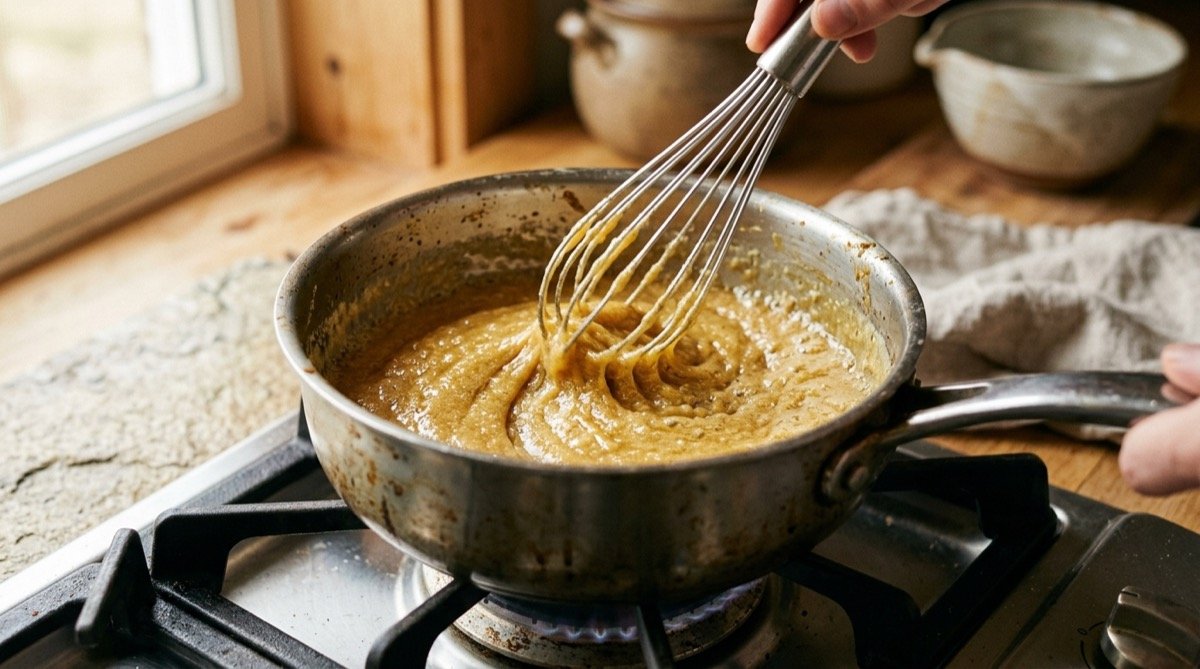
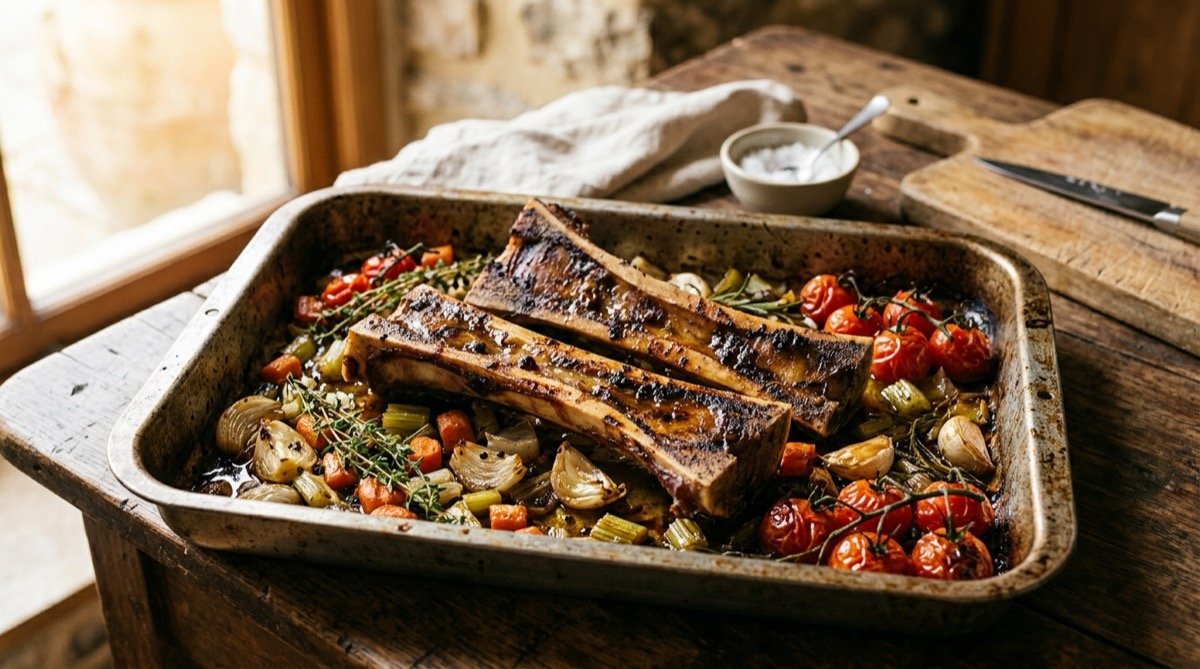
Glace de viande starts as dark stock, the kind you build from roasted bones and a careful simmer, and it ends as a glaze. You reduce until a spoon comes out coated, and you keep going until the flavour is deep and the liquid, once cold, gels. That gel is the sign the reduction has gone far enough to wear the name. It is not a broth you thin back for a bowl. It is a concentrate you keep to fortify other sauces and to lay a dark, shining ribbon on a plate. The guest should taste meat. They should not taste a stock that never reduced.
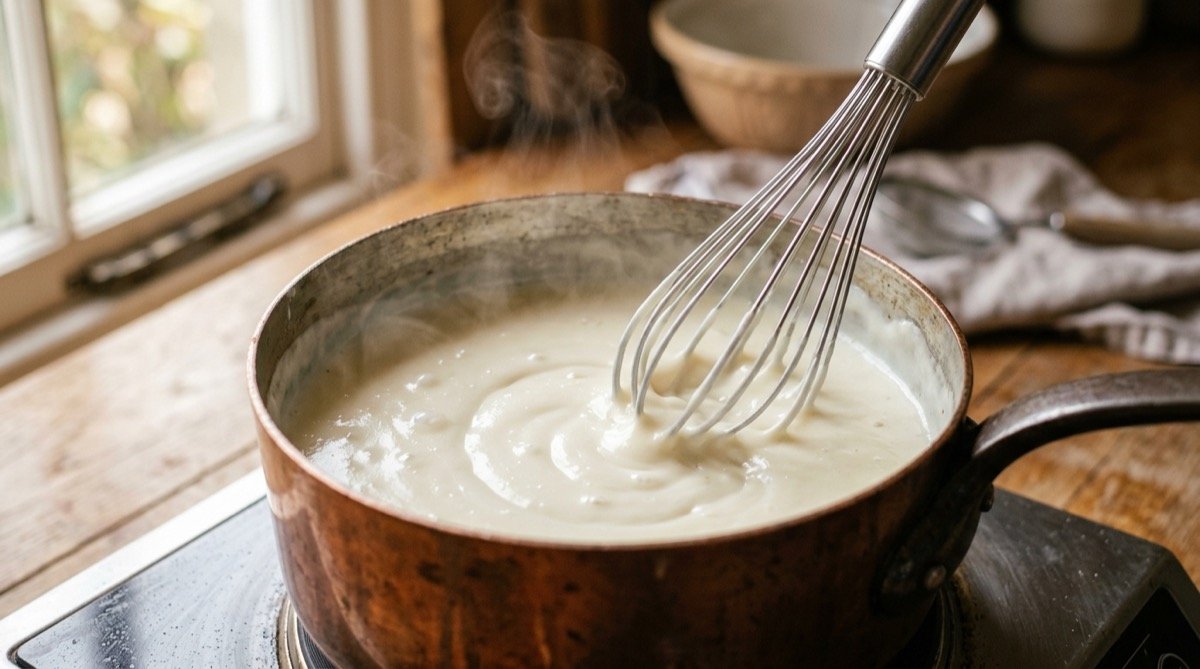
Demi-glace is a different pot. It brings espagnole and dark stock together and reduces them until the sauce naps. Glace de viande does not lean on espagnole. The body is the stock, taken past the point where a demi-glace would already be fit to serve. Cooks swap the names because both are dark, shiny and precious. The head chef should not swap them on the pass sheet. A demi-glace can coat a piece of meat as a sauce. A meat glaze is often too intense for that role, and you use it to deepen a jus. Know which ladle is in your hand before it touches the pan.
What it is not
| Gesture | What it does | What it does not do |
|---|---|---|
| Reduce dark stock | Naps, then gels when cold | Is not a bowl of broth |
| Go further than demi-glace | Body from the stock itself | Does not rely on espagnole |
| Fortify, do not flood | A spoon deepens a jus | Does not replace every sauce |
| Watch time and product | The cost is real without a figure | Does not excuse a scorched pot |
How it behaves on the pass
On the pass, glace de viande is a spoon from a pot you treat carefully. A little wakes a jus. More than the dish needs turns the plate heavy and one-note, because reduction concentrates everything you put into the stock, salt included. Taste the glaze before it touches the sauce. Many kitchens hold the salt back when the stock goes on, so the glaze stays usable at the end. That decision belongs in mise en place, not in a panic when the plate is called. A salty glaze is a costly pot that fights every sauce it enters, and you cannot dilute your way back to the flavour you wanted.
The head chef keeps the cost in view without inventing a number for it. Bones, the roast that colours them, the long simmer, the space on the stove, and the choice to push this stock further instead of using it as a fond: glace de viande asks for all of that. Then it asks for a cook who will not scorch the last stage. Scorch it and the expense goes in the bin. There is no honest shortcut that still gels and still tastes of the roast. If the service does not need that depth, do not make the glaze for pride. Pride is not a margin.
The guest meets meat glaze as shine and a long meat flavour that stays after the bite. They should not meet a sticky bitterness, and they should not meet added sweetness this gesture never asked for. Cold, in the fridge, a true glace de viande gels. If it stays loose when cold, you have a reduced stock, perhaps useful, but not the glaze you named on the board. Check that gel in mise en place before you promise the pass a pot you do not have. Naming it correctly is how the station, the costing and the plate stay in the same conversation. A wrong name spends the wrong pot.
How people search for it
People search glace de viande and meat glaze for the same concentrate: dark stock reduced until it naps and, once cold, gels. You will also see glace de viande recipe, meat glace, and meat glaze versus demi-glace. The versus matters. Demi-glace, demi glace and demiglace are espagnole plus dark stock, reduced until they nap. They are not this pot. A search that stops at a brown sauce you can ladle over steak has usually landed on demi-glace.
Frequently asked questions
What is glace de viande?
It is dark stock reduced until it coats a spoon and, once cold, gels. That gel is how you know the reduction has gone far enough to be a meat glaze. It is a concentrate for finishing other sauces, not a soup and not a powder stirred into hot water. It goes further than demi-glace.
How is meat glaze different from demi-glace?
Demi-glace is espagnole and dark stock reduced together until the sauce naps. Glace de viande is the dark stock itself, reduced further, until it gels when cold. One is a sauce you can build a plate on. The other is a concentrate you use with a careful spoon. The spellings demi-glace, demi glace and demiglace all belong to the first pot. They do not rename a meat glaze.
Why does a meat glaze gel in the fridge?
Because the reduction has concentrated what the bones gave the stock, far enough that the cold liquid sets instead of staying loose. If a pot you called glace de viande is still fluid when cold, it is a reduced stock, and it may still be useful, but it has not arrived. Check the gel in mise en place.
Why is the head chef wary of making it?
Because it spends bones, roast, stove space and a long simmer, and a scorch at the end throws that spend away. It is easy to make for pride when the menu does not need it, and easy to use with a heavy hand so every plate tastes the same. The cost is time and product. You do not need a figure on a sheet to see it.