Brown stock: what it is, and what it is not
Brown stock is bones and trim roasted, then simmered with vegetables, tomato, and herbs. Mahogany color, and the base of classic meat sauces.

Brown stock is a meat stock made from bones and trim that are roasted first, then simmered for hours with browned vegetables, tomato, and herbs. The color is a deep mahogany and the flavor is roasted. It is the base of classic brown sauces. It is not a white stock, which skips the roast, and it is not a demi-glace.
What brown stock is
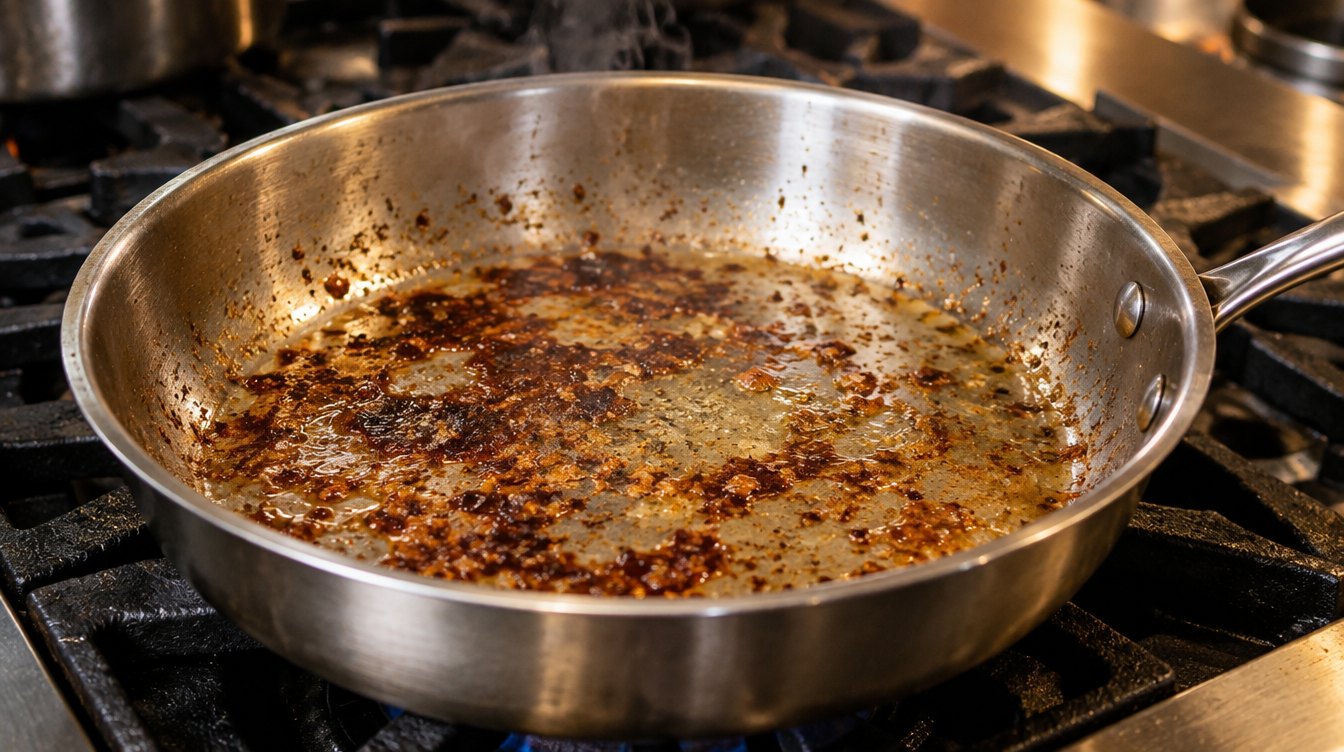
It is a stock, not a soup and not a sauce you nap on the plate as it comes from the pot. Bones with collagen, knuckle, shank, neck, or carcasses with a little meat left on, are roasted until the surface is deep brown. That roast is the Maillard reaction. The browned bits later dissolve into the liquid and give it the roasted taste a pale broth never has.
Then the bones go into cold water, barely covered, with a browned mirepoix, tomato, and a bouquet garni. The simmer is low enough that you see small bubbles, not a rolling boil. A hard boil emulsifies fat, clouds the stock, and beats up the colloids. You skim. You do not salt. A stock that will be reduced punishes any salt you add at the start.
People search brown stock and brown veal stock. Dark stock is the wording of the Spanish card, fondo oscuro. In an English kitchen the name on the prep list is brown stock.
How it is made
Roast the bones. Spread them so they are not piled. A pile steams. The Spanish fiche puts the tray at 200 to 220 °C for 40 to 60 minutes, turned once, until the color is an even deep brown and not burnt. Some kitchens paint a little tomato on the bones for the last minutes. That is color and acidity, not a different stock.
Brown the vegetables. Onion, carrot, and celery, in equal parts, cooked until they take color. Leek if you want it sweeter, a little parsnip if you want it wilder. Tomato, paste or fresh, goes in when the vegetables start to brown, and it cooks for a minute or two so the raw acidity leaves. Then the pot: bones, vegetables, bouquet garni of thyme, bay, and parsley stems, and a few peppercorns.
Simmer, skim, strain. A bare simmer. On this card the range from the Spanish fiche is 6 to 10 hours, until the bones are fragile and the liquid has reduced. Skim the foam. Strain through a fine chinois without pressing the solids. Pressing pulls bitterness. Chill fast in an ice bath. The next day the fat is a solid cap you lift off, and a good stock gels.
A pressure cooker can cut the time to about 2 or 3 hours. The Spanish fiche already says the clarity and the fineness are usually poorer. Past about 12 hours the same fiche warns that the stock starts to pull bitter notes from the bone. That is the working limit here, not a new measurement.

What it is not
| Brown stock | White stock | Fish fumet | |
|---|---|---|---|
| Bones | Roasted until deep brown | Blanched or started pale, not roasted | Fish bones, not roasted |
| Color | Mahogany | Pale gold | Light |
| Tomato | Usual | Left out | Left out |
| What it feeds | Brown sauces, braises | Veloutés, clear soups | Fish sauces |
| Salt | None at the start | None at the start | None at the start |
A fish fumet is the pale stock of fish bones. Roasting those bones the way you roast veal is how a fumet turns bitter. Do not borrow the brown-stock roast for it.
A demi-glace is not the stock. It is the sauce you build from brown stock and reduce until it naps. A glace de viande is the stock reduced further, until it gels when cold. The stock is the starting liquid. The other two are what you do with it.
White stock is the pale sibling. The bones are not roasted, tomato stays out, and the flavor stays quiet so a velouté or a clear soup can carry something else. The contrast is the roast.
On the pass
You do not drink brown stock from a cup. A ladle moistens a braise in place of water or a salty prepared broth, and the gelatin helps the sauce bind as the meat cooks. A spoon of the reduced sauce, not of the raw stock, finishes a grilled steak.
Espagnole, the classic brown mother sauce, is brown stock thickened with a dark roux and reduced. If your spec says espagnole, the stock is the liquid and the roux is a separate step. Do not pretend the stock already has the body of the sauce.
Pepper sauces, mushroom sauces, and the jus under a roast all start here, then take cream, butter, or wine at the end. Game, venison or wild boar, is where a brown stock does the most work: it carries the roasted note and softens the iron taste. Season after the reduction, not in the stockpot.
Mistakes
A pale roast. Light bones make a flat stock. Wait for deep brown. Stop before black. Black is bitter, and it is the Maillard reaction pushed too far.
Too much water. The stock should start concentrated. A pot you drown will need a reduction so long it turns bitter before it tastes of anything.
A rolling boil. The turbulence clouds the stock and beats the fat back in. If it is boiling hard, the heat is wrong. Small bubbles, and skim.
Pressing the solids in the strainer. Let them drain. Squeezing the bones and vegetables is how bitterness gets into an otherwise clean stock.
Cooling it on the counter. A stock that sits warm for hours is a growth medium. Ice bath, then the refrigerator. Lift the fat the next day.
Salting it because the spoon tastes thin. It is thin on purpose. Salt arrives in the sauce, after you know how far it will reduce.
Frequently asked questions
Why are the bones roasted for a brown stock? Dry heat on the bones is the Maillard reaction, and some of the sugars caramelize. That crust is what later dissolves into a roasted, meaty stock. Skip the roast and you have a pale stock, even if you simmer it all day. The Spanish card calls this fondo oscuro. In English kitchens the search is brown stock.
Is brown stock the same as demi-glace? No. Brown stock is the unsalted liquid. Demi-glace is a sauce built from that stock, reduced until it naps a spoon. A spoon of demi-glace finishes a steak. A ladle of brown stock is the base you reduce, or the liquid in a braise. The demi-glace card is the one that defines that sauce.
How long should a brown stock simmer? On this card the working range, taken from the Spanish fiche, is a bare simmer for 6 to 10 hours, depending on the bones and the batch. A pressure cooker can shorten that to about 2 or 3 hours, with a coarser result. Past about 12 hours the stock starts to pull bitter notes from the bone.
Can you make brown stock without tomato? Yes. You lose some of the red-brown color and the acidity that balances the fat in the finished sauce. Tomato also brings glutamate. Without it the stock is still a brown stock if the bones were roasted. You may need a deeper roast to reach the same color.
Can a bouillon cube stand in for brown stock? In a rush, a commercial stock will get you through a service, and the plate will show it. Those products are usually salty, low in gelatin, and built to one flavor. A brown stock is not salted, because you will reduce it. If you use a prepared one, season at the end, from the label, not from habit.
What is the difference between brown stock and white stock? Brown stock roasts the bones until they are deep brown, and it usually takes tomato. White stock blanches or starts the bones pale, skips the roast, and stays light. One is for brown sauces and braises. The other is for veloutés and clear soups. A fish fumet is a third thing: bones, not roasted.