Deglazing: what it is, and what it is not
Deglazing lifts the browned bits in a hot pan with a splash of liquid, so the fond becomes a sauce. It is not the reduction that follows.
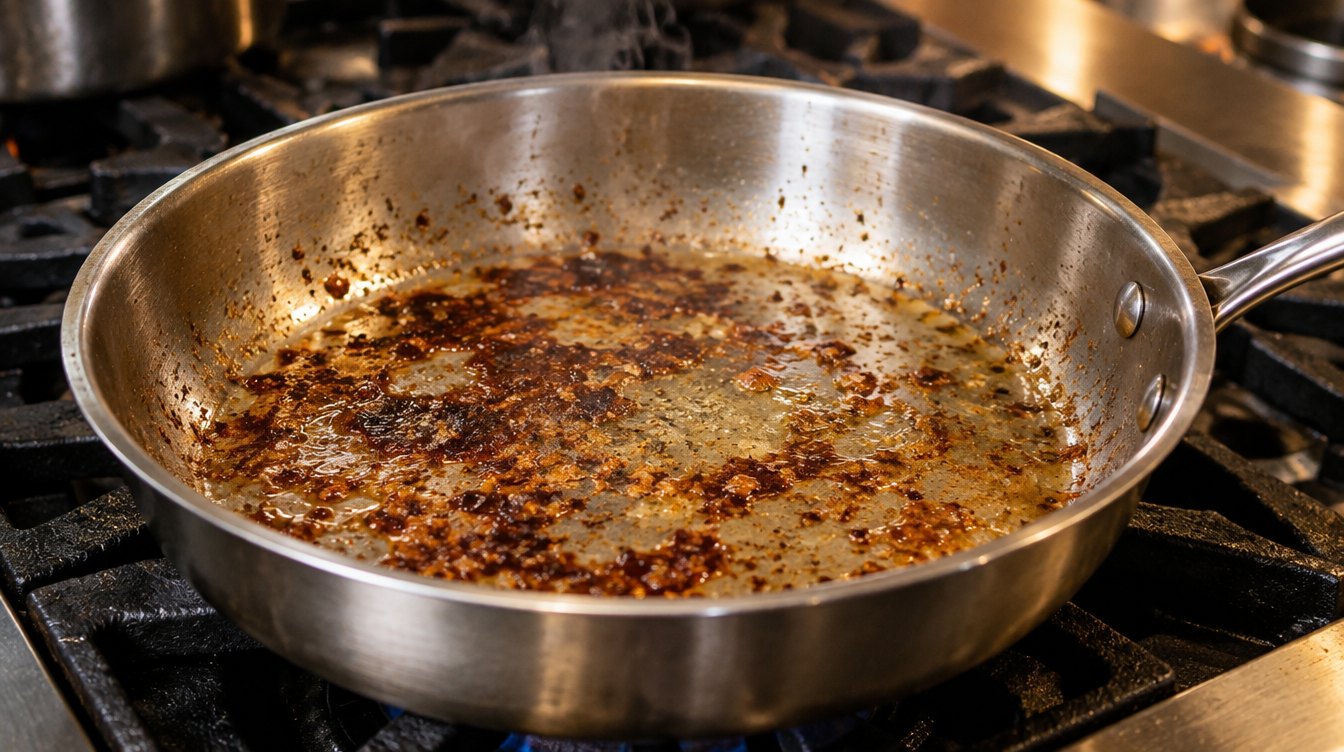
To deglaze is to pour a liquid into a hot pan after the food comes out, then scrape the browned bits off the metal so they dissolve into a sauce. Those bits are the fond. The liquid is usually wine, stock, or vinegar. Deglazing is not a reduction, and it is not a second Maillard step.
What the gesture is
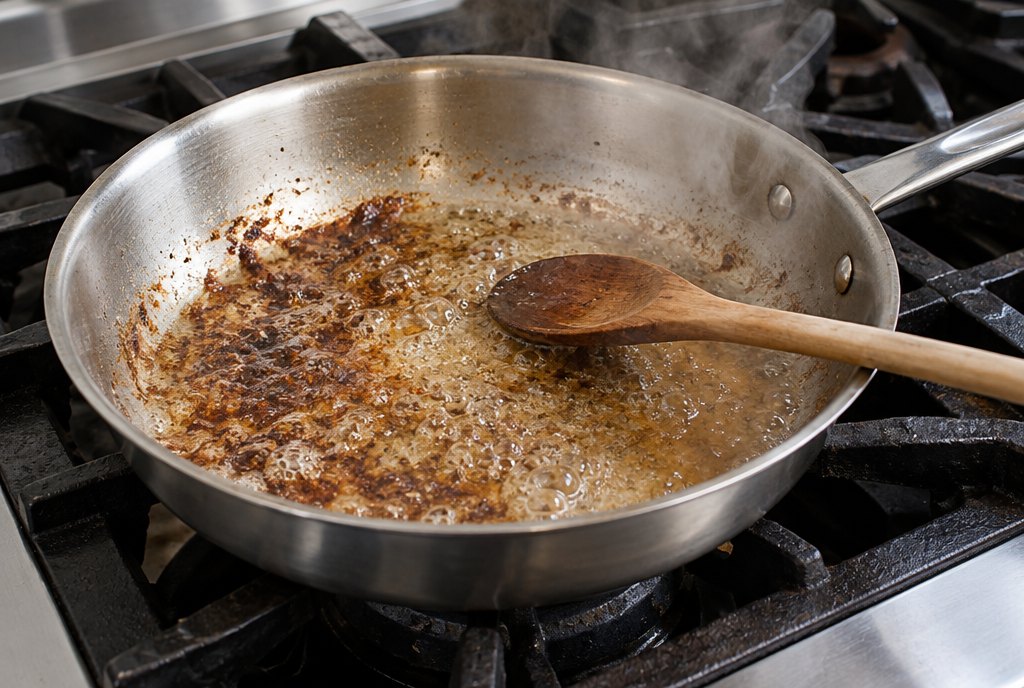
The food comes out. The pan stays on the heat, with a film of fat and a coat of brown stuck to the steel. That coat is the fond. You pour in a liquid that boils at once, and you scrape with a wooden spatula until the metal looks clean and the liquid has taken the color. That is the whole technique. Everything after it is a sauce decision.
Cooks search deglaze, deglazing a pan, and pan sauce. The Spanish card calls the verb deglasar, and the slug on that card is deglasear. The French verb is déglacer. In an English kitchen the line just says deglaze.
The fond only exists if something browned. A steamed fillet leaves nothing to lift. A steak, a chicken thigh, a dice of mushroom, or a tray of roasted bones leaves the crust the Maillard reaction built. Deglazing does not create that crust. It collects it.
The fond, and the liquid
Pull the food. If the pan is a lake of fat, pour most of it off and leave a thin coat. Fat helps the sauce emulsify later. A pool of it makes the sauce greasy and hides the fond.
The pan should still be hot. Cold steel and a splash of wine give you a puddle, not a boil, and the fond stays put. Tilt the pan, pour at the edge if the wine might flare, and scrape as soon as it bubbles. Cover the fond. Do not drown the pan. A splash that boils hard is enough. A ladle of stock poured in without a thought tastes of dilution.
Then you choose whether to reduce. Boiling the liquid down concentrates what you just dissolved. That second job is a reduction. Stop when the spoon tastes of the sear and the liquid starts to thicken. Push it further and salt, if any was already in the food, comes forward, and a bitter edge shows up.
Which liquid
| Liquid | What it brings | Where it usually goes |
|---|---|---|
| Red wine | Tannin, dark fruit | Red meat, braises |
| White wine | Acid, a lighter fruit note | Poultry, pork, fish |
| Brown stock | Body, roasted meat | Steak sauces, jus |
| White stock | Body without the roast | Pale pan sauces, a risotto base |
| Vinegar or a gastrique | Sharpness | Dishes that need sweet and sour |
| Water | Nothing but a solvent | When the fond is the only flavor you want |
| Beer or cider | Malt, or apple acid | Rustic braises, pork |
A gastrique is not a deglaze by itself. It is caramel dissolved in vinegar, often made ahead, and you can use a spoon of it to deglaze or to finish. Do not confuse the two cards.
Brown stock brings gelatin and the roast. White stock brings gelatin without that roast, which is what you want under a pale sauce. A salty cube does the dissolve and then fights you when the liquid reduces. If that is what you have, season at the end, from the label.
Brandy and other spirits deglaze the same way. The alcohol flashes off if the pan is hot. What stays is the flavor of the spirit, not the burn. If you flambé, that is a show on top of the same dissolve. The scrape still has to happen.
On the pass
A pan sauce is deglaze, then a short reduction, then a finish. Shallot in the fat before the liquid, wine, a ladle of stock, reduce, then cold butter or a spoon of cream off the heat. The butter is monté, not a deglaze. The deglaze was the wine.
The same gesture cleans a roast tray. Bones and vegetables come off, wine or water goes onto the hot tray, and you scrape the glued juices back into the pot. That is how a brown stock picks up the part of the roast that never made it into the water. Skip it and the best of the tray stays on the metal.
A risotto toasted in fat, then wetted with wine until the wine disappears, is the same dissolve on rice, not on a steak fond. The Spanish risotto card already points at deglazing for that splash. The wine’s job is acid and a lift. It is not a sauce yet.
Pepper sauces, mushroom sauces, and a simple jus all pass through this moment. If the fond is already in a demi-glace you bought or reduced yesterday, you may not need to deglaze at all. The work was done in the stockpot. Do not deglaze out of habit when the pan is clean.
Mistakes
Deglazing a black pan. Carbon dissolves too. The sauce tastes burnt. Wash the pan.
A cold pan. The liquid sits. The fond does not move. Heat first, then the splash.
Too much liquid. You can reduce a flood, and you will be standing there while the sear you wanted boils away into steam. Start small. Add more only if the fond is still stuck and the pan is dry.
Not scraping. A boil without a spatula leaves half the fond on the steel. The corners and the rim count.
Reducing a salty deglaze on autopilot. Wine is not salty. A prepared stock often is. Taste as it tightens. Stop before it turns sharp.
Calling the butter the deglaze. Mounting cold butter finishes a sauce. It does not lift a fond. If you add butter before the metal is clean, you are emulsifying fat over a dirty pan.
Frequently asked questions
What are you actually dissolving when you deglaze? The fond, also called the sucs: browned juices stuck to the pan. They are proteins, sugars, and the products of the Maillard reaction, concentrated because the water cooked off. They are not burnt scrap. A liquid and a spatula lift them. Leave them in the sink and you throw the sear away.
Can you deglaze with water? Yes. Water dissolves the fond. It does not add acid or a flavor of its own, so the sauce tastes thinner than one built on wine or stock. Use it when that is all you have. Wine, stock, or a little vinegar do more work for the same gesture.
What if the fond is black? Stop. Black fond is bitter, and deglazing will not redeem it. The color you want is deep brown, not carbon. If the pan is burnt, wash it and start the sauce from stock. Scraping charcoal into the wine only spreads the bitterness.
Is deglazing the same as reducing? No. Deglazing is the moment the liquid hits the hot pan and you scrape. Reducing is what you do next, if you do it: you boil that liquid down until the flavor concentrates. You can deglaze and then stop. A reduction that never lifted a fond is a different job. The reduction card is the one that defines that second step.
Does a nonstick pan deglaze? Poorly. The fond sticks to bare steel or cast iron. A nonstick surface is built so food does not stick, which is the opposite of what you need. Scraping it also wears the coating. Use a pan that can take a fond.
Is deglazing a second Maillard reaction? No. The Maillard reaction already happened on the dry, hot metal. Deglazing dissolves what that reaction left behind. Adding liquid stops the browning. It does not start a new one. If the pan is still browning after the splash, you did not add enough liquid, or the heat is still too high and the fond is heading toward black.