What is risotto? Definition and how it is made
What is risotto: rice toasted in fat and cooked slowly with hot stock until creamy. Which rice to use, the mantecatura, and the usual mistakes.
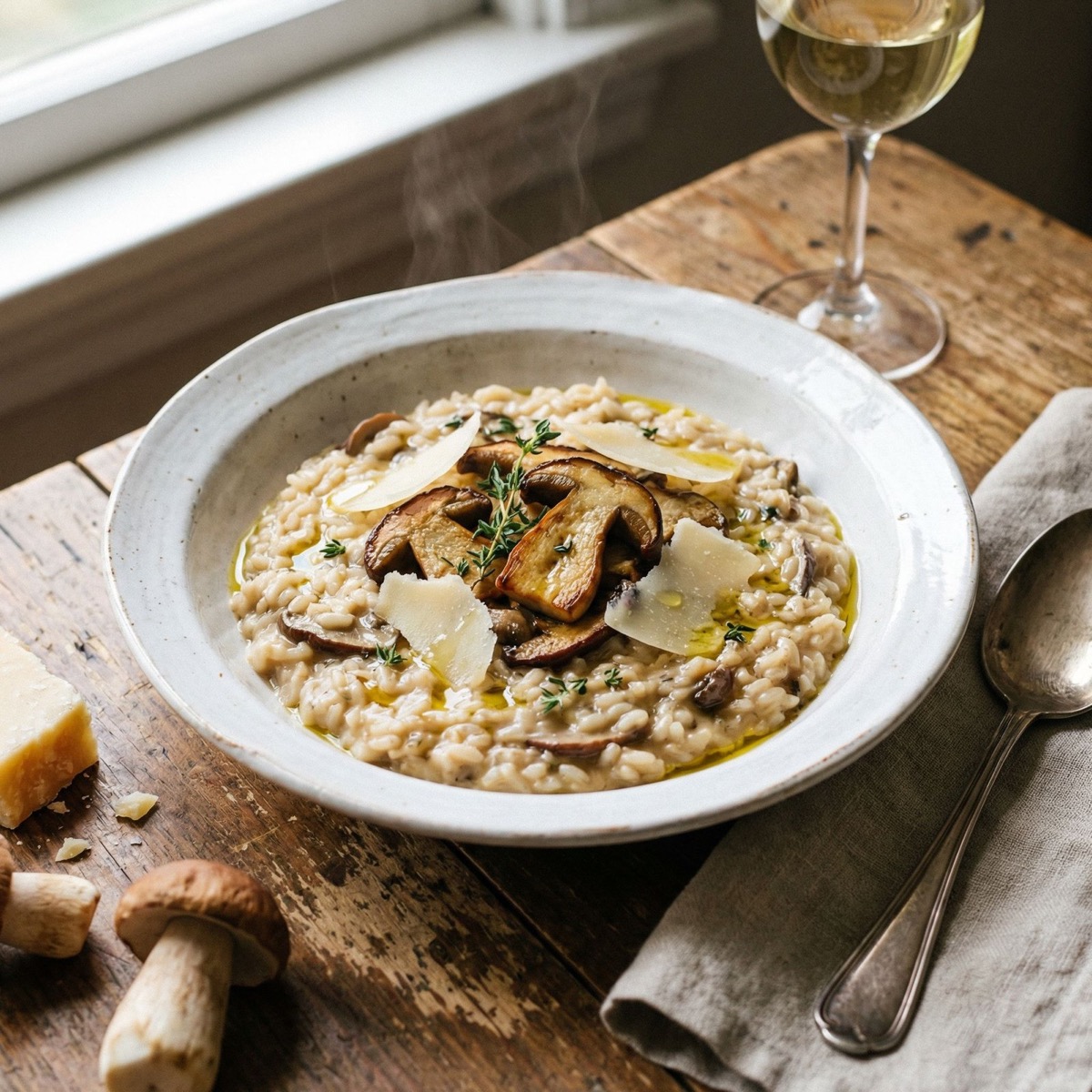
Risotto is an Italian rice dish. The rice is toasted in fat and cooked slowly with hot stock, added a little at a time while you stir. The grain releases starch and the dish turns creamy, with each grain whole and al dente. It is finished off the heat with cold butter and cheese, a step called the mantecatura.
What risotto is
When someone asks what risotto is, the short answer is this: rice cooked in one particular way. The ingredient does not define it. The method does. It can carry mushrooms, saffron, squash, or nothing more than butter and cheese. If the rice is toasted, wetted a little at a time, and stirred, it is a risotto.
The name comes from riso, rice, with the suffix -otto. It is spelled with one s and two t’s, and in Italian it is said ree-ZOT-toh, with the weight on the middle syllable.
It is not the same as other rice dishes.
| Dish | How it cooks | Result |
|---|---|---|
| Risotto | Toasted rice, stock in rounds, stirred | Creamy, grain al dente, served in a shallow bowl |
| Paella | Rice spread thin in a paella pan, not stirred | Separate grains and, when it goes well, socarrat on the bottom |
| Brothy rice | Plenty of stock from the start | Loose and soupy, closer to a soup |
The creaminess of risotto does not come from cream. It comes from the starch the rice releases as the grains rub against each other in the pot, and from the cold fat beaten in at the end.
Where it comes from
Risotto is a dish of northern Italy. Rice has been grown in the Po valley for centuries, and that is where the dishes of Lombardy, Piedmont, and the Veneto come from. The best known, risotto alla milanese, carries saffron and, in the classic recipe, bone marrow.
Toasting the grain, the tostatura, and the final binding, the mantecatura, are the two moves that set it apart from any other rice dish. They keep their Italian names because they are the craft of the dish.
The rice: carnaroli, arborio, and vialone nano
The rice is in charge. You need a medium or short grain with starch on its surface.
Carnaroli. It holds up best. It overcooks less if service runs long, and it keeps the grain whole. It is the usual choice in professional kitchens.
Arborio. The easiest to find. It releases starch quickly and overcooks sooner, so it needs more attention at the end.
Vialone nano. Typical of the Veneto. It absorbs stock well and suits a looser risotto, the kind served all’onda, in a wave.
Bomba rice, the one used for paella, has another purpose: it releases little starch and keeps the grains separate. With it you get rice in broth, not a risotto. A long grain, the kind used for a side dish, does not bind the same way either.
How it is made
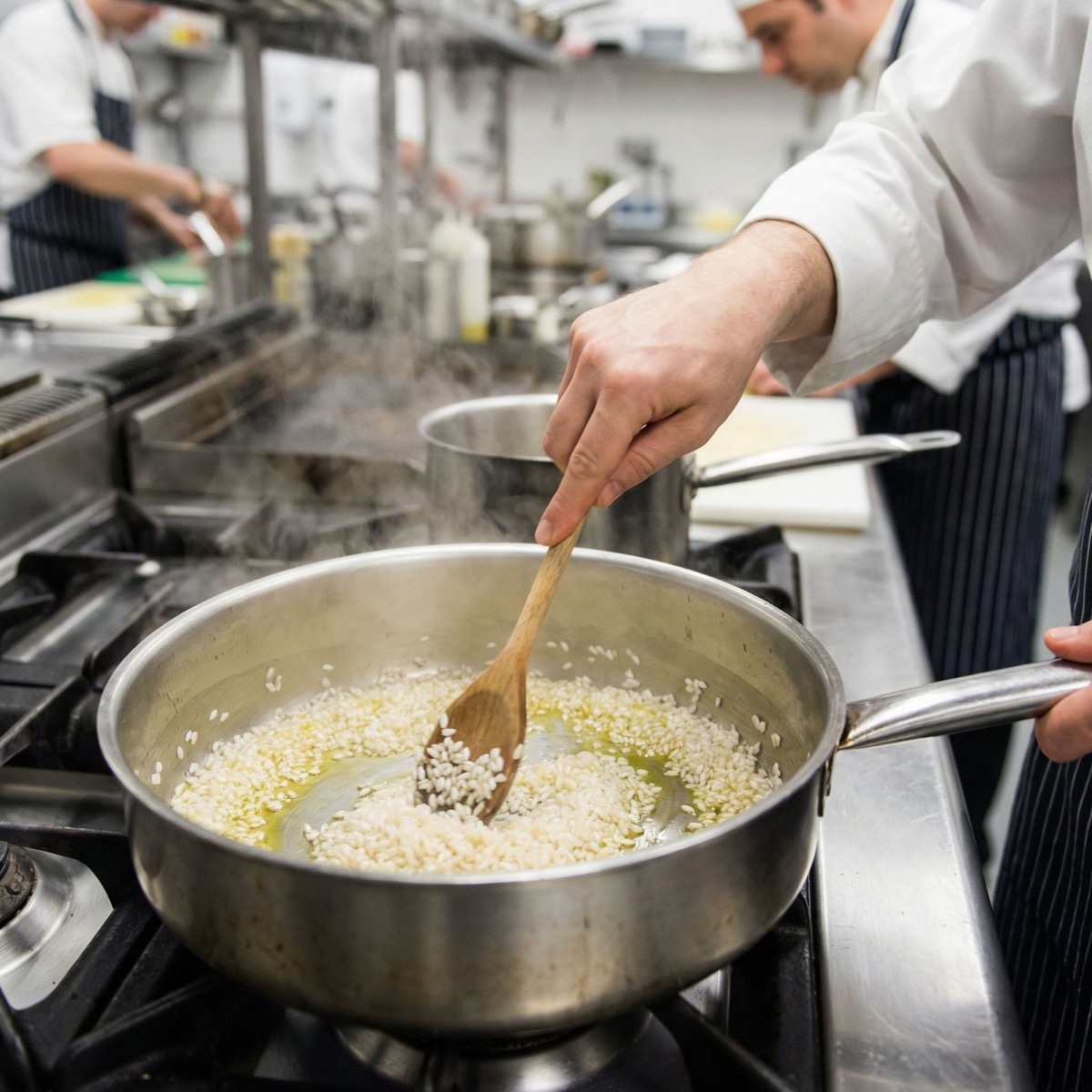
As a reference, a first-course plate takes about 80 g (3 oz) of rice per person. The amount of stock changes with the grain and the heat: start from about three parts stock to one part rice and adjust.
1. Make the base. Finely chopped shallot or onion, in butter or oil, over gentle heat until translucent. It should not take color.
2. Toast the rice. Add the dry rice and stir for a minute or two, until the grain is hot and the edges look translucent. That is the tostatura. It seals the surface so the grain takes the stock without falling apart.
3. Wet it with white wine. A splash of dry white wine, cooked off almost completely. It is a quick reduction: the wine lifts anything stuck to the pot and brings acidity to the dish.
4. Add the hot stock, little by little. One ladle at a time, stirring, and another ladle when the last one has almost disappeared. The stock has to be hot: cold stock stops the cooking every time it goes in. A good homemade stock shows in the plate, and so does a bouillon cube. Unsalted or lightly salted stock keeps you from overdoing it, because the cheese brings salt at the end.
5. Cook it to the point. Between 16 and 18 minutes from the first ladle, depending on the rice. Take out a grain and bite it: it should be tender outside, with a little firmness at the center, al dente. The dish should stay fluid, not dry.
6. Mantecatura. Off the heat, cold diced butter and grated parmesan. Beat it hard, cover for a minute or two, and serve. It is close to mounting a sauce with butter, monter au beurre, with the rice starch helping the emulsion hold. A well-made risotto spreads on its own across the plate, all’onda, and does not sit there as a block.
Common mistakes
It turns pasty. It was overcooked, or the rice was long grain or very old. Take risotto off a touch before it looks ready: it keeps cooking in its own heat.
Hard inside and soft outside. The heat was too high and the stock evaporated before it hydrated the grain. Lower the heat and add hot stock.
It does not bind. The rice was rinsed, or it was not stirred enough, or all the stock went in at once. Without the grains rubbing together, the starch does not come out.
It is bland or salty. The cheese and the stock already carry salt. Adjust the salt at the end of the mantecatura, not before.
It cools and sets. Risotto does not wait. It goes to the plate as soon as it is ready, and it is served hot, in a shallow bowl.
At service
Risotto is a dish for the pass, but a professional kitchen does not cook every plate from scratch. A common practice is to cook the rice to about two thirds of its point, spread it on a tray so it cools fast, and finish each portion to order, with stock and the mantecatura. It saves minutes at the pass and holds through service. It is well-planned mise en place: the base and the stock ready, the plate made to order.
On cost, the rice is cheap. The expensive part is next to it: the parmesan, the saffron, the mushrooms, or the seafood. That is why risotto costing is done per portion, with the trim loss of each ingredient, not by eye.
Variations and what to serve with it
Alla milanese. Saffron, meat stock, and parmesan. The classic recipe adds bone marrow.
Ai funghi. With mushrooms, the most repeated version outside Italy.
Al nero di seppia. With cuttlefish ink, typical of the Veneto, and black.
Alla zucca. With squash, an autumn dish of northern Italy.
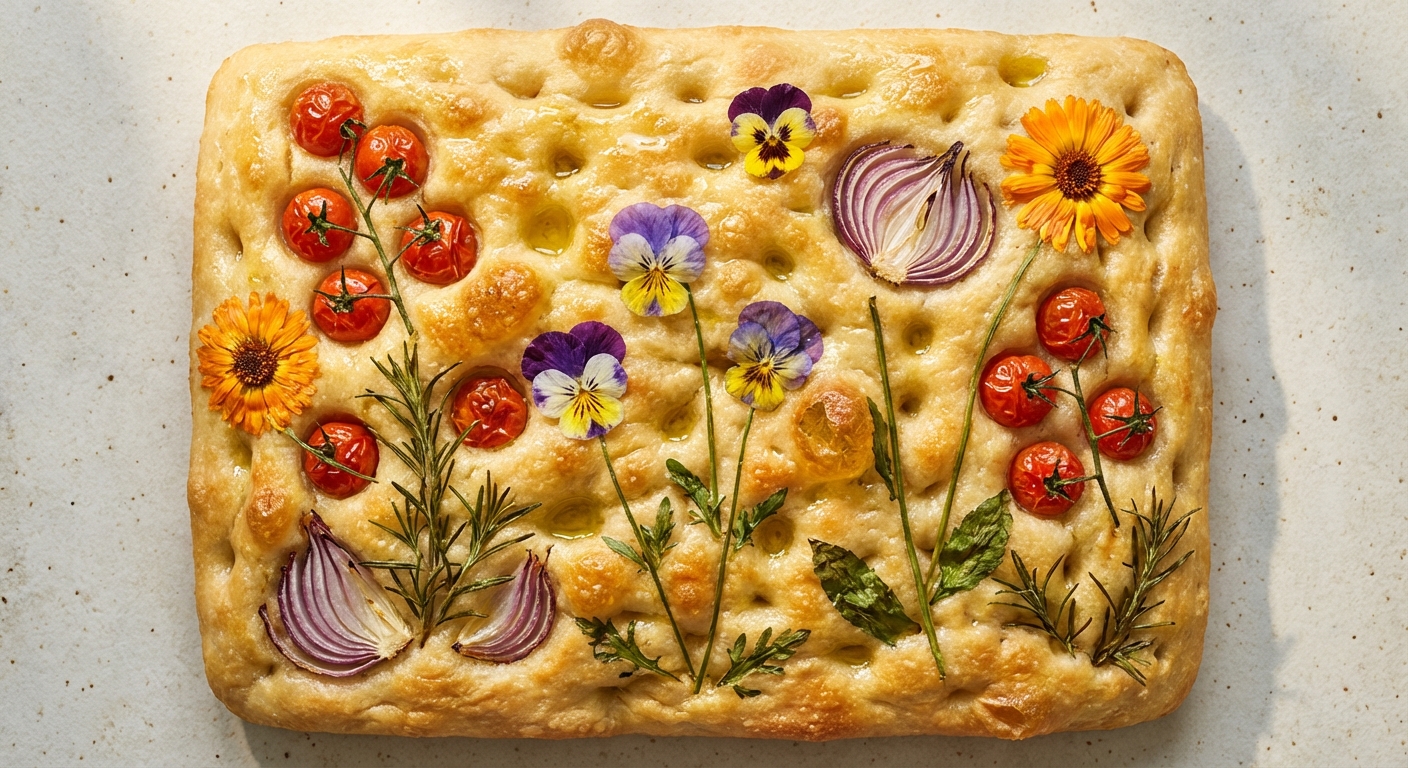
Risotto goes well with a dry white wine, the same one used in the cooking. If your menu is Italian and you want bread on the table, the focaccia belongs to the same repertoire.
Frequently asked questions
What is risotto? It is an Italian rice dish. The grain is toasted in fat and cooked with hot stock added a little at a time, while you stir. That releases starch, so the dish turns creamy and the rice stays al dente. At the end it is bound off the heat with cold butter and cheese.
How do you pronounce and spell risotto? In Italian it is ree-ZOT-toh, with the stress on the middle syllable. It is spelled with one s and two t’s: risotto. Rissoto and risoto are typos. The word comes from riso, rice.
What rice do you use for risotto? A medium or short grain that releases starch: carnaroli, arborio, or vialone nano. Carnaroli is the most forgiving. Bomba rice, made for paella, releases less starch, and a long grain will not give the same creaminess.
What is the difference between risotto and a brothy rice? Risotto is cooked with stock added in rounds, and it is stirred so the starch binds the dish. A brothy rice has much more liquid from the start and stays looser. Risotto is creamy, but each grain stays whole.
Do you rinse the rice for risotto? No. The starch on the surface is what makes it creamy. Toast the rice dry, straight from the bag.
What is the mantecatura? It is the last step. Once the rice is done and the pot is off the heat, you beat in cold diced butter and grated cheese. That binds the dish and gives it shine. Let it rest for a minute or two before serving.