Monter au beurre: mount a hot sauce with cold butter
Monter au beurre means whisking cold butter into a hot sauce, off a hard boil, for shine and roundness. It is not beurre blanc, and it is not beurre manié.
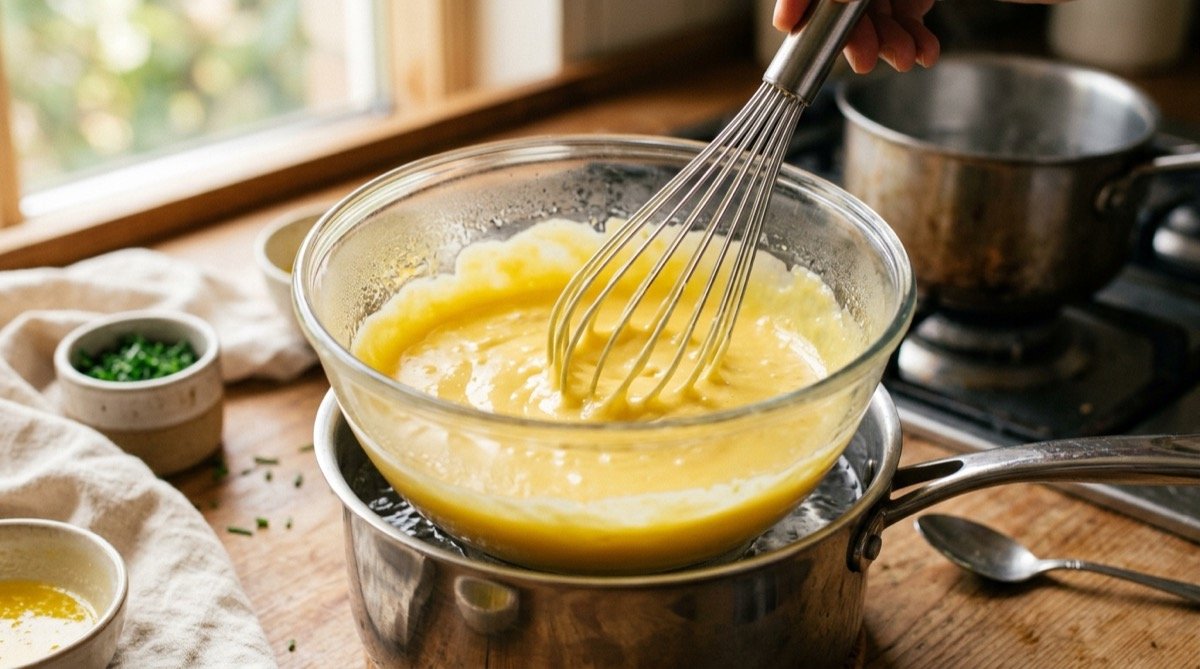
Monter au beurre means you whisk cold butter into a hot sauce, off a hard boil, for shine and roundness. It is a finish on the pass, not a new sauce. It is not beurre blanc, and it is not beurre manié, which carries raw flour. You polish a sauce you already have.
What it is, on the line
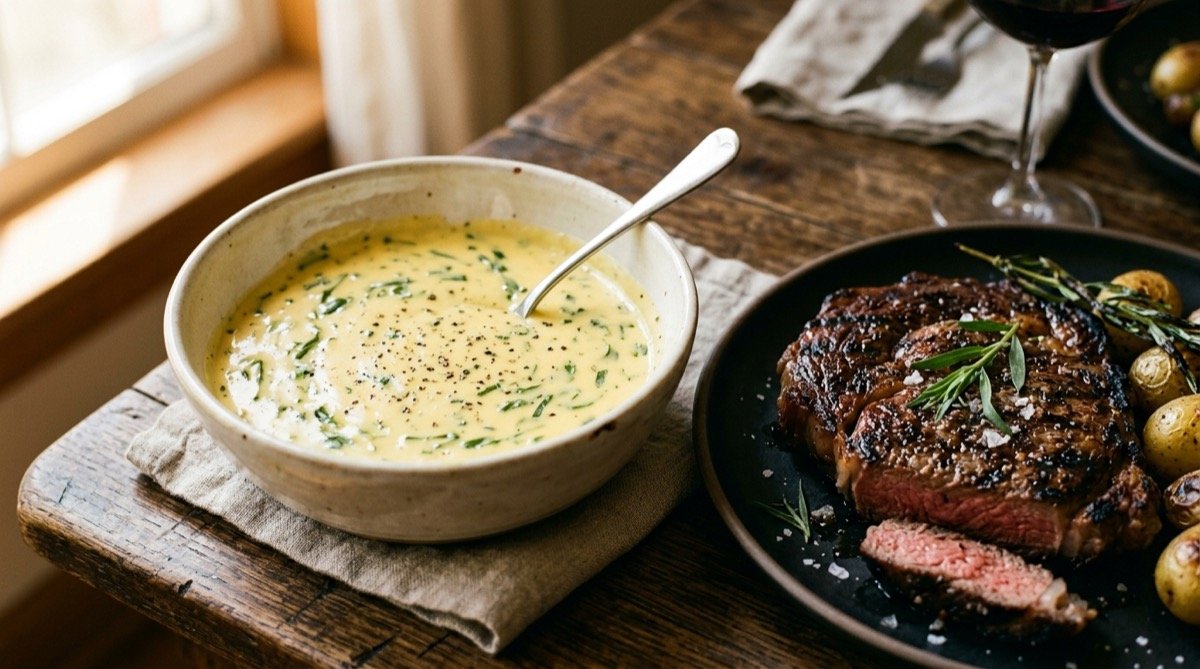
Mount with butter when the sauce is already itself. The pan is hot, the reduction tastes finished, and the body is close. You take cold butter and whisk it in off a hard boil, in pieces the sauce can take. Monter au beurre is that whisk. The butter should disappear and leave a shine, a rounder mouth, and a little more cling. If the pan is roaring, the butter splits out as fat and the sauce looks greasy. Quiet heat, a constant whisk, then stop. The gloss is the signal, not a bigger lump of butter.
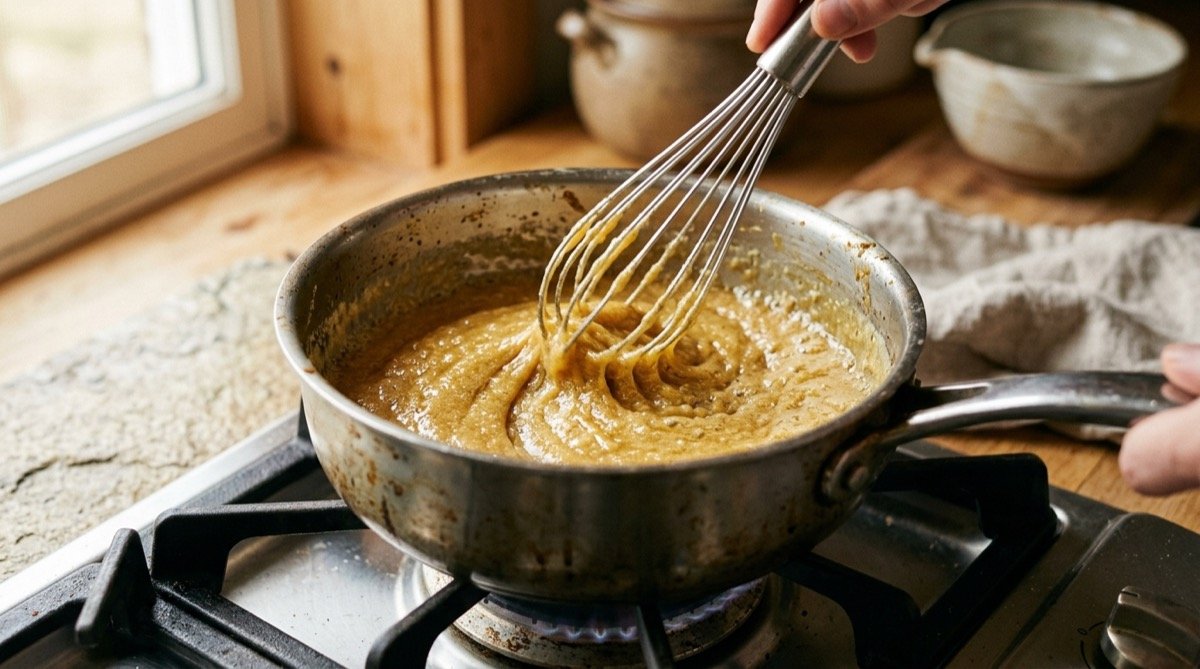
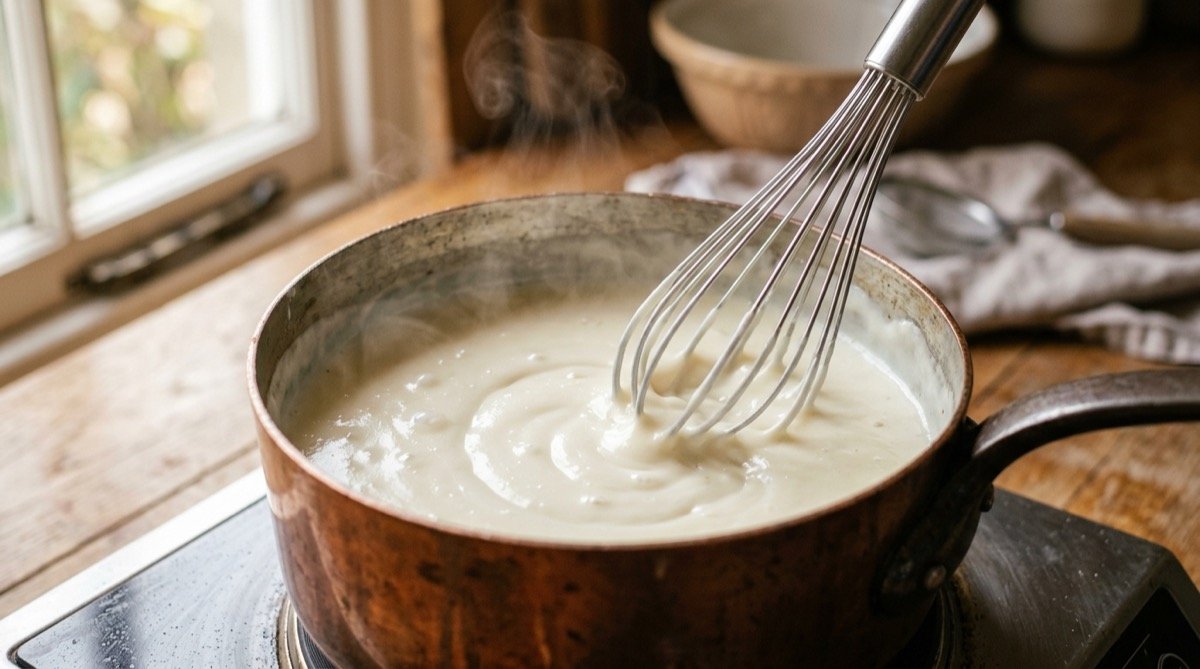
This is not beurre blanc. Beurre blanc starts with shallot, white wine and vinegar, and the butter is the body of that sauce. Monter au beurre starts with a sauce you already have, and the butter is the last polish. It is also not beurre manié. There is no flour in the butter. If you need starch, you are in a different gesture. Cooks blur the three names because butter is in all of them. The head chef should not let that blur reach the pass. A mounted jus, a beurre blanc and a manié-tightened stew are different plates.
What it is not
| Gesture | What it does | What it does not do |
|---|---|---|
| Whisk in cold butter | Adds shine and roundness | Does not go into a hard boil |
| Finish a sauce you have | Polishes the pan on the pass | Is not beurre blanc |
| Butter only, no flour | Gloss without starch | Is not beurre manié |
| Send it straight away | The gloss stays with the plate | Does not hold through a long wait |

How it behaves on the pass
On the pass, monter au beurre is one of the last things your hands do. The plate is called, the sauce is in a small pan, and you have a moment to make it look alive. Cold butter from mise en place, not a warm block that is already soft and oily, goes in piece by piece. You whisk until the surface turns glossy and the flavour tastes rounder, then you send it. Hold the sauce and the gloss dies, or the butter and the liquid let go of each other. This finish waits for the guest who is already at the table.
The margin lives in how much butter you mount, and in whether the sauce needed it. Butter is a store you can burn through, plate after plate, until the dish carries more fat than it was written for. The head chef watches that habit. A sauce that is already rich does not need a heavy mount to taste complete. A sauce that is sharp or thin in flavour may need the roundness. Taste before you add, and taste after the first piece. Mise en place is cold butter, ready for the dishes you will actually mount, not a tub you attack because the plate looks bare.
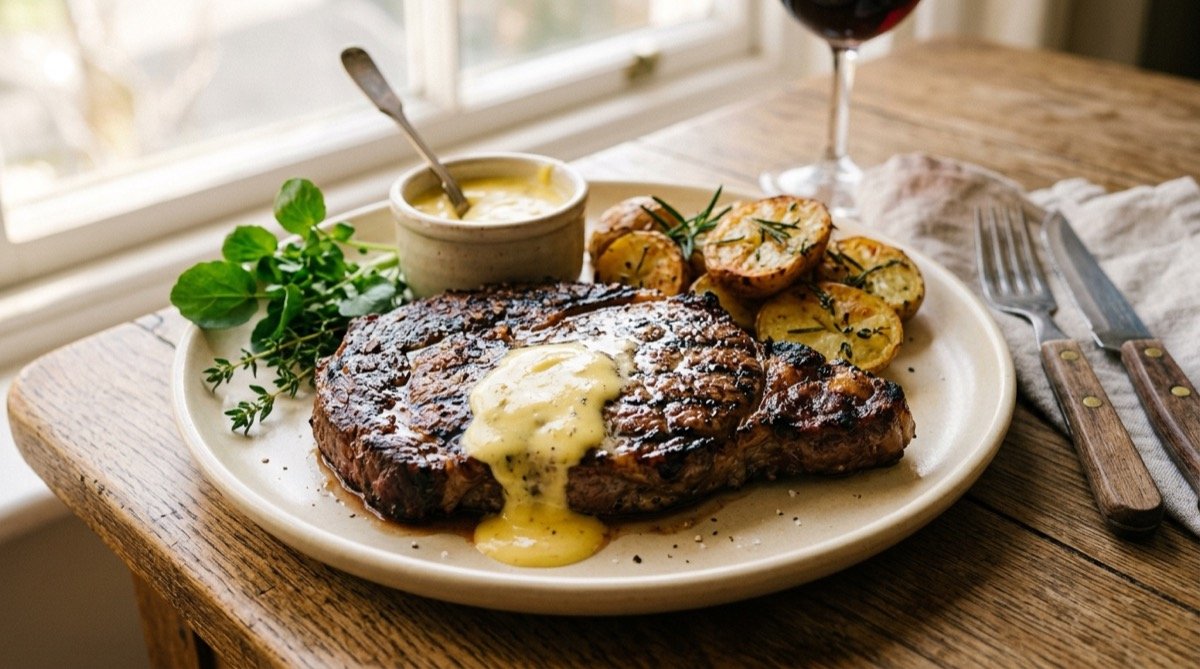
The guest sees shine before they taste roundness. A mounted sauce catches the light on the meat and smells of butter without tasting only of butter. Overdo it and the plate feels heavy, and the stock and the reduction step back. Skip it on a dish that was written with a mount, and the sauce looks dull and the flavour stays angular. Tell the station which sauces get mounted and which do not. Consistency across the pass is worth more than one brilliant plate the next cook cannot repeat. Name the gesture when you hand the pan over.
How people search for it
People search monter au beurre and mount with butter for the same finish: cold butter whisked into a hot sauce, off a hard boil, for shine and roundness. You will also see mount a sauce, monter au beurre technique, and finish with butter. Do not let those searches land on beurre blanc or on beurre manié. One is its own emulsion of shallot, wine, vinegar and butter. The other is raw flour in soft butter. This gesture has no flour and no separate reduction.
Frequently asked questions
Is monter au beurre the same as beurre blanc?
No. Beurre blanc is a sauce in its own right: shallot, white wine and vinegar, reduced, then mounted with cold butter. Monter au beurre takes a sauce you already have and whisks cold butter into it, off a hard boil, for shine and roundness. There is no new acid base. If you wanted the pale butter sauce, say beurre blanc. If you wanted a last polish, say mount it.
Is mounting with butter the same as beurre manié?
No. Beurre manié is soft butter and flour in equal parts by weight, kept raw and added to tighten. Monter au beurre has no flour. The butter is there for gloss and a rounder flavour, not for starch. If the sauce is thin in body and you need it to cling, the raw paste is the other gesture.
Why must the butter be cold, and the pan off a hard boil?
Cold butter melts into the sauce as you whisk, instead of collapsing into oil the moment it lands. A hard boil pushes the fat back out, and the sauce looks greasy on the plate. Keep the pan hot but quiet, add the butter in pieces, and stop when the surface shines.
Can you mount every sauce on the menu?
You can, and that is how the margin disappears. Butter on every plate, whether the dish was written for it or not, turns a finish into a habit. Taste first. A sharp or thin-flavoured sauce may want the roundness. A sauce that is already rich may only want a small piece, or none.