Nap a sauce: what nappé means on the spoon
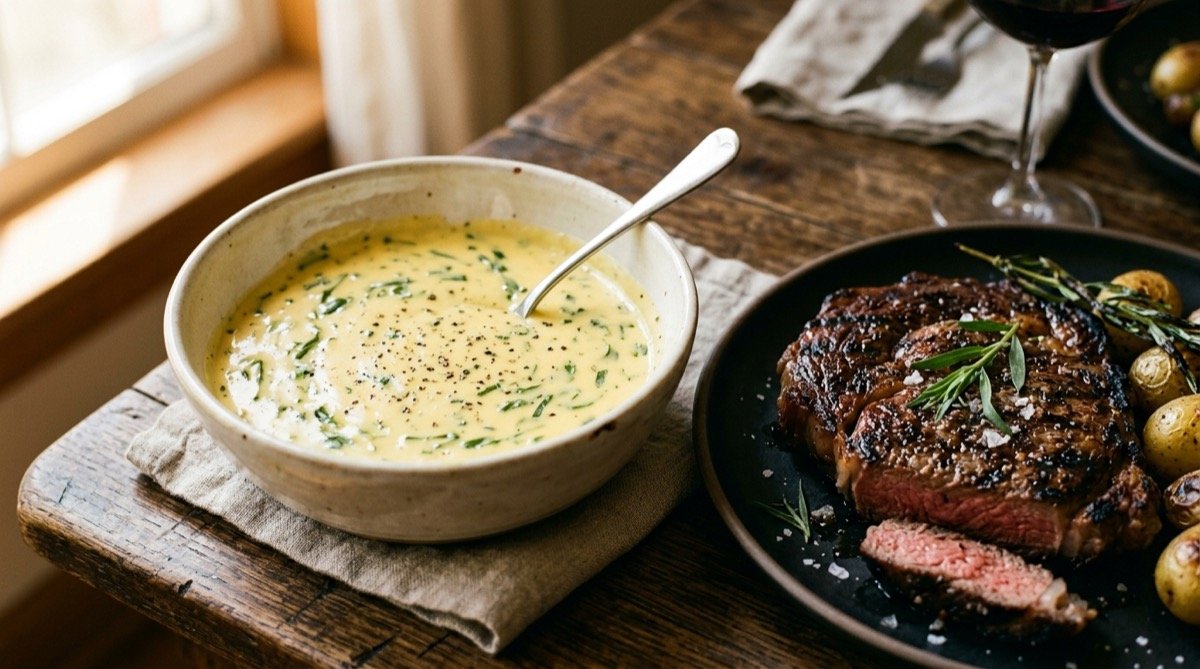
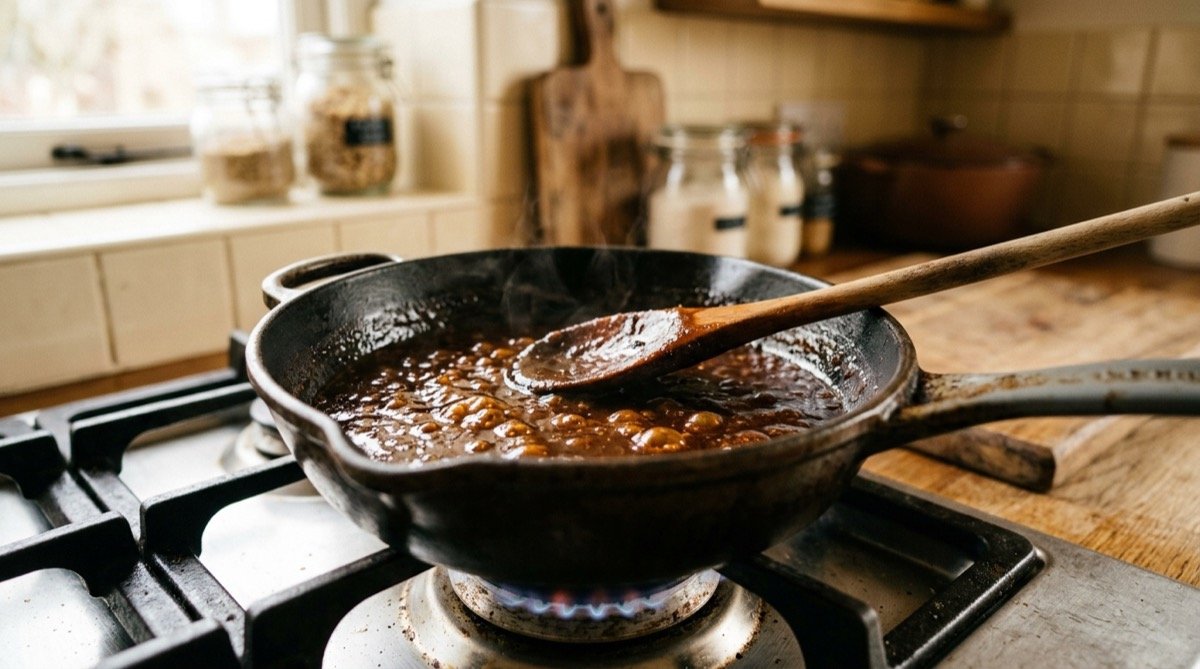
Nappé means a sauce coats the back of a spoon. Nap a sauce to judge body before the plate leaves. It is a test on the pass, not a sauce with a name of its own.
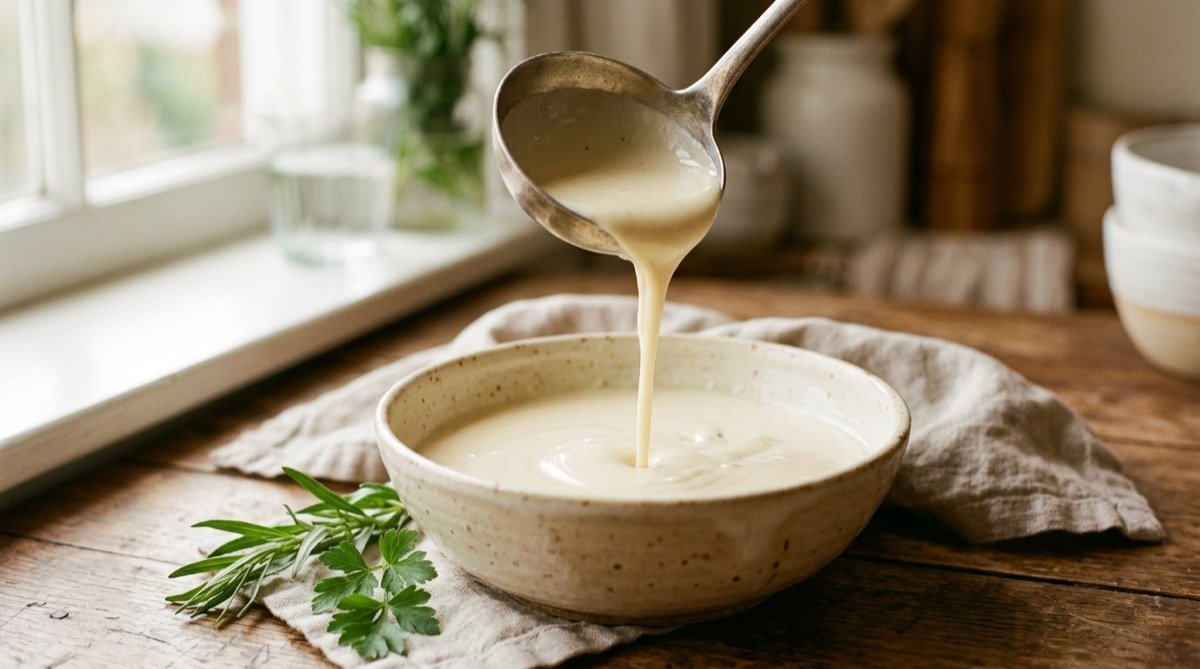
Nappé means the sauce coats the back of a spoon. It is a test of body, used on the pass and in mise en place, not a sauce with its own name. A thin jus fails it. A paste can pass and still be wrong for the guest, so you taste before the plate leaves the pass.
What it is, on the line
To nap a sauce is to see whether it will cling. You dip a spoon, lift it, and look at the back. Nappé means the sauce coats that surface instead of running off in a clear stream. It is a test of body, taken in the pot before the plate leaves the pass. It is not a named sauce and it is not a style of cooking. A velouté, a jus and a glaze can all be nappé or not, depending on where the reduction has got to. You are judging the liquid in front of you, nothing else.
Cooks write nappe, nappé and nap a sauce for the same check, and the spelling changes nothing in the pan. If the spoon comes out almost bare, the sauce is not ready to hold on meat or fish. If it hangs in a thick blanket that will not level, you have gone past a coat and into a paste. Draw a finger through the coat and the line should stay. The head chef wants the middle: a film that remains, still glossy, still tasting of the reduction rather than of starch. Learn that look before the rush teaches it to you badly.
What it is not
| Gesture | What it does | What it does not do |
|---|---|---|
| Coat the spoon | Shows the sauce has body | Is not a sauce with its own name |
| Trace a line in the coat | The line stays if it is nappé | Does not measure a time or a heat |
| Check again on the plate | Catches a sauce that runs | Does not rename the jus |
| Taste after you look | A paste can still be wrong | Does not excuse a dull thickener |
How it behaves on the pass
On the pass, nappé is a language between stations. The saucier says the pan is ready, and the chef de partie trusts that the spoon was dipped, not guessed. A sauce that looked right in a deep pot can look thin once it spreads on a hot plate, so you look again when the dish is meant to hold a coat. You are not renaming the sauce. You are saying it has enough body to stay with the food on the way to the guest. A loose sauce that floods the rim fails the plate even when the flavour is good.
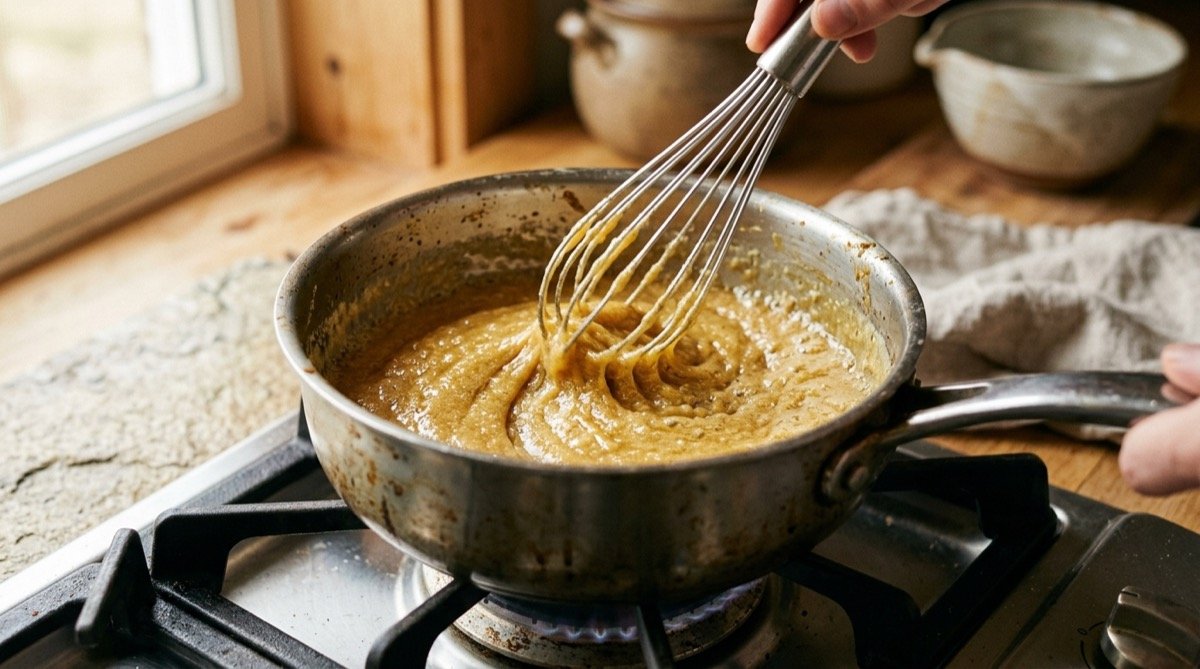
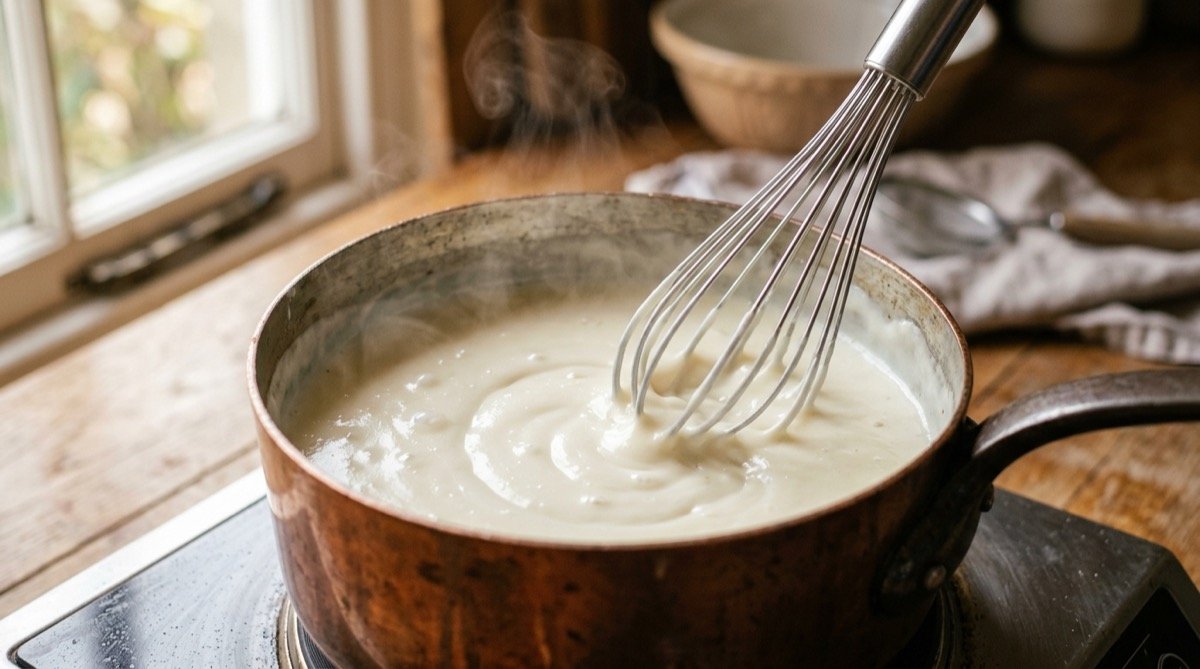
Mise en place is where you learn the look, not during the rush. Reduce a ladle of the sauce you will serve and watch the coat build. A reduction and a good roux keep a shine that a starch slurry knocks back, so the way you thickened the sauce changes what nappé looks like. The margin sits in that choice. Chasing body only with slurry is dull. Chasing it only with more reduction costs time and product. The head chef would rather you know which path the dish was written for than invent a fix that changes the sauce the guest ordered.
The guest reads the coat without the word. Sauce that clings to a slice, that stays on a piece of fish, that sits in a ribbon and does not bleed to the edge, feels finished. Sauce that pools like a broth feels careless, even when it tastes right. Your job is to send the body the dish was meant to have. If the spoon test fails, you do not argue with it. You reduce a little more, or you correct with the thickener the house allows, and you test again before the plate goes up. Looking is part of seasoning.
How people search for it
People search nappe, nappé and nap a sauce when they want the spoon test, not a recipe with its own title. You will also see nap the spoon, coat the back of a spoon, and nappe consistency typed into the same question. On a British and an American pass the word is the same gesture. Use it when you need to say a jus, a velouté or a glaze has enough body to cling, and when you need to say it is not the name of the sauce.
Frequently asked questions
Is nappé a sauce you can order?
No. Nappé describes body. The sauce coats the back of a spoon instead of running off. A jus, a velouté or a glaze can all reach that point, and none of them changes its name when it does. If a ticket says nappé, the cook is telling you to check the coat, not to fetch a pot that lives under that word. Taste it as well.
How do you nap a sauce without a gadget?
Dip a clean spoon, lift it, and look at the back. If the sauce coats the spoon, it is nappé. A clear stream that runs away means the body is short. A thick blanket that will not level means you have gone too far. A finger drawn through the coat should leave a line that holds. Then taste. The test judges cling. It does not season the pan for you.
Does a shiny sauce always count as nappé?
Shine and body are not the same thing. A thin jus can glint under the lamp and still run to the rim. A starch slurry can thicken until the spoon is coated and still look dull. Nappé is the coat on the spoon, read together with the surface the dish is supposed to have. A reduction and a good roux keep a gloss that a slurry tends to knock back.
Why does the head chef care about a spoon test?
Because the guest sees the fault on the plate, not in the pot. A sauce that looked fine in a deep pan can flood a hot plate, and a sauce corrected in a rush can turn pasty. The spoon test is how the station agrees, before the pass, that the body is there.