What is beurre blanc? Serve this butter sauce at once
Beurre blanc is shallot, white wine and vinegar, reduced and mounted with cold butter. It is an unstable emulsion, so you serve it at the moment.
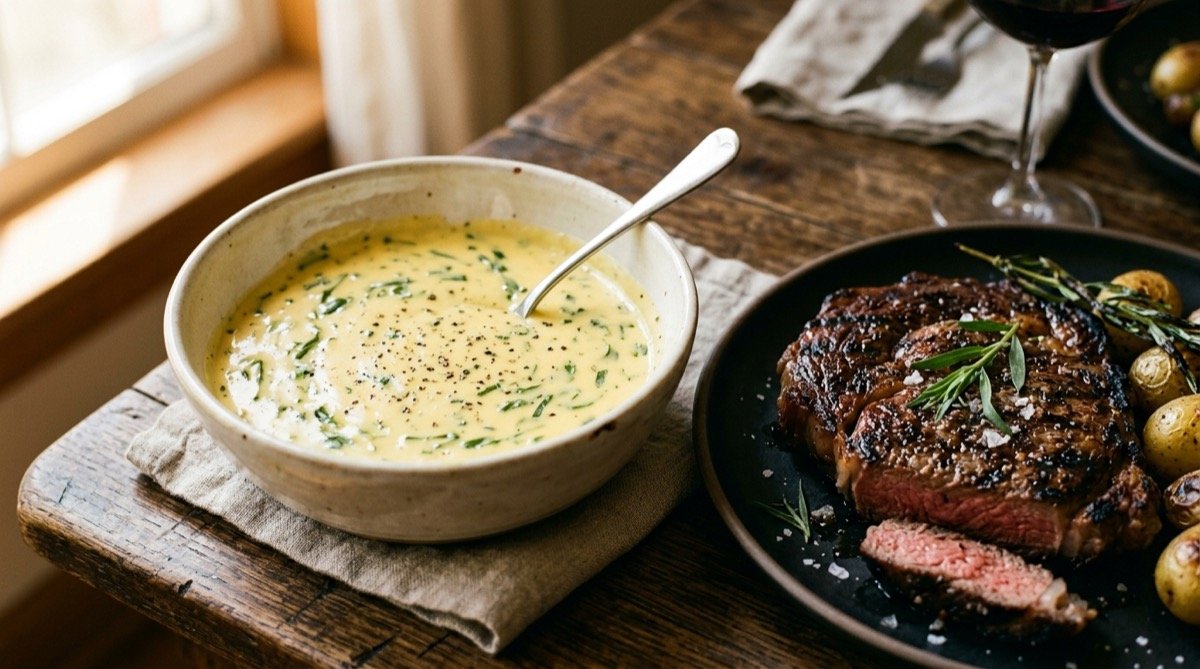
Beurre blanc is a reduction of shallot, white wine and vinegar, mounted with cold butter. It is an unstable emulsion, so you serve it at the moment. It will not wait the way a starch-bound sauce will. Hold the reduction in mise en place and mount it on the pass.
What it is, on the line
You start beurre blanc with the reduction, not with the butter. Shallot, white wine and vinegar cook down until the liquid is potent and almost syrupy, still sharp, no longer watery. That reduction is the acid and the aroma. Cold butter then goes in off a hard boil, whisked until the sauce looks pale and glossy. The butter is dispersed in what little liquid remains. There is no flour and no yolk. What holds it is the whisk, a gentle heat, and your attention. Walk away and it will not be waiting in the same state.
Call it an unstable emulsion. Mayonnaise can hold because the yolk is a strong emulsifier and the sauce is cold. Beurre blanc has no such safety. Heat that climbs to a hard boil splits it. A long wait lets it slacken into fat and liquid. It is not a hollandaise, and it is not a vinaigrette you shake back together later in the service. You serve it at the moment the fish or the vegetable is ready. If it splits, a splash of the reduction or a fresh piece of cold butter, whisked in, may bring it back.
What it is not
| Gesture | What it does | What it does not do |
|---|---|---|
| Reduce shallot, wine, vinegar | Builds the sharp aromatic base | Is not a vinaigrette |
| Mount with cold butter | Makes a pale glossy sauce | Is not a stable emulsion |
| Serve at the moment | Goes out with the plate | Does not wait under the lamp |
| Hold the reduction only | Mise en place stays usable | Does not hold the mounted sauce |
How it behaves on the pass
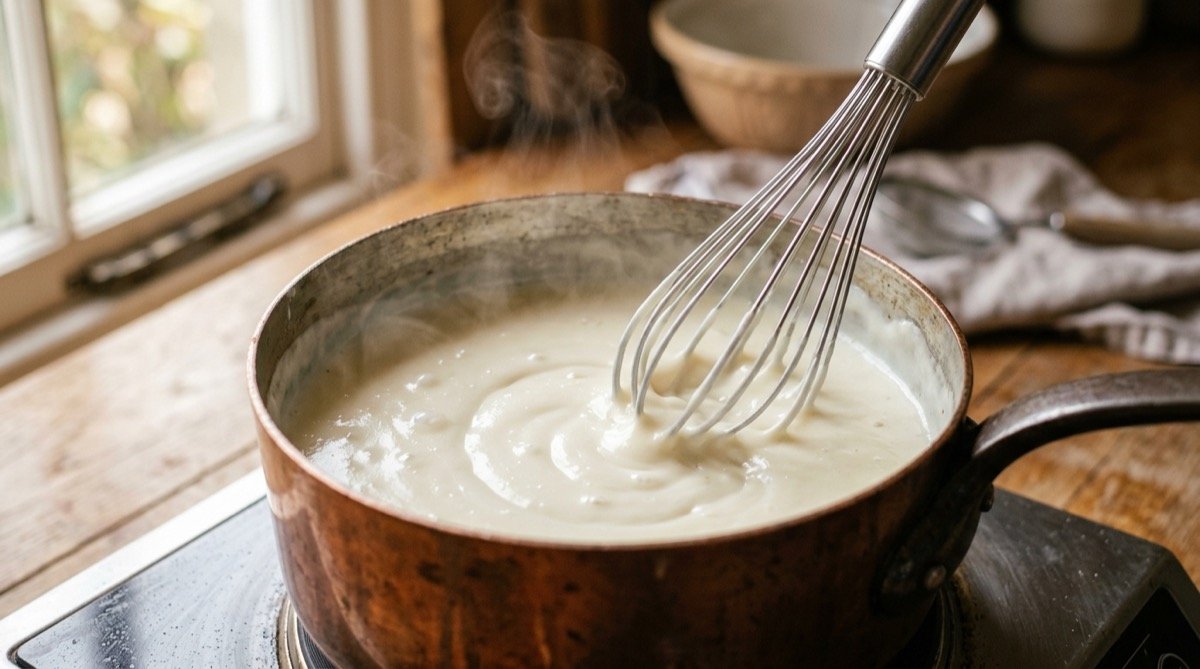
On the pass, the reduction sits ready and the butter stays cold. That is the mise en place. You do not mount a hotel pan of beurre blanc at the start of service and hope. Each plate, or each small wave, gets its own finish. The saucier whisks, tastes sharpness against the roundness of the butter, and sends. The head chef looks at the surface. Gloss and a soft cling mean the emulsion is still together. A ring of clear fat at the edge means it has let go, and that plate does not leave. The guest should taste shallot and acid through the butter, not a greasy film.
The margin in beurre blanc is the butter and the wine you reduce away. Both are easy to waste if the station mounts more than the pass can send, because a mounted sauce you cannot serve is a loss. Build the reduction for the service you have, and mount to the call. The head chef would rather see a smaller pan made again than a split bath thrown out. Taste the reduction before any butter goes in. If it is harsh, you have gone too far. If it is watery, you have not gone far enough. No figure on a card replaces that taste.
The guest meets beurre blanc as a pale sauce with a clean acid edge and a butter finish that should feel light, not waxy. It belongs with fish, with vegetables, and with anything that wants richness without a dark glaze. It does not belong in a holding drawer. If the plate waits under the lamp, the sauce suffers before the food does. Coordinate the pass so the mount happens as the plate is wiped and called away. The ingredients are few. The timing is the recipe. A station that understands the hold will send the same sauce from the first ticket to the last.
How people search for it
Beurre blanc is what people type when they want the pale butter sauce, and the spelling rarely changes. You will also see beurre blanc sauce, white butter sauce, and shallot butter sauce in the same search. The pot is a reduction of shallot, white wine and vinegar, mounted with cold butter. It is not monter au beurre, which polishes some other sauce, and it is not beurre manié, which carries flour. Call it an unstable emulsion and serve it at the moment.
Frequently asked questions
What is in a beurre blanc?
Shallot, white wine and vinegar, reduced until the liquid is potent, then mounted with cold butter off a hard boil. There is no flour and no yolk. The butter is whisked in so it disperses and the sauce looks pale and glossy. Taste the reduction before the butter goes in. If it is watery, reduce further. If it is harsh, you have already gone too far. The butter rounds it.
Why will beurre blanc not hold through service?
It is an unstable emulsion. Nothing in the pan has the holding power of an egg yolk in a cold mayonnaise. A hard boil splits it, and a long wait lets fat and liquid part company. You can hold the reduction in mise en place. You mount to the call, plate by plate or in a small wave. The head chef looks for gloss.
Is beurre blanc the same as mounting a jus with butter?
No. Mounting a jus is monter au beurre: cold butter whisked into a sauce you already made, for shine and roundness. Beurre blanc is the sauce. Its body is the butter, and its flavour is the shallot, wine and vinegar reduction. Use the mount when the pan already has a jus. Use beurre blanc when the plate is supposed to taste of that pale, sharp butter sauce.
What does the guest notice when beurre blanc is tired?
A greasy film, a waxy weight, or a sharp edge with no butter to round it. Sometimes the sauce has split into a clear rim and a dull centre. Those are hold and heat faults, and they show up under the lamp before they show up in the dining room. Send it as you mount it.