What is a gastrique? Caramel loosened with vinegar
A gastrique is sugar cooked to caramel and loosened with vinegar, a sweet-sour base. It is not a vinaigrette. Build it before service and add it by taste.
A gastrique is sugar cooked to a caramel and loosened with vinegar, a sweet-sour base rather than a finished sauce. It is not a vinaigrette. You make it before service and keep it in mise en place. On the pass you add a little when a reduction wants a caramel edge.
What it is, on the line
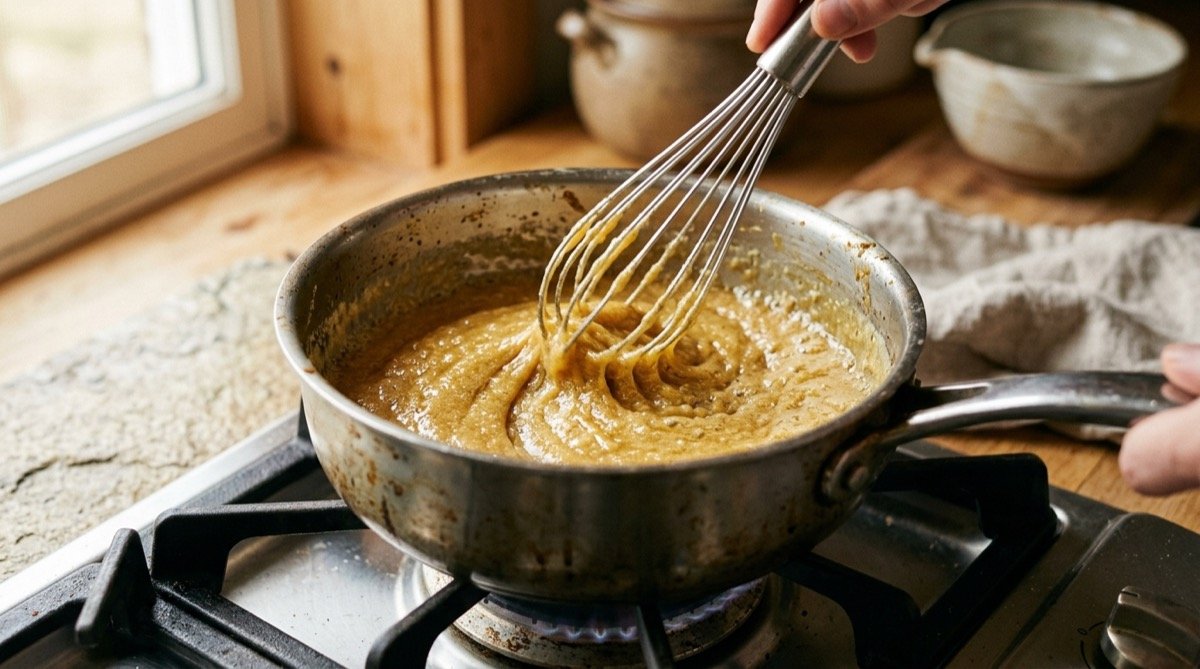
Sugar goes into the pan and you cook it until it smells of caramel and the colour is honestly deep. Vinegar then loosens that caramel. The pan will seize and protest. You stir until the caramel dissolves back into a sharp, dark syrup. That syrup is the gastrique. It is a base and a seasoning, a way to put sweet and sour into a sauce without flinging sugar and vinegar in as two separate afterthoughts. It is not a sauce you flood over a plate. Used in quantity, it tastes like itself and nothing of the dish.
A vinaigrette puts oil and acid together, and you taste both. A gastrique has no oil in the gesture. The sweetness is cooked sugar, and the acid is the vinegar that loosened the caramel. Whisk oil into it and you have started a different sauce. Keep the names apart on the pass. When a cook says gastrique and means a splash of vinegar and some sugar stirred into a hot pan, the dish will not have the same depth. The caramel has to happen. That cooked note is the whole point of taking the time to make it.
What it is not
| Gesture | What it does | What it does not do |
|---|---|---|
| Cook sugar to caramel | Gives a cooked sweet note | Is not raw sugar stirred in late |
| Loosen with vinegar | Makes a sweet-sour base | Is not a vinaigrette |
| Add by taste on the pass | Lifts a rich sauce | Does not flood the plate |
| Make it before service | Sits ready in mise en place | Does not get built in the rush |
How it behaves on the pass
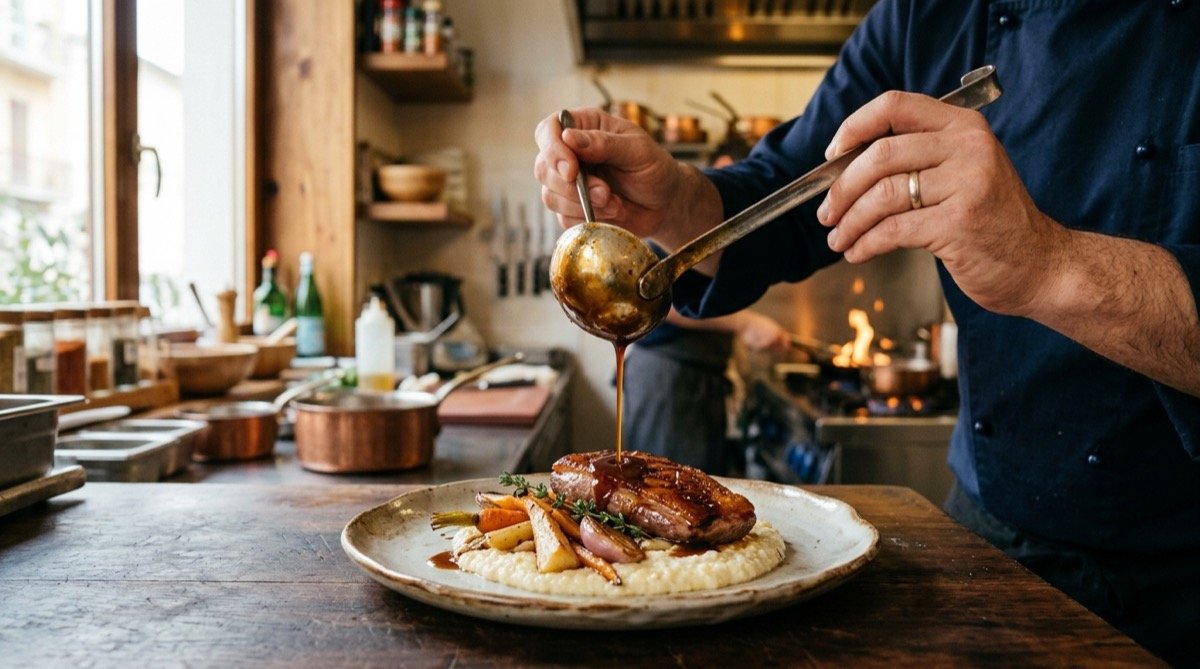
On the pass, gastrique is a small spoon from a pot you made in mise en place. You add it to a jus or a reduction that needs a lift, and you taste before you add again. Sweet-sour is easy to overshoot. Too much and the plate tastes of confectionery vinegar. Too little and you did not change the sauce. The head chef wants the same hand from every cook, so the amount is learned against the house dishes, not guessed in the rush. A gastrique that scorched when you made it will taste bitter in every sauce it touches. Throw that batch out.
Mise en place is the caramel, done before the tickets start. Sugar burns the moment you turn to read an order, so this is a job for a quiet stretch with your eyes on the pan. The margin is in that attention. Burnt sugar is waste, and a timid caramel that never coloured is only sweet vinegar, which will not do the work. Vinegar and sugar are modest stores next to meat, but a failed batch still costs the time you needed for other prep. Make what the booked service can use. Taste it on its own, then taste it in a spoon of the sauce it will join.
The guest tastes gastrique as brightness with a round caramel note, often beside rich meat or a fruit element that needs an edge. They should not be able to name sugar. If they can, you added too much, or the caramel was pale and the sweetness stayed raw. Used well, it wakes a dark sauce and keeps a rich plate from sitting heavy. Used badly, it turns a careful reduction into a sweet-and-sour glaze the dish never asked for. Agree on the station which plates take it. A house taste the guest can trust is worth more than a clever splash on one plate.
How people search for it
Gastrique is the word people type, sometimes with sauce in front of it, when they want the sweet-sour caramel base. You will also see gastrique sauce, vinegar caramel, and sugar vinegar reduction. The gesture is sugar cooked to a caramel and loosened with vinegar. It is not a vinaigrette, and a search that sends you to oil and mustard has changed the subject. On a ticket it may be shortened to a spoon of gastrique in the jus. That spoon comes from mise en place.
Frequently asked questions
What is a gastrique made of?
Sugar cooked to a caramel, then loosened with vinegar. The caramel will seize when the vinegar goes in, and you stir until it dissolves into a sharp, dark syrup. That syrup is a base, not a finished sauce and not a vinaigrette. There is no oil in the gesture.
Is a gastrique just vinegar and a pinch of sugar?
No. Sugar stirred into hot vinegar, or vinegar splashed into a pan with a little sugar, never becomes a caramel. The cooked sugar note is the point. If the caramel stayed pale, the sweetness tastes raw. If it scorched, every sauce you season with it turns bitter. Take the time while the kitchen is quiet.
How do you use a gastrique without making the plate sweet?
Treat it as a seasoning, the way you treat salt. A small spoon in a reduction, then a taste, then a decision. The guest should notice brightness and a round edge, not a dessert. Rich meat and some fruit garnishes can carry it. A delicate sauce cannot. The head chef wants the same hand on every plate, agreed in prep, not improvised when the ticket is already late.
Why is a gastrique not a vinaigrette?
A vinaigrette brings oil and acid together, and often mustard, and you taste the oil. A gastrique has no oil in its definition. It is a caramel loosened with vinegar, kept as a sweet-sour base for other sauces. Whisk oil into it and you have left the gesture.