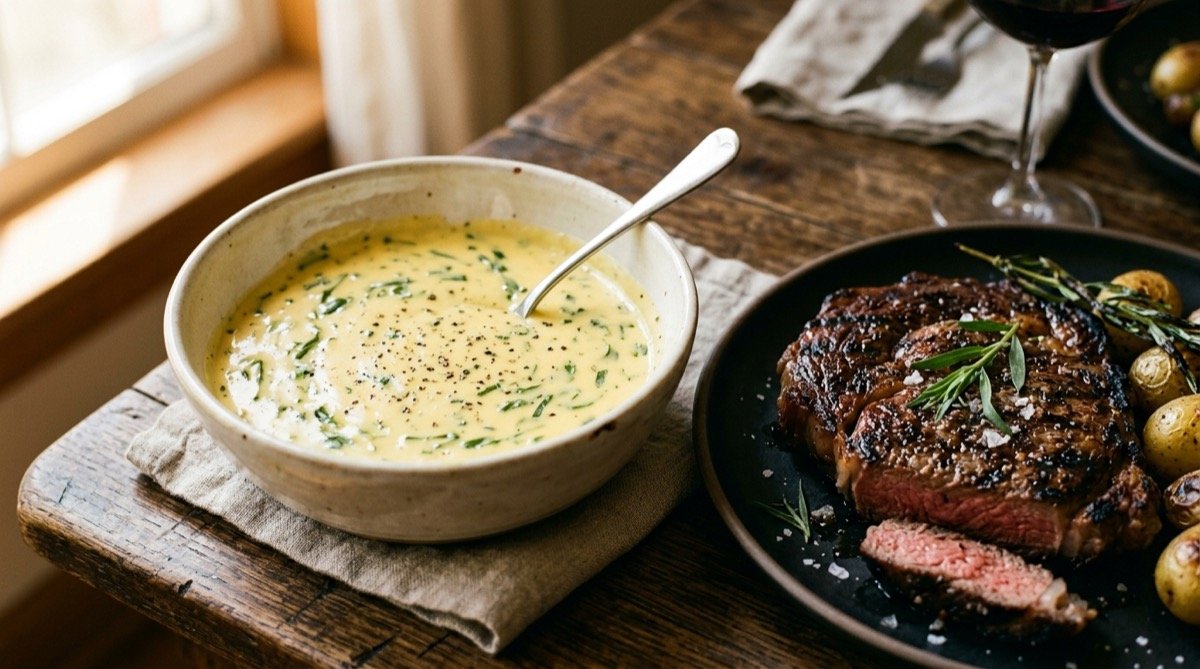
Starch slurry: what a cornstarch slurry does to shine
A starch slurry is starch in cold liquid, then stirred into a simmer. It thickens fast. It also dulls the shine a reduction or a good roux would keep.
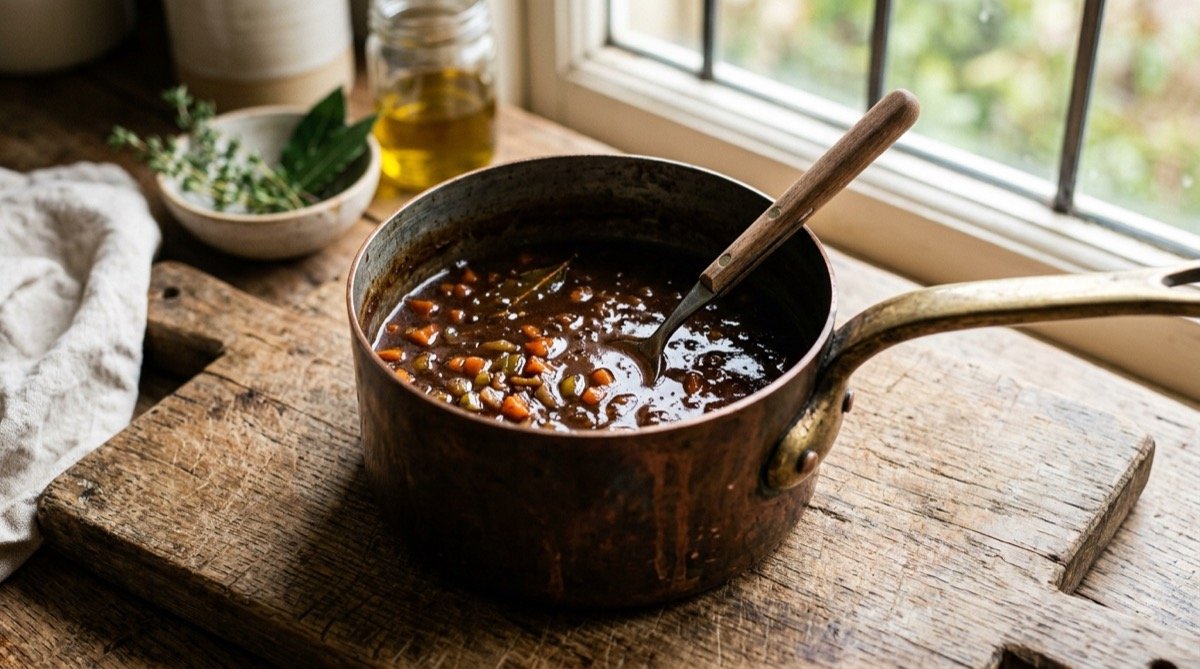
A starch slurry is starch dispersed in cold liquid, then stirred into a simmering sauce so it thickens. Cooks say slurry or cornstarch slurry for the same move. It is fast body on the pass. It is not a roux and not beurre manié. A good reduction can stay glossy. A slurry knocks that gloss back.
What it is, on the line
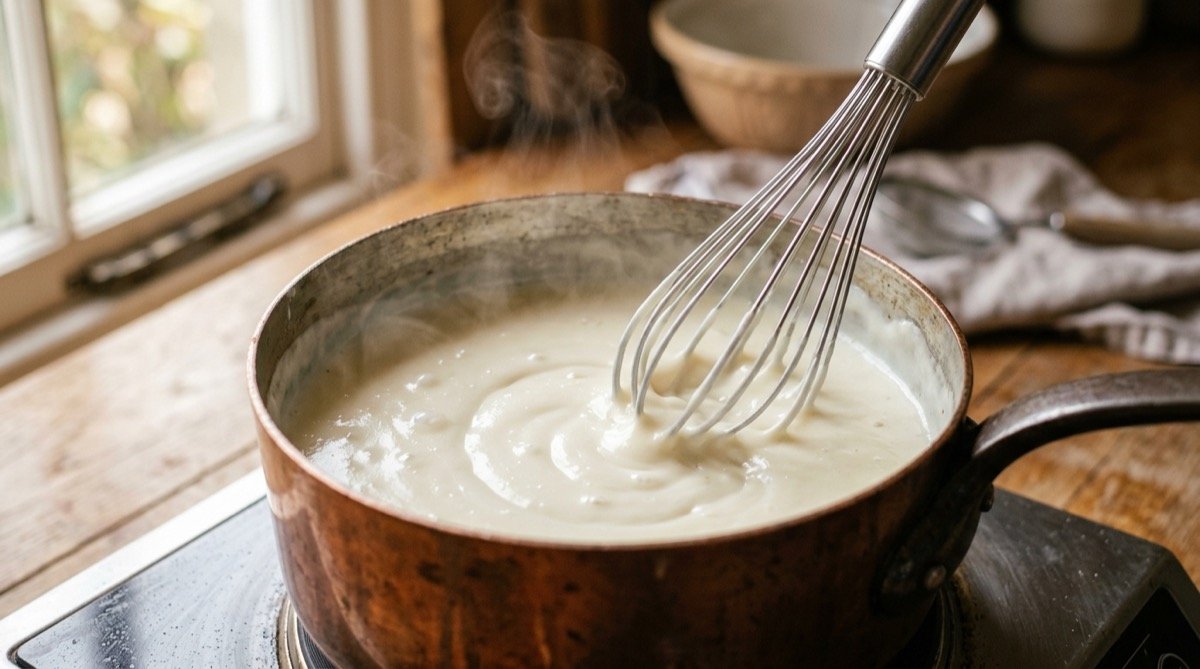
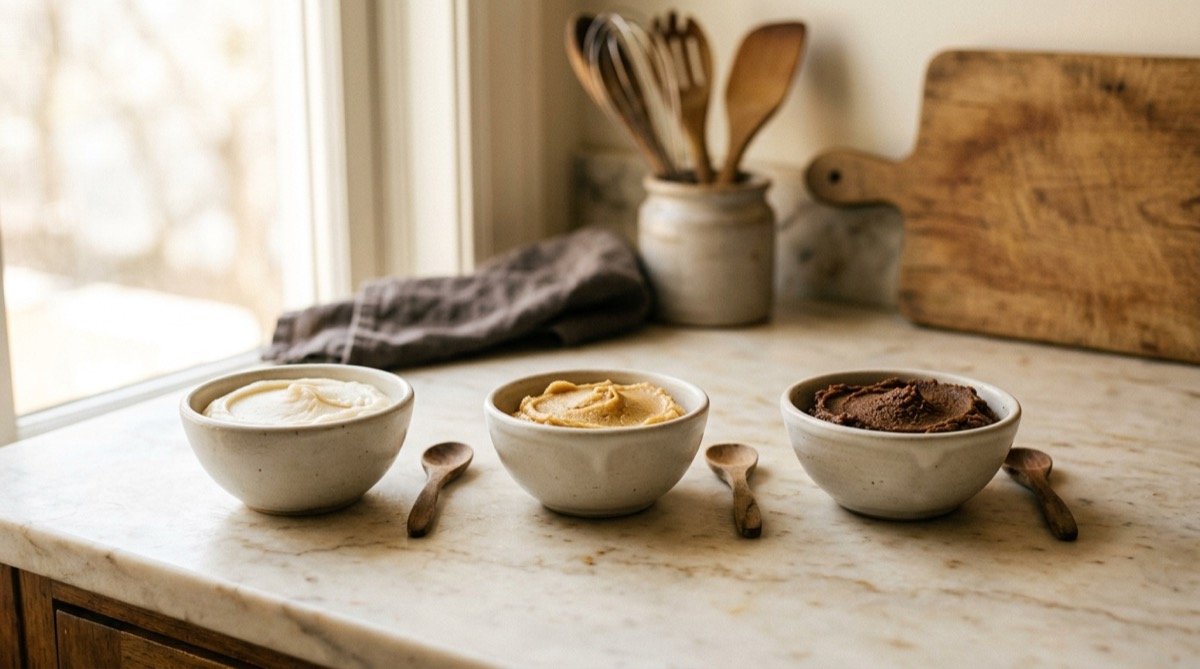
You disperse the starch in cold liquid before it ever sees the pan. Rain dry starch into a hot sauce and it seizes into lumps no whisk will beat smooth. A cornstarch slurry is what most stations mean, though another starch can do the same job when the dish allows it. The cold mix looks cloudy and thin. You stir it, then you pour it into the liquid at a simmer, whisking, until the raw starch taste clears and the body comes up. Then you stop. The sauce keeps tightening as it heats, and a pan that looked right can set too firm on the plate.
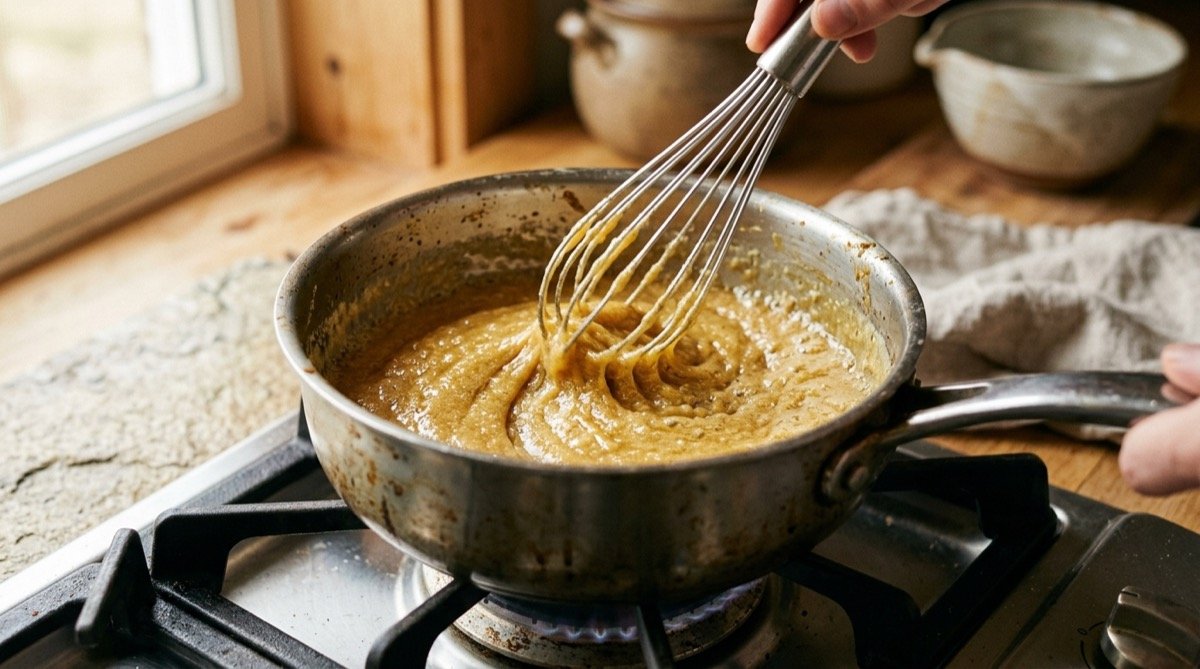
A slurry does not cook flour in fat. That is a roux. It does not knead raw flour into soft butter. That is beurre manié. Here the starch is naked, suspended in water or another cold liquid, and it thickens by swelling in the hot sauce. Keep the names apart when you write the prep list and when you talk on the pass. A cook who says roux and reaches for a cornstarch slurry will send a different shine and a different flavour from the one the dish was built on. The head chef hears the wrong word as the start of the wrong plate, and is usually right.
What it is not
| Gesture | What it does | What it does not do |
|---|---|---|
| Disperse starch in cold liquid | Keeps it from lumping | Does not hit the pan as dry powder |
| Stir into a simmer | Thickens quickly on the pass | Does not cook flour in fat |
| Stop when the body arrives | Useful when the card says so | Does not keep a reduction's shine |
| Stir again before you pour | Starch settles as it sits | Is not beurre manié |
How it behaves on the pass
On the pass, a slurry is the quickest honest thickener you have, and the easiest to overuse. A thin pan, a ticket in the window, a spoon of slurry, a simmer, a coat. The spoon may come out nappé. The gloss the guest expected from a reduced jus may not. The head chef can see that trade from across the pass: a dull surface, and sometimes a starch flavour if you added more than the simmer could clear. Use a slurry when the dish is written for one, or when a clear body matters more than a mirror. Do not use it to fake a glaze you did not reduce.
Mise en place is a small pot of cold slurry, stirred again before it goes in, because the starch settles and the top of the pot turns thin. Make it close enough to service that it has not sat into a brick. The margin looks kind. That modesty is how sauces drift. Each time you correct with slurry instead of the method on the card, you save a little stove and you spend the character of the dish. The head chef sees the drift in plates that no longer match the one you sold.
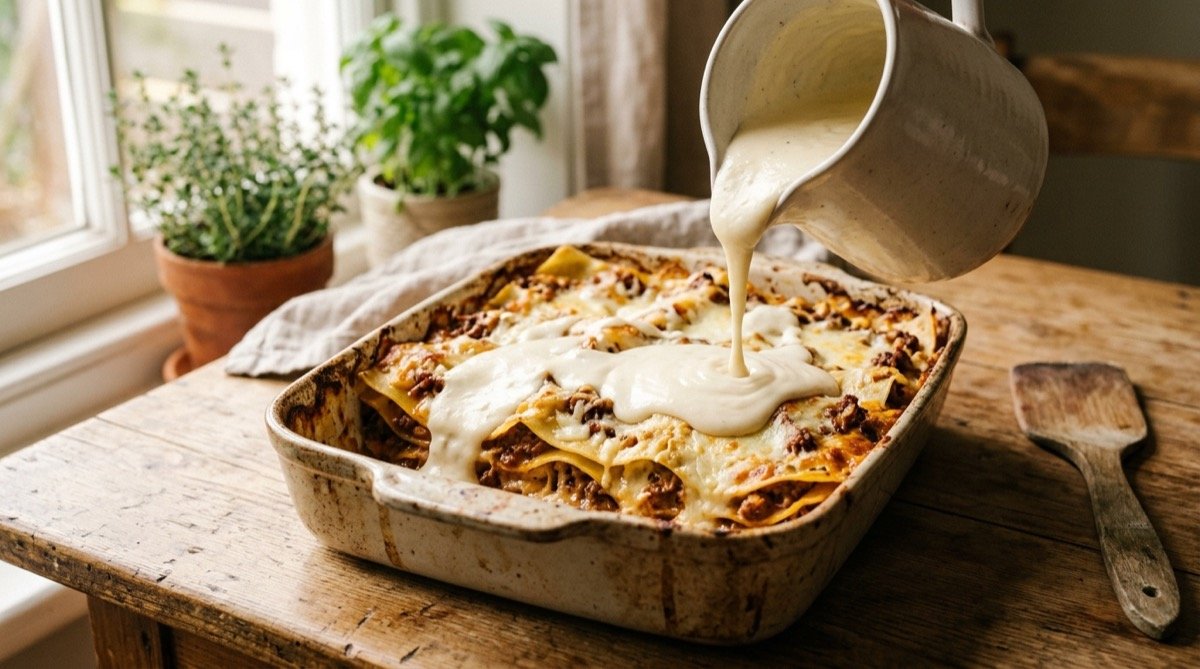
The guest reads the surface before the first bite. A slurry-thickened sauce can be smooth, even and pleasant, and plenty of dishes want exactly that. It will not look like a reduced meat glaze, and it should not be asked to. If the plate was promised a shining jus, a slurry is the wrong tool and the guest will see a flat coat even when the seasoning is good. If the plate is a braise that needs body without more fat, the slurry can be the right tool. Match the gesture to the dish, then taste for raw starch before you send.
How people search for it
People type slurry and cornstarch slurry when they want starch stirred into cold liquid and then into a simmering sauce. You will also see cornflour slurry, starch slurry, and thicken with cornstarch. It is not a roux, which cooks flour in fat first, and it is not beurre manié, which is raw flour in soft butter. The search that matters on a professional pass is the one about shine. A slurry gives body quickly and knocks back the gloss a reduction or a good roux would have kept.
Frequently asked questions
What is a starch slurry?
Starch dispersed in a cold liquid, then stirred into a sauce or stock that is at a simmer. The cold liquid keeps the starch from lumping. The simmer lets it swell and thicken. Cooks often mean a cornstarch slurry, though the gesture is the same with another starch the dish allows. It is a fast thickener for the pass.
Why does a slurry make a sauce look dull?
Because it thickens without the gloss a reduction keeps, and without the gloss a good roux can keep. The spoon may be coated, so the sauce can be nappé, and still look flat under the pass lights. That is the trade. If the dish was written as a shining jus or a meat glaze, a slurry will not fake it.
Can you add the starch straight into the hot pan?
You can, and you will make lumps. Dry starch in a hot liquid seizes before the whisk can separate it. Disperse it in cold liquid first, stir so nothing sits on the bottom, then pour that mix into the simmer while you whisk. Stop when the body is there.
When is a slurry the wrong saving move?
When you are using it to imitate a reduction you did not have time to make, or a roux the card actually asked for. The body may arrive. The flavour and the shine will not match, and the guest can see the flat surface. Starch looks modest on a cost sheet, which is why stations reach for it.