These digital products pair with AI Chef Pro — the AI platform for hospitality with 55+ tools — AI platform for hospitality
Explore
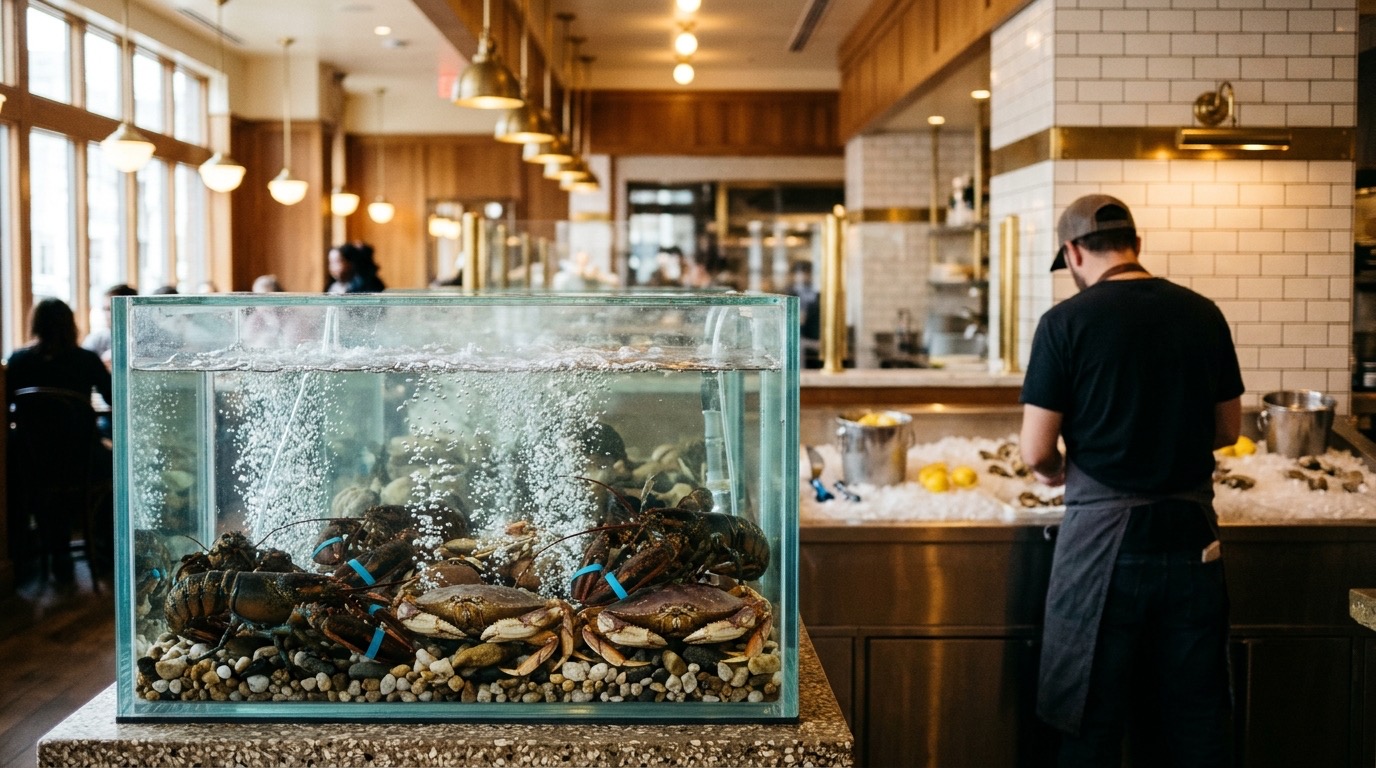










Seafood Restaurant Checklists Kit Pro: Raw Bar, Receiving & Opening Checklist Templates for Excel
9 templates + 3 bonuses (12 files) with 165 seafood restaurant tasks already written in Excel: opening and closing, the live tank and receiving, HACCP and traceability with shellfish tags, the raw bar and ice display, the manager, roles, cleaning and seasons. Print it, hand it to your team and check it off.
One-time payment · lifetime access · updates included
No international card, or prefer your wallet? Same price, no surcharge.
Print, Delegate and Control
Excel templates set up to print on US Letter. Compatible with Excel, LibreOffice and Numbers









9 Seafood Restaurant Checklist Templates + 3 Bonuses (12 files)
165 seafood restaurant tasks already written and sorted by shift, area and role. Adjust them to your menu and your suppliers, print and delegate.
Seafood Restaurant Opening & Closing Checklist: Live Tank, Display, Kitchen & Dining Room
Opening for the live tank and the display (8 tasks), the kitchen (8) and the dining room (5): water and aeration checked, dead animals logged, the display on drained ice at 41 °F, walk-ins and freezer, sauces and fish stock, safe thawing, the raw bar, seafood tools and today's catch. Closing (9): the display into the walk-in on ice, the tank checked at close for overnight mortality, waste, the fish area sanitized, tomorrow's order and the register. 30 tasks, each with a time and who does it.
Live Tank & Seafood Receiving Checklist: Water Quality, Suppliers & Freshness Signs
Daily live tank checks (water temperature by species per your supplier and the tank maker, dissolved oxygen at 6 mg/L or more, salinity, pH, filter, mortality, feeding), receiving from your seafood distributor or dock-to-door supplier (refrigerated transport, the day's catch, shellstock tags and invoices, 41 °F cold and 0 °F frozen, histamine-forming fish rejected if warm, lot traceability) and the freshness signs for fish, live crustaceans, bivalves and cephalopods. 21 checks with a Reading column.
Seafood HACCP & Traceability Checklist: Shellfish Tags, Allergens & Critical Control Points
Traceability (lot, species with its FDA Seafood List market name, harvest area or origin, dates, receiving and walk-in temperatures, thawing), allergens (crustacean shellfish and fish are major US allergens, molluscs are not; separate prep areas, a written notice, anaphylaxis training) and 5 critical control points: receiving with shellstock per NSSP rules, storage, cooking to 145 °F, the display on drained ice and raw fish with parasite destruction (record kept 90 days) and the consumer advisory. 17 checks.
Raw Bar & Seafood Display Checklist: Ice Display, Service & Close
Setup (crushed ice on a drained tray, crustaceans, oysters, clams, mussels and razor clams with their tags, cephalopods, whole fish, price labels and garnish), service (ice every 90 minutes to hold 41 °F, FIFO, melt water drained, every piece checked, oysters shucked to order with the lot tag kept and the consumer advisory) and the close (product pulled and sorted, the tray sanitized). 19 tasks.
Seafood Restaurant Manager Checklist: Purchasing, Market Price, Waste & Food Cost
The daily order before your distributor's cutoff, prices from wholesalers, delivery ratings, inventory and waste, the pre-shift meeting, stations, sales by item, market price items adjusted to today's cost, display and tasting checks, schedules, training, invoices, weekly food cost under 32% (the kit's target), group bookings and social media. 18 tasks with frequency and priority.
Seafood Restaurant Duties by Role: Head Chef, Fish & Shellfish Stations, FOH Manager & Server
Clear tasks for 5 roles: the head chef and seafood buyer, the fish station cook (fillets, fumet, cooking to 145 °F), the shellfish station cook (cooking times, seafood stews, opening bivalves), the FOH manager (today's catch, tableside seafood towers, allergens at every table) and the server (seafood tools, finger bowls, wine pairings for guests 21+). 5 tasks each.
Seafood Restaurant Weekly & Monthly Checklists: Live Tank, Walk-Ins, Maintenance & Audits
Weekly: the live tank drained, sanitized and refilled, filters and pump serviced, inventory, waste review, walk-ins deep cleaned, freezer dates, knives sharpened, white wine stock and the display tray. Monthly: a review of your HACCP and traceability records, supplier ratings, the menu by season, refrigeration serviced by an EPA 608-certified tech, training, food cost, prices and pest control by a licensed operator.
Seafood Seasons & Events Checklist: US Seasons, Holidays & Regulations
A seasonal guide for the US (dates vary by state): crawfish, soft-shell crabs, wild salmon, lobster, stone and king crab, bay scallops and oysters; the key sales events (the Feast of the Seven Fishes on Christmas Eve, New Year's Eve seafood towers, Valentine's Day, Lent Fridays, oyster and seafood festivals, summer patio and raw bar); and the rules: your state's seasons, closures and minimum sizes, origin documented to avoid IUU seafood. 18 tasks.
Blank Seafood Restaurant Checklist Template (Editable)
A blank checklist with the kit's columns (area, task, assigned to, frequency, OK and notes) to build lists for your exact concept: oyster bar, fish house, raw bar, with or without a live tank.
BONUS: Seafood Pre-Shift Meeting Template (Today's Catch)
A pre-shift meeting sheet: today's catch (3 fresh fish and 3 live shellfish), specials and the off-menu special, allergens and allergy notes, covers, VIPs and group seafood feasts, and the wine pick of the day (21+ with ID).
BONUS: Seafood Restaurant Annual Calendar: Seasons, Events, Maintenance & Training (US)
12 months for a US seafood restaurant: the seafood in season (oysters, crawfish, soft-shell crabs, wild salmon, lobster, blue crab, stone and Dungeness crab), the sales events (Valentine's Day, Lent, Mother's Day, July 4th, clambakes, Thanksgiving, the Feast of the Seven Fishes), the maintenance and the training for each month.
Hear From the Pros
Head chefs, seafood restaurant owners and consultants who already run their operations with Kit de Tareas Recurrentes: Marisquería con Vivero y APPCC, the Spanish edition of this kit

Alejandro Ruiz
Head Chef, seafood restaurant in Madrid
"The live tank checklists are really thorough. Temperature, oxygen, salinity, pH… the whole team follows the same standard every morning, and the shellfish reach the plate in top condition."
María López
Owner, Galician seafood restaurant
"The HACCP traceability, with the lot log, the harvest area and the shellfish allergens, saved us in two health inspections. A must-have to stay compliant."
Carlos Méndez
Director, seafood restaurant group (3 locations)
"We rolled it out in all 3 locations. The ice display, FIFO rotation and oyster shucking are now consistent: the same standard in Vigo, Madrid and Marbella."
Laura Fernández
FOH Manager, seafood restaurant in Madrid
"The duties by role make it clear who does what. The pre-shift meeting with today's catch, the specials and the VIP tables lines up the kitchen and the dining room in 5 minutes before we open."
David Torres
Hospitality Consultant specializing in fish and seafood
"For seafood restaurants it's the most complete kit out there. Live tank, display, traceability, receiving, the seasons… it covers every critical point where seafood places tend to slip."
Ana García
Manager, fish restaurant in Barcelona
"The seasons checklist, with the closures, and the annual calendar let us plan the menu and our orders ahead. No more buying frozen lobster tails right in the middle of fresh lobster season."
Pedro Gutiérrez
Shellfish Cook, Galicia
"The live tank tasks are really clear: oxygen, salinity, pH, filter cleaning, mortality. I know exactly what to check every shift without having to ask the chef."
Fernando Delgado
Executive Chef, premium seafood restaurant, Marbella
"Checking the freshness of the fish and the lot traceability are the details that make the professional difference. We built it into our HACCP plan and went from "improvised" to "auditable"."
Why This Kit?
These aren't generic templates. They're checklists designed by a chef who has worked in kitchens since the age of 17 and has been a hospitality consultant since 2010, set up for a US seafood restaurant under the FDA Food Code.
Built for Seafood Restaurants
Not restaurant templates with the name changed. Checklists for the real operation of a seafood restaurant: the live tank, the ice display, receiving, traceability and the raw bar.
The Live Tank, Every Day
Water temperature by species, dissolved oxygen, salinity, pH, the filter, mortality and feeding, plus the weekly drain, sanitize and refill. The tank stays healthy and the shellfish reach the plate in good shape.
Shellfish Tags and HACCP
Shellstock tags kept 90 days, shellfish only from NSSP-listed shippers, lot traceability, 5 critical control points and parasite destruction for raw fish, with its record kept 90 days. Ready when the health inspector asks.
Checklist Apps Charge Every Month. This Is $15, Once
The same kind of task lists seafood restaurants run in premium checklist apps, in Excel, for a one-time payment. No subscription.
Compatible with:

Created by
Chef John Guerrero
CEO of AI Chef Pro and founder of ChefBusiness Group. In kitchens since the age of 17 and a hospitality consultant since 2010. He has advised seafood restaurants, fish houses and raw bars on running their operations professionally: the live tank, the ice display, traceability and the seafood seasons.
Exclusive Bonuses
Besides the 9 templates, you get these extra resources
BONUS 1Seafood Pre-Shift Meeting Template
Today's catch (3 fresh fish and 3 live shellfish), specials and the off-menu special, the dishes with crustacean shellfish and molluscs, allergy notes, covers, VIPs and group seafood feasts, and the wine pick of the day. The sheet that lines up the kitchen and the dining room before service.
BONUS 2Seafood Restaurant Annual Calendar (US)
12 months of seafood in season (a guide: dates vary by state), US sales events from Valentine's Day and Lent to Thanksgiving and the Feast of the Seven Fishes, and the maintenance and team training for each month.
 BONUS 3
US · UK · Canada · Australia Equivalents Guide
Bonus: terms, taxes, food safety, staff rules, alcohol and units for using this kit in the US, UK, Canada and Australia.
Everything included: 9 templates + 3 bonuses
$15
8 Professional Tools, Free
Your purchase also unlocks our professional hospitality tools. Use them straight from your dashboard or right here.
One-time payment · lifetime access · updates included
YES, I WANT THE SEAFOOD RESTAURANT CHECKLISTS KIT — $15Crypto payment
No international card, or prefer to pay from your wallet?
Same price as by card, no surcharge. You pay the equivalent in USDT, USDC, BTC or ETH at the current rate.
- Automatic delivery by email as soon as the gateway confirms the payment: usually a few minutes; Bitcoin can take longer
- Recommended: USDT on the TRON network (TRC-20), with fees of a few cents
- From Binance, Trust Wallet or any wallet that supports the network you choose

Satisfaction Guarantee 100%
If the checklists don't help you run your seafood restaurant more professionally, from the live tank and receiving to the raw bar and your shellfish tags, we'll refund 100% of your money. No questions, no hassle.
If you pay with crypto, refunds are handled manually and sent in the same coin and network you paid with.
30
Day guarantee
100%
Money back
0
Awkward questions
Frequently Asked Questions
Everything a restaurant opening checklist has, plus the live product. The live tank and the display first: the water temperature checked by species (per your supplier and the tank maker's spec), aeration and filters, live shellfish condition, dead animals removed and logged, the display set on drained crushed ice (display ice is never used in food), today's seafood laid out by family with price labels, and the display at 41 °F or below. Then the kitchen: the fresh fish walk-in at 41 °F or below with the fish on ice, the live shellfish walk-in with shellstock at 41 °F or below once received, the freezer at 0 °F or below, the sauces (cocktail sauce, mignonette, tartar, remoulade, drawn butter), the fish stock, the sides, the griddle and grill, and the day's thawing done in the walk-in or under cold running water at 70 °F or below. Then the dining room: tables set with seafood tools, bibs, wet wipes and lemons, today's menu with the catch and prices, the raw bar with shellfish from NSSP-listed shippers, and the reservations with shellfish allergy notes. The "Opening & Closing" checklist has those 21 opening tasks already written, each with a time and who does it.
The seafood pulled from the display and stored in the walk-in on ice, the live tank checked again (temperature, oxygen and overnight mortality), the fish and shellfish inventory against tomorrow's order, the day's waste logged (it is high-value product), the fish area and cutting boards deep cleaned and sanitized (checked with test strips), the walk-ins checked with the doors closed, the seafood service tools washed and stored, tomorrow's order placed with your seafood distributor or dock-to-door supplier, and the register closed out by fresh item with the cash count, over/short and tips per your written tip pool. The kit has those 9 closing tasks already written.
The "Raw Bar & Display" checklist has 19 tasks in three steps. Setup: crushed ice on a tray with a drain (no standing water), crustaceans (lobster, spiny lobster, crab, langoustines), bivalves (oysters, littlenecks and cherrystones, mussels, razor clams) from NSSP-listed shippers with their tags kept 90 days, cephalopods, the whole fish of the day, price labels and the garnish. Service: ice replenished every 90 minutes to hold 41 °F or below, FIFO rotation, melt water drained, the look and smell of every piece checked, prices updated when a species sells out, and oysters shucked to order with no shell fragments, the lot tag kept and the consumer advisory on the menu for raw or undercooked items. Close: everything pulled and sorted, good product stored on fresh ice, unfit product logged and discarded, and the tray, drain and surface cleaned and sanitized.
Under the FDA Food Code (3-203.12), shellstock tags stay on file for 90 days after the container is emptied, and molluscan shellfish must come from shippers on the Interstate Certified Shellfish Shippers List under the National Shellfish Sanitation Program (3-201.15). The kit puts that where it happens: the receiving checklist asks for the tags (harvest area and date, certified shipper number) with every lot, the raw bar keeps the lot tag while the oysters are being shucked, and the opening checklist checks the shippers before the raw bar opens.
The delivery time with your seafood distributor or dock-to-door supplier and refrigerated transport at 41 °F or below; the day's catch checked for species, size and freshness; the paperwork for every lot (shellstock tags, and species, origin and supplier on the invoice for finfish); the receiving check (temperature, appearance, smell, eyes; cold at 41 °F or below, frozen at 0 °F or below and frozen solid; shellstock received per NSSP rules, on ice or shipped at 45 °F air or 50 °F internal or below, then held at 41 °F); lot, supplier, date and weight logged for traceability; and the product in the walk-in right away. The freshness signs are spelled out: bright, convex eyes, red gills, firm flesh, a fresh ocean smell and never ammonia, live crustaceans active, bivalves closed or closing when tapped.
Yes, every day. Water temperature by species (per your supplier and the tank maker's spec: cold-water lobster runs colder than spiny lobster, so the kit leaves a blank for your figure instead of one that doesn't fit your species), dissolved oxygen (6 mg/L minimum), salinity (30–35 ppt for Atlantic shellfish), pH (7.5–8.5), the mechanical filter, mortality removed and logged, and feeding if needed. Weekly, the tank is drained, sanitized and refilled and the filters and pump are serviced, as the maker and your health department require. A display tank for live molluscan shellfish is a different case: it needs a variance and a HACCP plan from your health department.
Yes. The traceability records cover the lot number, species (with its FDA Seafood List market name and scientific name), harvest area or origin, catch method, date, weight and supplier; the receiving temperature of every delivery and the walk-ins twice a day; shelf life (fresh shellfish within 48 hours as a house standard, cooked ready-to-eat seafood date-marked for 7 days at 41 °F); and thawing. The HACCP section lists 5 critical control points: receiving, storage in separate walk-ins, cooking fish and shellfish to 145 °F for 15 seconds, the display on drained ice at 41 °F or below rotated every 2 hours, and raw or undercooked fish with parasite destruction and its record. The monthly checklist reviews the records so they are ready for the health inspection.
Yes. Raw or undercooked fish (crudo, ceviche, tartare) needs parasite destruction under the FDA Food Code (3-402.11): frozen and stored at −4 °F or below for 7 days, or frozen at −31 °F or below until solid and stored at −31 °F or below for 15 hours, or frozen at −31 °F or below until solid and stored at −4 °F or below for 24 hours. The kit has you keep that record for 90 days (3-402.12) and the consumer advisory on the menu (3-603.11), and the raw bar checklist repeats the advisory for raw oysters.
Yes, at receiving. Histamine-forming fish (tuna, mackerel, mahi-mahi, sardines, anchovies) must arrive cold: the checklist has you reject warm product, because cooking does not destroy histamine. Keeping them cold from the delivery truck to the walk-in is the control, so the kit pairs it with the receiving temperatures and the rule that product goes into the walk-in right away.
Fish and crustacean shellfish (shrimp, prawns, lobster, crab, langoustines) are among the 9 major US allergens. Molluscs (mussels, clams, oysters, scallops, octopus, squid) are not a major US allergen, so the kit tells your team to answer guests who ask; in the UK they are one of the 14. The checklists also keep crustaceans, molluscs and fish in separate prep areas, put a written allergen notice for each dish where your state has adopted the 2022 FDA Food Code (3-602.12(C)), train the team on severe allergies, and have the FOH manager tell every table about allergens.
Yes. It covers seafood restaurants and fish houses, oyster and raw bars, and places with or without a live tank. If you don't have a live tank or a raw bar, delete those tasks or mark them N/A. Every cell can be edited, so adjust tasks, species and times to your menu, and use the blank template for anything extra.
Yes, as a guide: dates vary by state and by year, so check your state fish and wildlife agency and NOAA Fisheries. The seasonal checklist covers crawfish (Gulf states, peak in spring), soft-shell crabs, wild salmon runs, lobster, stone crab and king crab, bay scallops, oysters in the cold months and year-round shrimp, farmed oysters and mussels, plus your state's closures and minimum sizes and origin documented to avoid IUU seafood. The annual calendar adds the seafood in season month by month.
Yes, you will find free restaurant checklist templates online, and a blank one is fine to get started. This kit is something else: 11 Excel workbooks with 165 seafood restaurant tasks already written and sorted by shift, area and role, the live tank, receiving, shellfish tags and the raw bar covered, °F temperatures under the FDA Food Code, and a ✓ / — / N/A drop-down on the checklists. Print it on US Letter, or save any sheet as a PDF from Excel.
Each checklist has columns for the area, the task, who does it, when (a time on the opening and closing list, a frequency, a day or a lead time in the others), OK and notes; the live tank and receiving checklist adds a Reading column. In 7 of the checklists the OK column has a ✓ / — / N/A drop-down, and the row turns green when you pick ✓; the manager checklist has a status column you fill in yourself. Print the list and hand it to the team, or keep it open on a tablet.
Checklist apps charge a monthly fee per location and need connected tablets or phones. This kit gives you the same kind of task lists in Excel for $15, a one-time payment. What it is not: there are no reminders, photos or notifications on your team's phones.
Yes. One purchase covers one business with all of its locations, which makes it a good fit for seafood restaurant groups. If you are a consultant, you can use the checklists with your clients, but you can't hand them copies: each business buys its own.
The register close-out is part of the day: the closing checklist has you close out by fresh item with the cash count and over/short against the POS Z report, and split tips per your written tip pool policy (managers and supervisors don't keep tips). This kit has no separate cash count sheet by bill and coin; if you want one that works out the starting bank and the over/short for you, the Restaurant Checklists Kit Pro includes it.
Yes, with a few edits, all in cells you can change. The kit is set up for the US: temperatures in °F under the FDA Food Code (41 °F cold holding, 145 °F cooking), shellfish under the NSSP and the 9 major allergens. In the UK, the legal limits are 8 °C for cold holding and 63 °C for hot holding, allergen information covers 14 allergens with molluscs included, and live shellfish come with the labels of an approved dispatch centre instead of NSSP tags: keep them as your local rules require. In Canada and Australia, check your provincial or state food safety and shellfish rules and allergen list and type them into the tasks. The legal drinking age for the wine pairings is 18 in the UK and Australia and 19 in most Canadian provinces. Every English edition also includes the US · UK · Canada · Australia Equivalents Guide, a bonus with the local terms, taxes, food safety, staff rules and alcohol side by side.
The price is $15 USD, a one-time payment. At checkout, Stripe can show the amount in your local currency (for example GBP, EUR, CAD or AUD) and converts it for you.
No subscription: you pay once and get lifetime access to the online dashboard. When we add new templates or improvements, you get them at no extra cost — just download the files again.
Yes. A full 30-day guarantee. If you're not happy, we'll refund 100% with no questions asked.
Your Seafood Restaurant, Organized from the Live Tank to the Raw Bar — in 11 Excel Files
9 templates + 3 bonuses (12 files) for the critical areas of your seafood restaurant: the live tank, receiving, traceability, the raw bar, roles and seasons. For a one-time $15.
No international card, or prefer your wallet? Same price, no surcharge.
Buy from anywhere in the world
Digital products in English with instant download. Pay by card, Apple Pay or Google Pay from the US, the UK, Canada, Australia or anywhere else.
New to the platform?
Try AI Chef Pro today
The most complete AI suite for hospitality and restaurants. Available in 7 languages.
10,000 credits a month on the Member plan. No commitment.

SEAFOOD RESTAURANT CHECKLISTS KIT PRO — $15
BUY NOW